Handwriting improvement Addition Worksheets for Ages 4-7
4 filtered results
-
From - To
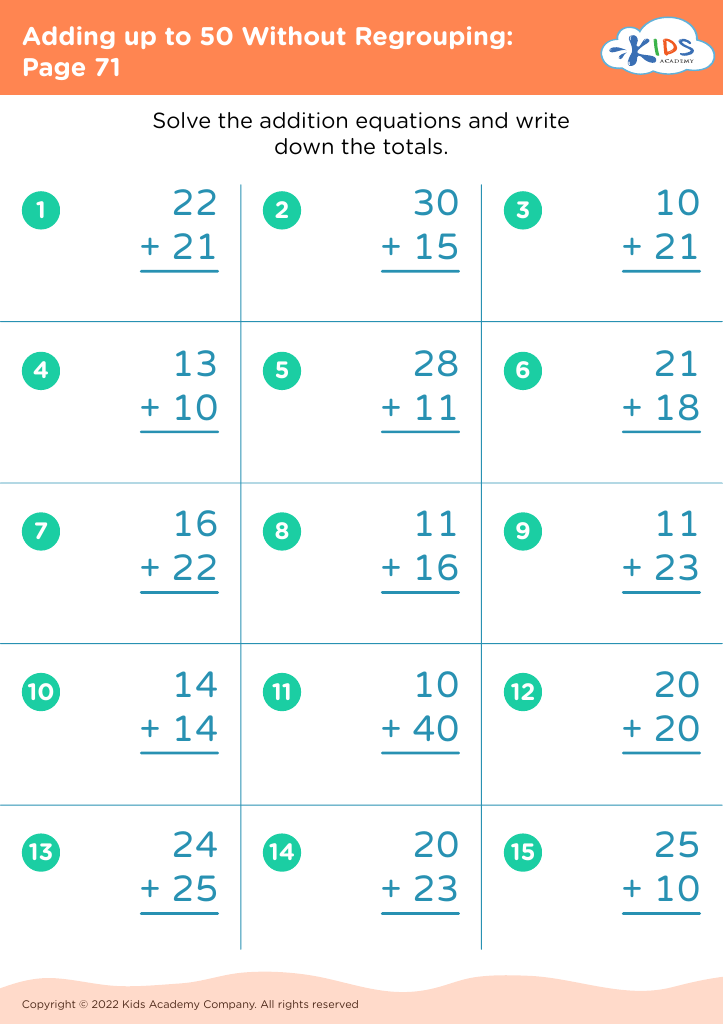
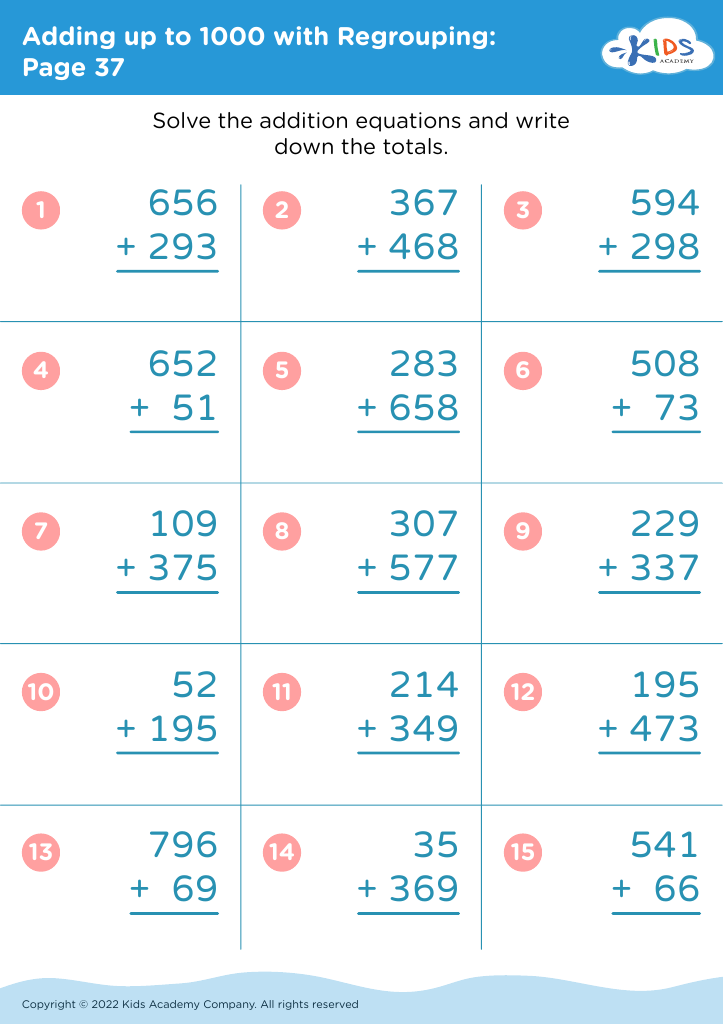
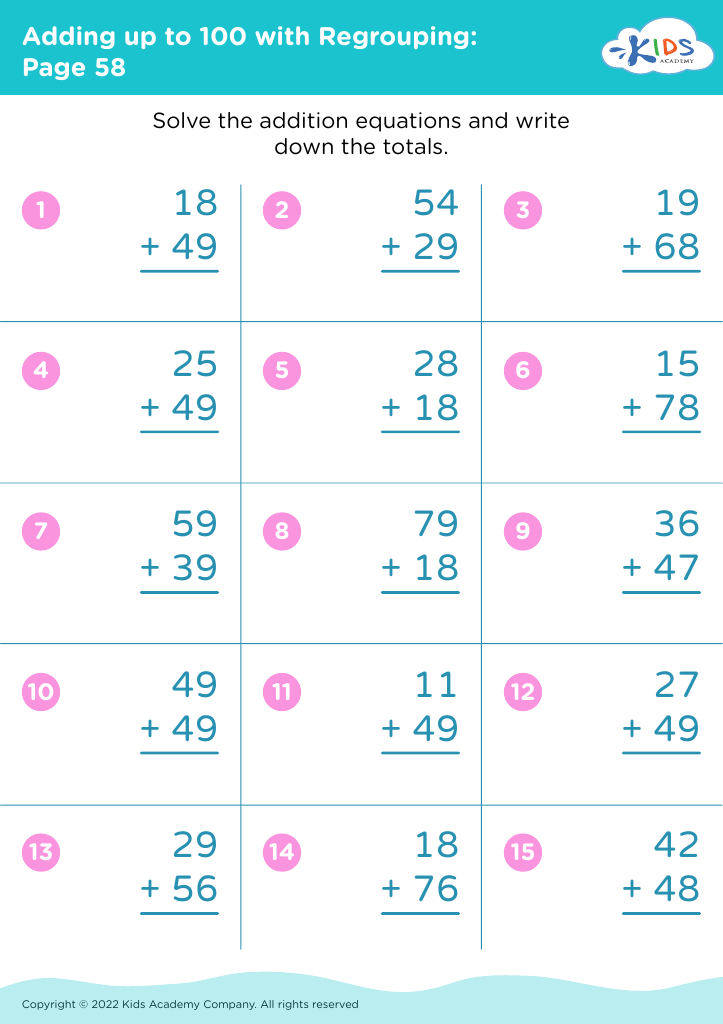
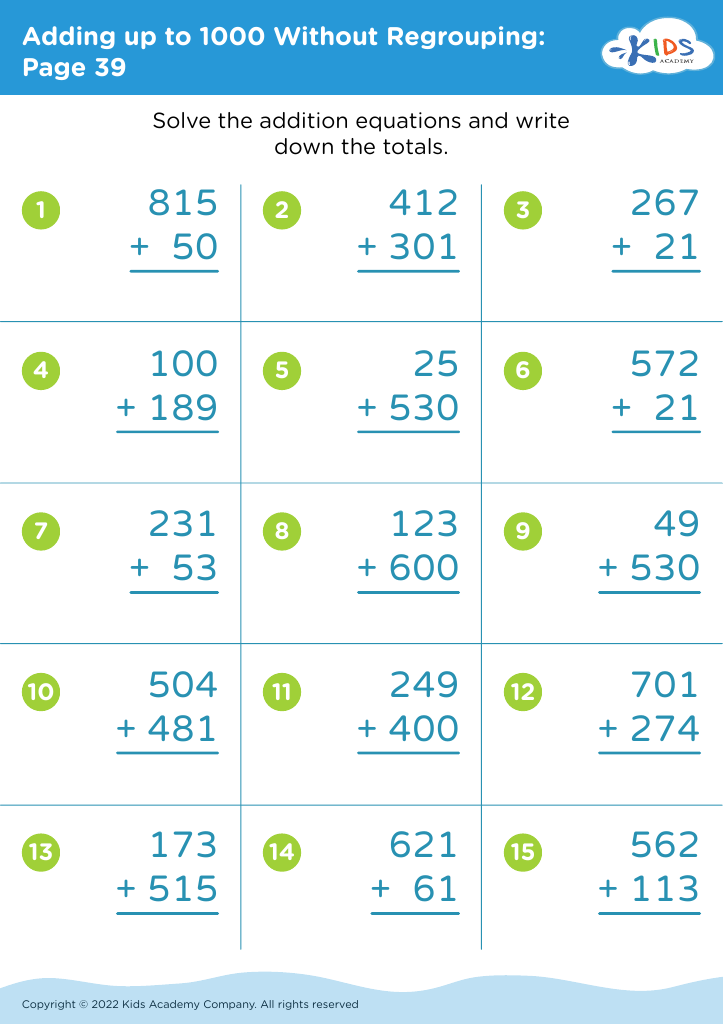
Enhance your child's handwriting skills while reinforcing their addition abilities with our Handwriting Improvement Addition Worksheets, specially designed for ages 4-7. These engaging worksheets combine fun math exercises with structured handwriting practice, promoting fine motor skills and confidence in writing. Each worksheet is expertly crafted to captivate young learners, encouraging them to neatly write numbers and improve letter formation as they practice addition. Ideal for early learners, these interactive resources make mastering math concepts enjoyable and accessible. Help your child develop essential skills that lay the foundation for future academic success with our thoughtfully designed worksheets available for immediate download!


.jpg)




.jpg)
Handwriting improvement for children aged 4-7 is crucial for several reasons that parents and teachers should prioritize. First, handwriting is a foundational skill that supports the development of fine motor skills, which are essential for various everyday tasks. When children learn to control their writing instruments, they enhance their hand-eye coordination and dexterity, promoting overall motor skill development.
Furthermore, legible handwriting fosters effective communication. As children begin to express their thoughts and ideas on paper, the ability to write clearly becomes significant for their confidence and self-expression. Students with poor handwriting may struggle to convey their message, leading to frustration and disengagement in learning activities.
Additionally, quality handwriting positively impacts academic performance. Studies have shown that children who develop proficient handwriting skills tend to achieve higher scores in assessments, as they can focus on content rather than the mechanics of writing.
Lastly, improved handwriting can aid in a child's emotional and social development. When children take pride in their work and feel capable of completing tasks, their self-esteem grows, leading to a love for learning. By supporting handwriting improvement, parents and teachers lay the groundwork for success in school and beyond, fostering a well-rounded development.








