Identifying equivalent fractions Addition Worksheets for Ages 4-7
7 filtered results
-
From - To
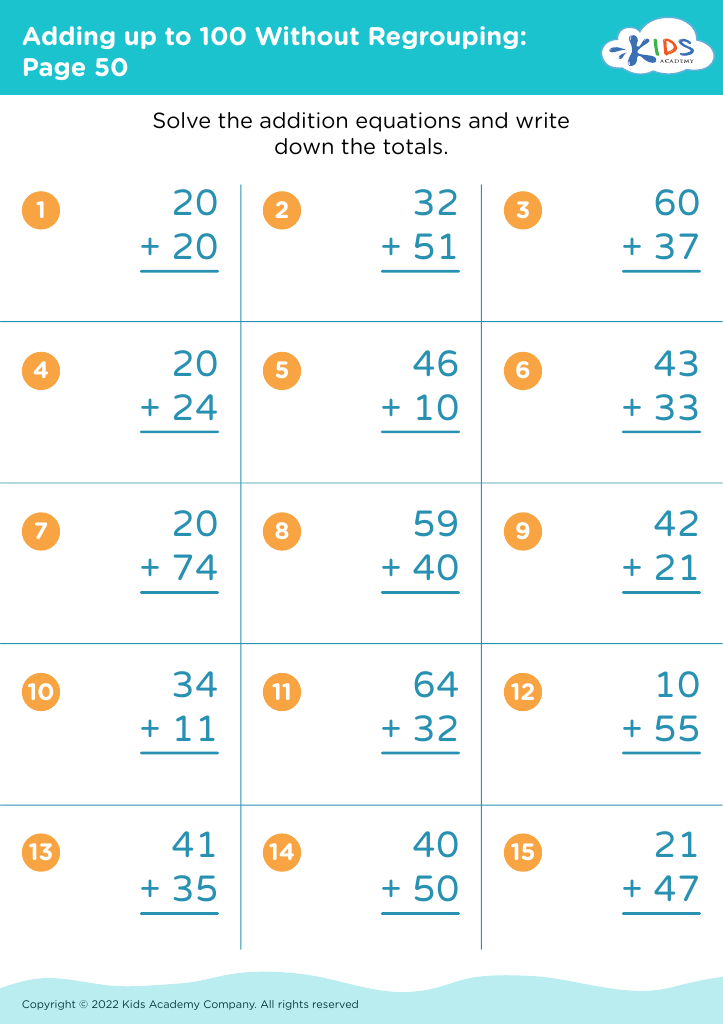
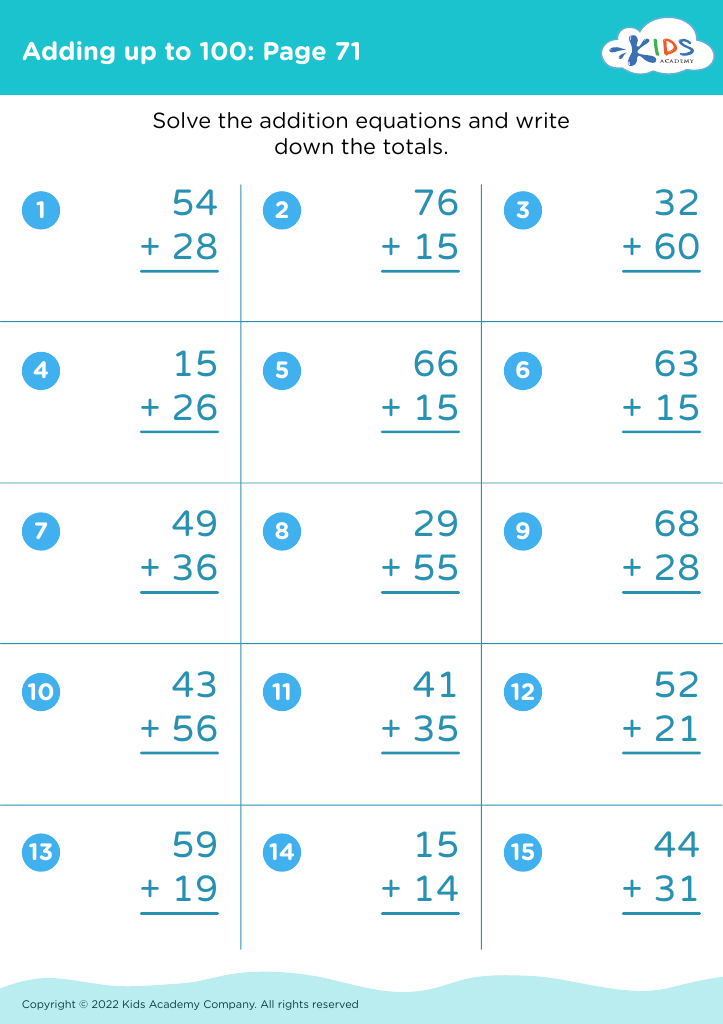
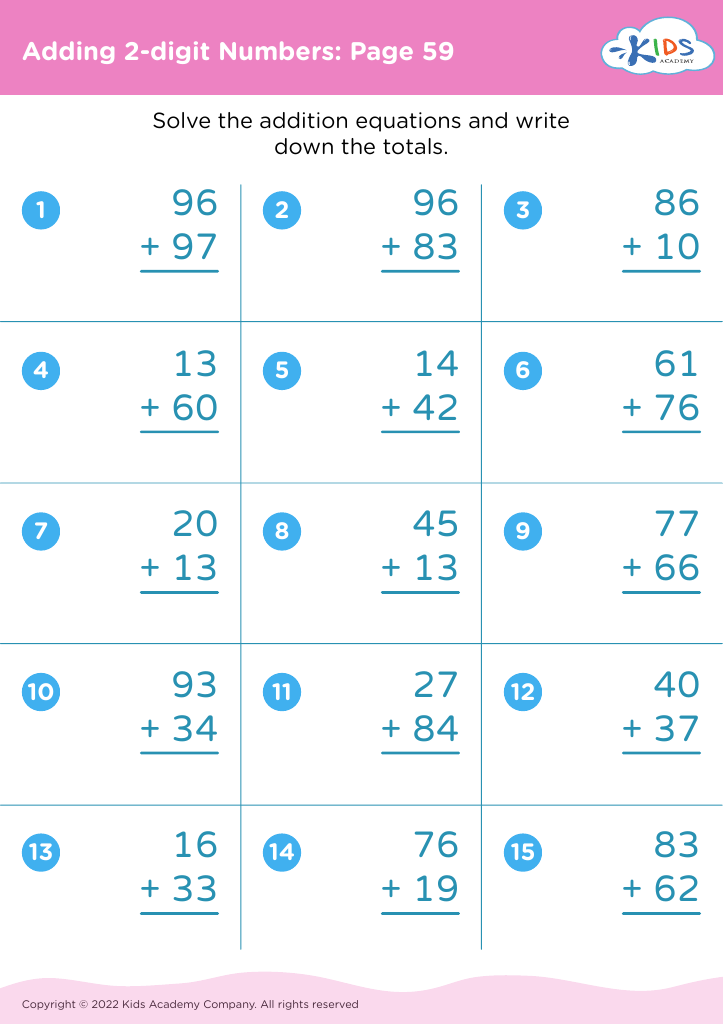
Discover engaging Identifying Equivalent Fractions Addition Worksheets tailored for ages 4-7! Our worksheets offer a fun and interactive way for young learners to master the concept of equivalent fractions through addition. With colorful visuals and relatable examples, children will quickly grasp how different fractions can represent the same value. Perfect for at-home learning or classroom reinforcement, these activities promote critical thinking and problem-solving skills in an enjoyable manner. Help your child build a strong mathematical foundation while they have fun exploring fractions. Explore our collection today and watch their confidence soar as they become fraction experts!








Identifying equivalent fractions is a crucial mathematical concept for children aged 4-7, as it lays the foundation for their understanding of more complex topics in mathematics. Parents and teachers should care about this due to several reasons.
First, understanding equivalent fractions nurtures critical thinking skills. Children learn to recognize that different representations can express the same quantity, promoting problem-solving abilities. This understanding is integral as they start exploring other math topics such as addition, subtraction, and division involving fractions.
Second, this knowledge fosters numerical fluency. By recognizing equivalent fractions, children can simplify problems and make calculations easier, boosting their confidence in handling mathematical tasks. For instance, when adding fractions, identifying common denominators through equivalent fractions helps them grasp the process more effectively.
Furthermore, these early math skills have lasting impacts on academic success. Progressing through early education, children who are comfortable with concepts like equivalent fractions typically show greater proficiency in later math topics.
Finally, engaging with fractions aids in real-life applications, such as cooking or sharing, thereby enhancing children's understanding of math as a practical tool. By supporting children's grasp of equivalent fractions, parents and teachers help cultivate a strong mathematical foundation and foster a positive attitude towards learning.








