Letter recognition Addition Worksheets for Ages 4-7
3 filtered results
-
From - To
Discover engaging Letter Recognition Addition Worksheets tailored for children ages 4-7! These fun and educational printables seamlessly combine early math skills with letter learning to boost your child's development. Perfect for preschoolers and early elementary students, our worksheets make math exciting by incorporating familiar letters into addition problems. Enhance your child's numeral and alphabetical proficiency simultaneously, fostering a love for both math and reading. Ideal for home practice or classroom use, these worksheets will bring a delightful learning experience. Visit our page to download and start enhancing your child's skills today!
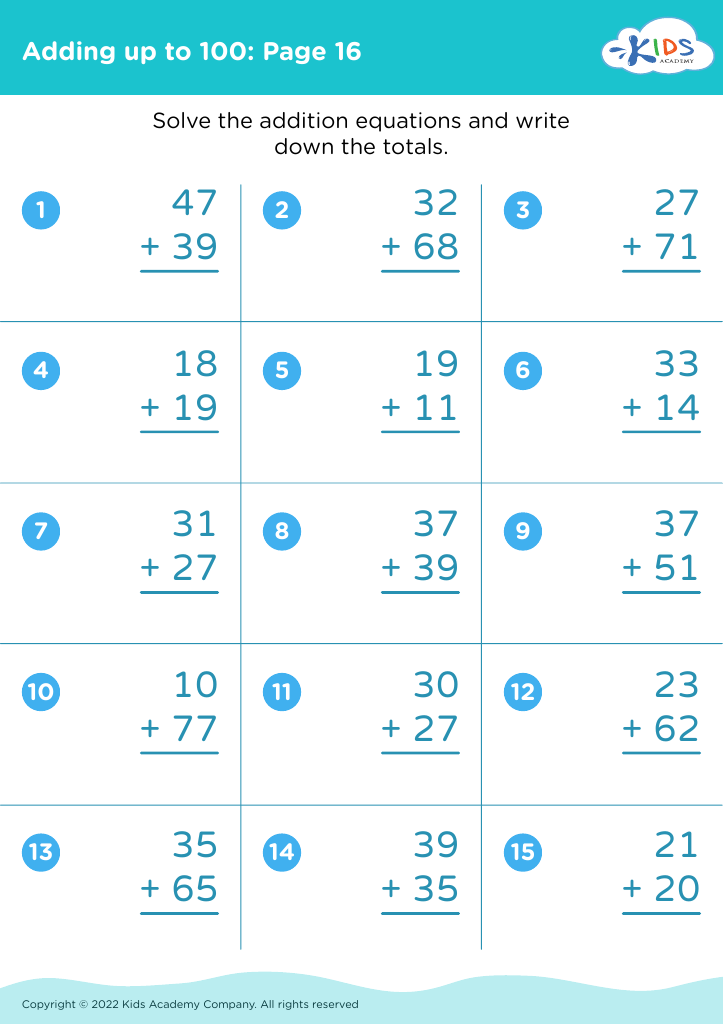
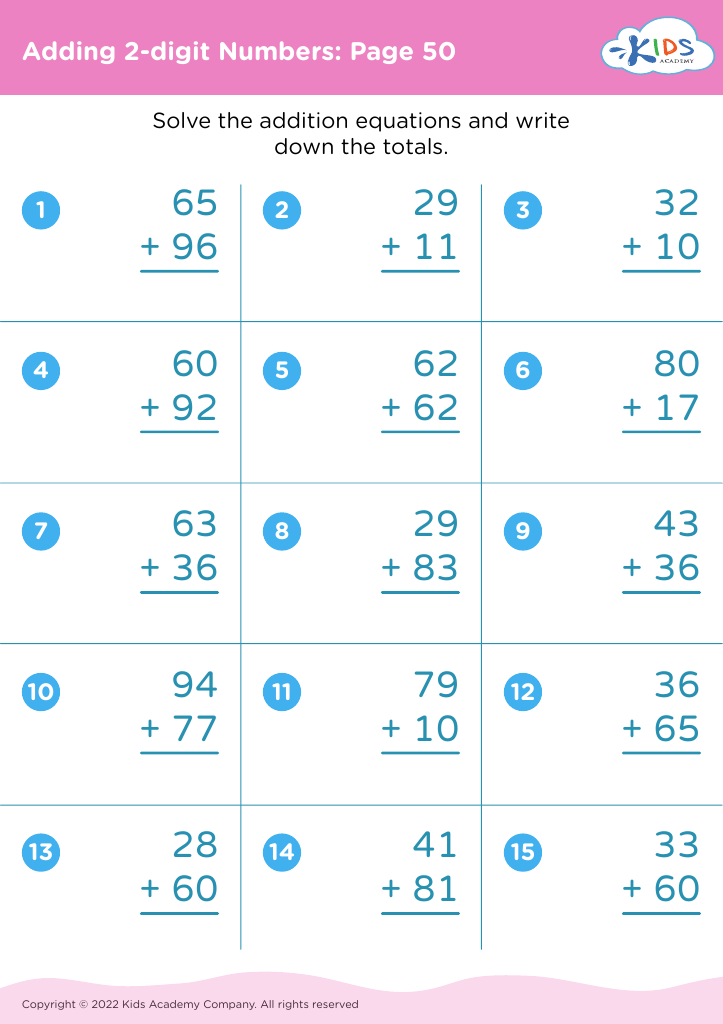
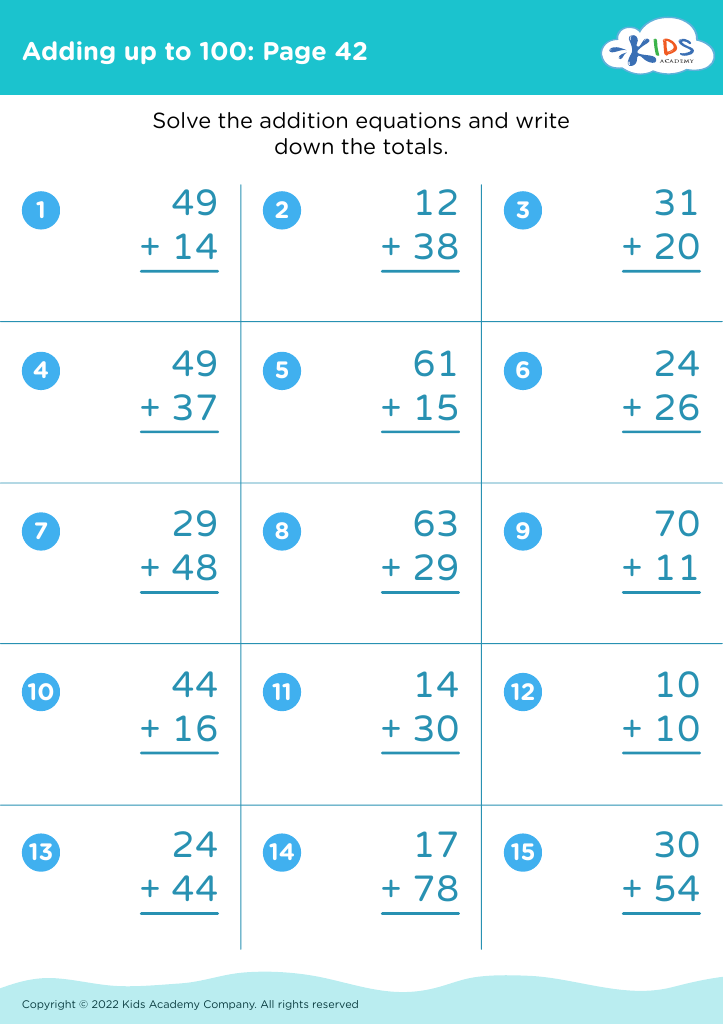








Letter recognition and basic addition are fundamental skills for children ages 4-7, establishing the groundwork for future learning and academic success. For parents and teachers, emphasizing these skills is vital.
Firstly, letter recognition is essential for literacy development. When children can identify letters, they are better prepared to understand word formation, phonics, and the mechanics of reading. This recognition enhances their vocabulary, comprehension, and ability to express thoughts, contributing to their overall cognitive growth.
Basic addition introduces children to mathematical thinking, promoting problem-solving skills and logical reasoning. Early exposure to addition helps demystify numbers and arithmetic operations, making future math concepts more approachable.
Furthermore, mastering these skills boosts children’s confidence. As they achieve small milestones, such as recognizing letters or solving simple addition problems, their self-esteem grows. They become enthusiastic learners, more likely to participate in classroom activities and tackle new challenges.
For teachers, focusing on these skills ensures they meet early learning standards and curriculum goals. For parents, it provides an opportunity to be actively involved in their child's early education, strengthening the parent-child bond and supporting their child's educational journey.
In both home and school environments, fostering letter recognition and basic addition skills equips children with critical tools for lifelong learning and success.








