Filters

508 filtered results

Clear all filters
Favorites
With answer key
Interactive

508 filtered results

Difficulty Level

Grade


Check out this FREE Trial Lesson on Addition for age 4-7!

Exactly the Same, or Not

Favorites
With answer key
Interactive
  • 4-7
  • Number Recognition
  • Addition
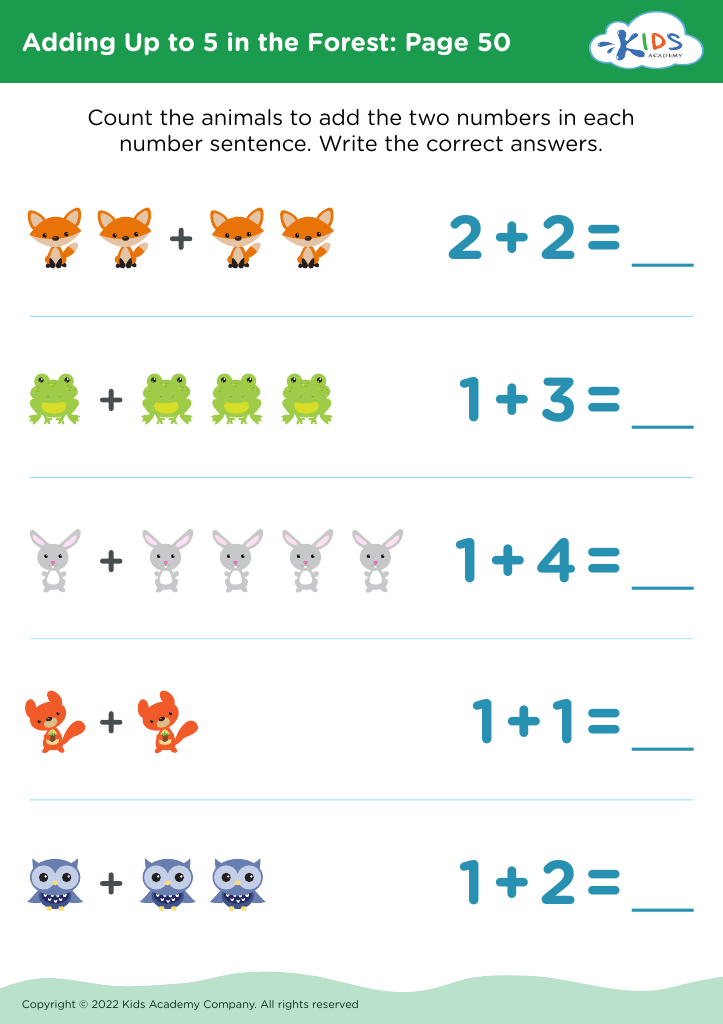
Adding Up to 5 in the Forest: Page 50
Worksheet
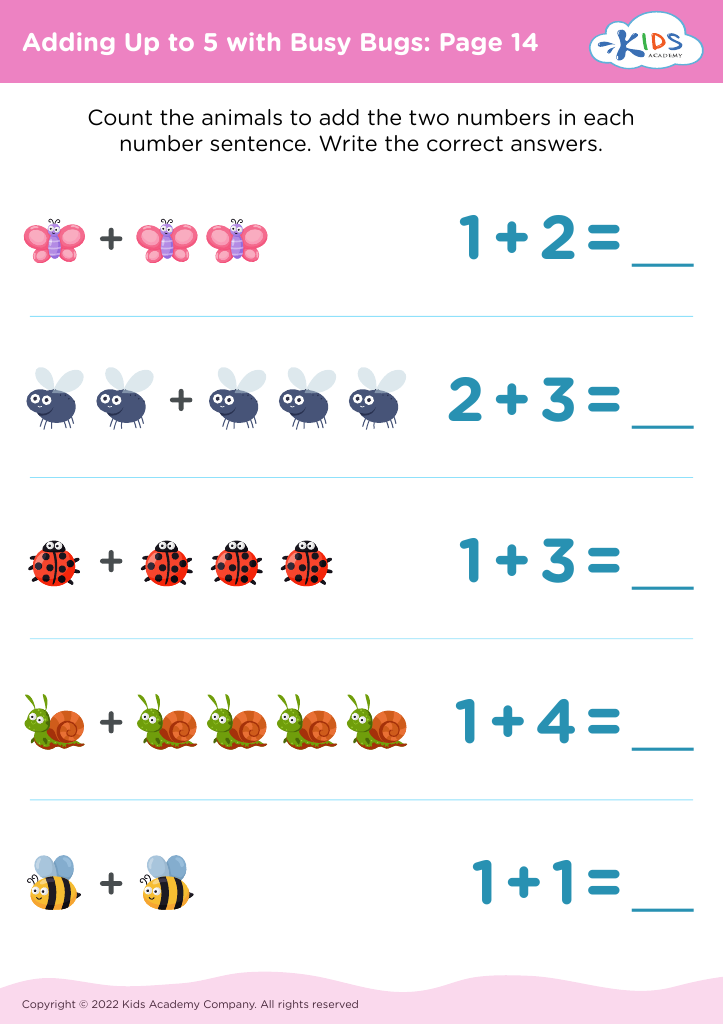
Adding Up to 5 with Busy Bugs: Page 14
Worksheet
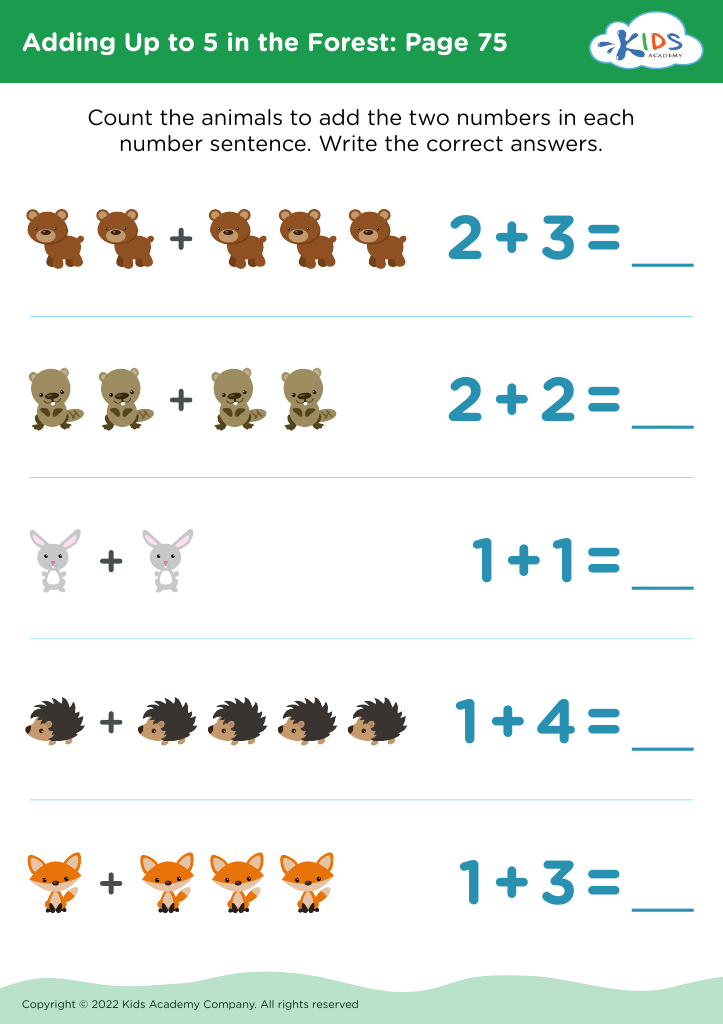
Adding Up to 5 in the Forest: Page 75
Worksheet
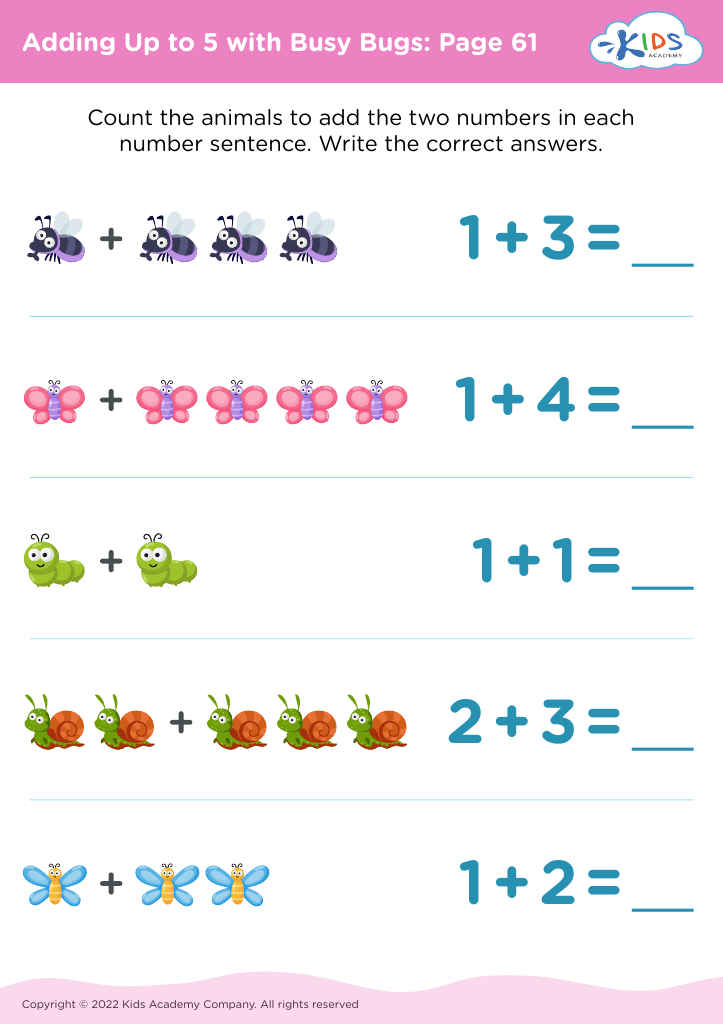
Adding Up to 5 with Busy Bugs: Page 61
Worksheet
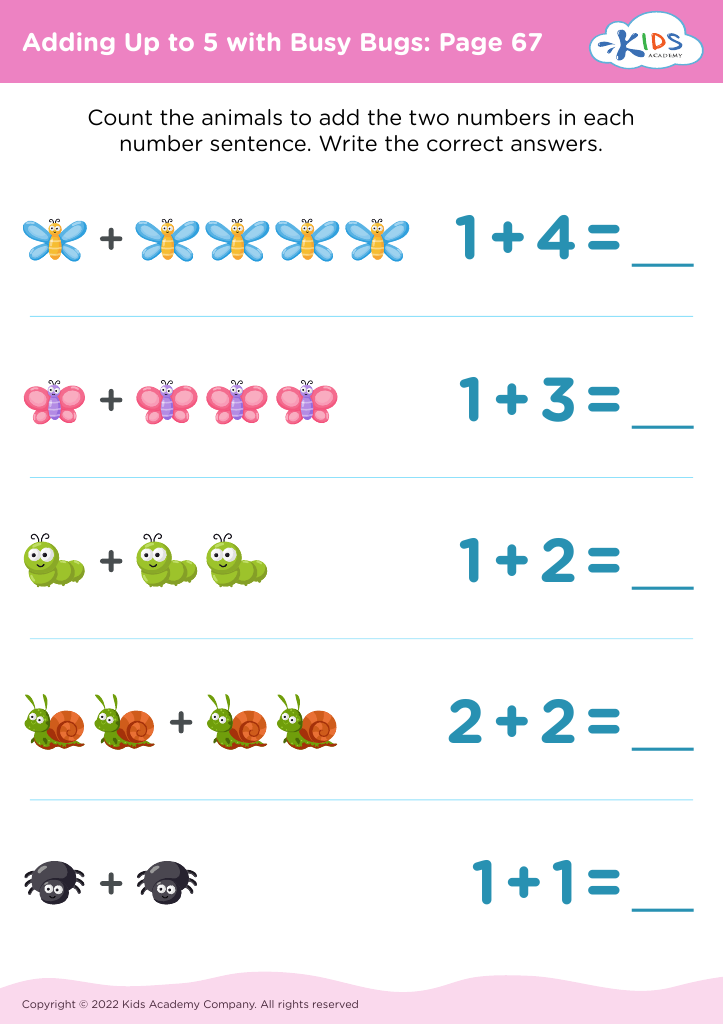
Adding Up to 5 with Busy Bugs: Page 67
Worksheet
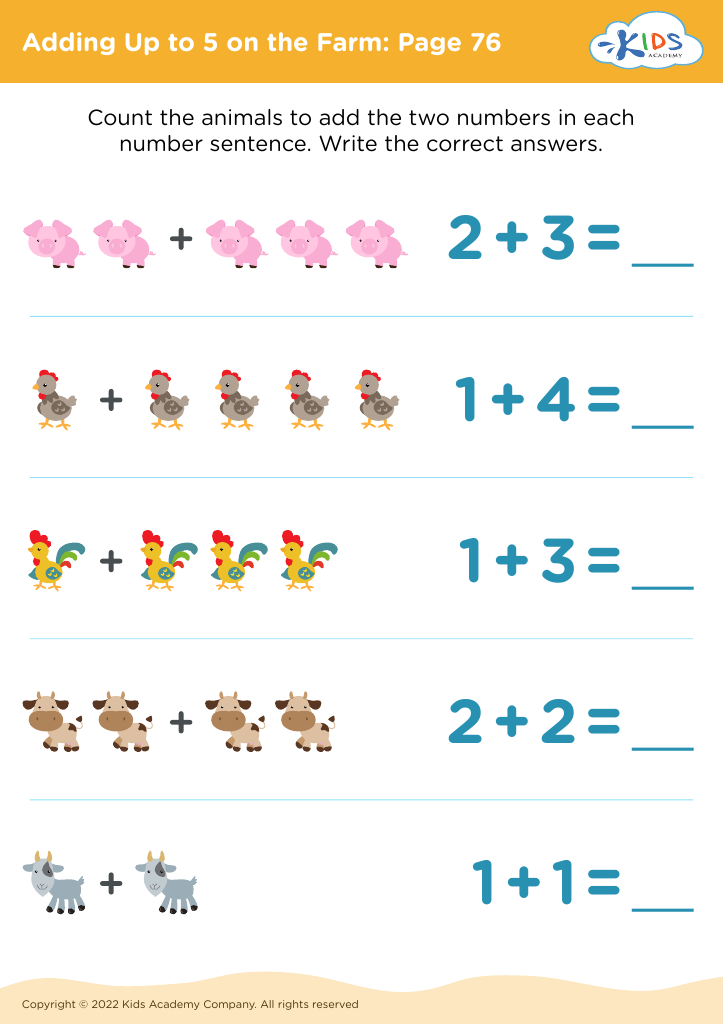
Adding Up to 5 on the Farm: Page 76
Worksheet
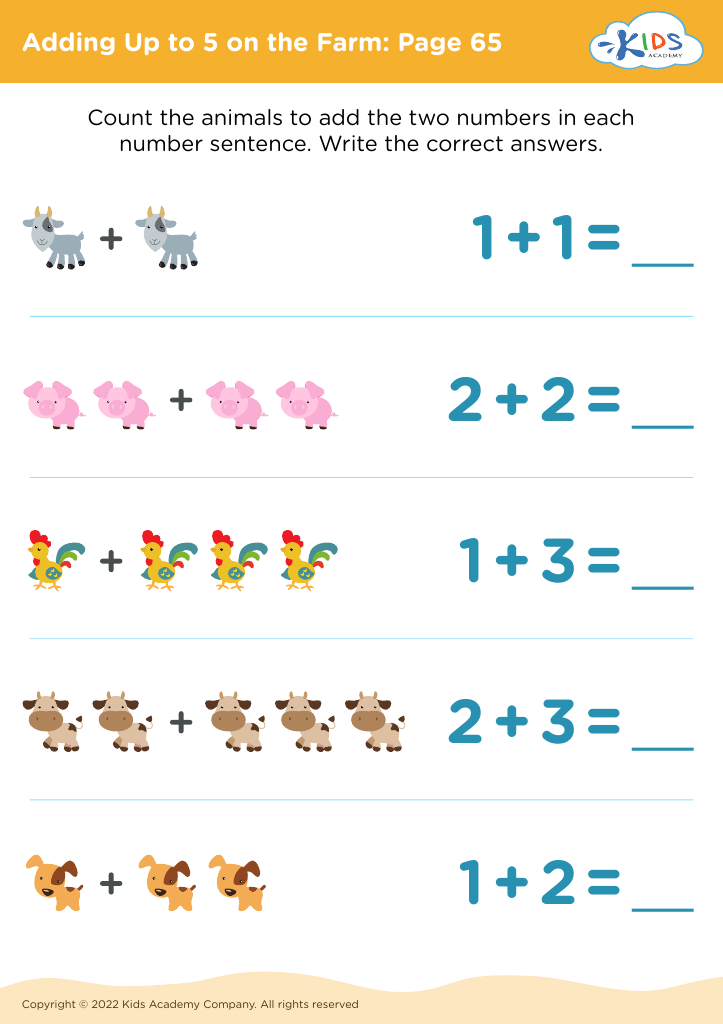
Adding Up to 5 on the Farm: Page 65
Worksheet
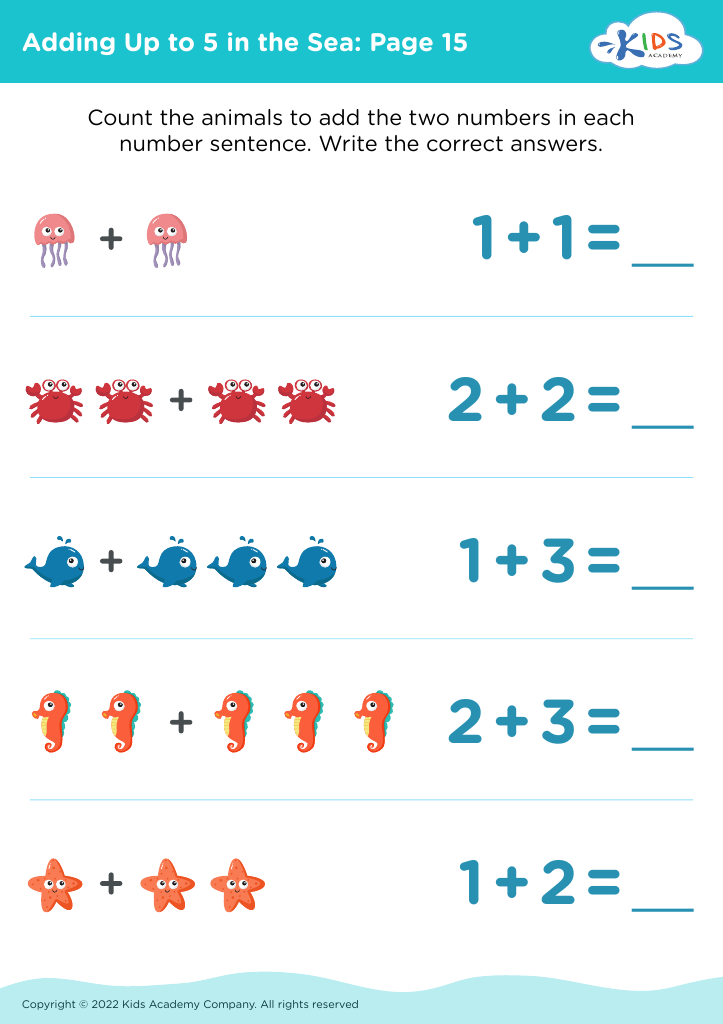
Adding Up to 5 in the Sea: Page 15
Worksheet
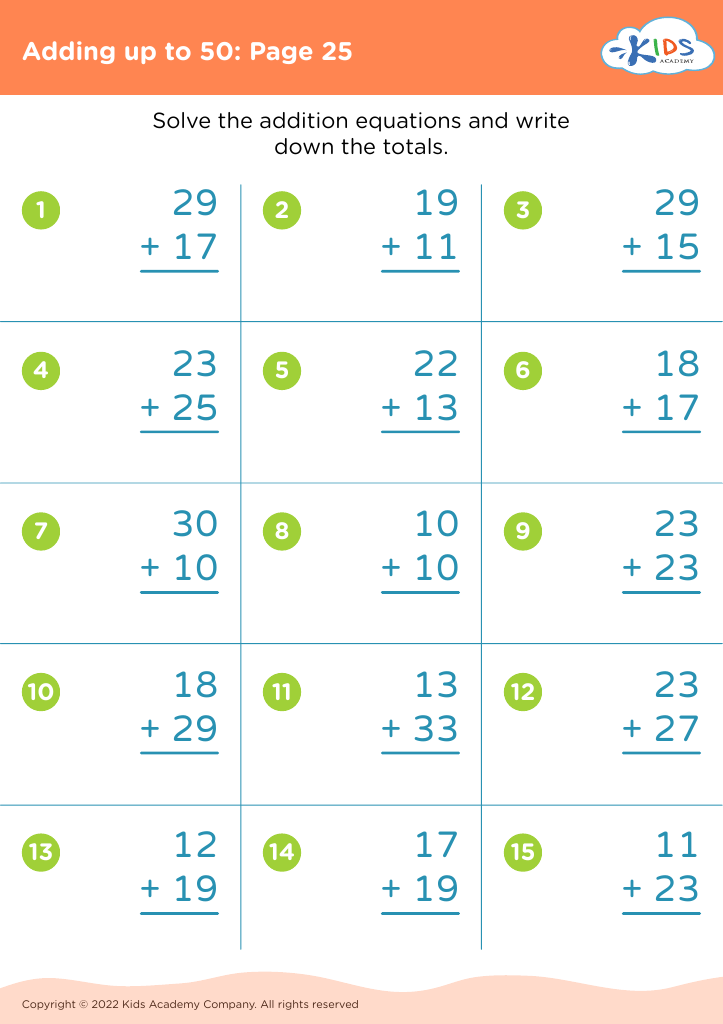
Adding up to 50: Page 25

Adding up to 50: Page 25

Adding up to 50: Page 25
Worksheet
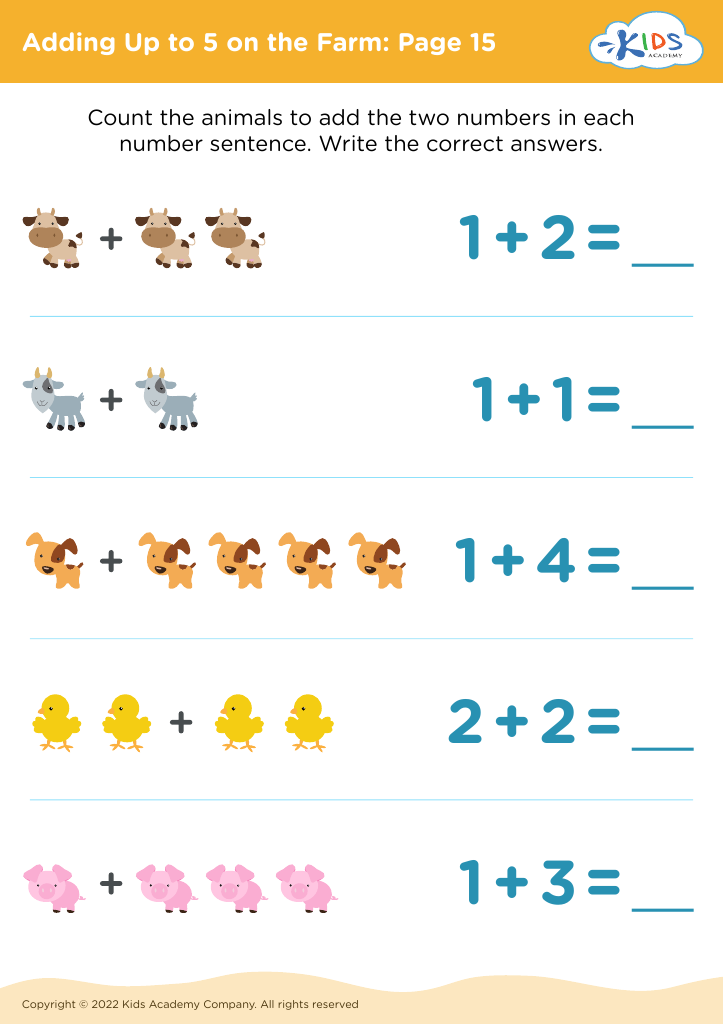
Adding Up to 5 on the Farm: Page 15
Worksheet
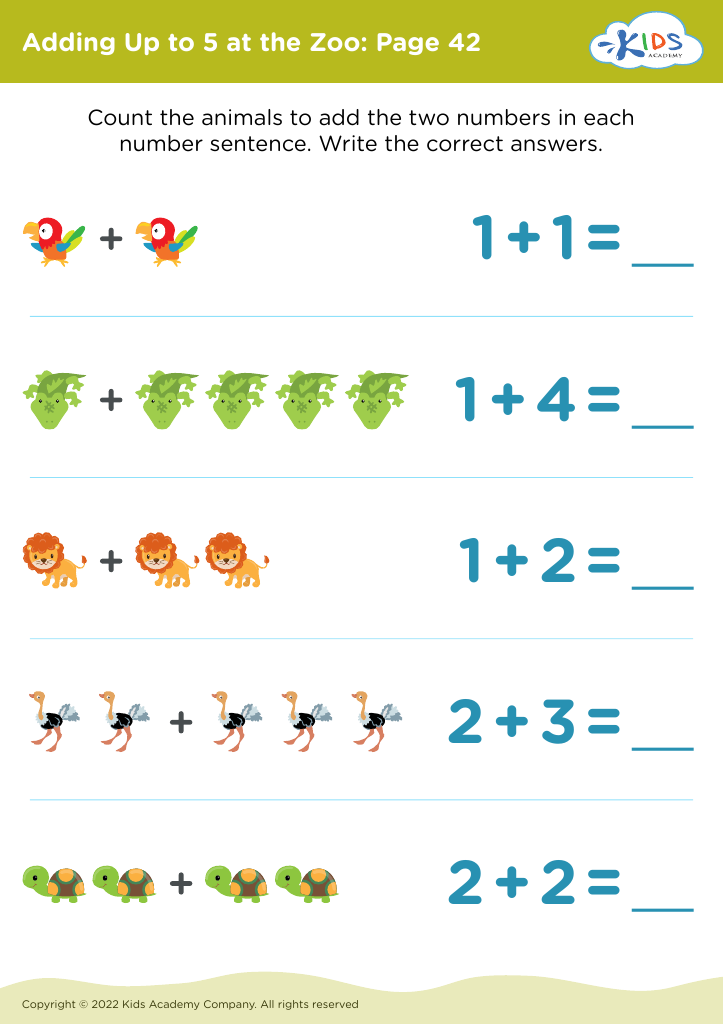
Adding Up to 5 at the Zoo: Page 42
Worksheet
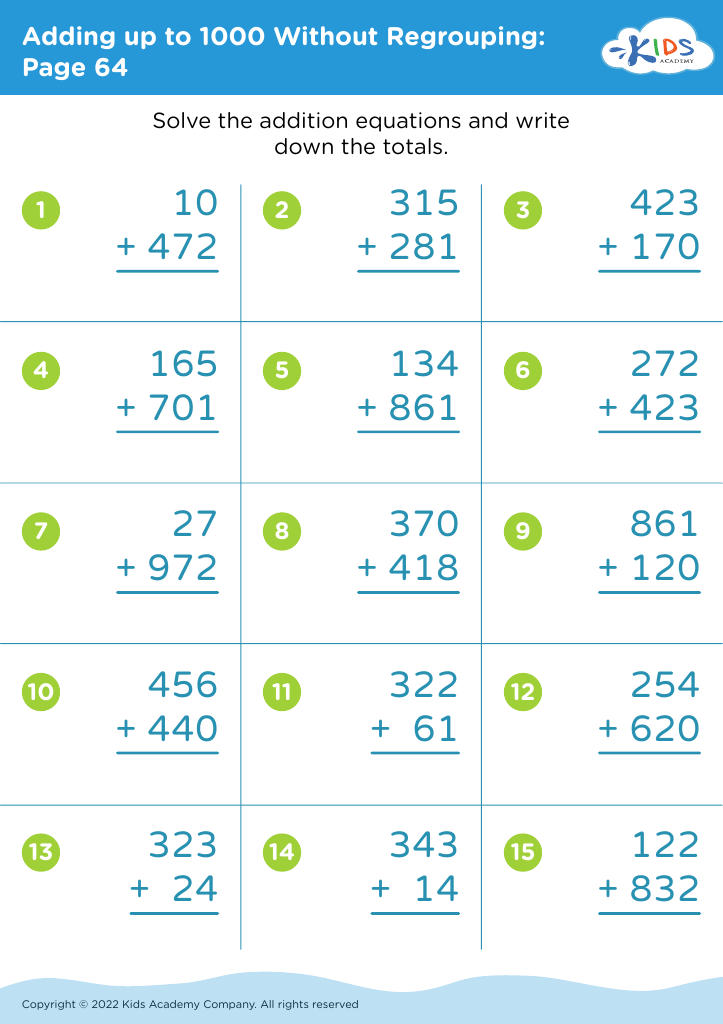
Adding up to 1000 Without Regrouping: Page 64
Worksheet
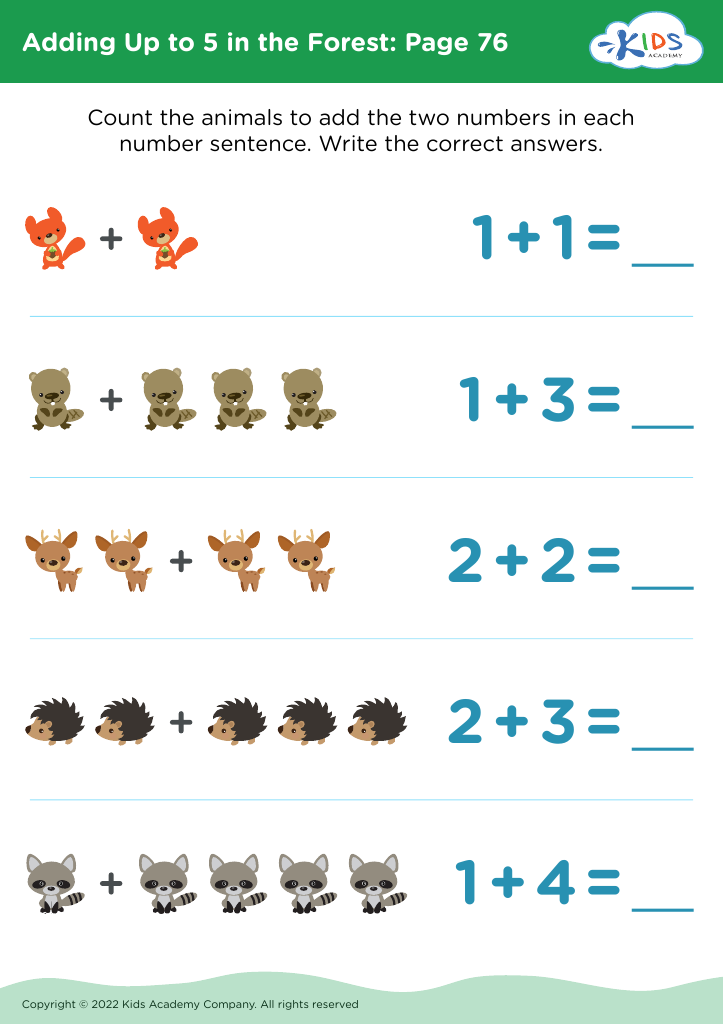
Adding Up to 5 in the Forest: Page 76
Worksheet
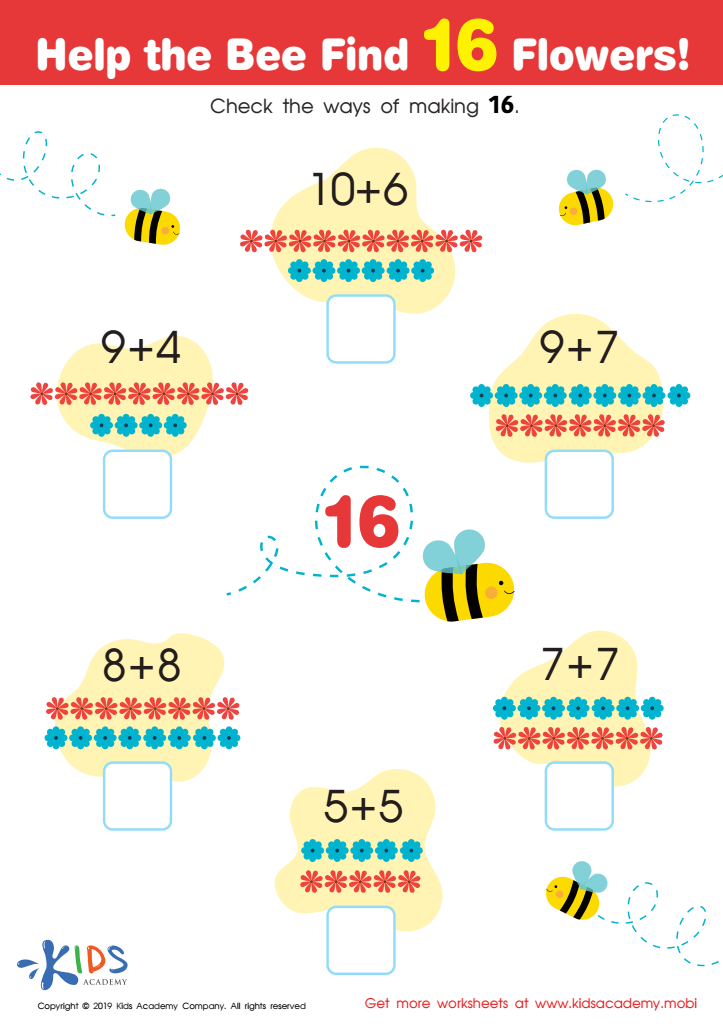
Help the Bee Find 16 Flowers Worksheet

Help the Bee Find 16 Flowers Worksheet

Ask your students to count as high as they can. Show them that different numbers can equal the same figure with examples like 2+2=4 and 3+1=4. Ask for more examples, then help the bees find 16 flowers by checking the ways of making 16.
Help the Bee Find 16 Flowers Worksheet
Worksheet
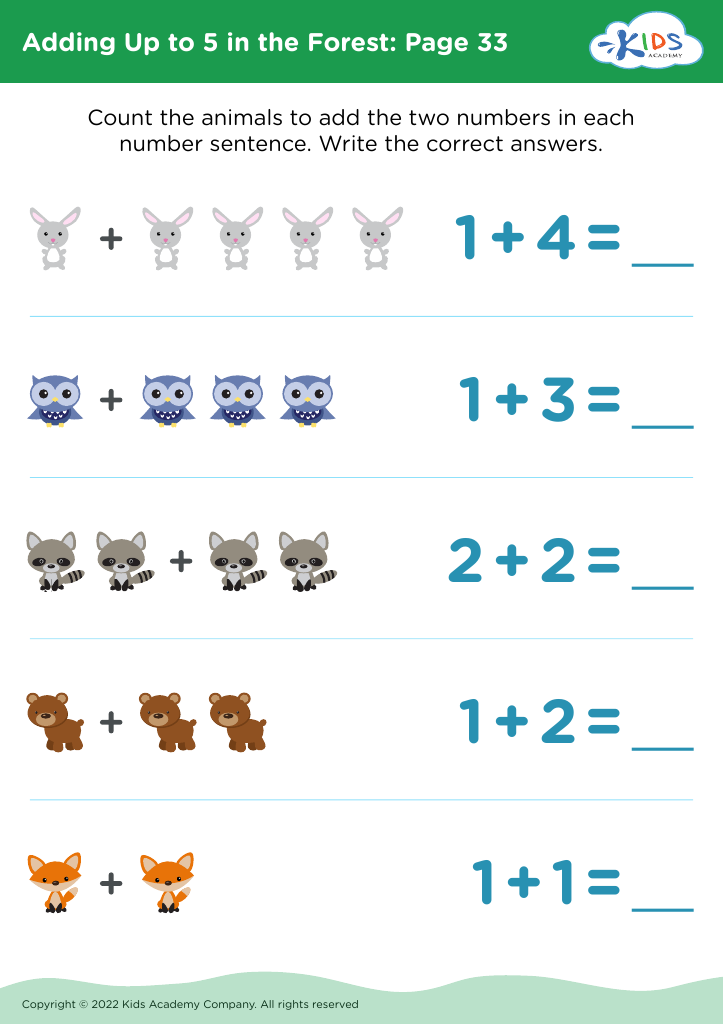
Adding Up to 5 in the Forest: Page 33
Worksheet
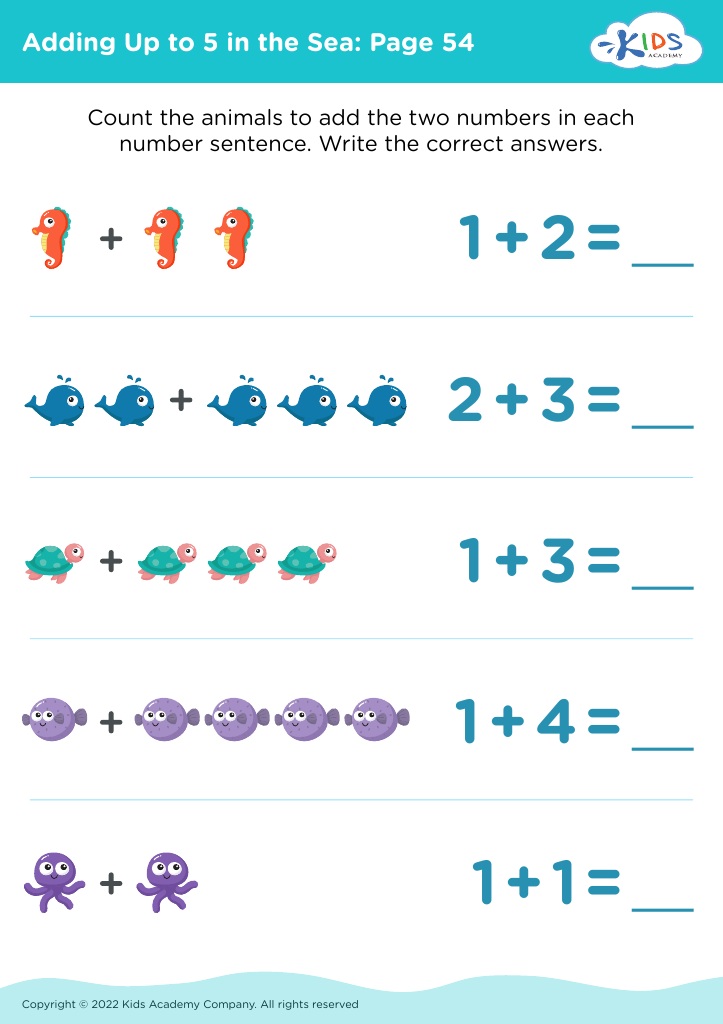
Adding Up to 5 in the Sea: Page 54
Worksheet
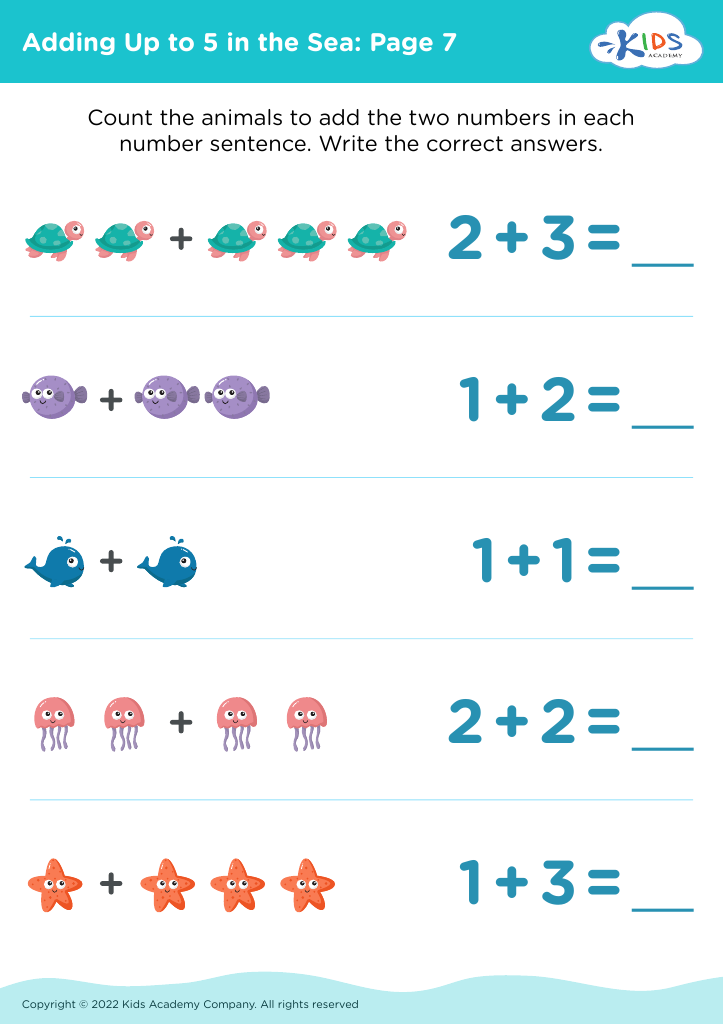
Adding Up to 5 in the Sea: Page 7

Adding Up to 5 in the Sea: Page 7

Adding Up to 5 in the Sea: Page 7
Worksheet
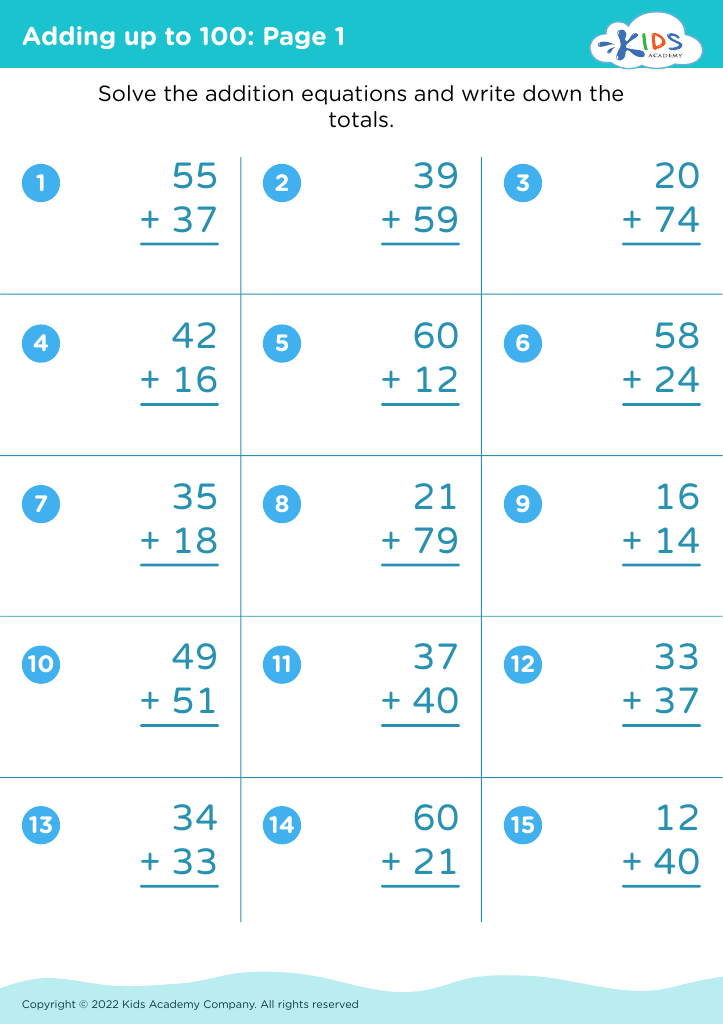
Adding up to 100: Page 1

Adding up to 100: Page 1

Adding up to 100: Page 1
Worksheet
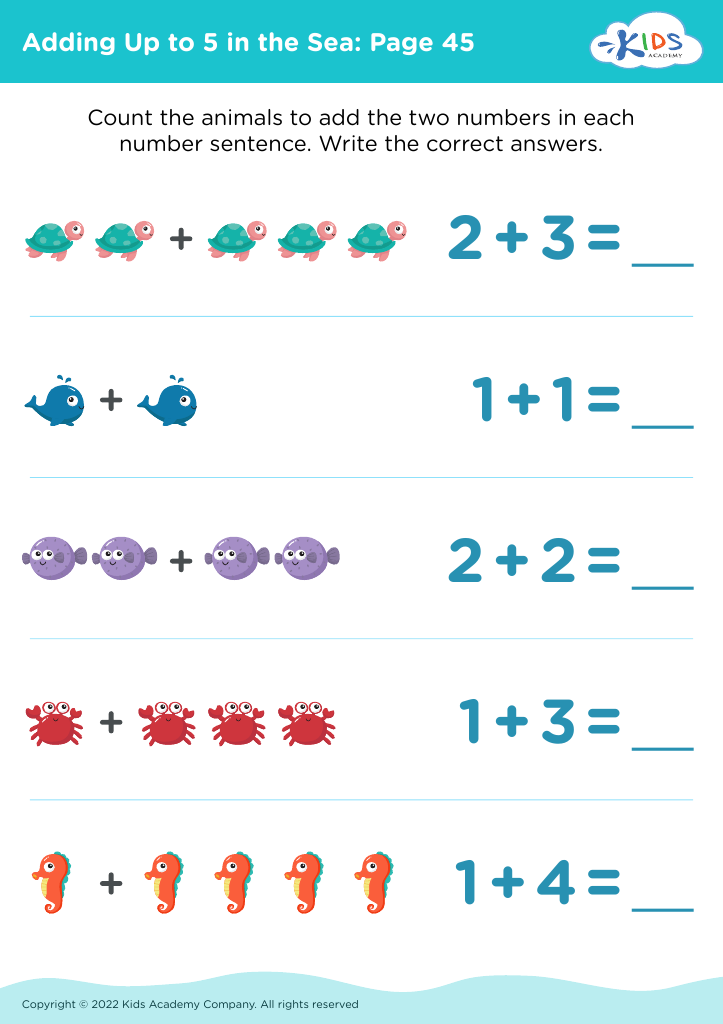
Adding Up to 5 in the Sea: Page 45
Worksheet
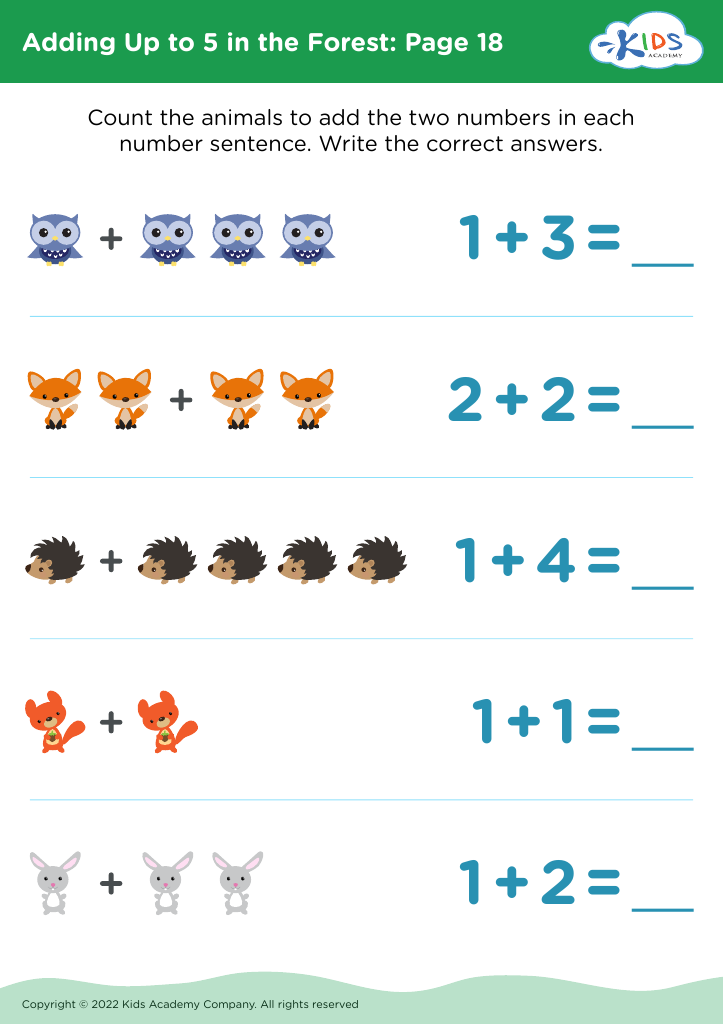
Adding Up to 5 in the Forest: Page 18
Worksheet
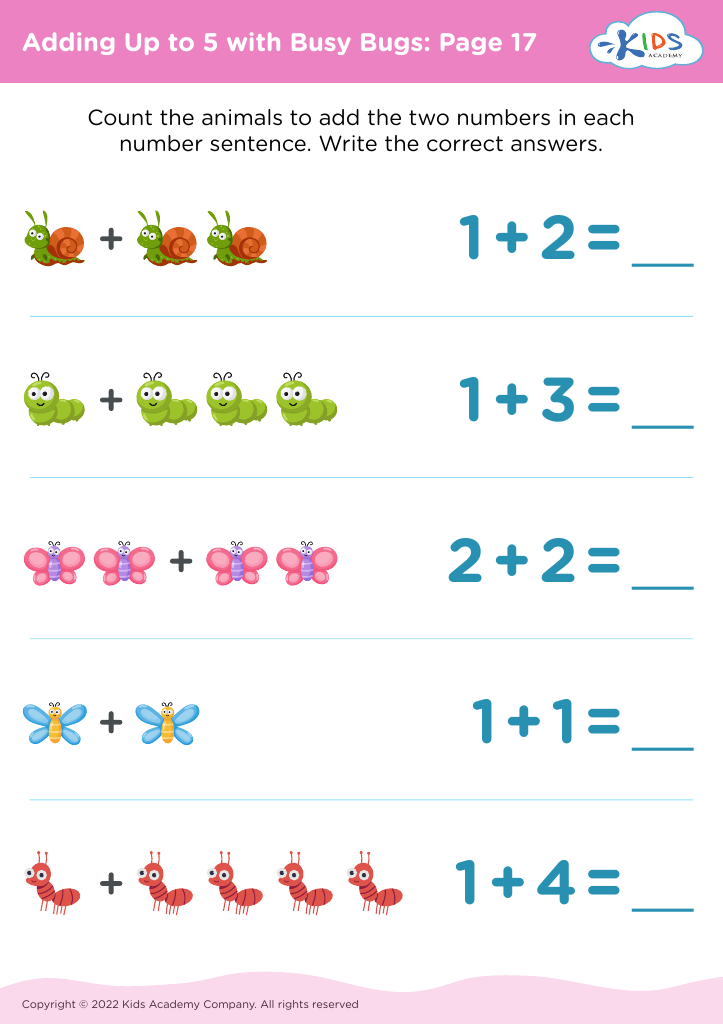
Adding Up to 5 with Busy Bugs: Page 17
Worksheet
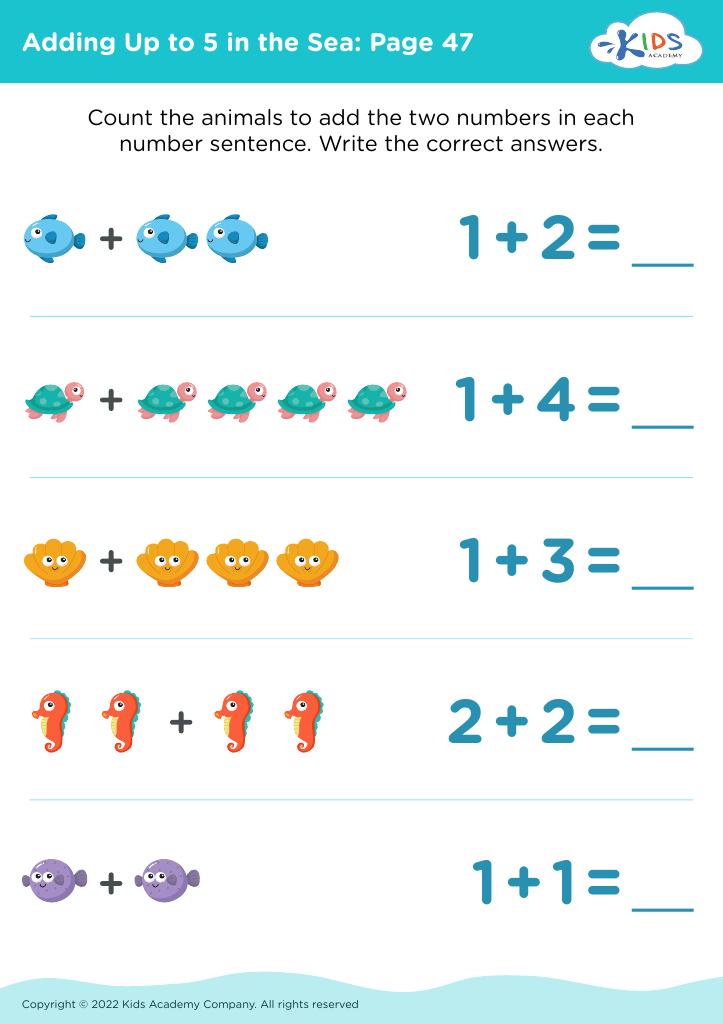
Adding Up to 5 in the Sea: Page 47
Worksheet
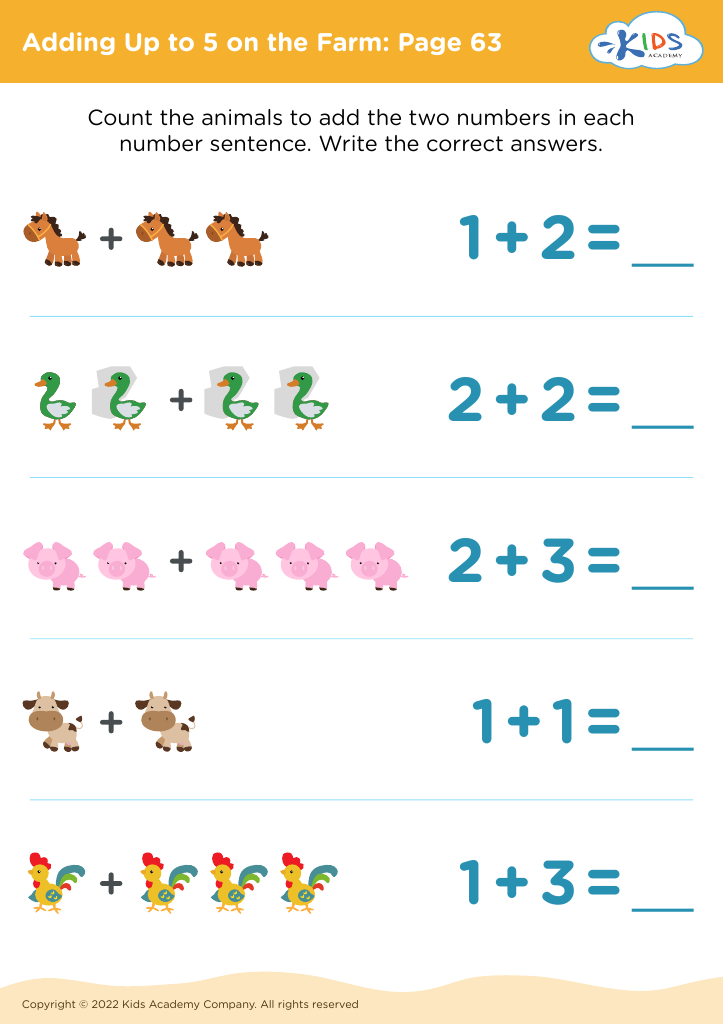
Adding Up to 5 on the Farm: Page 63
Worksheet
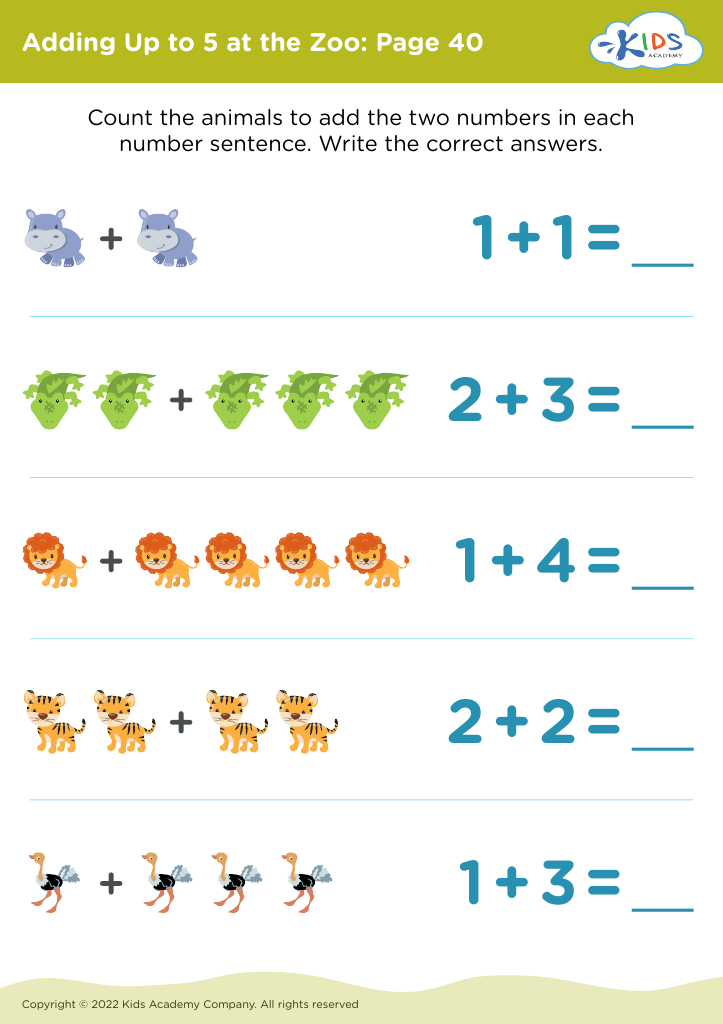
Adding Up to 5 at the Zoo: Page 40
Worksheet


Number recognition and addition are foundational skills for children aged 4-7, forming the cornerstone of their mathematical understanding. At this early stage, children learn to identify numbers and begin to grasp simple addition concepts, which significantly impacts their future academic success. Parents and teachers should prioritize these skills for several reasons.

Firstly, number recognition helps children develop a strong understanding of quantity, setting the stage for more complex mathematical operations later on. When children can identify numbers, they can engage with basic math concepts in everyday situations, enhancing their learning through real-world applications.

Secondly, understanding addition fosters critical thinking and problem-solving abilities. Encouraging young learners to add numbers using visual aids or practical scenarios not only makes learning enjoyable but also reinforces their cognitive development.

Moreover, a solid grasp of these concepts builds confidence. Children who feel competent in their abilities are more likely to participate in math-related activities, influencing their overall attitude toward learning.

Finally, early mastery of number recognition and addition promotes collaboration between parents and teachers. Engaging in these activities together fosters a supportive learning environment that underscores the importance of education, leading to long-term academic commitment and success.