Numeracy development Addition Worksheets for Ages 4-7
3 filtered results
-
From - To
Discover engaging addition worksheets designed specifically for ages 4-7 to boost numeracy development! Our collection features a variety of fun and interactive activities that help young learners grasp essential addition skills in a playful manner. With colorful illustrations and age-appropriate exercises, these worksheets encourage children to practice counting, improve number recognition, and develop their ability to solve simple addition problems. Perfect for use at home or in the classroom, our resources support early math learners in building a solid foundation for future mathematical success. Jumpstart your child’s journey to mastering addition with our exciting and educational worksheets today!
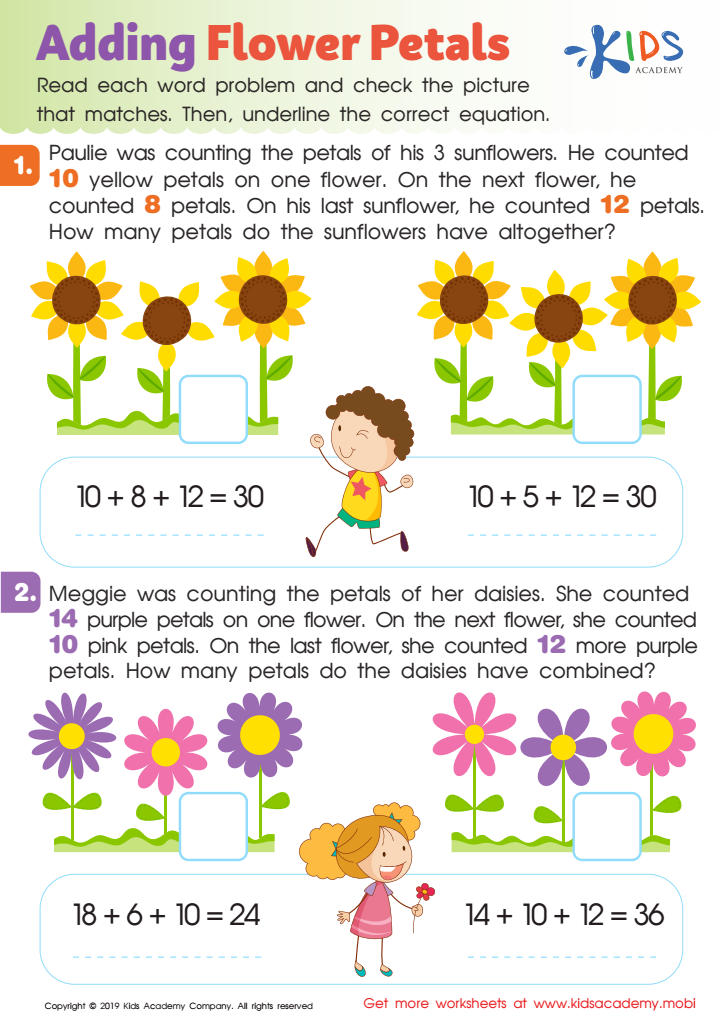
Adding Flower Petals Worksheet
 Assign to My Students
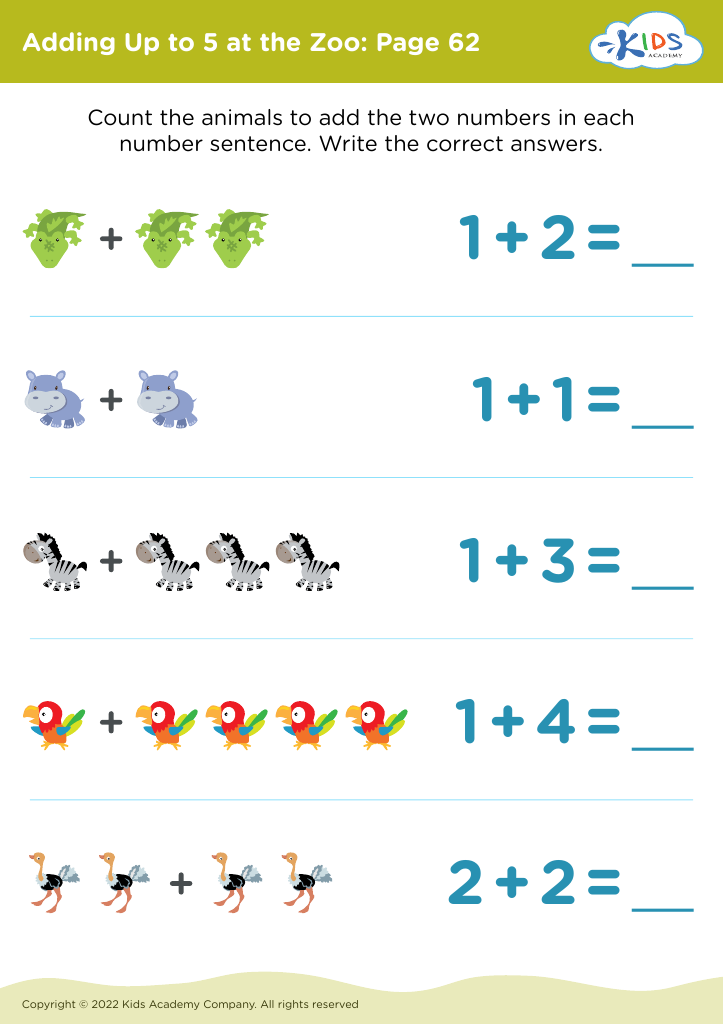
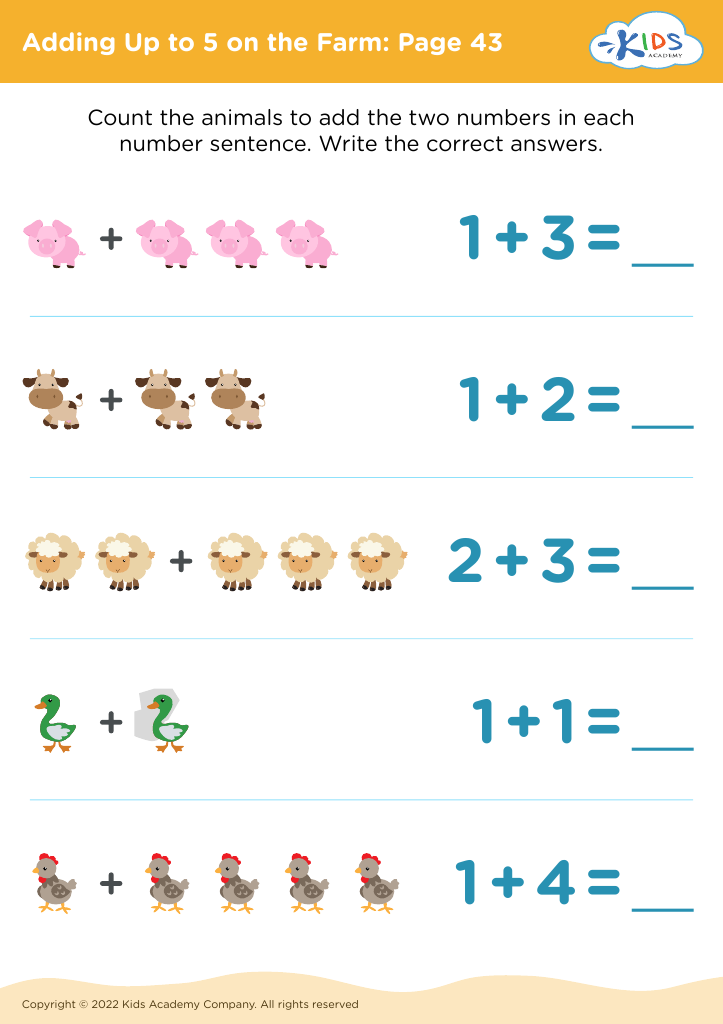








Numeracy development, especially in the area of addition for children aged 4 to 7, is foundational for their overall mathematical understanding and critical thinking skills. This stage of development is crucial as it lays the groundwork for future learning. Parents and teachers should prioritize numeracy because early experiences with numbers can significantly influence a child's confidence and attitude towards math.
Addition is often one of the first mathematical operations children learn and is essential for solving everyday problems. Understanding addition helps children to grasp concepts of quantity, comparison, and relation, fostering their cognitive development. Engaging in activities that promote addition skills can also enhance children's social skills, as they often work collaboratively to solve problems or share strategies.
Furthermore, children who master basic addition are more prepared for advanced mathematical concepts they will encounter later in school. This reduces the risk of math anxiety and builds a positive learning environment in both home and school settings. By focusing on addition during these formative years, parents and teachers can ensure that children develop strong numeracy foundations, encouraging lifelong learning and success in mathematics. Through interactive play and structured learning, they can cultivate a sense of achievement and curiosity towards numbers.








