
Observational skills Addition Worksheets for Ages 4-7
5 filtered results
Difficulty Level
Grade
Age
-
From - To
Subject
Activity
Standards
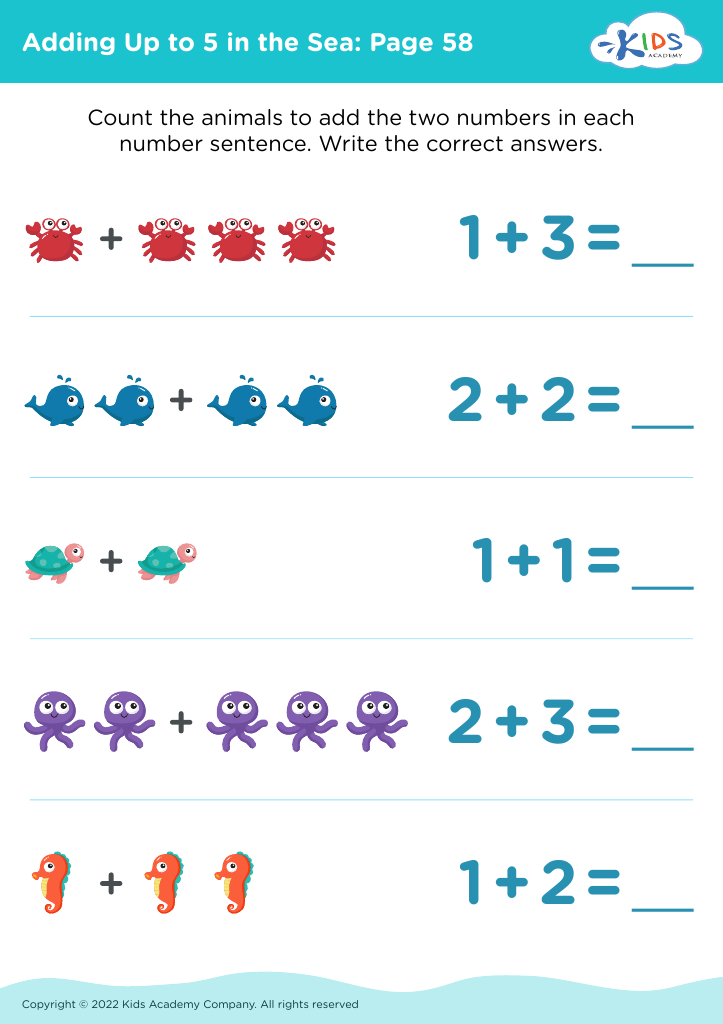
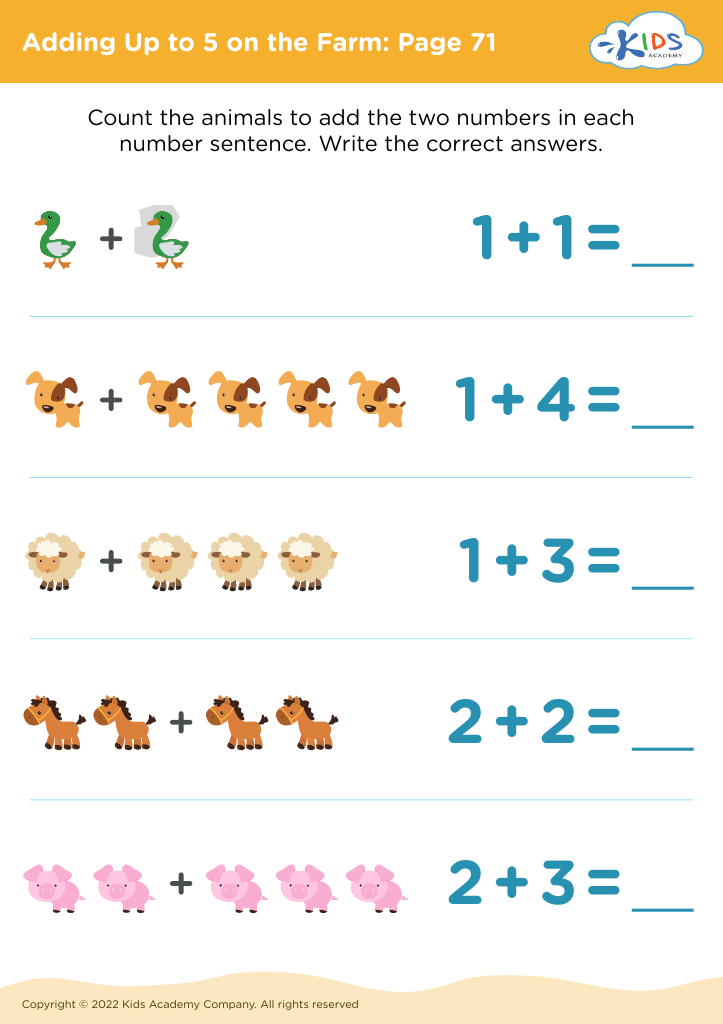
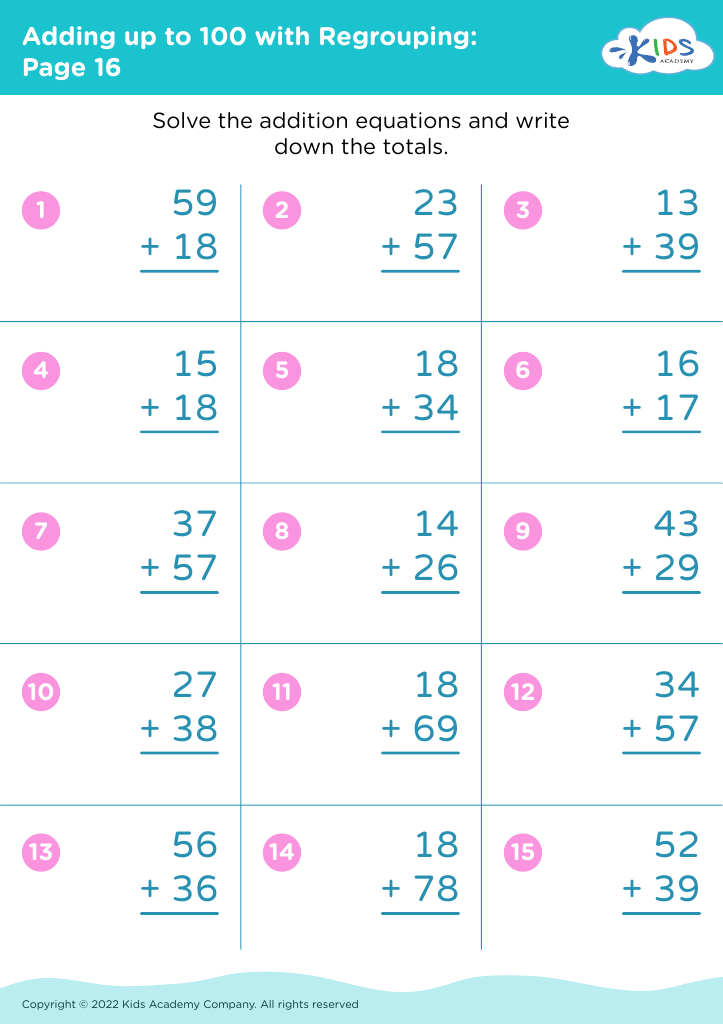
Enhance your child's learning experience with our Observational Skills Addition Worksheets designed specifically for ages 4-7. These engaging worksheets help young learners strengthen their mathematical understanding and observational skills through fun exercises. By observing and analyzing various images, children will practice addition in a creative way, making math enjoyable! Our worksheets promote critical thinking, improve attention to detail, and build a solid foundation for future math success. Each activity is crafted to suit various learning styles, ensuring every child can thrive. Discover the perfect blend of education and entertainment, giving your child the tools they need for confident arithmetic skills!
Favorites
With answer key
Interactive
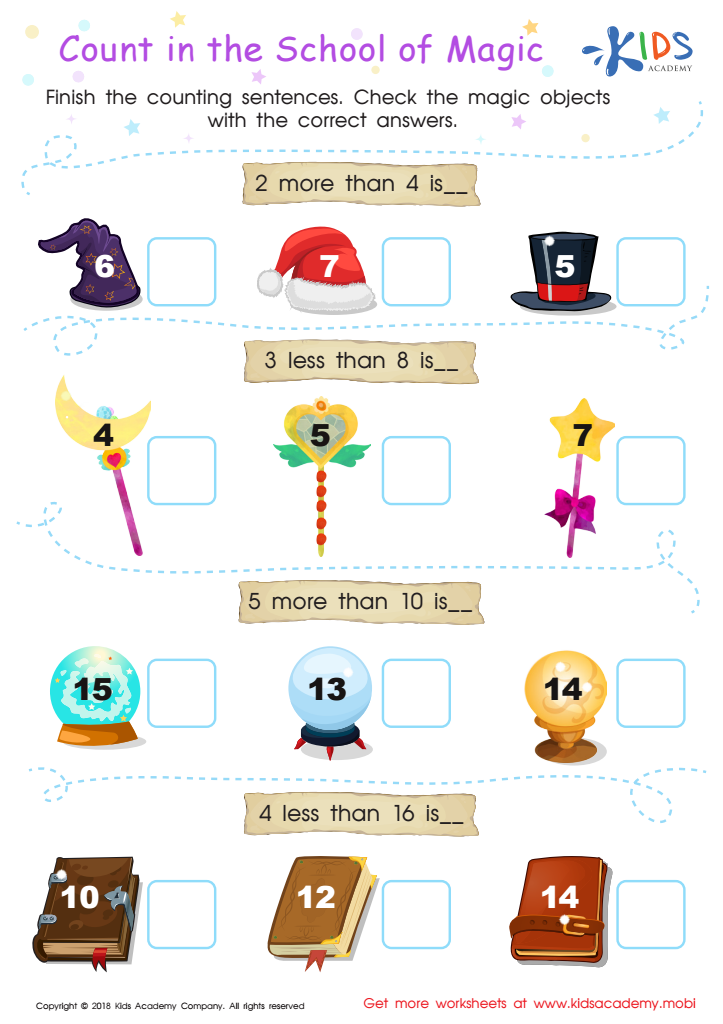
Count in the School of Magic Worksheet
Your math learners can explore the School of Magic with this worksheet. They'll read equations with addition and subtraction numbers under 20, count back and forth to find the answer, then complete the counting sentences. Fun pictures and easy accuracy make it an enjoyable and successful learning experience.
 Assign to My Students
Count in the School of Magic Worksheet
Worksheet
Join Kids Academy for Free
Who is primarily going to use this learning content?








Developing observational skills in children aged 4-7 is vital for several reasons, making it crucial for both parents and teachers to prioritize this aspect of learning. Observational skills lay the foundation for critical thinking, problem-solving, and adaptability. Young children learn primarily through exploration and understanding their surroundings; by honing their observational skills, they enhance their ability to notice details, make connections, and engage with the world meaningfully.
These skills are particularly important in addition, as they can help children recognize patterns, sequences, and relationships, which are essential in developing early math concepts. For instance, children who can observe quantities and differentiate between them will understand basic addition better and more intuitively. Moreover, strong observational skills encourage curiosity and can lead to a deeper love for learning.
By fostering these skills in informal settings—like nature walks, everyday conversations, or playful activities—parents and teachers can create an engaging learning environment. This holistic approach not only strengthens foundational academic abilities but also builds emotional intelligence, as children learn to observe and understand their peers and social situations better, paving the way for collaboration and communication skills crucial for lifelong success.








