Practice counting Addition Worksheets for Ages 4-7
6 filtered results
-
From - To
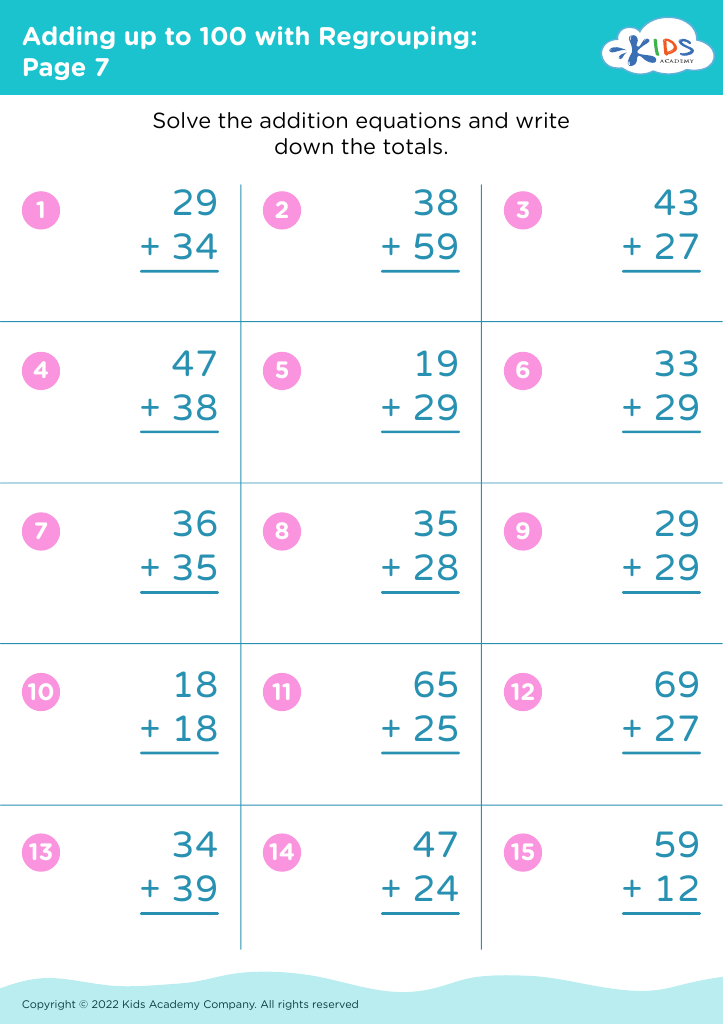
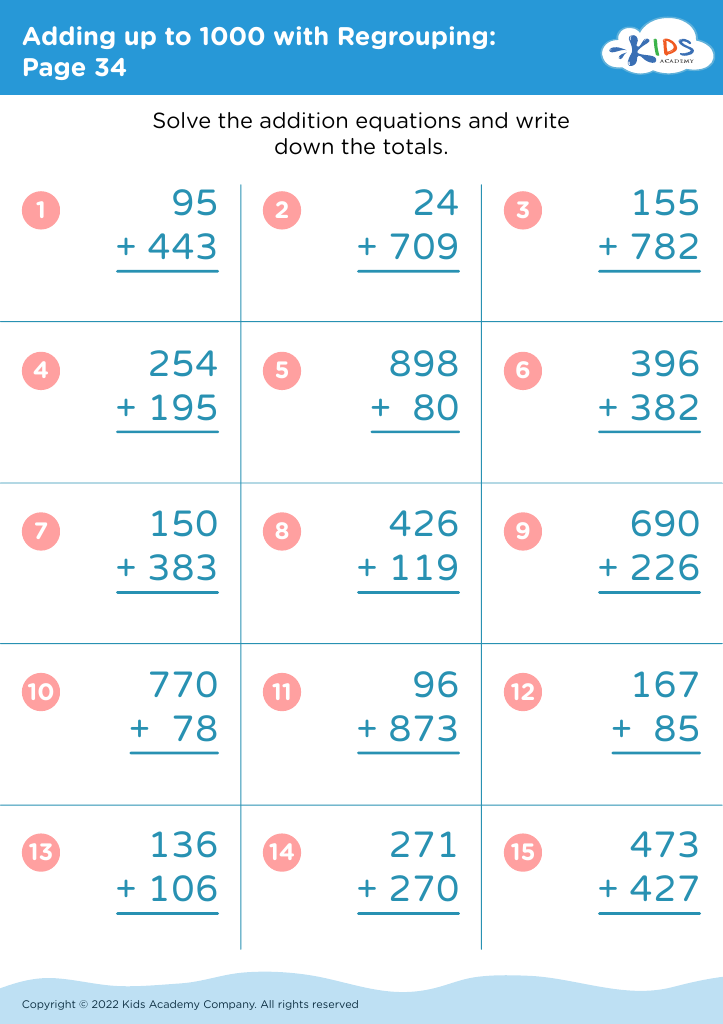
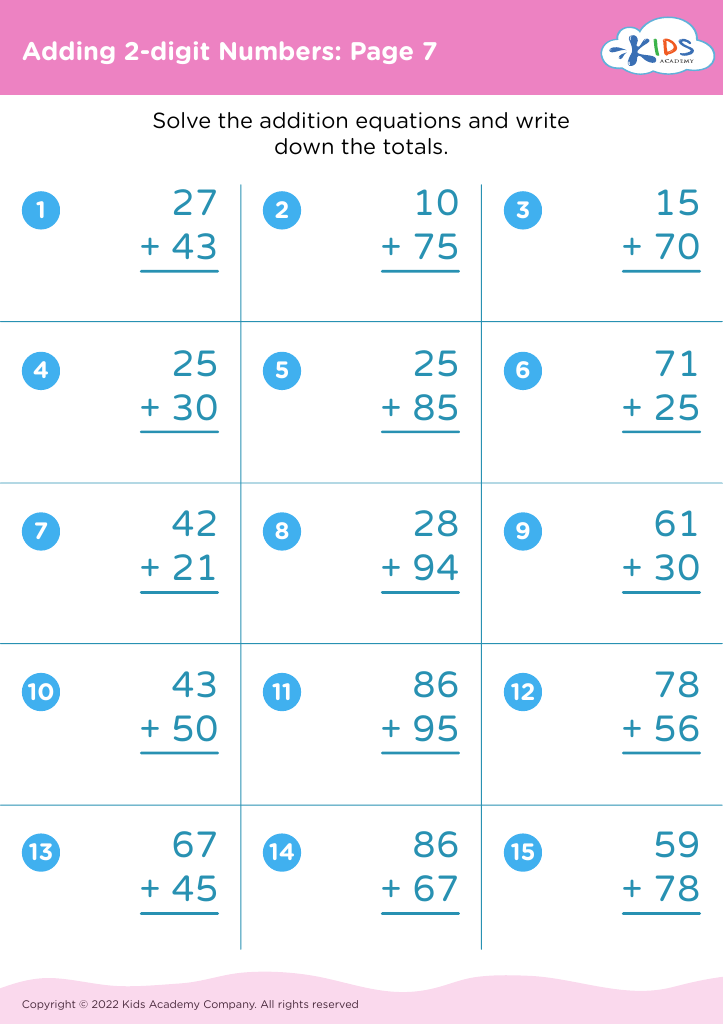
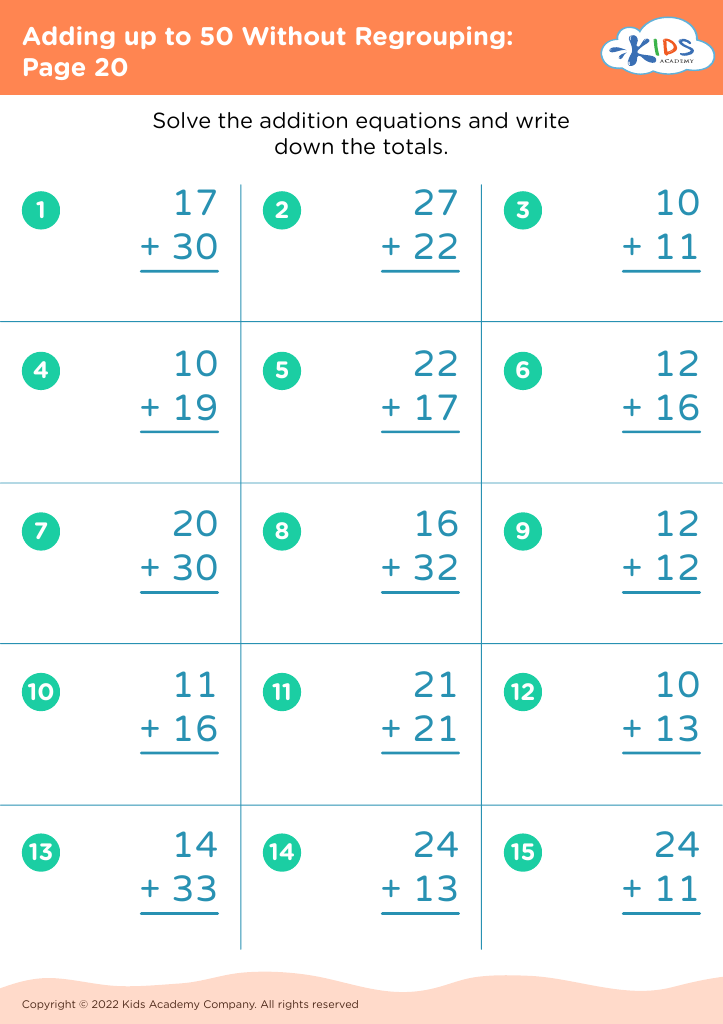
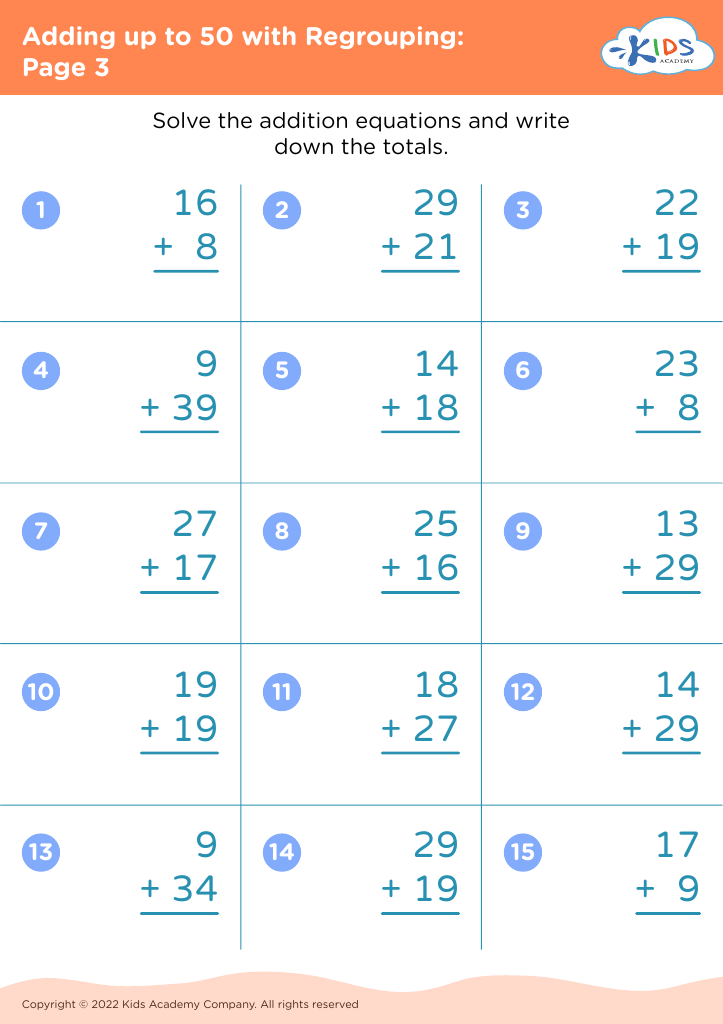
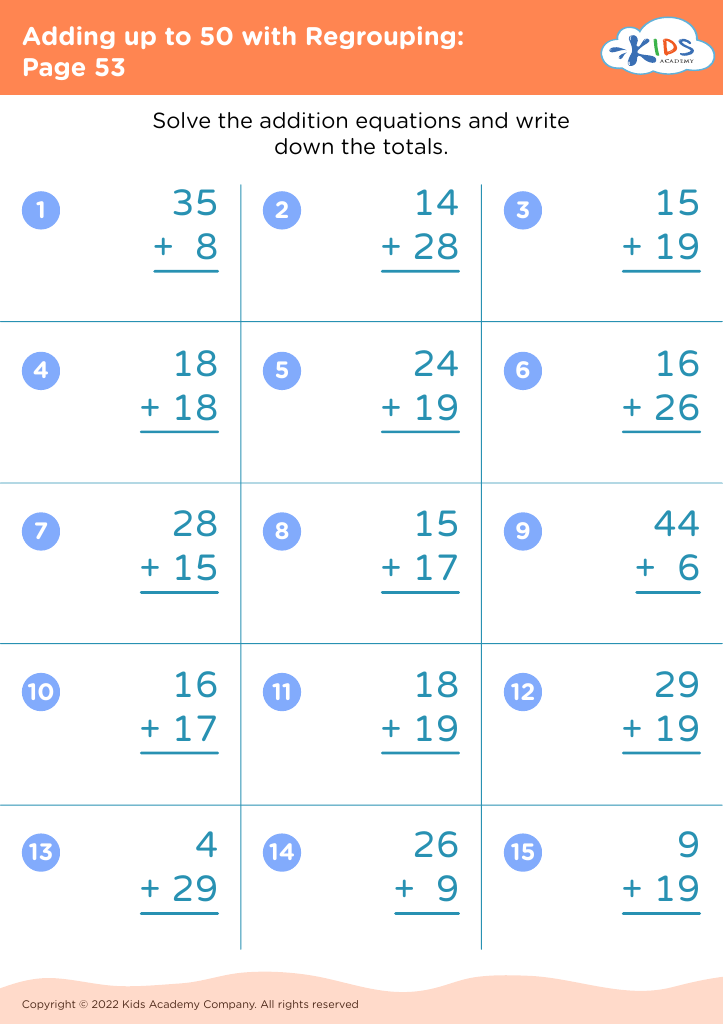
Discover our engaging addition worksheets designed for children aged 4-7. These interactive resources provide a fun way to practice counting and develop basic math skills. Each worksheet features colorful illustrations and age-appropriate challenges that make learning enjoyable and effective. With various exercises, kids will enhance their ability to add and count confidently, reinforcing their foundational math knowledge. Perfect for classroom use or at-home practice, our addition worksheets encourage young learners to explore numbers in a creative setting. Download now and help your child master counting while building a strong mathematical foundation for future success!


.jpg)

.jpg)



Counting and addition are foundational skills for young learners, making it crucial for parents and teachers to focus on these areas for children aged 4-7. Early proficiency in counting lays the groundwork for more complex mathematical concepts. As children engage in counting and simple addition, they not only develop numeric skills but also enhance cognitive abilities such as problem-solving and critical thinking.
During this stage, kids are naturally curious and eager to explore numbers, making it an ideal time to introduce them to addition. Practicing counting addition through fun activities and games helps embed these concepts more deeply in their minds. Additionally, it fosters a love for learning and a positive attitude toward mathematics, reducing anxiety about the subject in later years.
Parents and teachers play a key role by providing supportive environments that encourage practice. Collaborative learning experiences, such as counting objects at home or playing educational math games, reinforce these skills and promote parent-child or teacher-student bonding. Moreover, mastering these early math skills contributes to better academic performance in school. Overall, prioritizing counting and addition practice for children aged 4-7 sets them on a path to success in mathematics and boosts their confidence in their abilities.








