Recognizing equivalent fractions Addition Worksheets for Ages 4-7
5 filtered results
-
From - To
Welcome to our "Recognizing Equivalent Fractions Addition Worksheets" designed for children aged 4-7. These engaging worksheets aim to build essential math skills by helping young learners identify and understand equivalent fractions in addition contexts. Through fun activities and colorful illustrations, children will explore fractions in a way that resonates with their developmental stage. Our resources not only make math enjoyable but also enhance critical thinking and problem-solving skills. Perfect for classroom exercises or home practice, these worksheets provide a valuable opportunity for early learners to master the foundational concepts of fractions. Start their educational journey with us today!
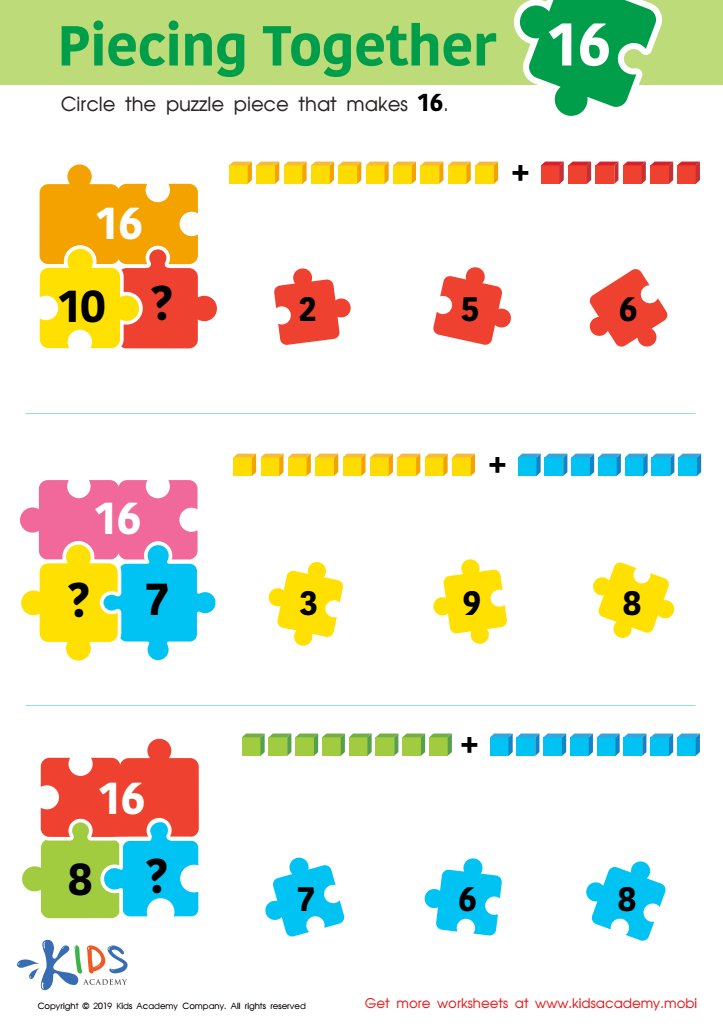
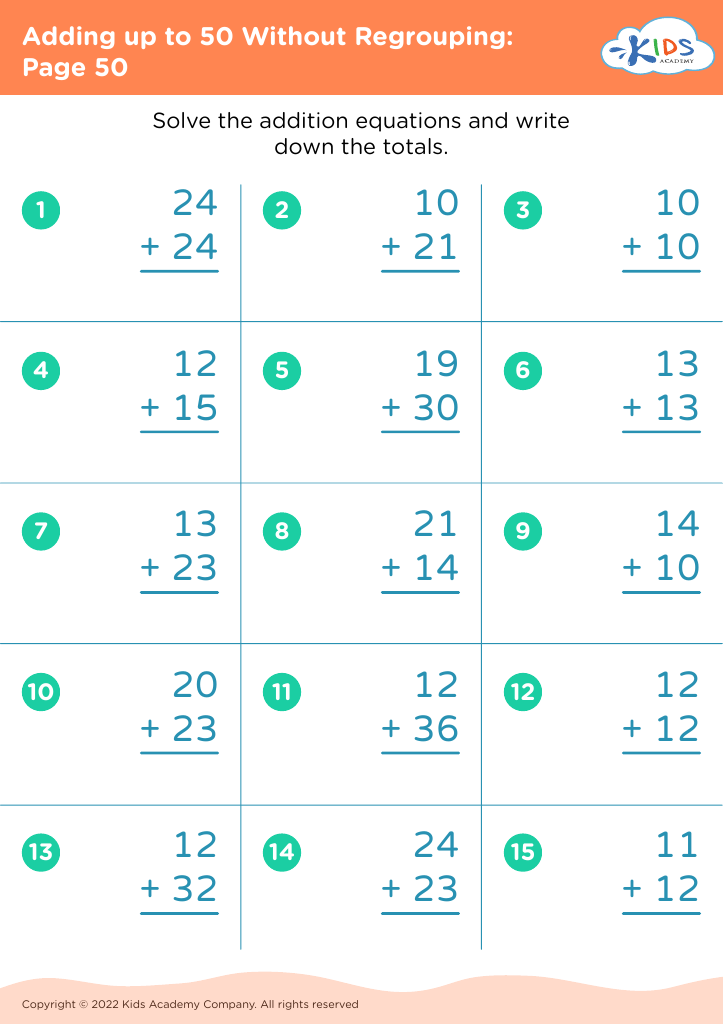
Piecing Together 16 Worksheet
 Assign to My Students






.jpg)
Recognizing equivalent fractions is fundamental for young learners aged 4-7, as it forms a building block for understanding more complex mathematical concepts. For parents and teachers, it is essential to instill a strong foundation in addition and sharing concepts right at this stage. Understanding equivalent fractions helps children grasp the idea that different fractions can represent the same part of a whole, promoting flexibility in thinking.
When children learn to recognize and create equivalent fractions, they develop critical skills such as problem-solving and analytical thinking. This knowledge is particularly valuable when it comes to addition and combining fractions, a skill they'll encounter later in their educational journey. Early mastery of these concepts can mitigate math anxiety and foster a positive attitude toward the subject.
Engaging activities, like using visual aids or real-life examples (like sharing pizza), make learning enjoyable and relevant. Additionally, when parents and teachers emphasize the topic, they reinforce its importance, helping students appreciate the interconnectedness of mathematical ideas. By prioritizing recognition of equivalent fractions from a young age, caregivers can pave the way for successful mathematical understanding in the future, ensuring students are well-equipped with essential skills as they progress through their education.








