Understanding addition Addition Worksheets for Ages 4-7
7 filtered results
-
From - To
Welcome to our "Understanding Addition" worksheets, designed specifically for children ages 4-7! Engaging young learners, these worksheets provide a fun and interactive way to grasp basic addition concepts. Through colorful visuals and relatable examples, kids will explore the fundamentals of combining numbers, enhancing their mathematical skills in a supportive environment. Our carefully crafted activities promote critical thinking and problem-solving, ensuring that each child develops confidence in their ability to work with numbers. Ideal for classroom settings or at-home learning, these addition worksheets make math enjoyable and accessible. Begin your child's journey toward math mastery today!
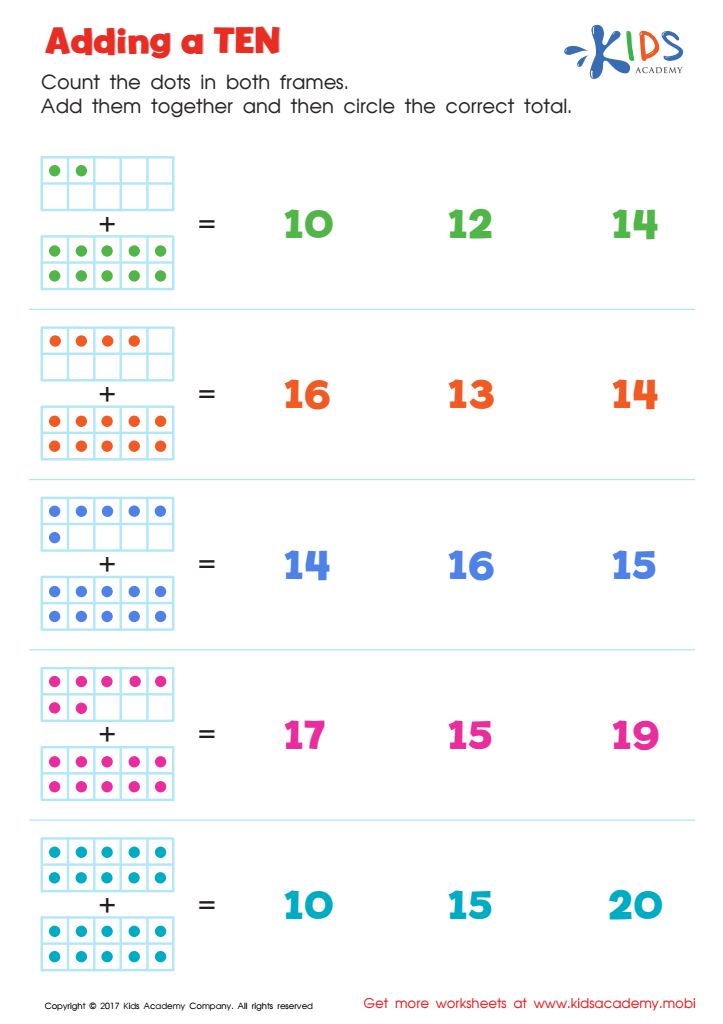
Adding a Ten Worksheet
 Assign to My Students
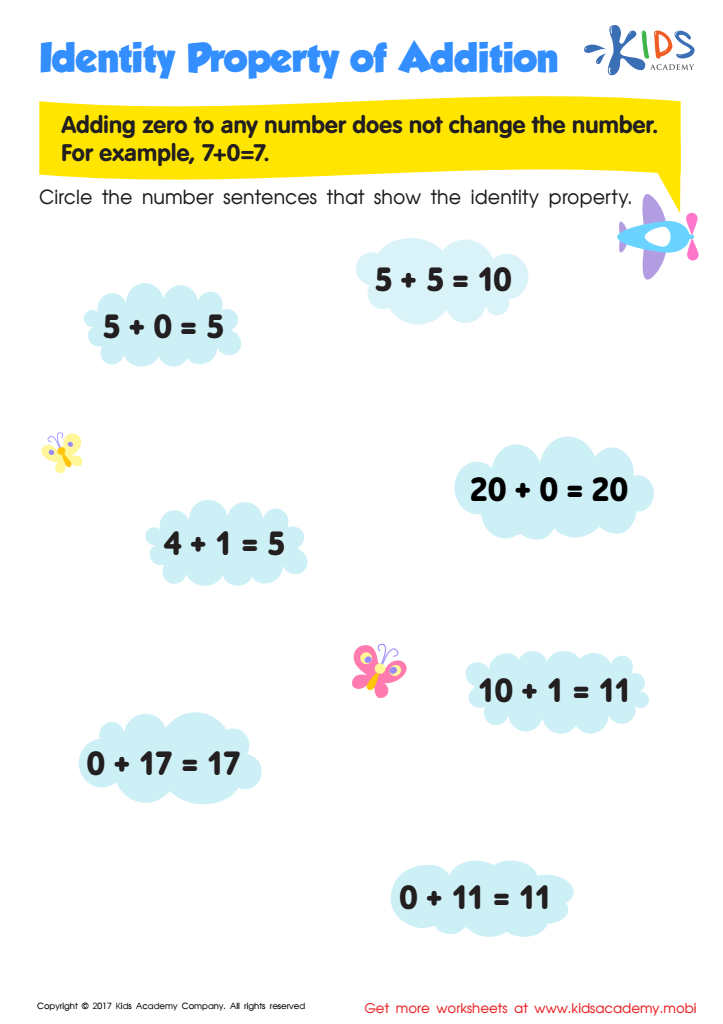
Identity Property of Addition Worksheet
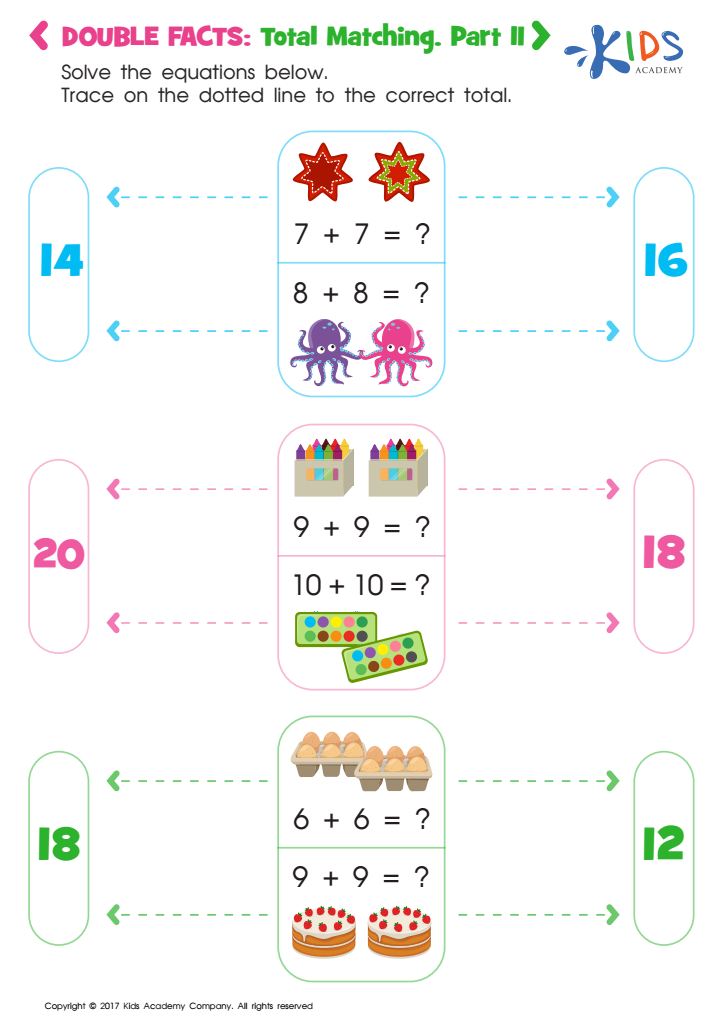
Double Facts: Total Matching 2 Worksheet








Understanding addition is crucial for children aged 4-7 as it forms the foundation for their future mathematical abilities. At this developmental stage, children are naturally curious and explore numerical concepts through play, storytelling, and everyday activities. A strong grasp of addition helps them make sense of the world around them, aiding in problem-solving skills and logical reasoning.
Parents and teachers should prioritize teaching addition because it enhances cognitive development. Mastery of addition fosters confidence in children's abilities, encouraging a positive attitude towards math and learning. Additionally, understanding addition lays the groundwork for more complex math skills they will encounter later, such as subtraction, multiplication, and division.
Engaging activities and practical applications of addition can also strengthen a child's social skills, as they often work collaboratively in groups during math games. By showing enthusiasm for addition, adults can instill a lifelong love for learning. Moreover, solid early math skills have been linked to improved academic performance across various subjects.
Ultimately, grasping addition empowers children with critical life skills, enables them to navigate everyday situations, and prepares them for educational success. Thus, parents and teachers play a vital role in nurturing these skills during these formative years.








