Understanding number sequence Addition Worksheets for Ages 4-7
3 filtered results
-
From - To
Our "Understanding Number Sequence Addition Worksheets" for ages 4-7 are designed to spark a love for math in young learners. These engaging activities help children grasp fundamental addition concepts by exploring number sequences in a fun and interactive way. Perfect for both classroom and at-home learning, these worksheets encourage kids to build confidence in their math skills while making learning enjoyable. With colorful and age-appropriate exercises, young minds will develop a solid foundation in addition, fostering their numerical fluency and preparing them for more advanced math challenges. Start your child's journey towards math proficiency with our thoughtfully crafted worksheets!
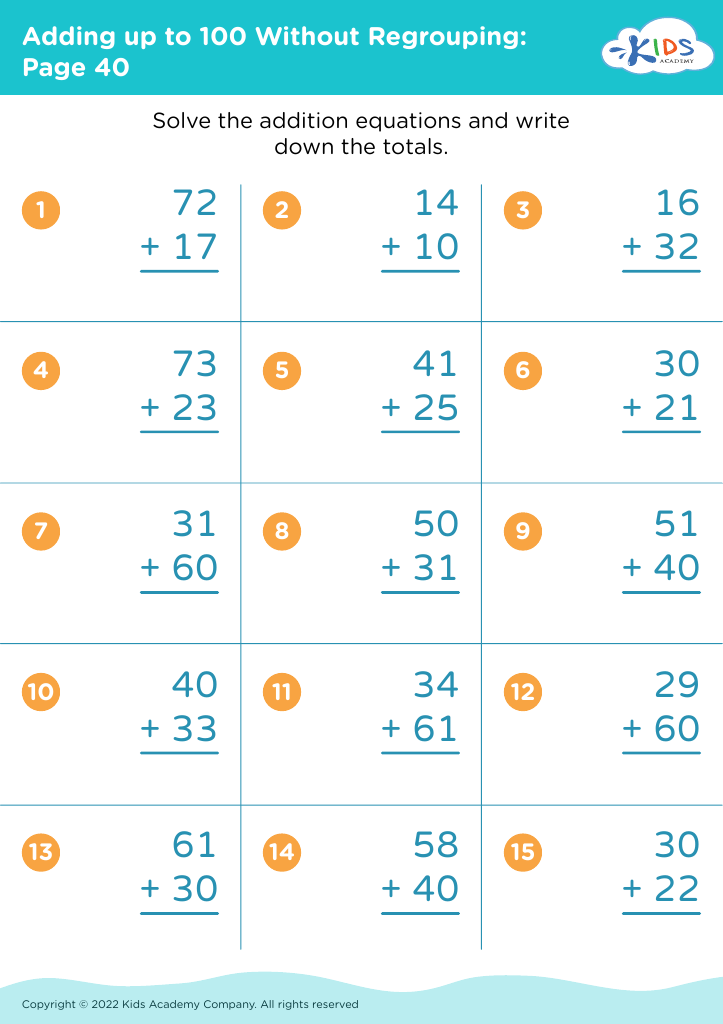
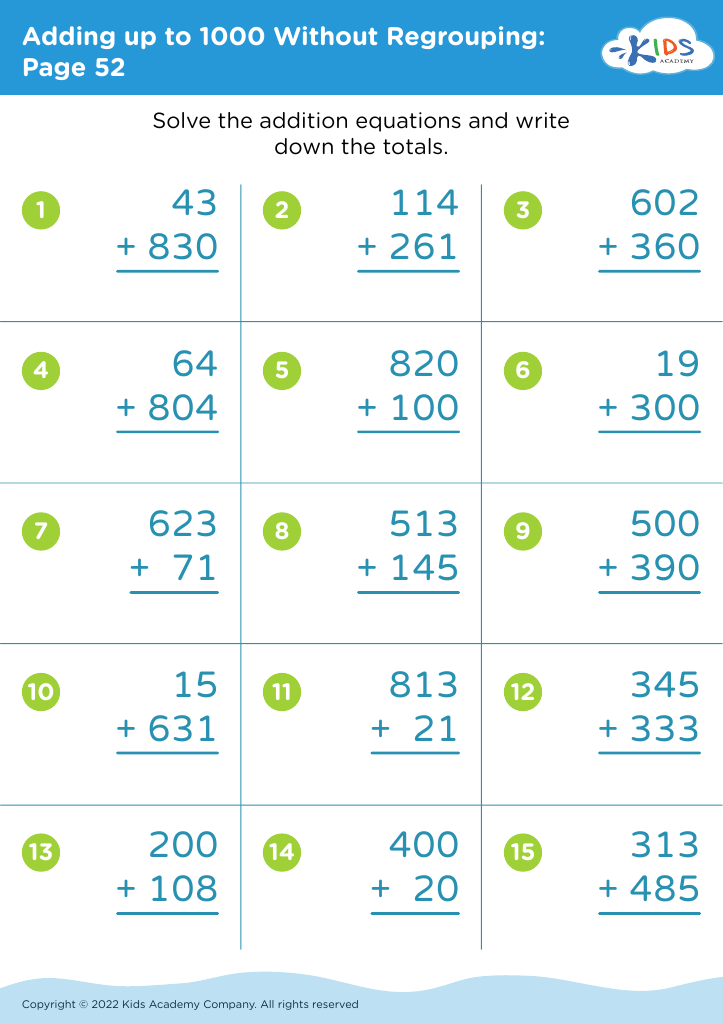
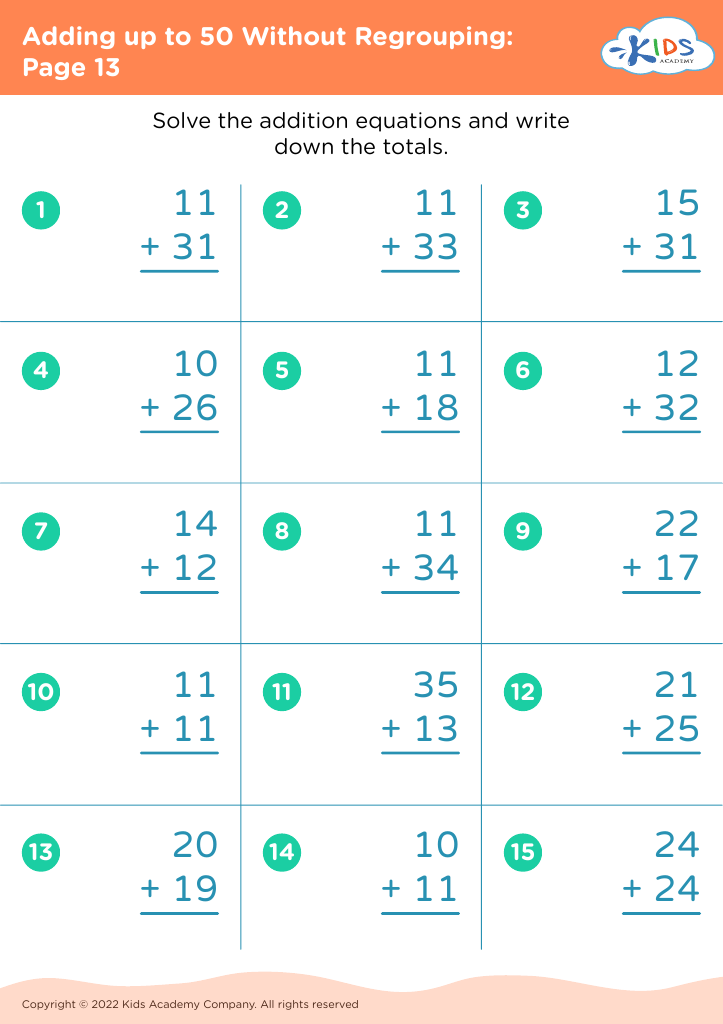








Understanding number sequences and basic addition at ages 4-7 forms a cornerstone for future mathematical learning. During these formative years, children's brains are exceptionally receptive to new information and foundational concepts. Number sequences lay the groundwork for numerical fluency, enabling children to recognize patterns, anticipate the next numbers, and develop an understanding of the relationships between numbers. This familiarity with sequences assists in mental mathematics, making future advanced concepts less intimidating.
Basic addition introduces children to the fundamental principle of combining quantities. This skill is not only essential in everyday tasks, such as counting items, but it also builds a platform for more complex arithmetic, including subtraction, multiplication, and division.
When children grasp these concepts early, they are equipped with confidence and skills to tackle more intricate mathematical problems later on. Furthermore, understanding number sequences and addition fosters critical thinking, problem-solving, and logical reasoning. It equips children with the analytical tools they need across various subjects and life scenarios.
Parents' and teachers' active involvement in nurturing these early skills through playful and engaging activities can stimulate a child's interest and can build a positive attitude towards math. This proactive approach ensures that children associate learning with fun, laying the groundwork for lifelong academic and personal success.








