Understanding numerical values Addition Worksheets for Ages 4-7
4 filtered results
-
From - To
Discover our "Understanding Numerical Values: Addition Worksheets for Ages 4-7," designed to make learning addition fun and effective for young learners. These engaging worksheets help children grasp the concept of numerical values while building a solid foundation in basic math skills. Colorful visuals and interactive activities ensure that kids stay interested and motivated. Perfect for at-home practice or classroom use, our addition worksheets cater to different learning styles and abilities. Give your child a head start in math with exercises that combine entertainment and education seamlessly. Visit Kids Academy now and unlock a world of learning possibilities!
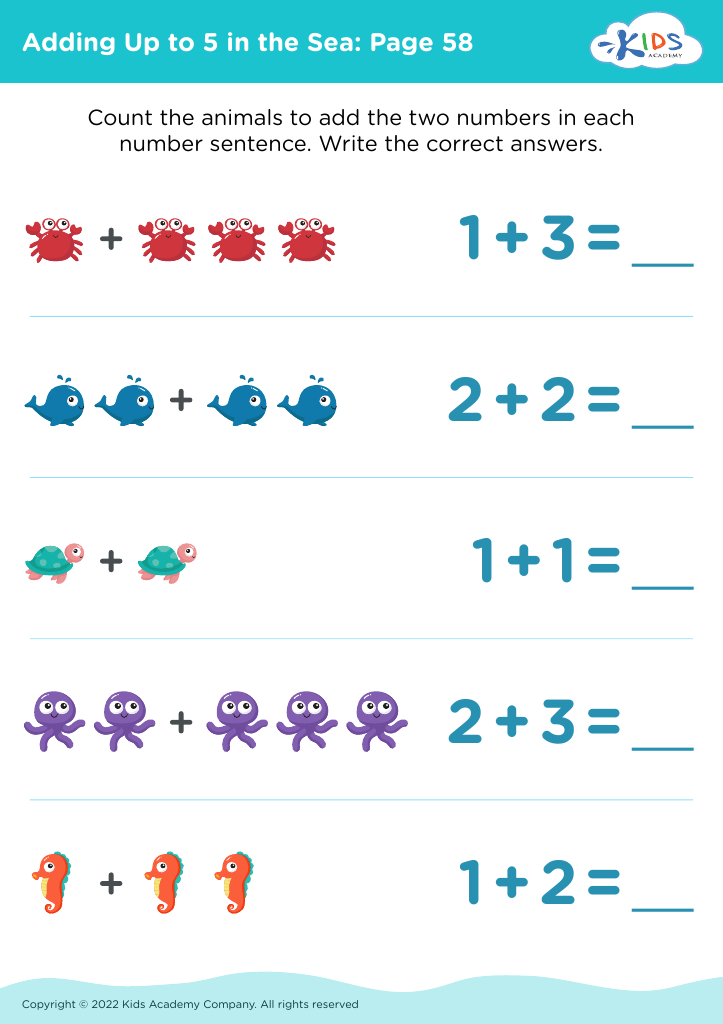
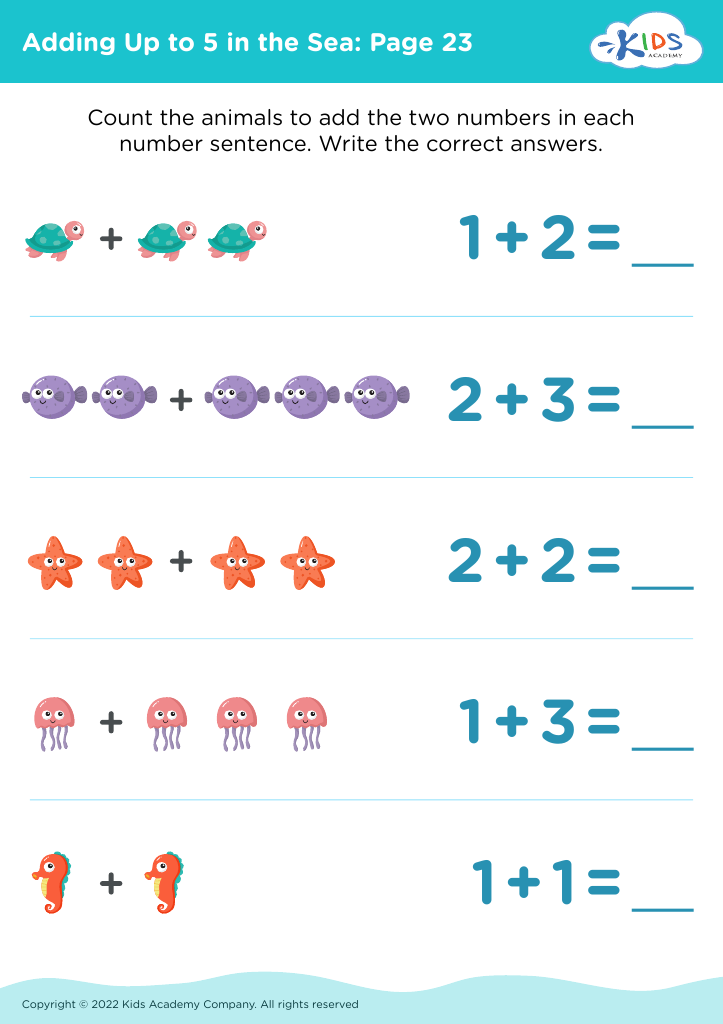
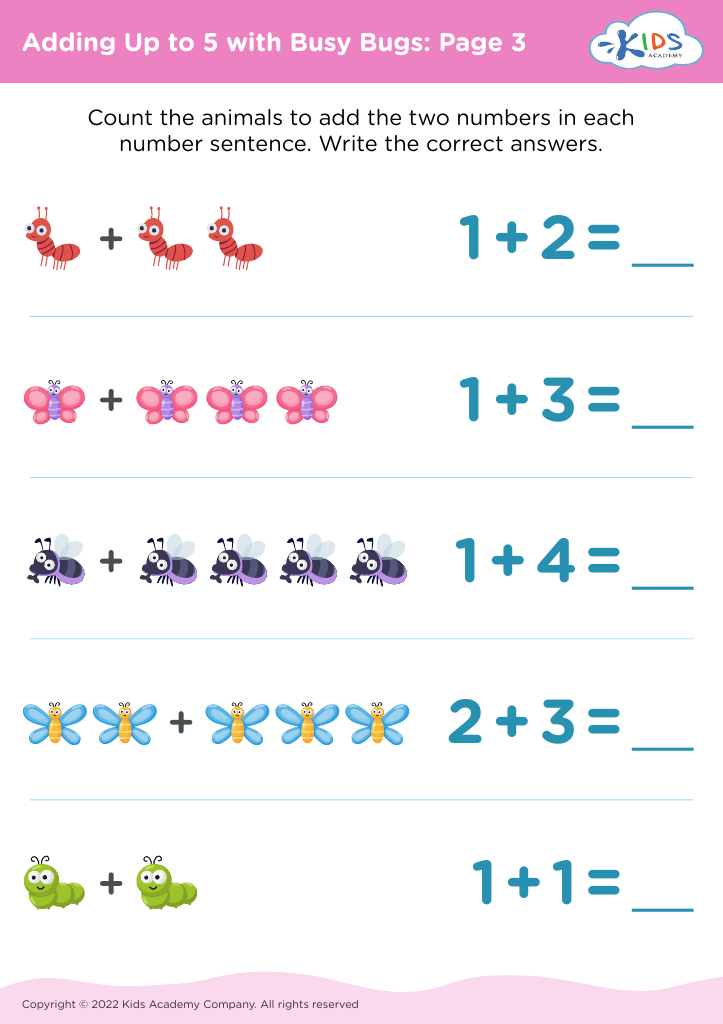
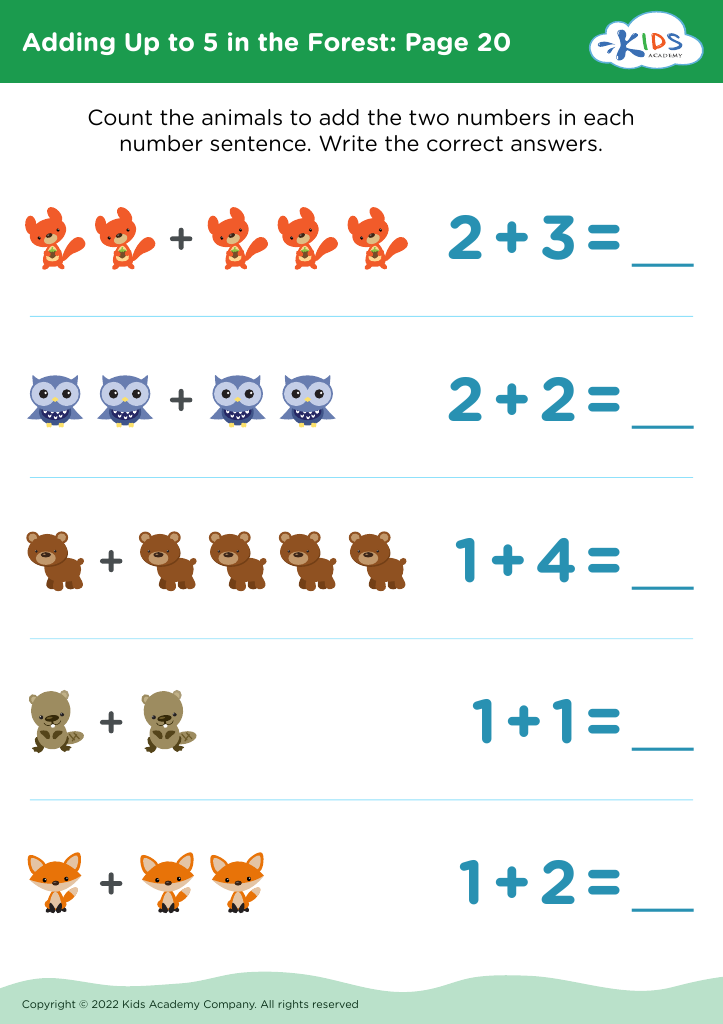








Understanding numerical values and basic addition is fundamental for children aged 4-7 because it lays the groundwork for their entire mathematics education. At this early stage, young children are building important cognitive skills, such as pattern recognition, problem-solving, and logical thinking, which are critical for their future academic success. When parents and teachers pay attention to developing these skills, they are essentially setting the stage for a positive attitude towards math and learning in general.
Mastering numerical values ensures that children grasp the concept of quantity and numbers representing real-world items. This understanding is crucial for making sense of everyday interactions, such as sharing toys or dividing snacks, which use basic math concepts in practical situations. Learning addition not only enhances a child’s numerical comprehension but also promotes their ability to perform simple calculations that are essential for more complex mathematics later on.
Additionally, early proficiency in math builds confidence. Children who feel competent in solving basic problems are more likely to approach more challenging subjects with a positive mindset. Therefore, understanding numerical values and addition is not just about learning math; it’s about nurturing a lifelong skill set that will be invaluable both academically and in daily life.
For these reasons, encouraging children aged 4-7 to engage with numerical values and addition is a critical aspect of their early education and overall development.








