Visual comprehension Addition Worksheets for Ages 4-7
7 filtered results
-
From - To
Introduce young learners to the world of math with our Visual Comprehension Addition Worksheets designed for ages 4-7. These engaging and colorful worksheets help children develop essential addition skills while enhancing visual comprehension. Each worksheet offers fun, interactive exercises, ranging from counting objects to piecing together sums with pictures, making learning both enjoyable and effective. Our expertly crafted materials aim to build a solid math foundation, boost confidence, and ignite a love for learning in young minds. Perfect for both classroom and at-home practice, these worksheets are an invaluable resource for parents and educators alike.
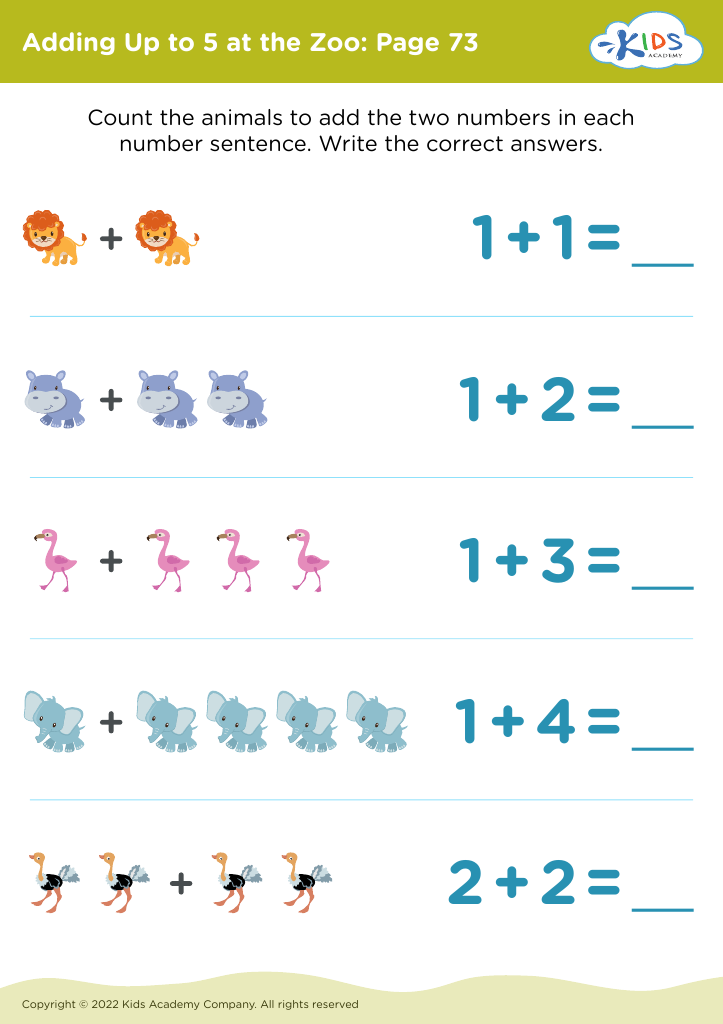
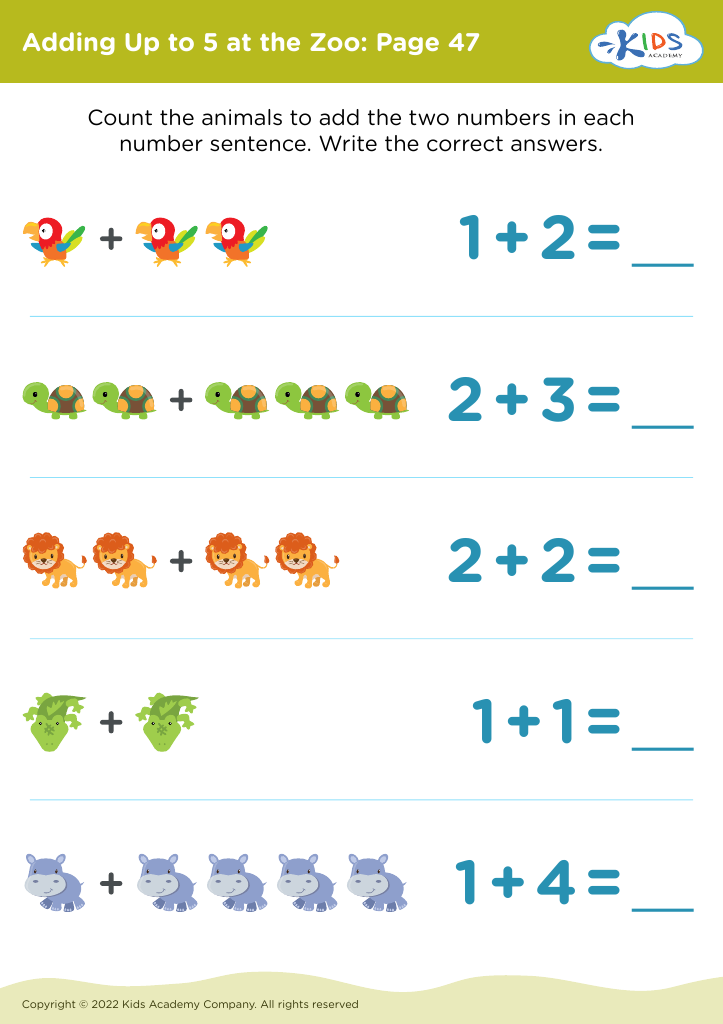
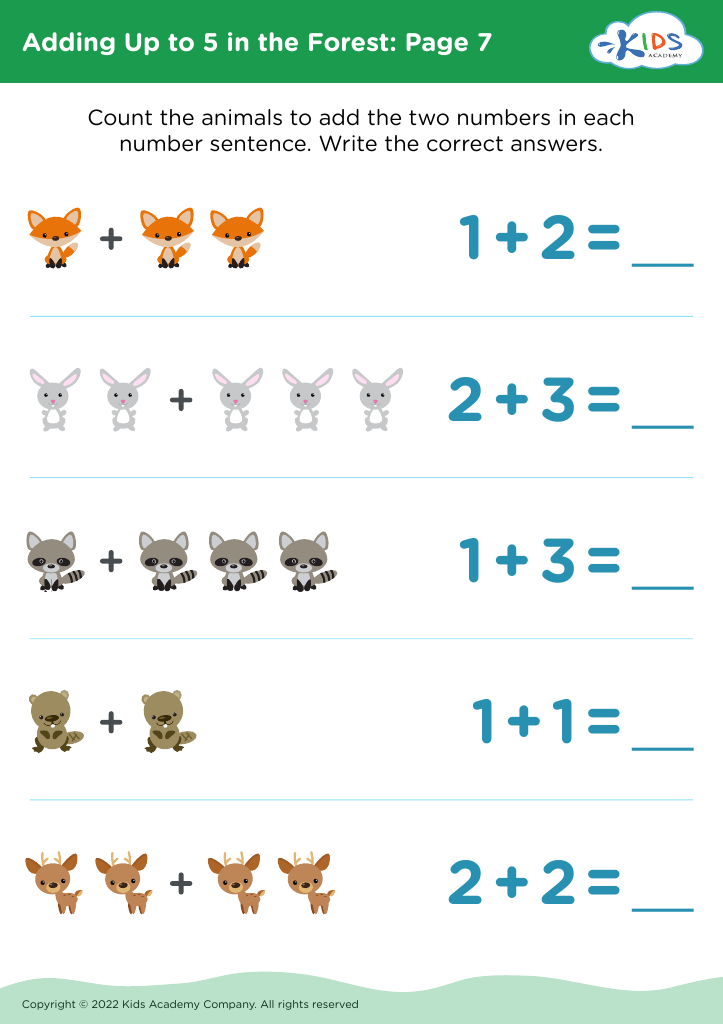
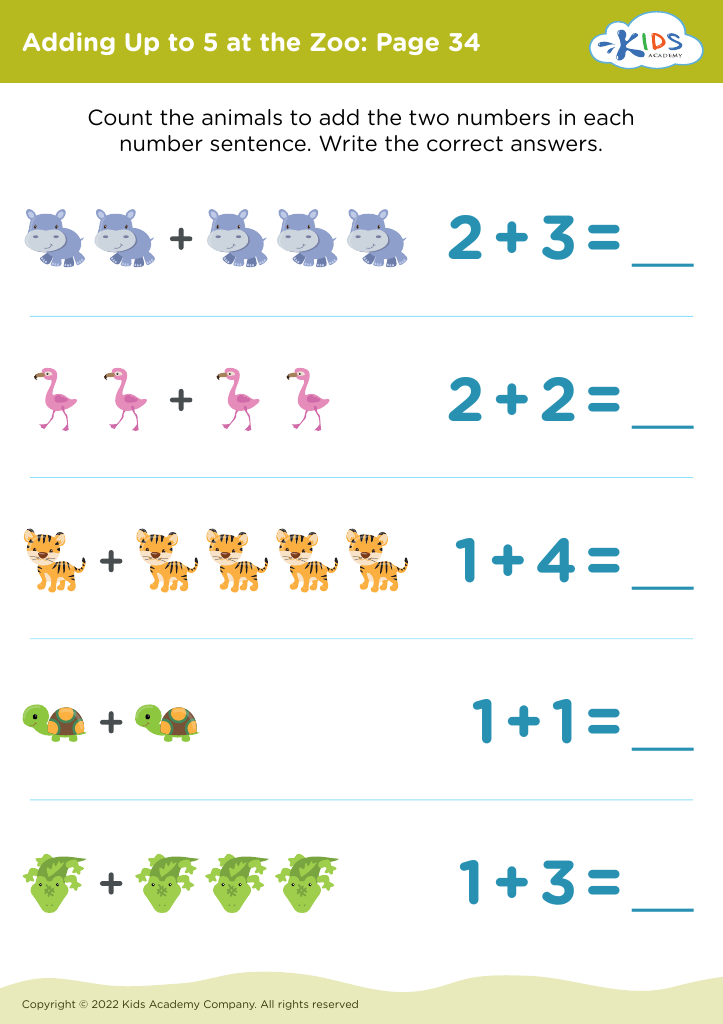
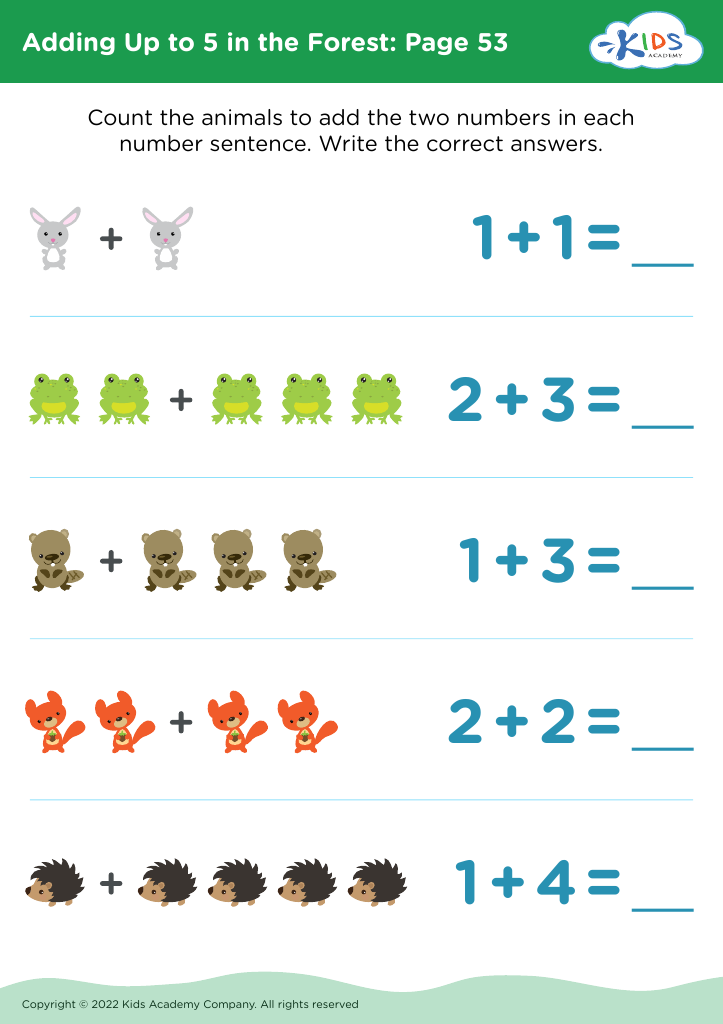
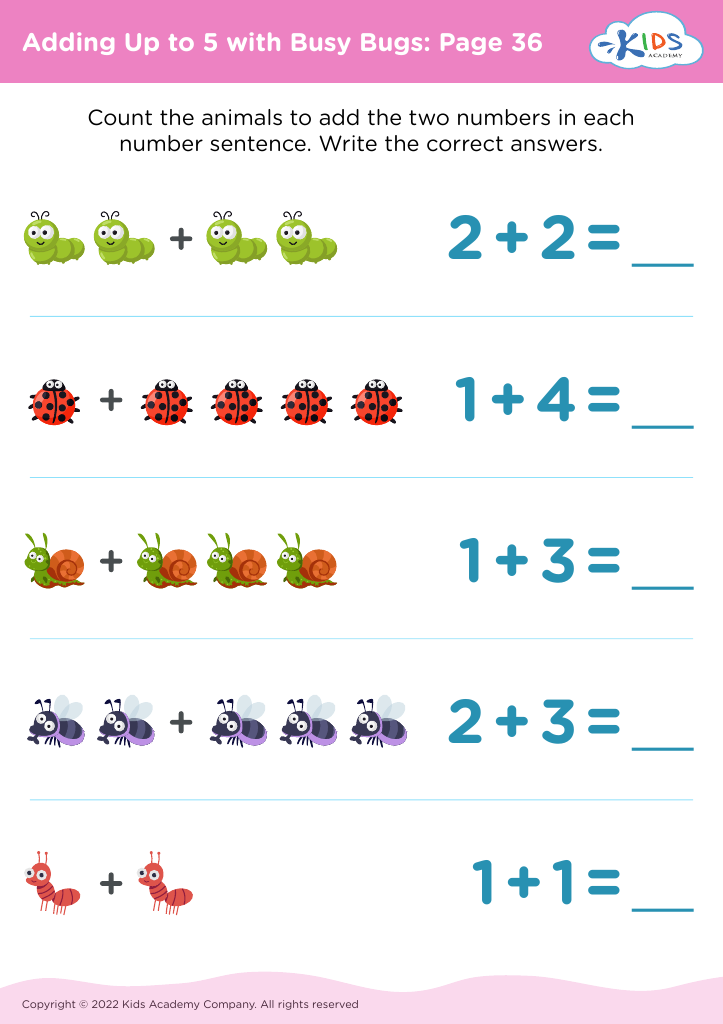
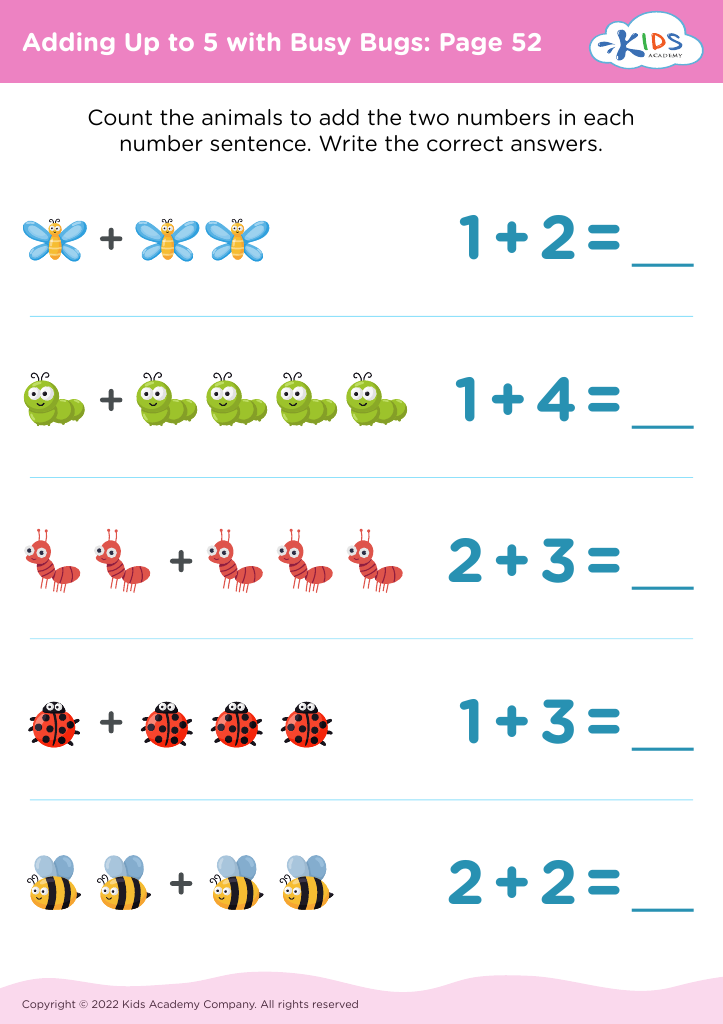








Visual comprehension skills are critical in a child's early development, particularly in the realm of mathematics. For children ages 4-7, who are just beginning their formal education, grasping the concept of addition through visual means can significantly enhance their understanding and retention of the subject.
Visual comprehension aids such as pictures, number lines, and counting objects provide concrete examples of abstract ideas. When children see images of apples being grouped together or separated, for instance, they can more easily grasp the concept of adding or subtracting quantities. This hands-on learning is crucial for young learners who often struggle with abstract concepts.
Moreover, incorporating visual learning techniques aligns with the learning styles of many young students, who may not yet have the verbal or reading skills to understand written math problems. By integrating visuals, children can better engage with the material, reducing frustration and fostering a positive attitude towards learning.
Additionally, strong visual comprehension skills can lay the groundwork for more advanced math and reading skills later on. It aids children in developing critical thinking and problem-solving abilities. When visual comprehension is emphasized, it helps build a strong mathematical foundation, making future learning more intuitive and less daunting.
Inclusion of visual comprehension in early education ensures a fuller, more adaptable learning experience, addressing diverse learner needs and laying a solid foundation for future academic success.








