Visual learning enhancement Addition Worksheets for Ages 4-7
4 filtered results
-
From - To
Enhance your child's math skills with our Visual Learning Enhancement Addition Worksheets for Ages 4-7! These engaging, colorful worksheets are designed to make learning fun and effective. By incorporating visual aids, children can grasp addition concepts more easily, fostering a deep understanding of numbers. Each worksheet includes vibrant images and interactive elements that encourage active participation and retention. Perfect for at-home practice or classroom activities, our resources cater to various learning styles, ensuring that every child can thrive in their mathematical journey. Explore our collection today to give your little ones the tools they need for a strong foundation in mathematics!
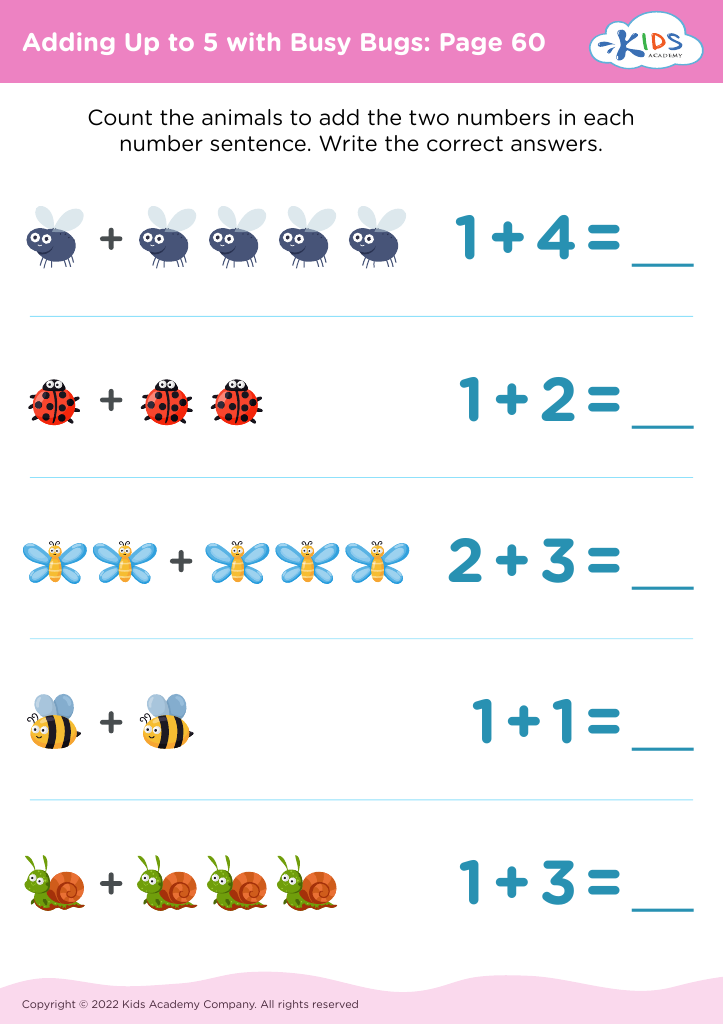
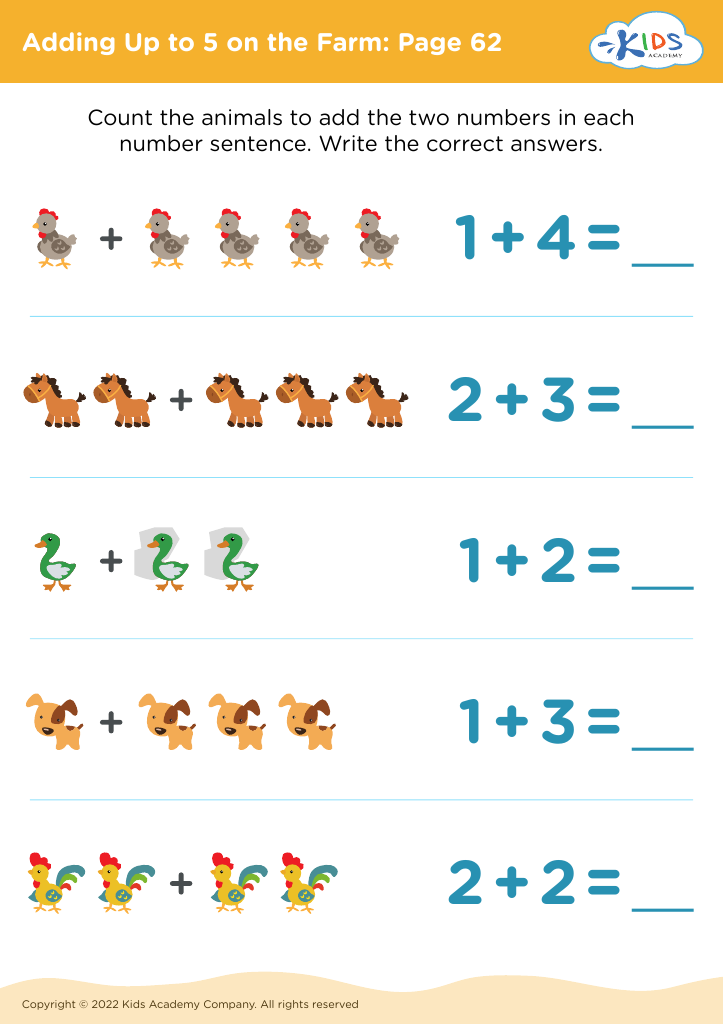
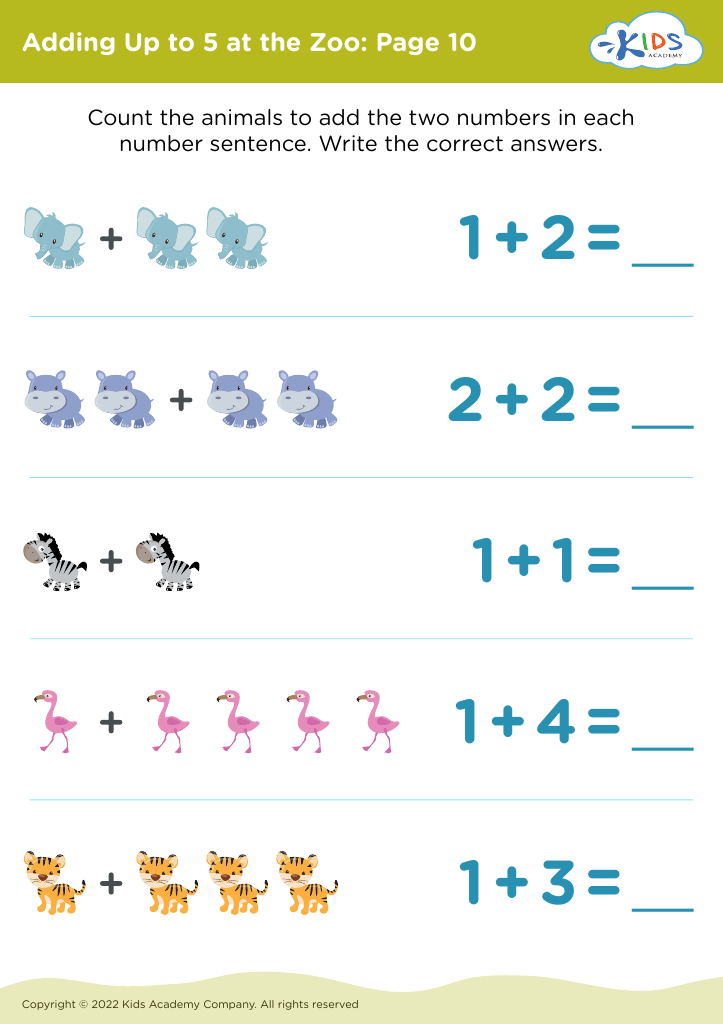
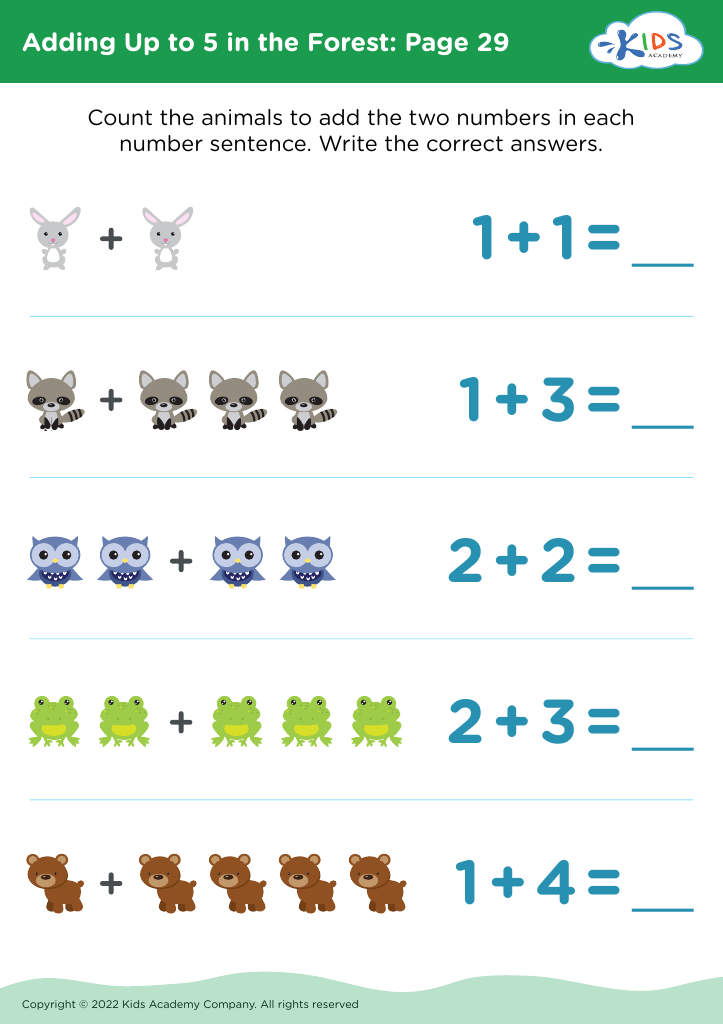








Visual learning enhancement in early education, particularly for children aged 4-7, is vital for fostering engagement and understanding. At this developmental stage, many children are naturally inclined to learn through visual means; leveraging this trait can significantly enhance their cognitive and academic growth.
Visual learning tools, such as diagrams, charts, or colorful manipulatives, stimulate children's imaginations and make abstract concepts more tangible. For example, using visual aids in teaching addition helps young learners visualize problems, making math less intimidating and more enjoyable.
Moreover, improving understanding through visual strategies can boost retention and recall. Children are more likely to remember information presented through pictures or interactive resources than through traditional text-based methods.
Investment in visual learning approaches also supports diverse learning styles. Some children may struggle with auditory learning or reading, yet thrive when able to connect with material through visual formats. This inclusivity is crucial in a classroom setting.
Ultimately, supporting visual learning enhances problem-solving skills, fosters independence, and cultivates a lifelong love of learning. Therefore, parents and teachers should prioritize and integrate visual learning strategies to prepare children for future academic challenges and ensure a strong educational foundation.








