
Visual perception Addition Worksheets for Ages 4-7
16 filtered results
Difficulty Level
Grade
Age
-
From - To
Subject
Activity
Standards
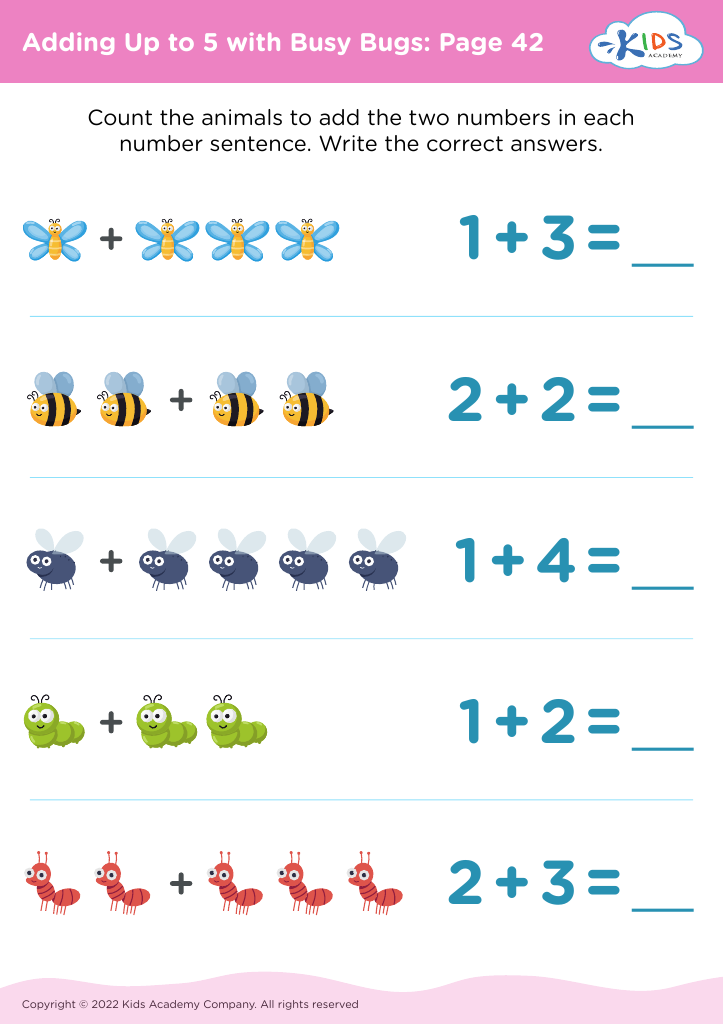
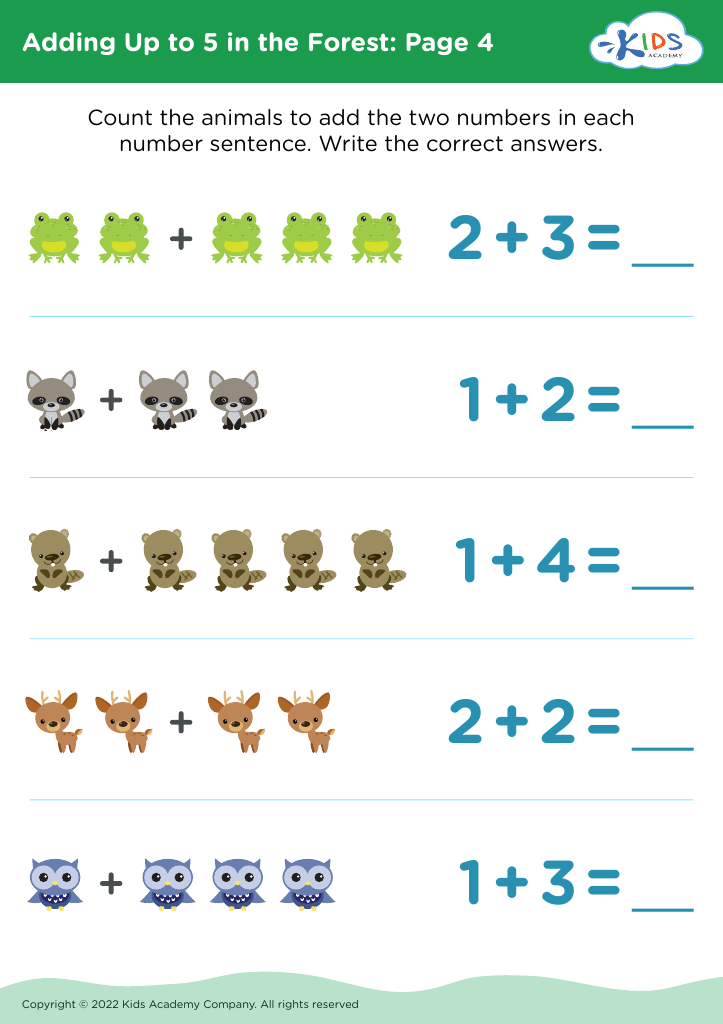
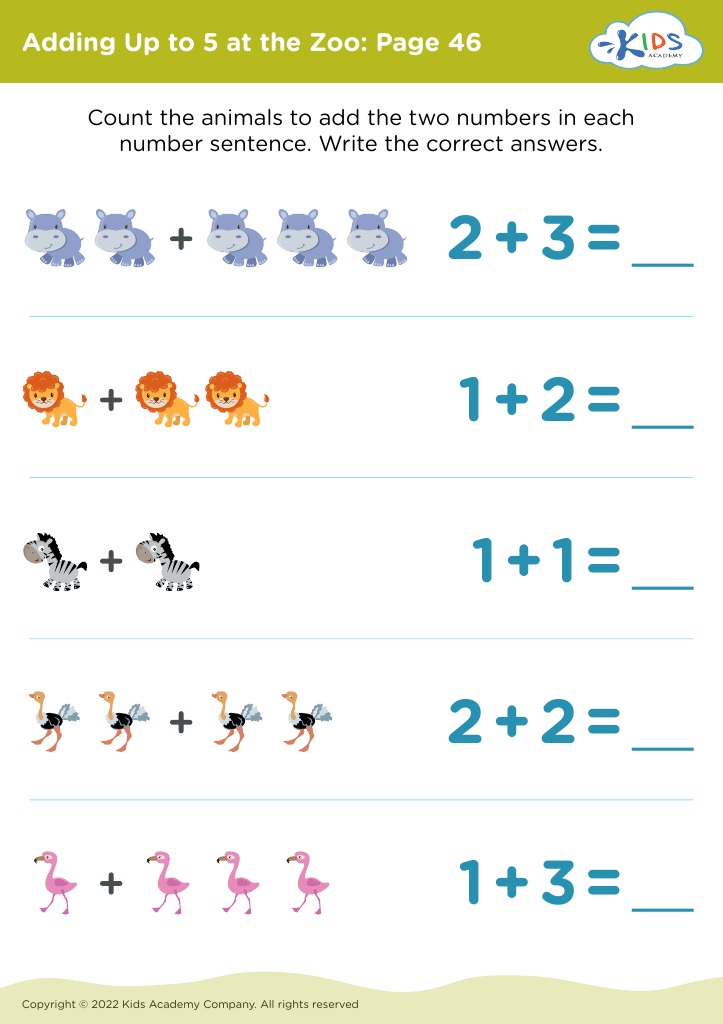
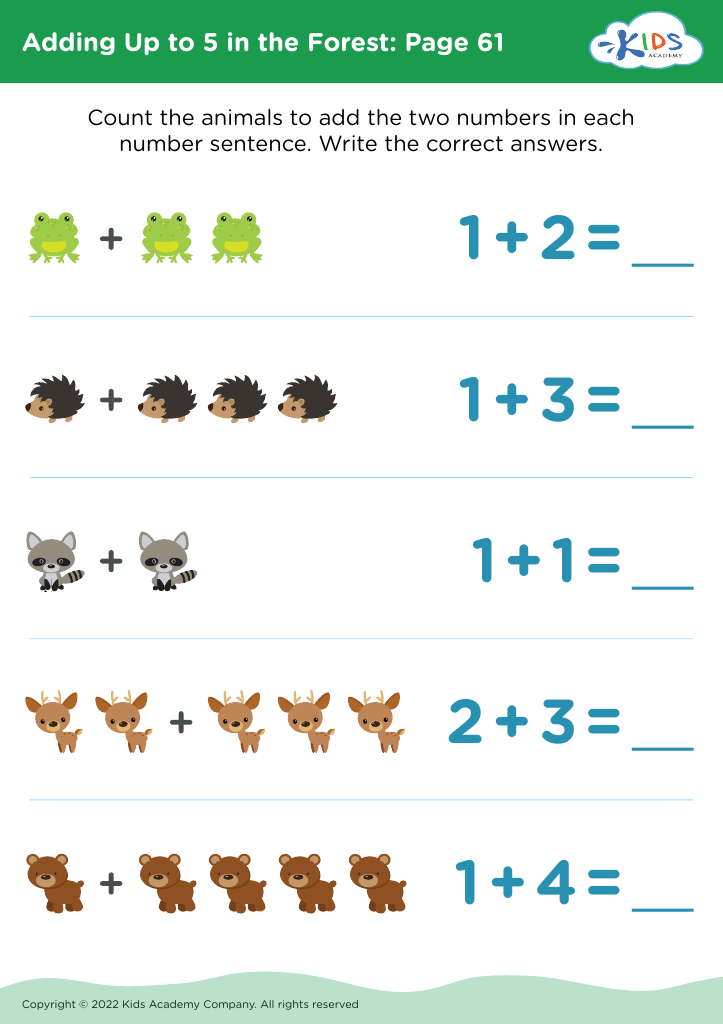
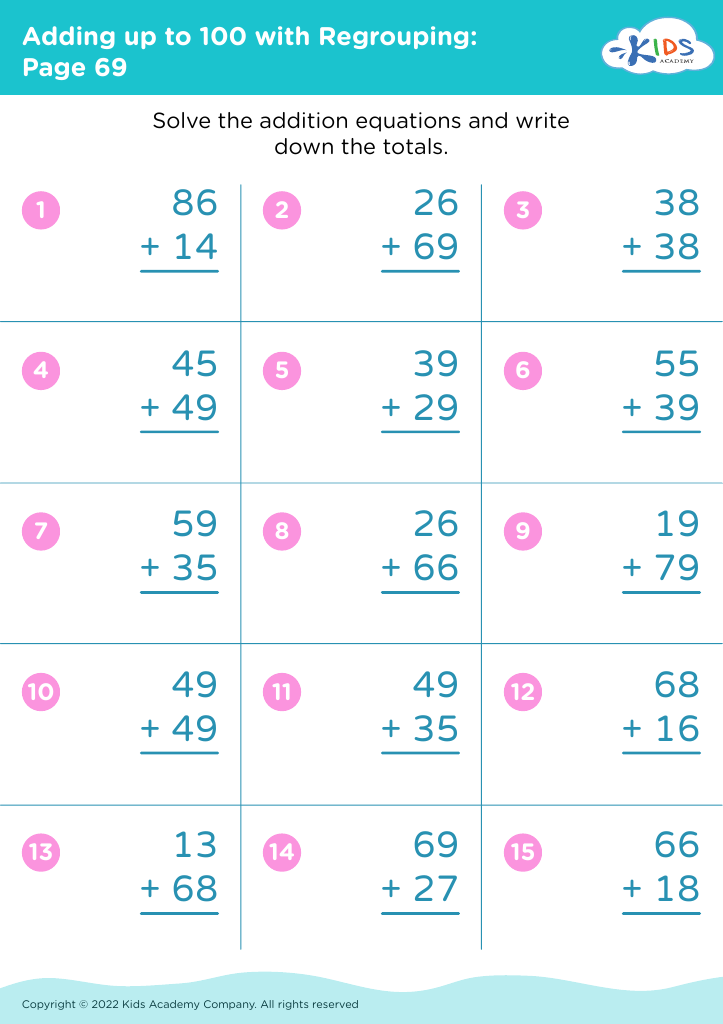
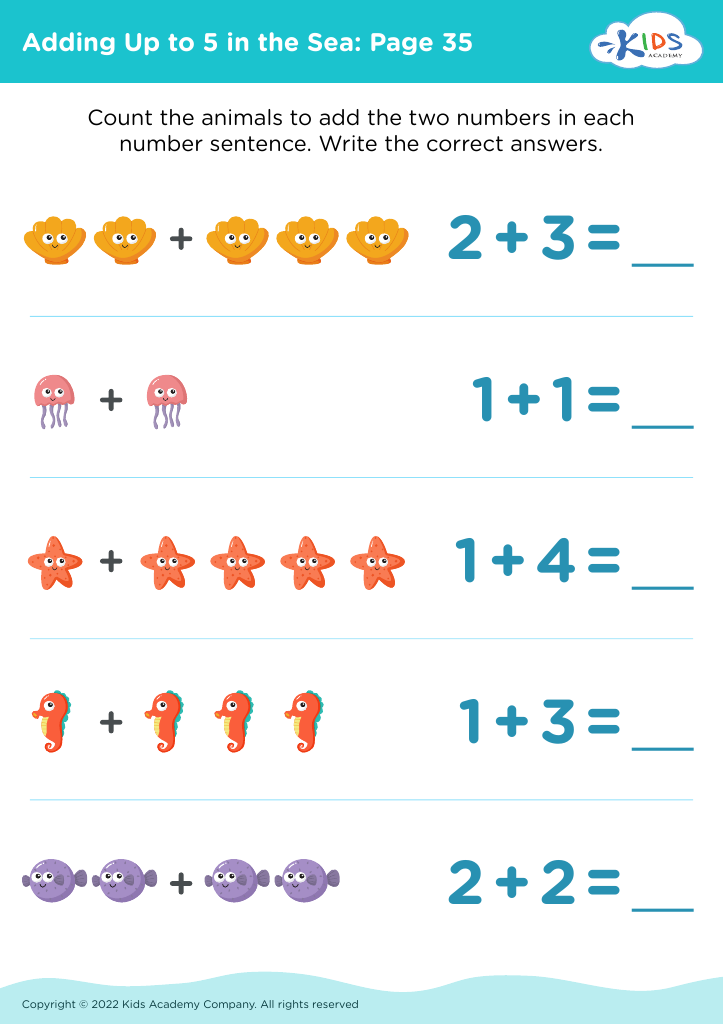
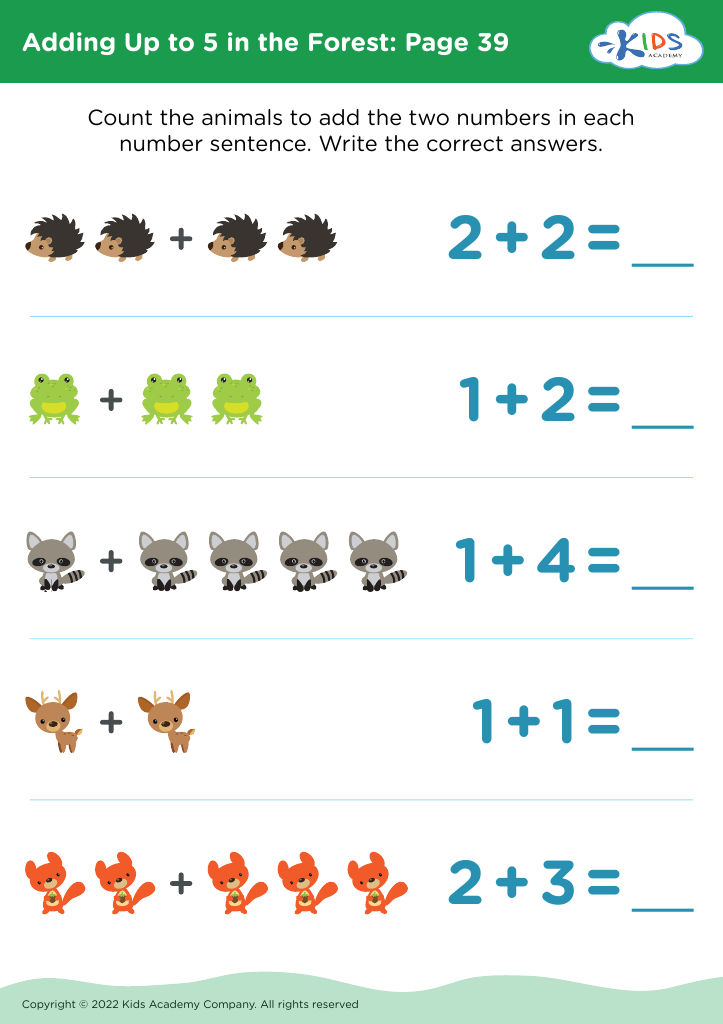
Enhance your child's mathematical skills with our Visual Perception Addition Worksheets designed specifically for ages 4-7. These engaging worksheets focus on developing essential visual perception skills that are crucial for mastering addition. By combining fun visuals with practical problems, children will learn to identify numbers, understand quantities, and improve their counting abilities. Our worksheets cater to various learning styles, ensuring every child enjoys learning through play. Suitable for both home and classroom settings, these resources are perfect for nurturing early math skills while promoting critical thinking. Start building a strong mathematical foundation today with our entertaining and educational addition worksheets!
Favorites
With answer key
Interactive
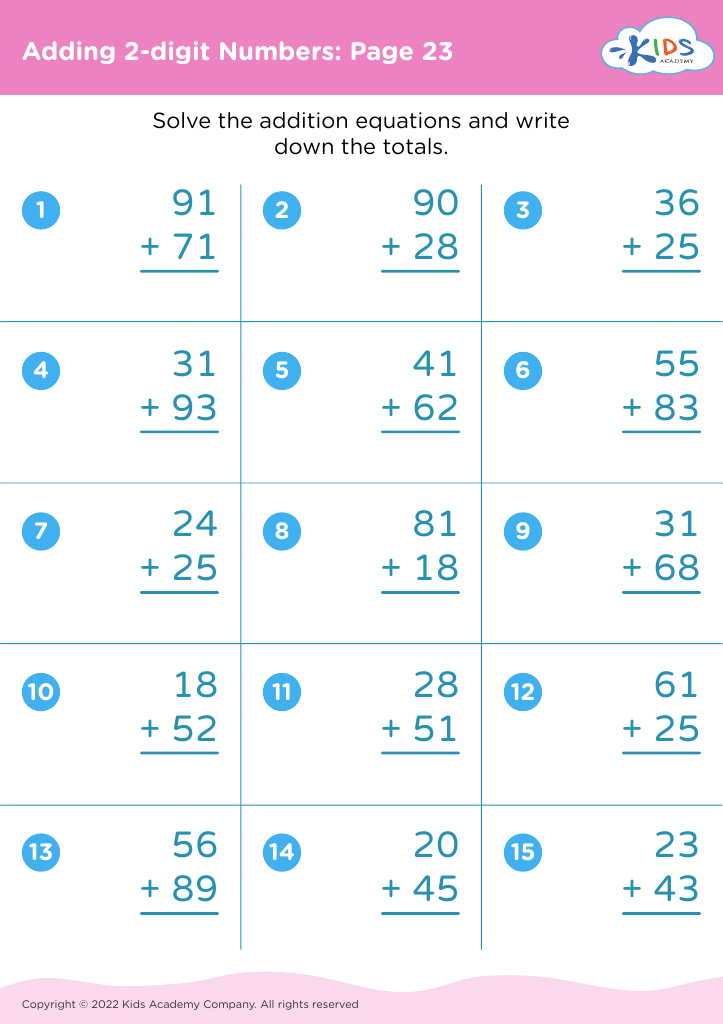
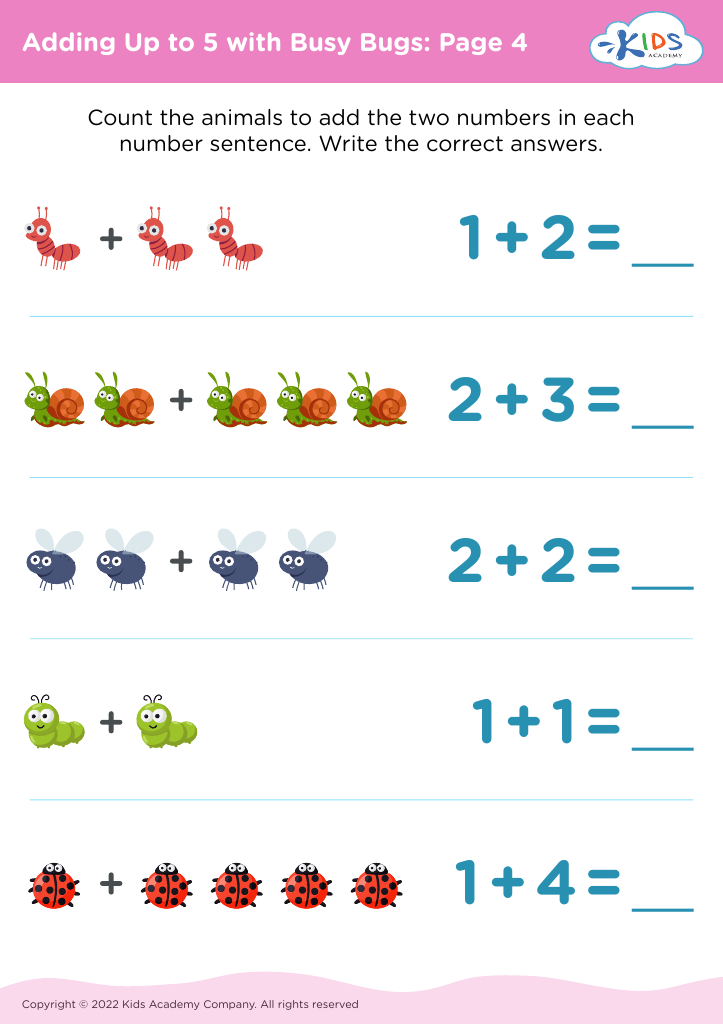
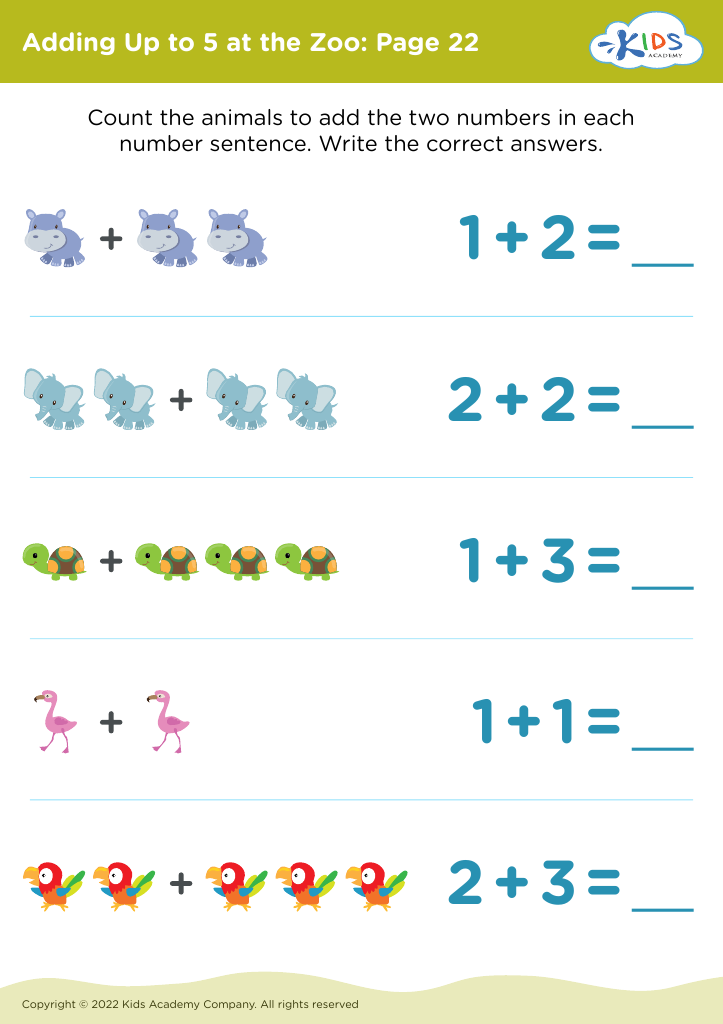
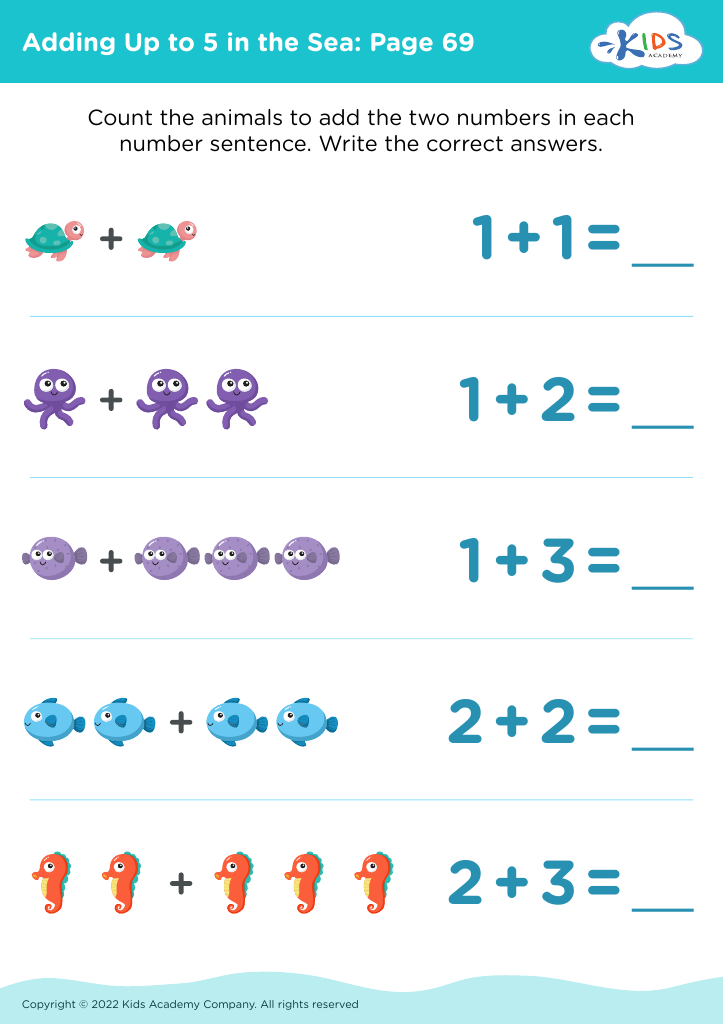
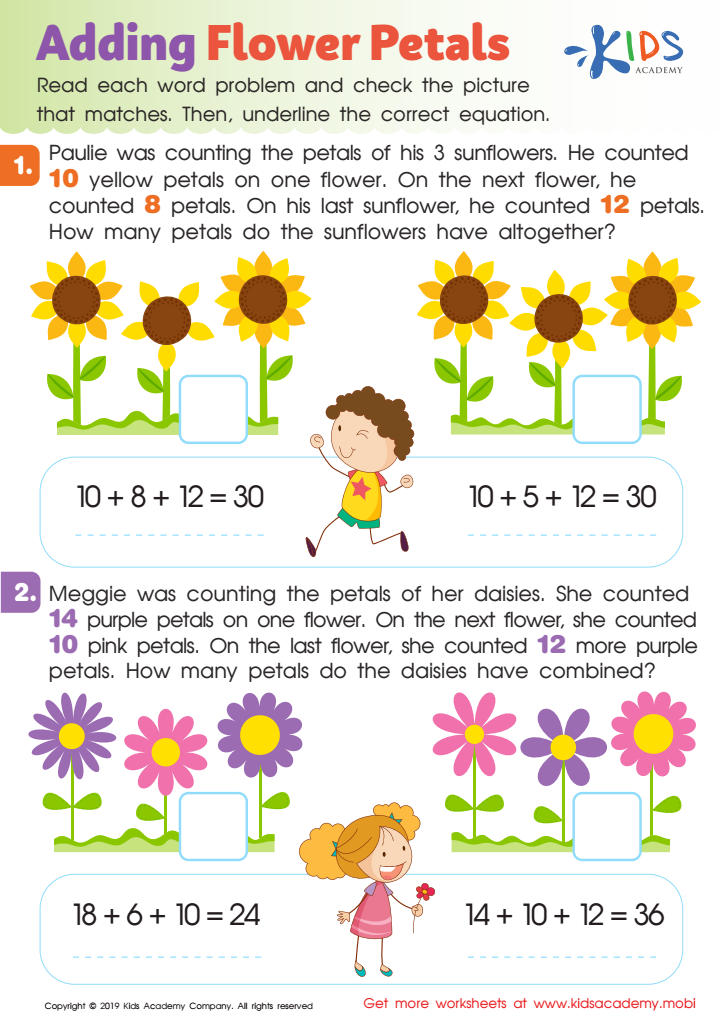
Adding Flower Petals Worksheet
This free worksheet helps little mathematicians learn to understand word problems. They'll read each one and match it to the corresponding picture. Important info is highlighted, teaching kids to look for key info when solving problems. Then they'll underline the correct number equation that matches the picture. A great way to practice problem-solving skills!
 Assign to My Students
Adding Flower Petals Worksheet
Worksheet
Join Kids Academy for Free
Who is primarily going to use this learning content?








Visual perception skills are crucial for children aged 4-7 as they form the foundation for various learning processes and daily activities. During this developmental stage, kids begin to develop essential cognitive skills, and strong visual perception greatly enhances their ability to recognize letters, numbers, shapes, and patterns. This skill is particularly relevant in mathematics, as it helps with tasks like counting, number recognition, and even simple addition.
Parents and teachers should be engaged in supporting visual perception development, as it influences not only academic success but also overall confidence in problem-solving. Often, difficulties in visual perception can lead to frustration and a negative attitude towards learning. Early intervention through fun and engaging exercises—such as puzzles, matching games, or sorting activities—can set the stage for stronger math skills and a love for learning.
Moreover, fostering visual perception aids in a child’s ability to follow visual directions, understand spatial relationships, and develop fine motor skills. By recognizing the importance of visual perception, parents and teachers equip children with tools essential for effective learning, ensuring they build the necessary skills to thrive academically and socially. Support in this area can often lead to significant improvement in children's readiness for school challenges.








