Counting skills Money Worksheets for Ages 4-7
5 filtered results
-
From - To
Welcome to our Counting Skills Money Worksheets for Ages 4-7! These engaging printable worksheets are designed to help young learners grasp essential counting skills while introducing them to the concepts of money. Our fun and interactive activities will encourage children to identify coins, understand their values, and practice counting. With a variety of exercises tailored for different skill levels, these worksheets make learning enjoyable and effective. Ideal for both classroom and home settings, they foster a strong numerical foundation, preparing children for future math success. Dive into our resources and watch your child's confidence in counting soar as they master money skills!
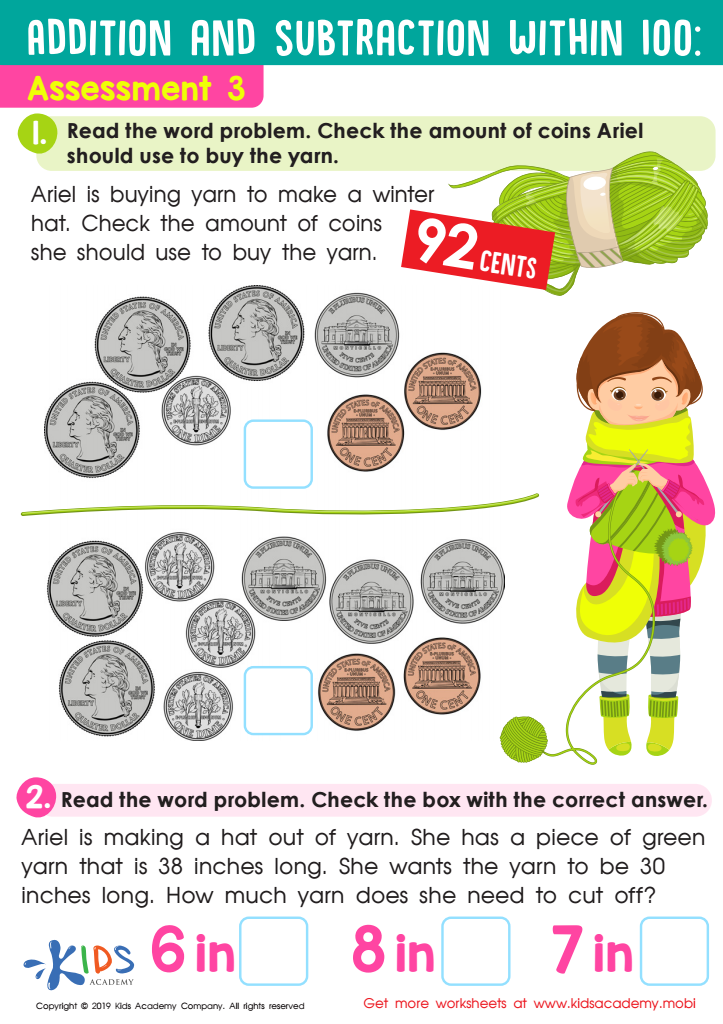
Assessment 3 Math Worksheet
 Assign to My Students
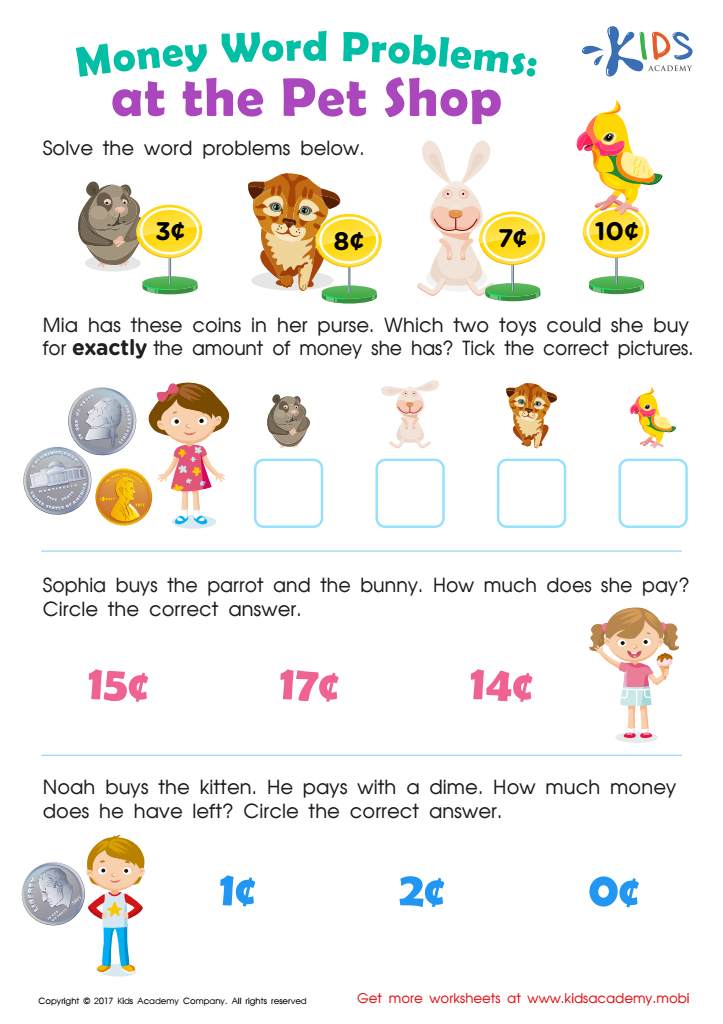
Pet Shop Worksheet
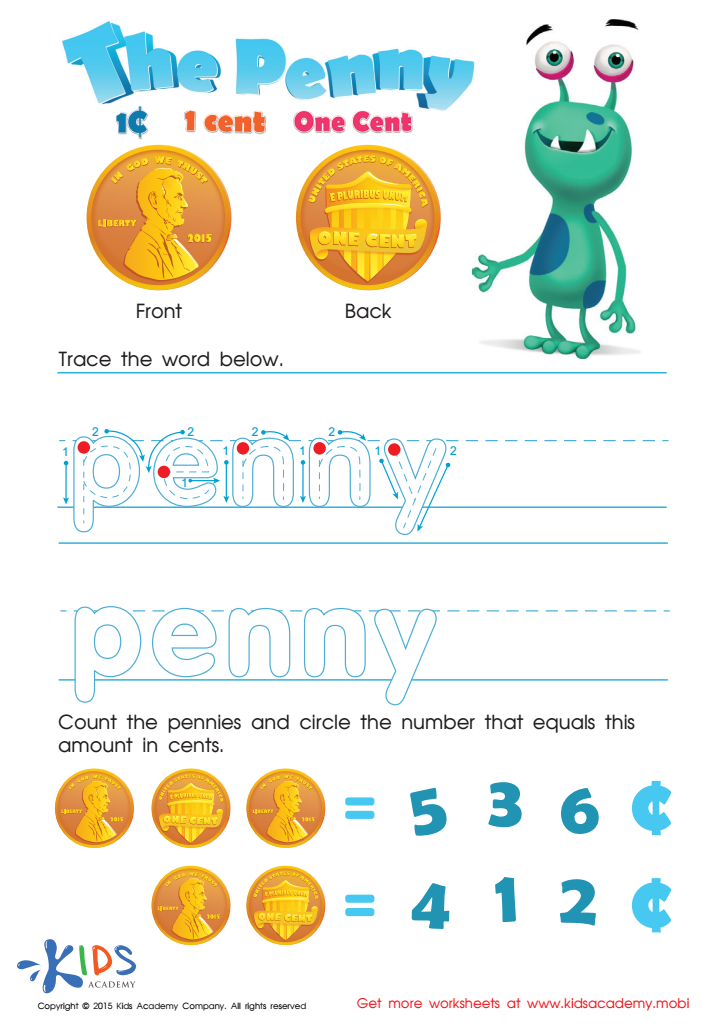
One Cent or the Penny Money Worksheet
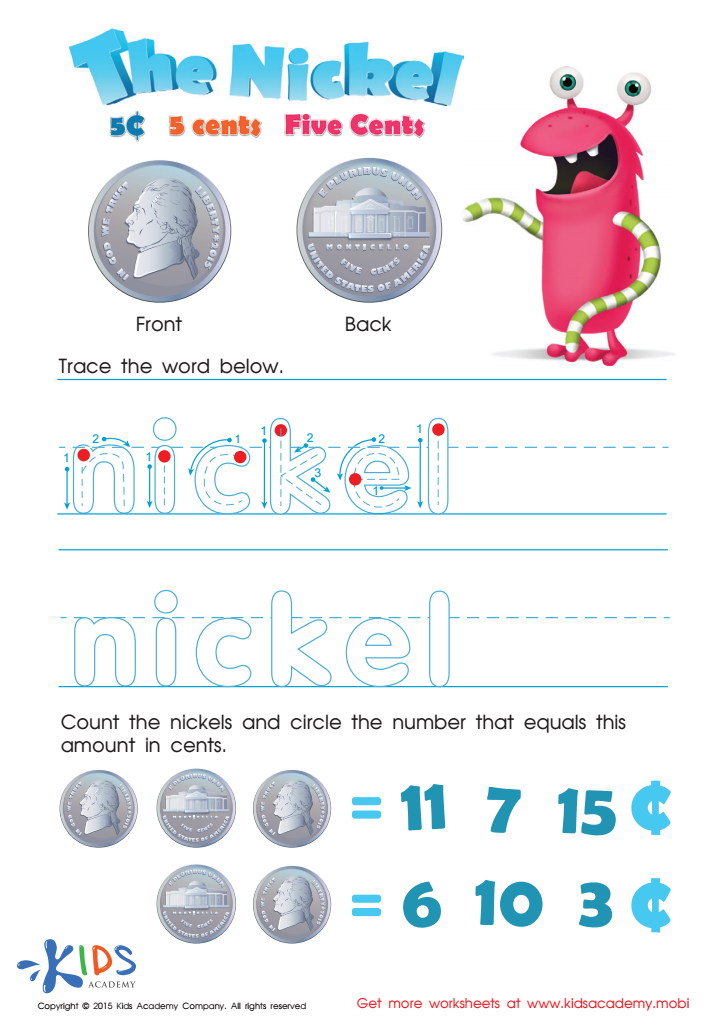
Five Cents or the Nickel Money Worksheet
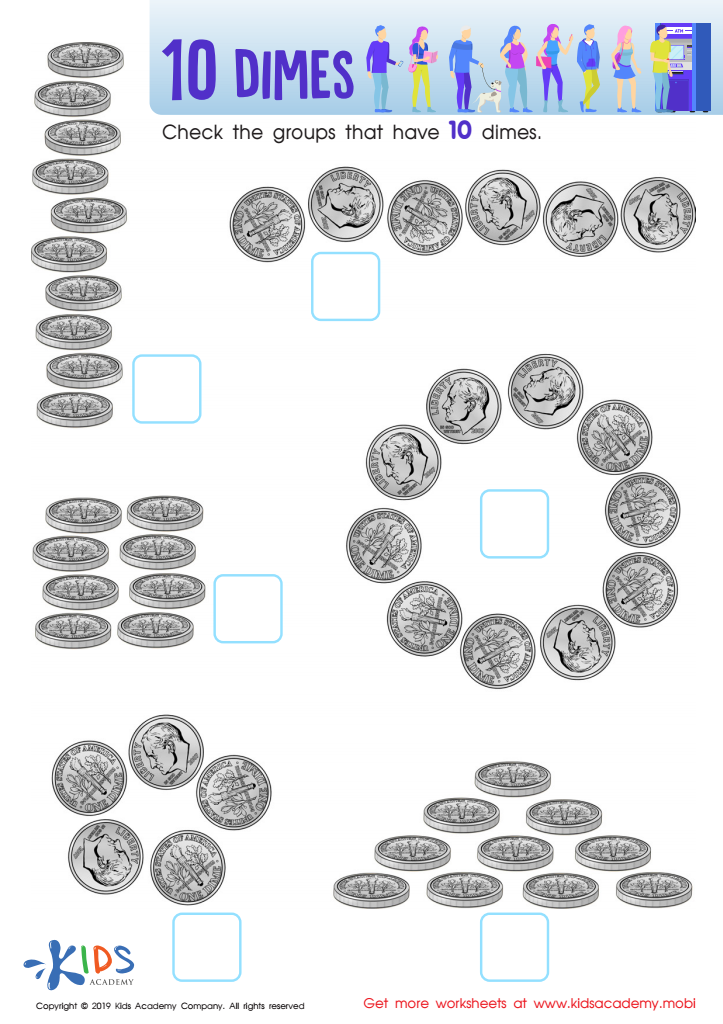
10 Dimes Worksheet






.jpg)

Counting skills, particularly with money, are essential for children ages 4 to 7 for several reasons. First and foremost, these skills form the foundation for future mathematical understanding. When children learn to count various denominations, they develop not only number recognition but also an ability to understand values and make comparisons. This early comprehension of money nurtures problem-solving abilities and enhances critical thinking.
Moreover, understanding money promotes financial literacy from a young age. It prepares children for real-life situations where they will need to make decisions about spending, saving, and budgeting. Learning to calculate prices and give change lays the groundwork for responsible money management as they grow older.
Furthermore, counting with money is inherently engaging. It often lends itself to hands-on activities, like playing store, which keeps children motivated and excited about learning. This interactive approach fosters positive attitudes towards math as a subject, which is crucial for long-term success.
Finally, parents and teachers should regard money skills as a way to promote independence. As children gain confidence in counting and managing small amounts of cash, they feel empowered to make decisions, facilitating social skills and reinforcing a sense of personal responsibility.








