Basic geometry knowledge Geometry Worksheets for Ages 4-7
3 filtered results
-
From - To
Explore our engaging Basic Geometry Worksheets designed specifically for children aged 4-7! These interactive activities help young learners grasp essential geometric concepts through fun exercises. With colorful visuals and age-appropriate challenges, kids can easily identify shapes, understand their properties, and develop spatial awareness. Our worksheets promote critical thinking and problem-solving skills while ensuring an enjoyable learning experience. Perfect for both classroom use and at-home practice, these resources foster a love for math early on. Boost your child’s confidence and skills in geometry today with our carefully crafted worksheets that make learning an exciting adventure!
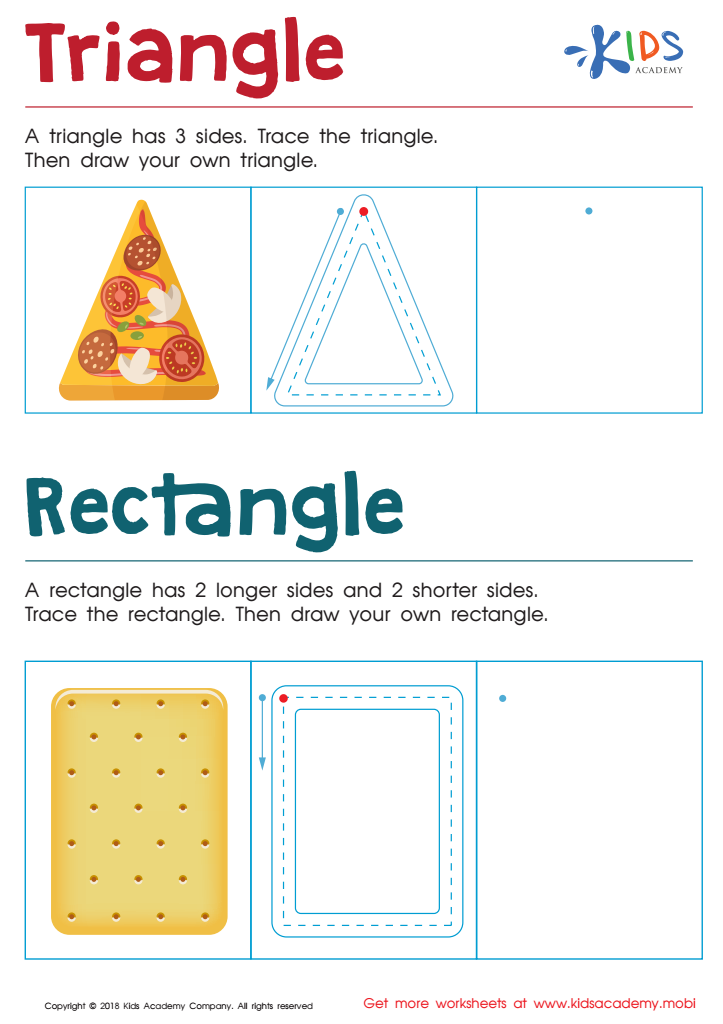
Triangle Rectangle Worksheet
 Assign to My Students











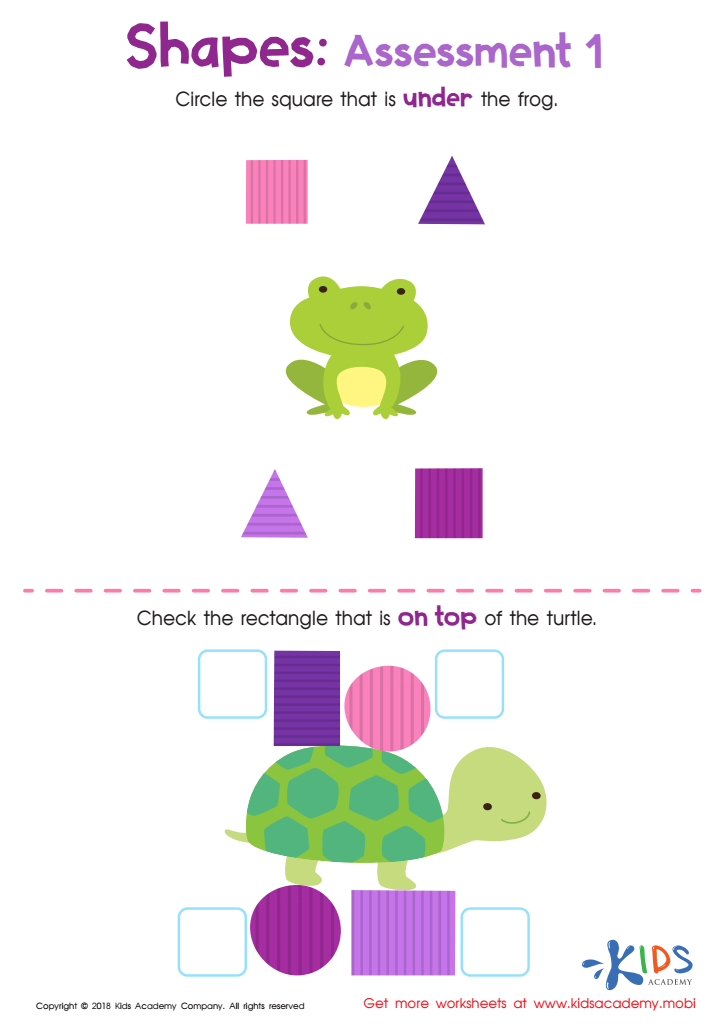
Geometry – Assessment 1 Worksheet
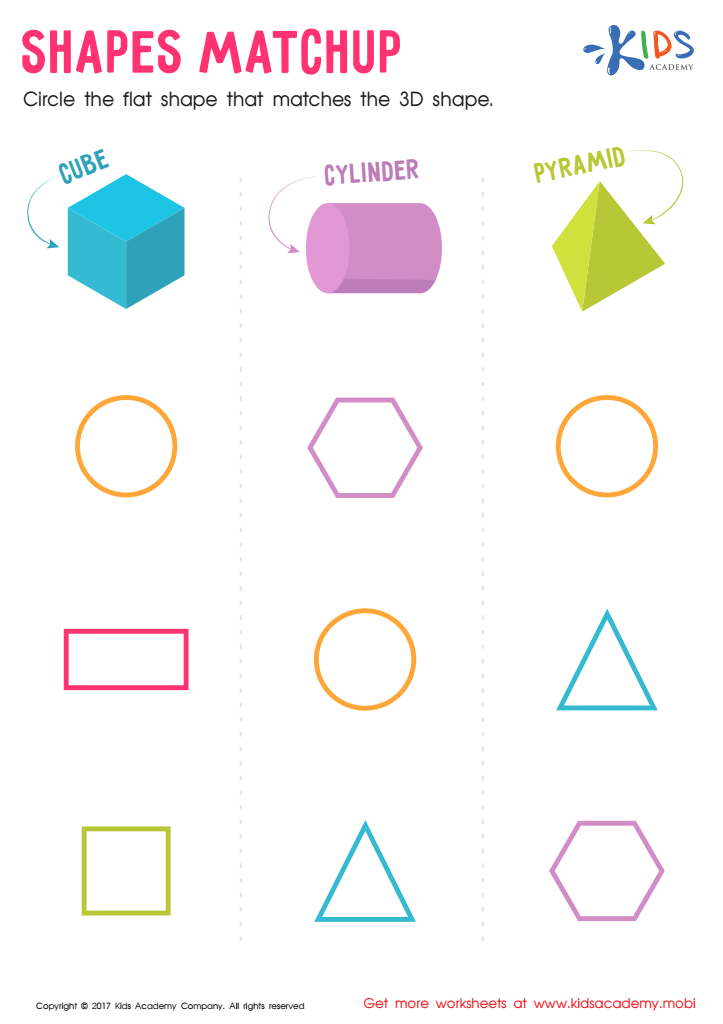
Shapes Matchup Worksheet








Understanding basic geometry is essential for children ages 4-7, as it forms the foundation for their mathematical development and critical thinking skills. Early exposure to geometric concepts helps children recognize shapes and understand spatial relationships, which are vital skills in everyday life and various disciplines, such as art, science, and engineering.
Parents and teachers should prioritize geometry knowledge because it enhances children's problem-solving abilities. Recognizing shapes, sizes, and patterns nurtures logical reasoning and cultivates spatial awareness, important for activities like reading maps or assembling furniture. Geometry also supports language development; discussing shapes and their attributes helps expand vocabulary and communication skills.
Additionally, engaging with geometry can boost children's confidence and creativity. As they learn to categorize shapes and explore concepts like symmetry and measurement, they become more adept at visualizing and organizing information. This practice taps into their innate curiosity about the world around them.
Fostering a strong foundation in geometry at these early ages not only prepares children for more complex mathematical concepts in the future but also instills a love for learning and exploration, shaping them into well-rounded individuals prepared for future academic endeavors.








