Recognizing shapes Geometry Worksheets for Ages 4-7
4 filtered results
-
From - To
Explore our engaging "Recognizing Shapes Geometry Worksheets" designed specifically for children aged 4-7! These worksheets promote essential early math skills by introducing young learners to various shapes in a fun and interactive manner. From circles and squares to triangles and rectangles, kids will enhance their shape identification skills through vibrant visuals and hands-on activities. Perfect for both classroom and home use, our resources encourage critical thinking and creativity while fostering a love for learning. Download our printable worksheets today and watch your little ones master shape recognition in no time! Ideal for early grade teachers and parents alike!
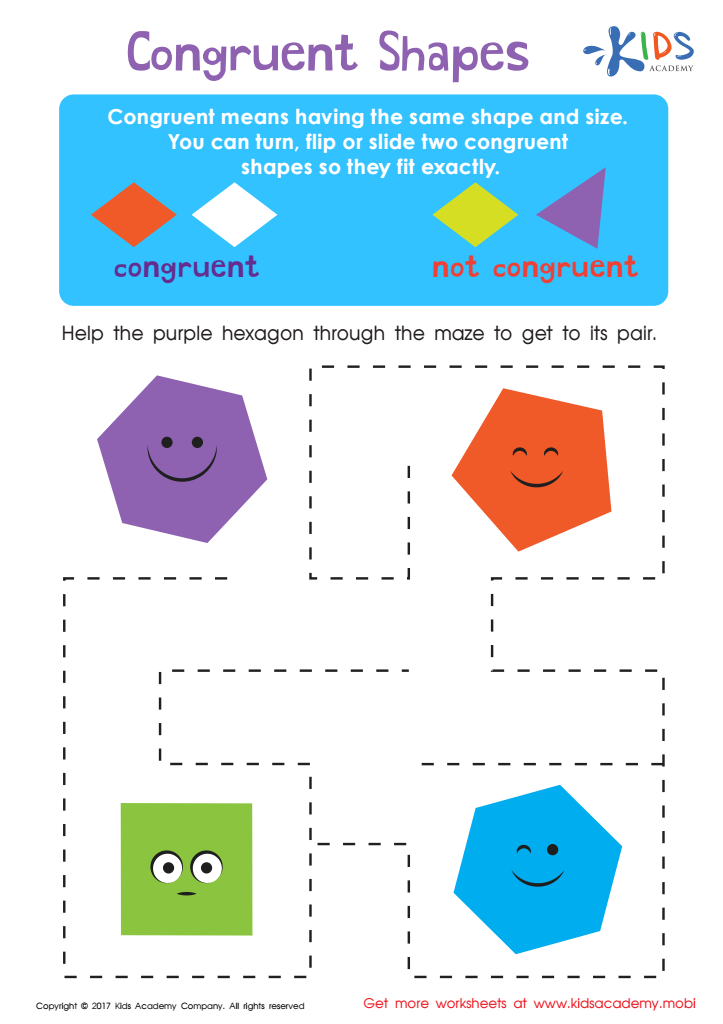
Congruent Shapes Worksheet
 Assign to My Students











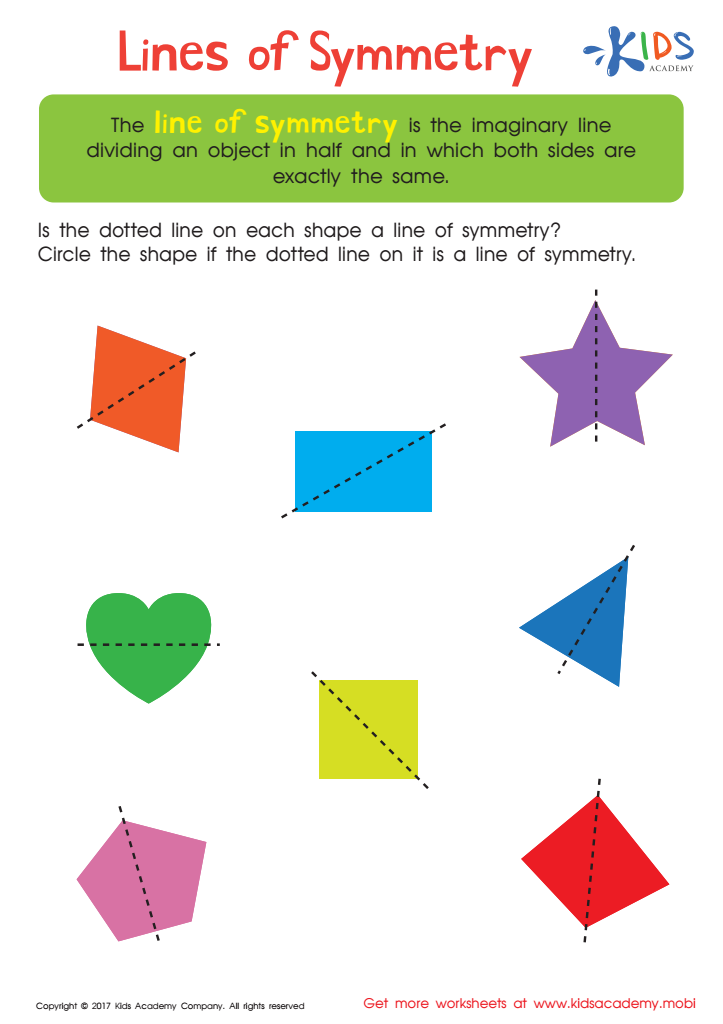
Lines of Symmetry Printable
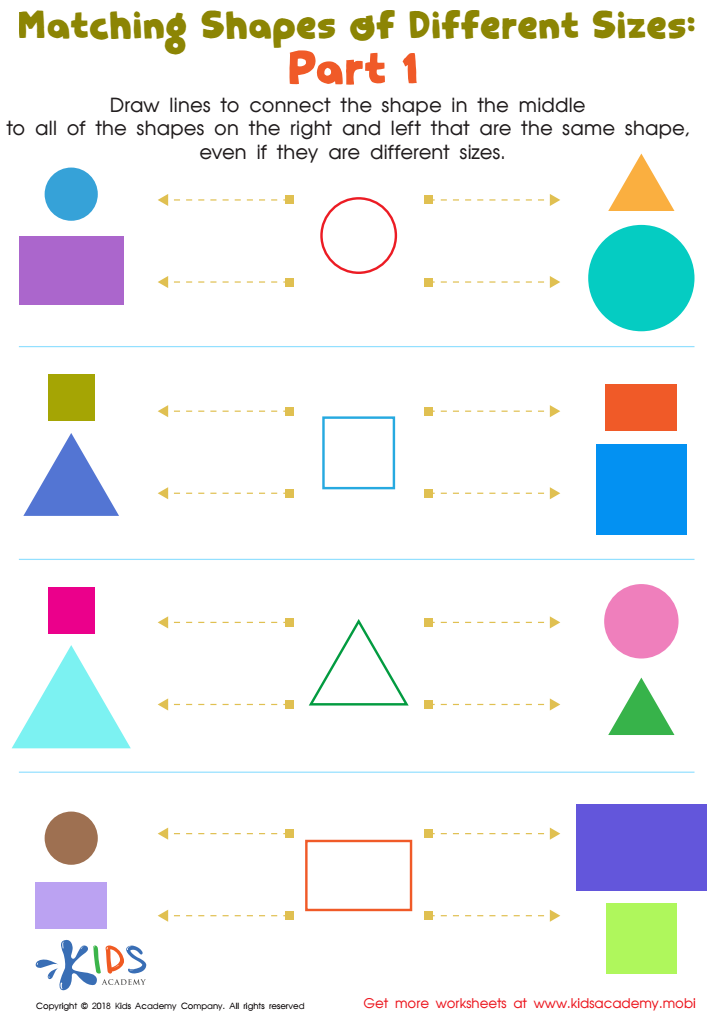
Geometry: part 1 Worksheet
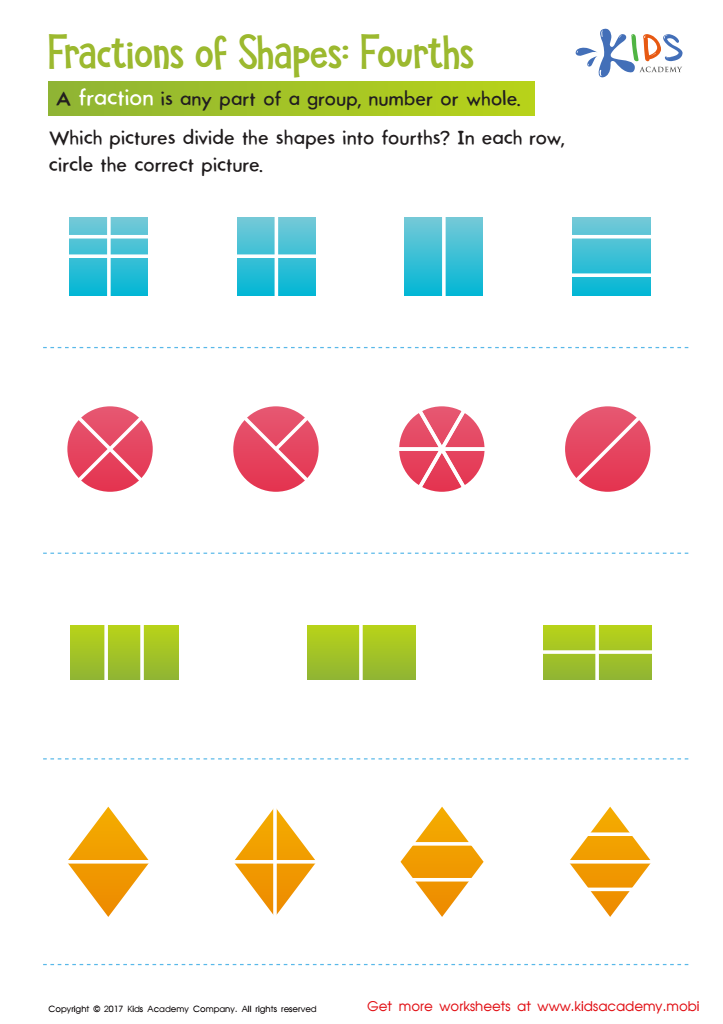
Fractions of Shapes Worksheet








Recognizing shapes is a fundamental aspect of early mathematics education, crucial for children aged 4-7. This understanding lays the groundwork for spatial awareness, problem-solving skills, and critical thinking. Teaching young learners to identify and categorize shapes enhances their ability to analyze and interpret the world around them.
Parents and teachers should care about shape recognition because it fosters cognitive development, aiding in visual discrimination and memory. Recognizing shapes can improve language skills as children learn to describe and discuss various geometric forms. Additionally, it introduces them to concepts of symmetry, congruence, and transformations, which are foundational in more advanced mathematics.
Shape recognition also enhances creativity and imagination. Through activities like drawing, building, or playing with shapes, children explore how these forms can combine and function in different contexts. This play-based learning encourages exploration and experimentation, vital components of holistic education.
Furthermore, strong shape recognition prepares children for real-world applications in art, architecture, and even sciences, helping relate math to everyday life. Ultimately, promoting shape recognition in young children equips them with essential skills, confidence, and a strong mathematical foundation for future learning.








