Basic addition practice Numbers Worksheets for Ages 4-7
6 filtered results
-
From - To
Enhance your child's math skills with our Basic Addition Practice Numbers Worksheets designed for ages 4-7. These engaging and educational worksheets help young learners grasp fundamental addition concepts through fun activities and colorful illustrations. Perfect for kindergarten and early elementary students, each worksheet is crafted to make learning enjoyable while reinforcing essential math skills. From adding single digits to solving simple addition problems, your child will build a strong mathematical foundation. Suitable for classroom or home use, these worksheets support both self-paced learning and guided instruction. Visit Kids Academy to help your child master basic addition their way!
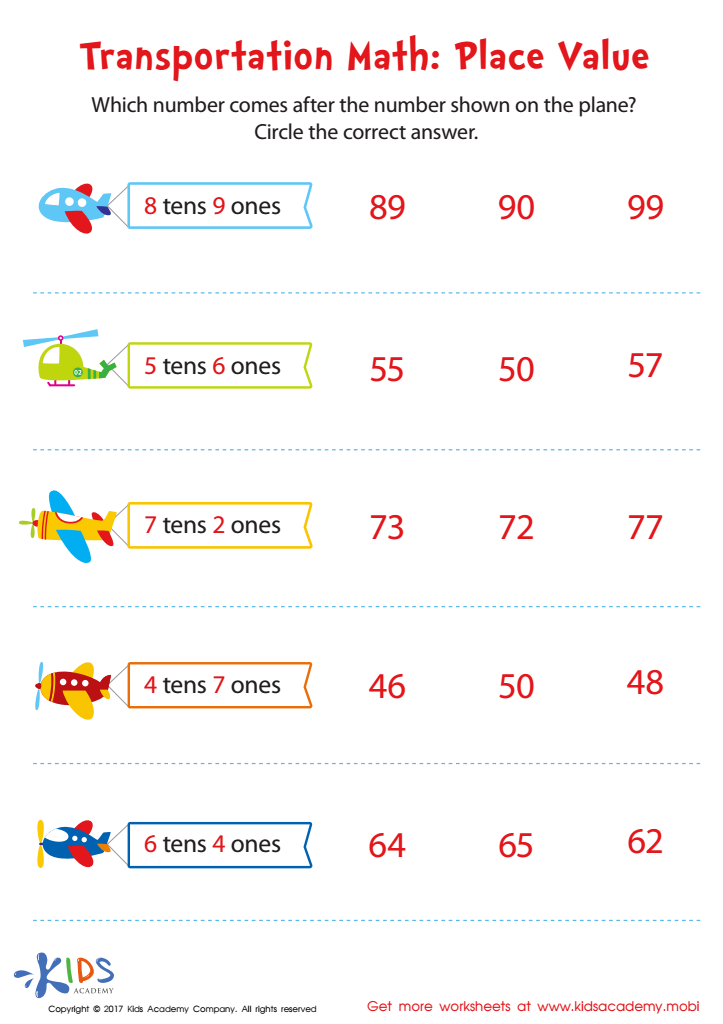
Transportation Math Printable
 Assign to My Students
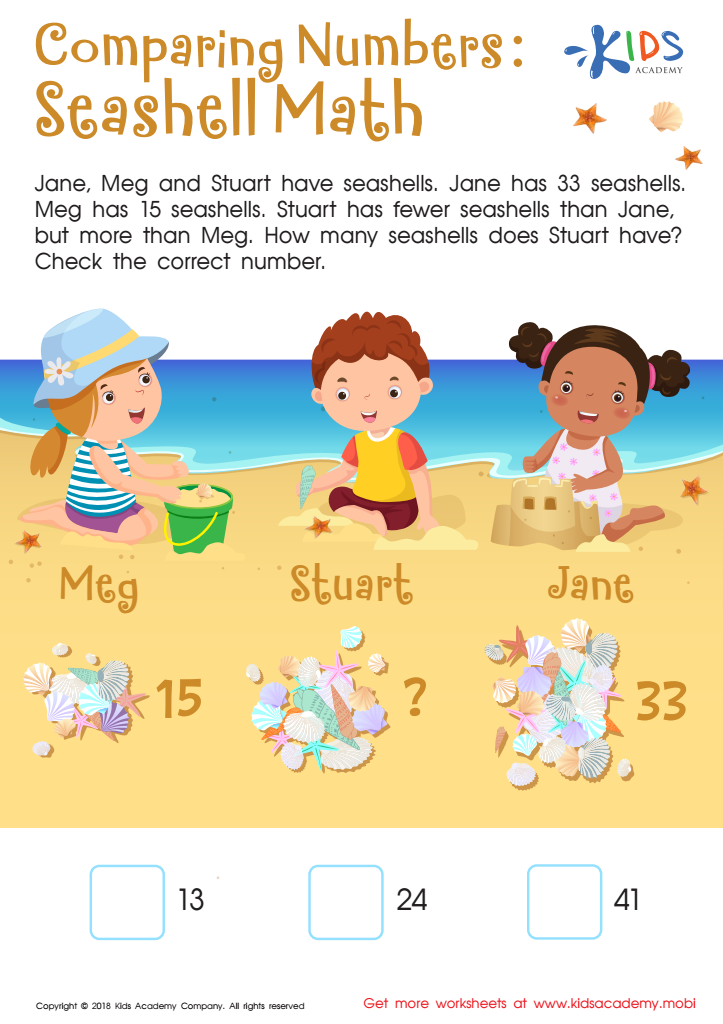
Seashell Collectors Worksheet
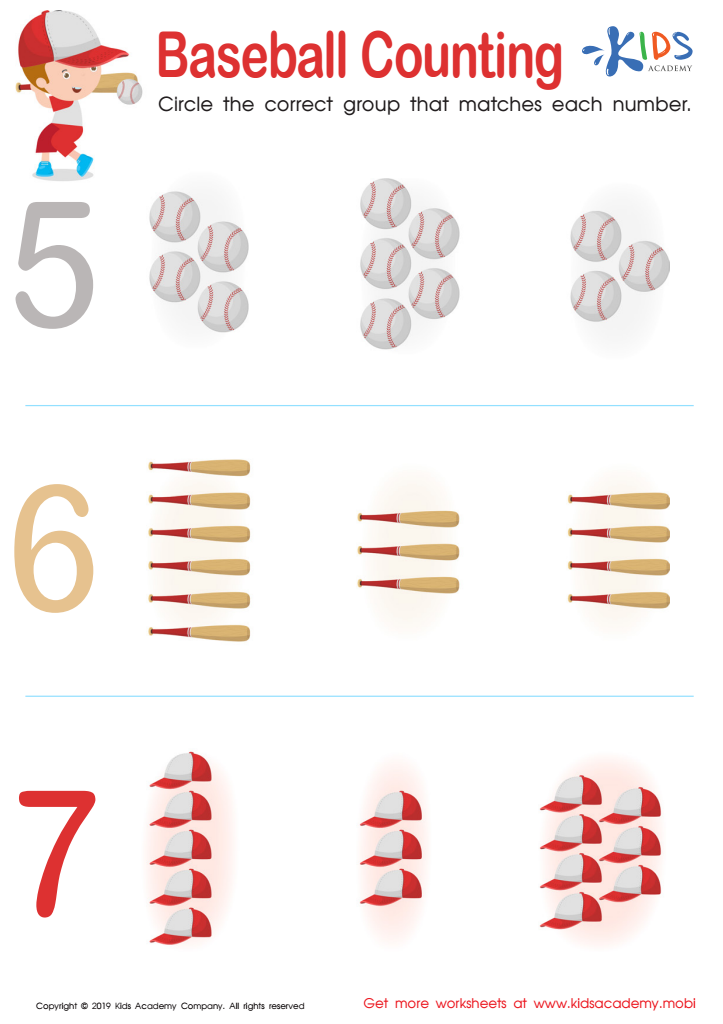
Baseball Counting Worksheet
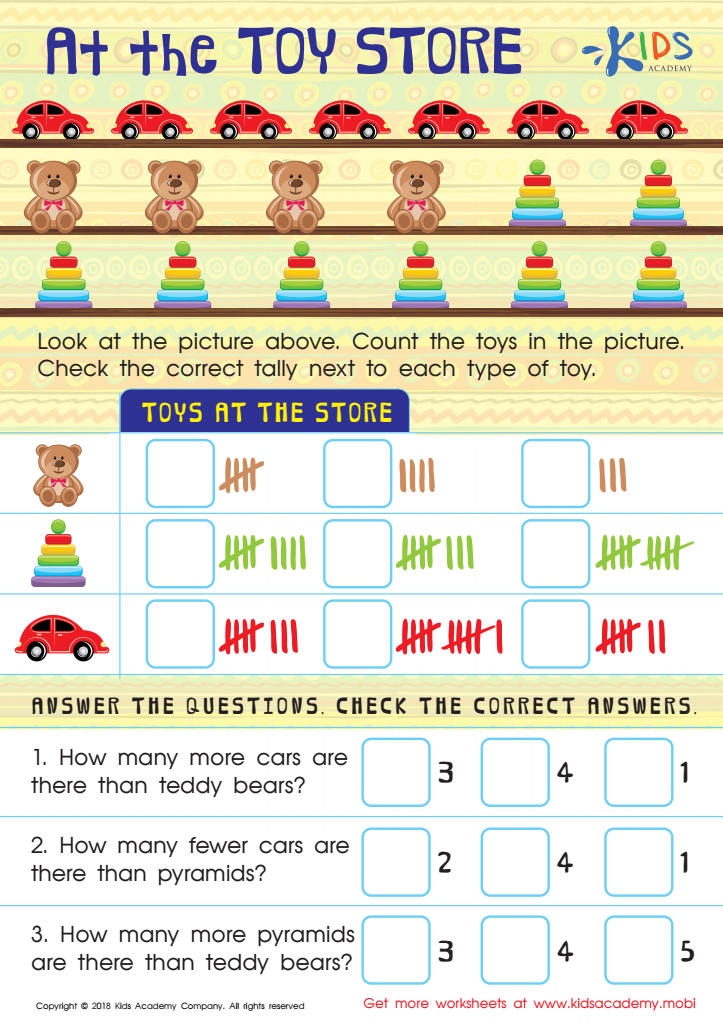
Tally Chart: At the Toy Store Worksheet
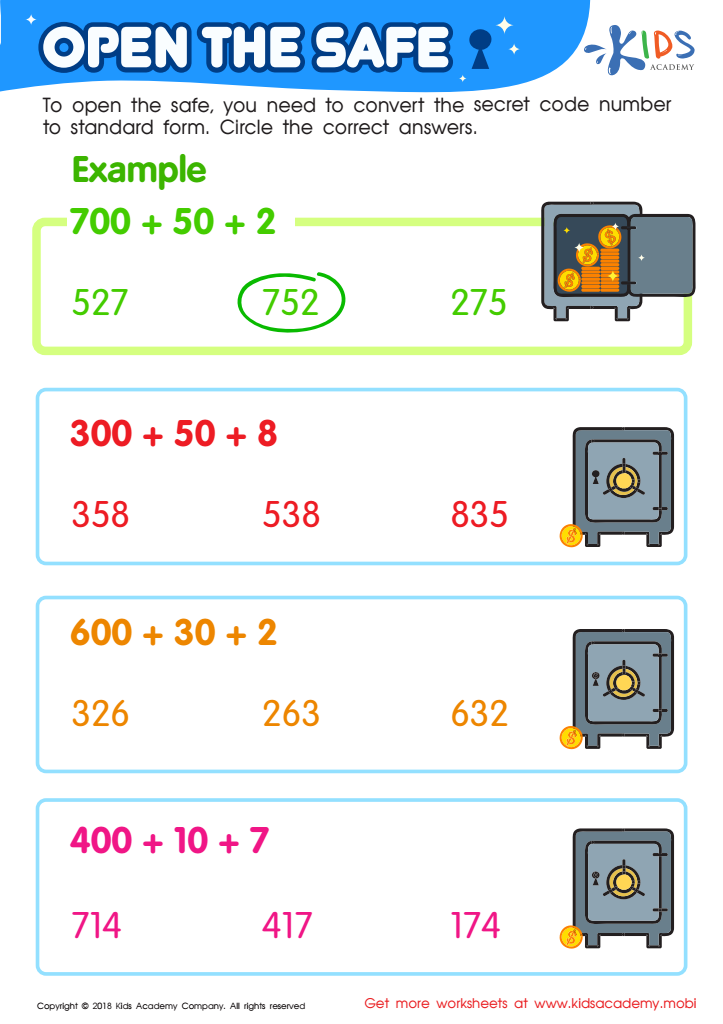
Open the Safe Worksheet
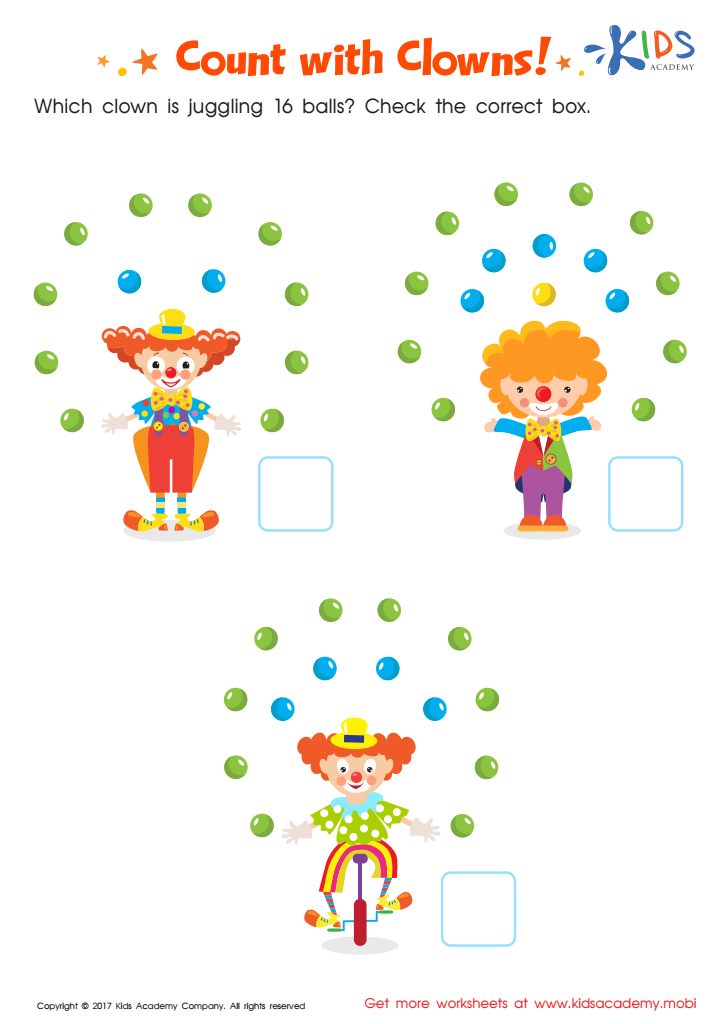
Count with Clowns Worksheet



.jpg)



Understanding basic addition is foundational for children ages 4-7, and it's essential that both parents and teachers give ample attention to this skill. At this stage, children's brains are highly receptive, and developing a strong number sense is crucial for their future success in mathematics and other problem-solving activities.
Basic addition helps children grasp key concepts such as counting, numerical recognition, and the relationship between numbers. Mastering these skills early sets the groundwork for more complex mathematical operations, such as subtraction, multiplication, and division, which they will encounter in later grades.
Moreover, early proficiency in basic addition contributes to a child's confidence and love for mathematics. Children who struggle early on may develop anxiety toward math, leading to a negative attitude that can persist and affect their academic performance and disposition toward learning in general.
Practicing basic addition also offers opportunities for parents or teachers to engage in meaningful, interactive activities with children, strengthen their cognitive abilities, and cultivate a collaborative learning environment. Whether through playful games, visual aids, or daily routine applications (like adding fruits into a basket), consistent practice can make learning both fun and impactful. Therefore, investing time in basic addition during these formative years is crucial for fostering a long-term appreciation and aptitude for mathematics.








