Pattern recognition Numbers Worksheets for Ages 4-7
4 filtered results
-
From - To
Unlock your child's potential with our Pattern Recognition Numbers Worksheets designed for ages 4-7! The engaging activities aim to strengthen early math skills by identifying and completing number sequences. Children will enjoy colorful, interactive exercises that make learning fun. These worksheets are perfect for honing critical thinking, building cognitive skills, and enhancing problem-solving abilities. Tailored specifically for young learners, they cater to various learning stages and styles. Download these free, printable resources to support your child's educational journey and give them a head start in math! Perfect for parents and teachers alike.
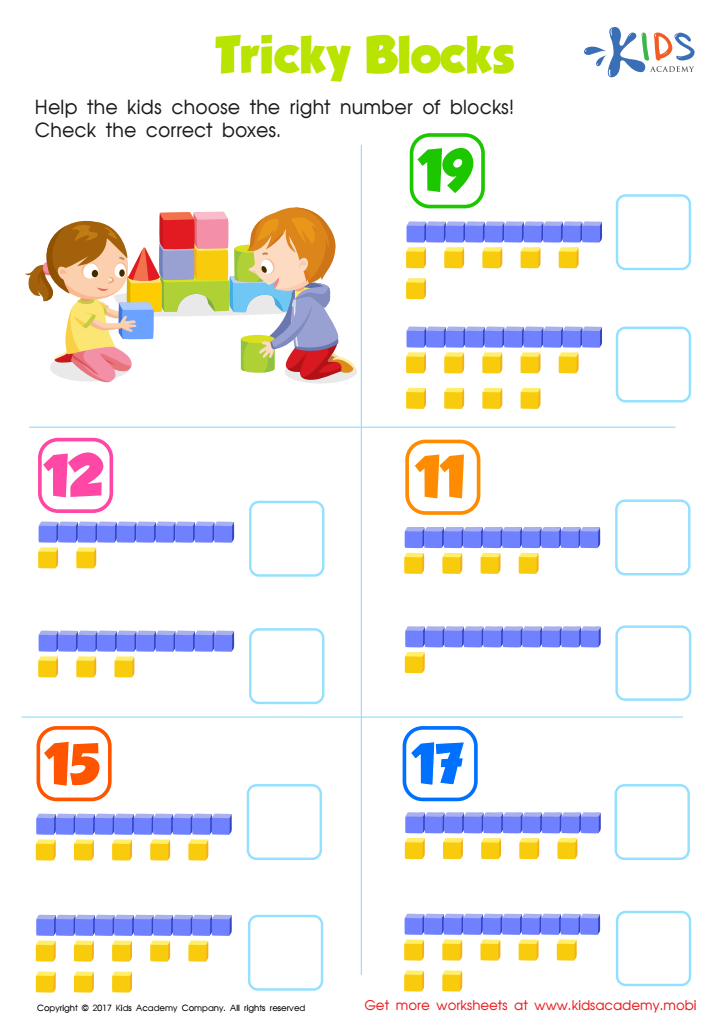
Tricky Blocks Worksheet
 Assign to My Students
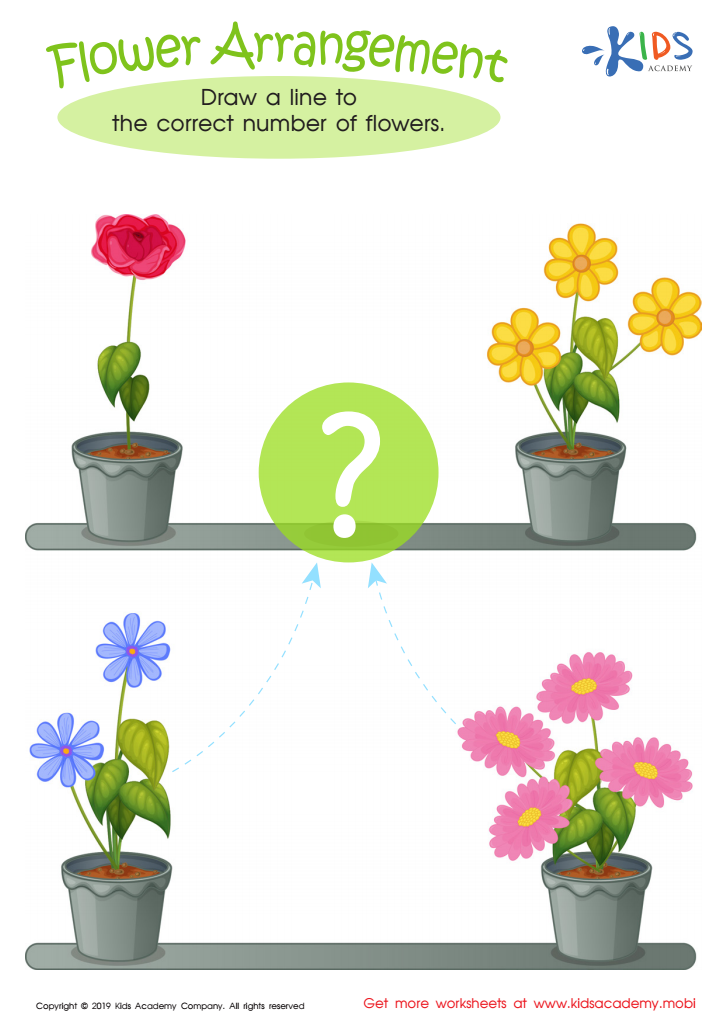
Flower Arrangement Worksheet
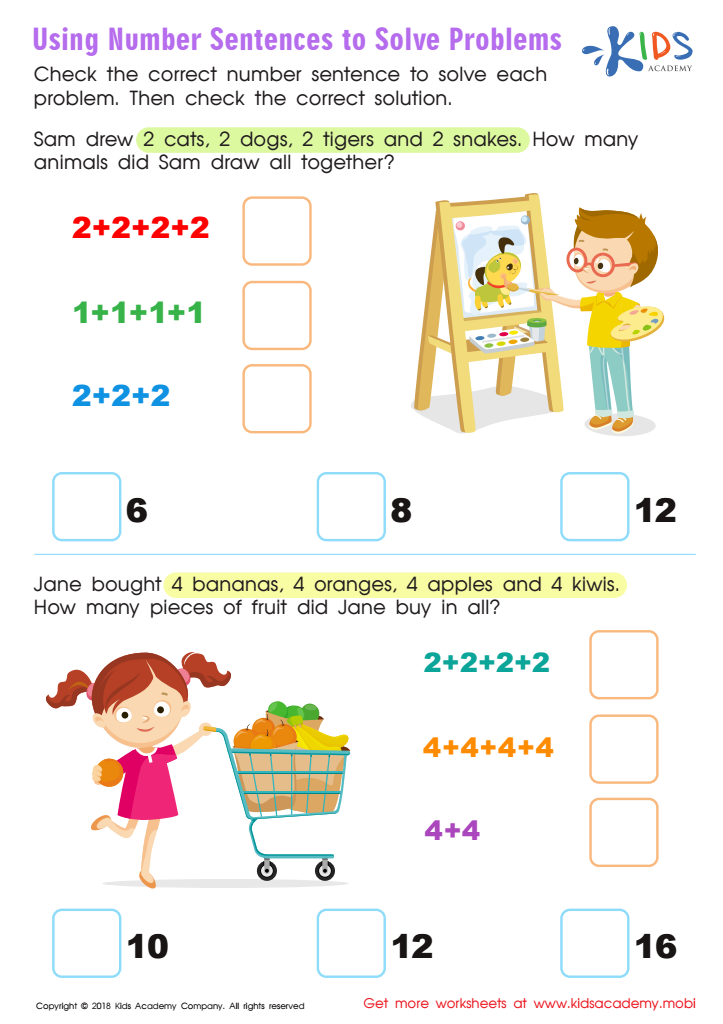
Using Number Sentences to Solve Problems Worksheet
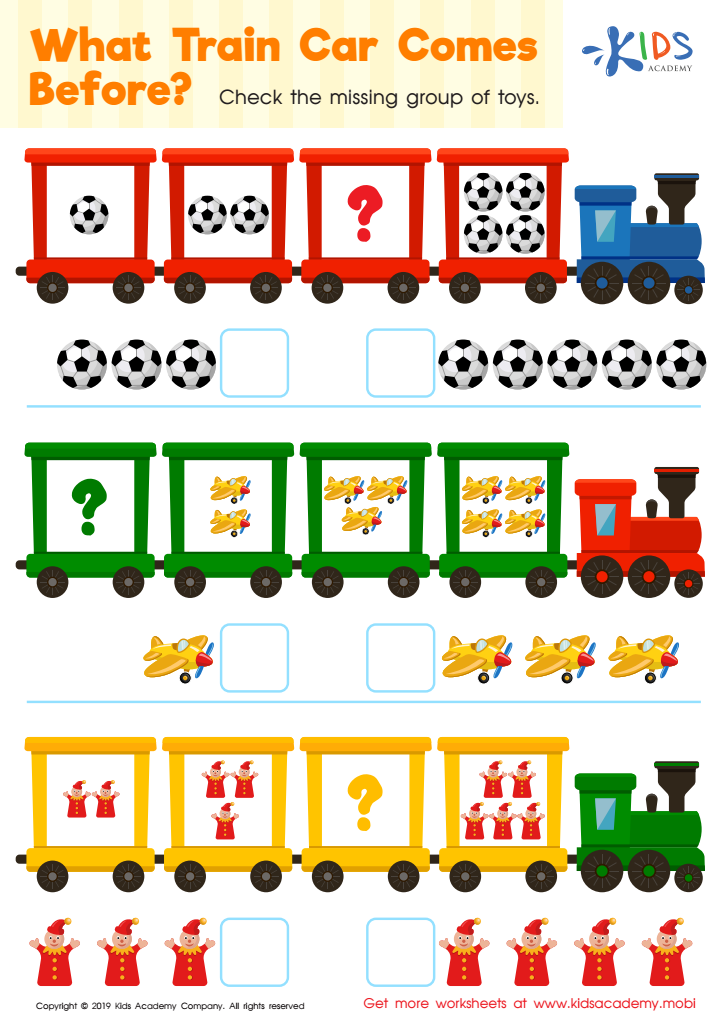
What Train Car Comes Before? Worksheet








Pattern recognition, especially with numbers, forms an essential building block for young children aged 4-7; it lays the groundwork for becoming adept at mathematics and overall problem-solving. Parents and teachers should immensely care about fostering this skill during early childhood.
At this developmental stage, children’s brains are remarkably receptive and adaptable, making it an optimal time to instill essential cognitive abilities. Number patterns, such as sequences (1, 2, 3) or relationships (2, 4, 6), improve a child’s understanding of order, predictability, and logical thinking. Such skills are fundamental in grasping more complex mathematical concepts they will encounter as they advance in their education, like addition, subtraction, and multiplication.
Furthermore, pattern recognition goes beyond mathematics; it boosts general cognitive development, advancing analytical thinking and problem-solving capabilities. Recognizing relations between numbers enhances memory, sharpens attention, and encourages children to make educated guesses—proficiencies useful in everyday tasks and other academic subjects.
Actively engaging young learners with fun games, interactive activities, or simple day-to-day occurrences demonstrating numerical patterns cultivates curiosity and enjoyment in learning. This enthusiasm can translate to a lifelong appreciation for numbers and analytics, eventually leading to better performance in school and other aspects of life.








