Understanding graphs Numbers Worksheets for Ages 4-7
3 filtered results
-
From - To
Unlock your child's potential with our "Understanding Graphs Numbers Worksheets for Ages 4-7." These engaging worksheets help young learners grasp essential graphing concepts through fun activities. Perfect for preschool and early elementary students, each worksheet aids in developing critical thinking and data interpretation skills. With colorful visuals and age-appropriate exercises, children can easily learn to read, draw, and interpret simple bar graphs and pictographs. Help your child build a strong mathematical foundation while enjoying the process. Ideal for both classroom and at-home learning, our worksheets make mastering graphs a fun and rewarding experience!
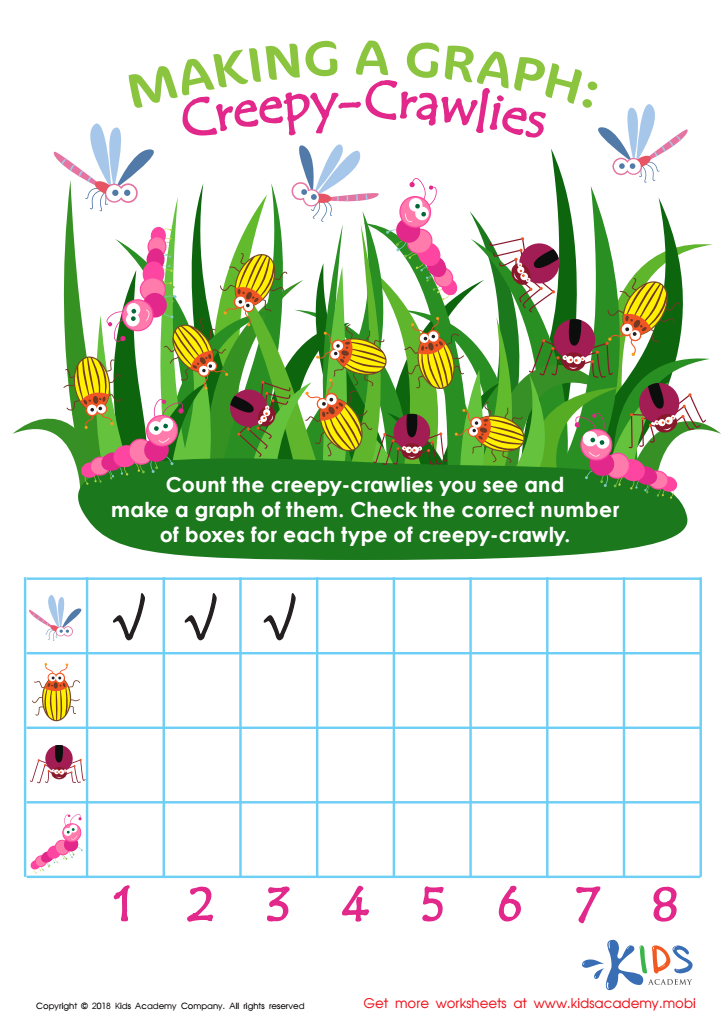
Making a Graph: Creepy Crawlies Worksheet
 Assign to My Students
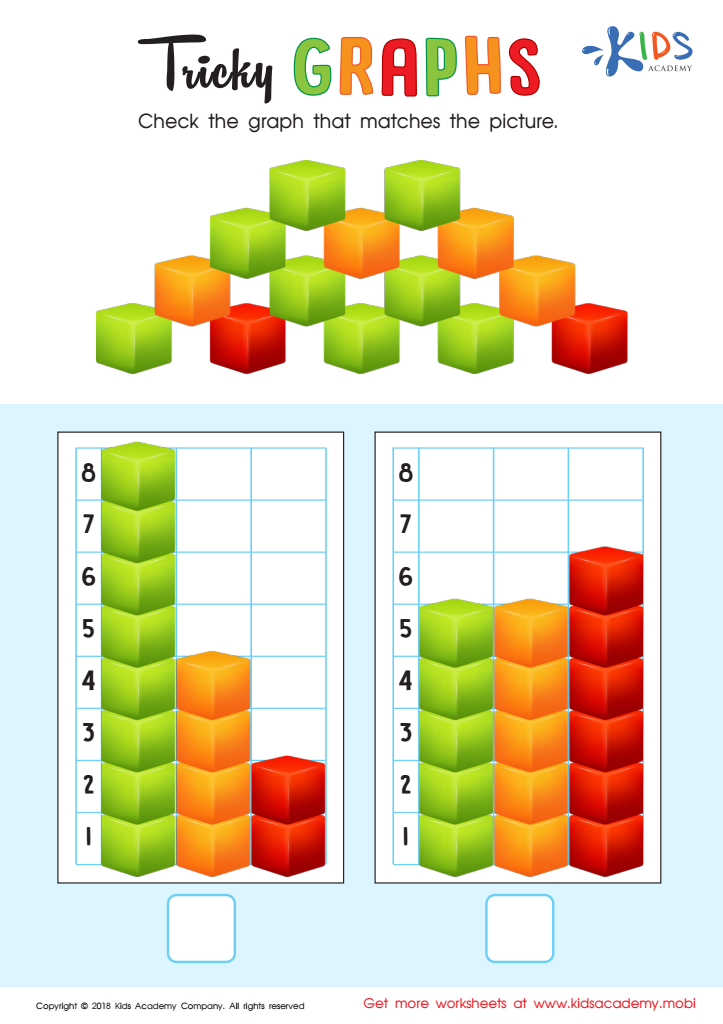
Tricky Graphs Worksheet
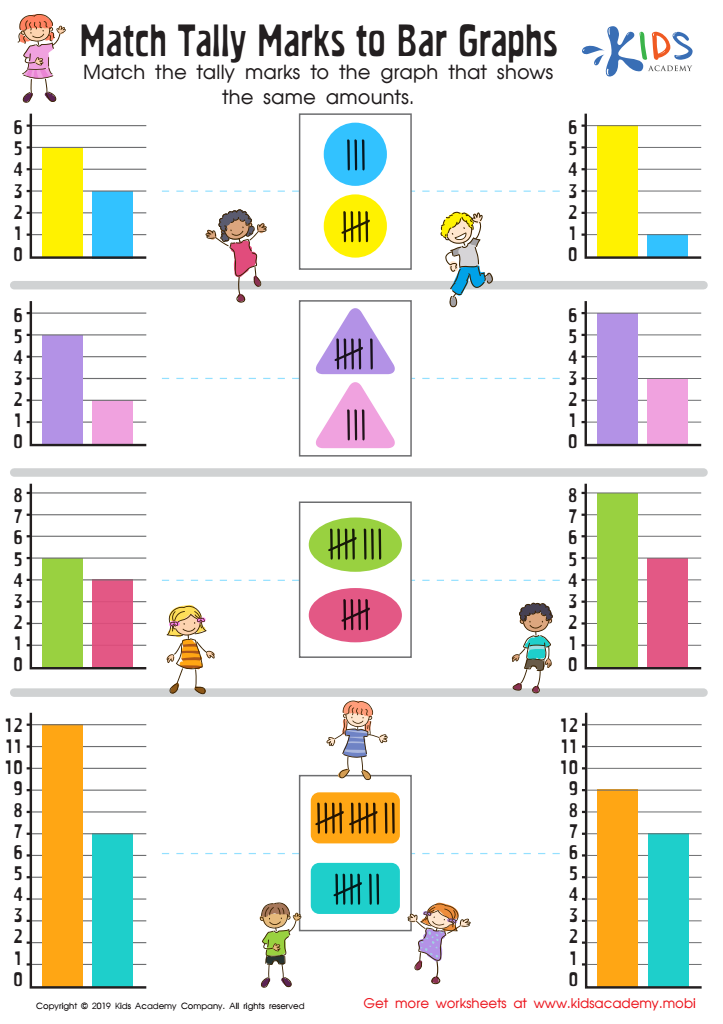
Match Tally Marks to Bar Graphs Worksheet








Understanding graphs and numbers at an early age lays a critical foundation for children’s future academic success and everyday life skills. Grasping these concepts between the ages of 4 and 7 enhances young learners' analytical and problem-solving abilities. Graphs visually represent information, making complex data more accessible. By learning to interpret simple graphs, children develop the ability to compare quantities, recognize patterns, and make informed decisions—a fundamental skill set they will use throughout school and beyond.
Numbers form the cornerstone of mathematics, crucial not just in academics but in various real-world scenarios. Early familiarity with numbers and basic graph interpretation fosters numerical literacy, enabling kids to understand measurements, quantities, and sequences. This early exposure demystifies math, often perceived as challenging, making it a more enjoyable and less intimidating subject.
In addition, engaging with numbers and graphs improves cognitive development. Kids learn to classify, sort, and organize information, skills essential for logical thinking. Parents and teachers must realize that introducing these concepts through playful, age-appropriate activities doesn't just bolster math skills—it nurtures curiosity, boosts confidence, and fosters a lifelong appreciation for learning. Investing in this foundational knowledge equips children to tackle more complex mathematical and analytical challenges as they progress in their education.








