Understanding number sequence Numbers Worksheets for Ages 4-7
3 filtered results
-
From - To
Unlock the first steps of math mastery with our 'Understanding Number Sequence' worksheets, tailored for ages 4-7. These engaging worksheets, available on Kids Academy, offer young learners an interactive and fun way to grasp the concept of numerical order. By completing activities that include counting, recognizing patterns, and understanding sequences, children develop a solid foundation in early math skills. Our worksheets are designed to stimulate critical thinking and foster a love for numbers. Perfect for both classroom and at-home learning, they provide the essential practice kids need to confidently progress in their mathematical journey.
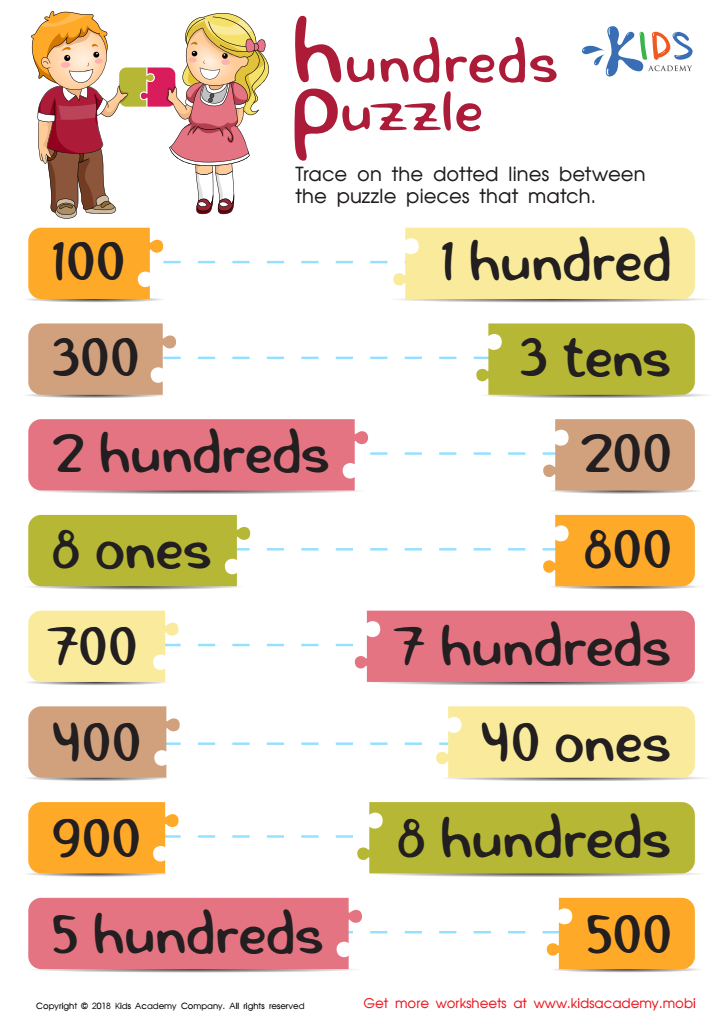
Hundreds Puzzle Worksheet
 Assign to My Students
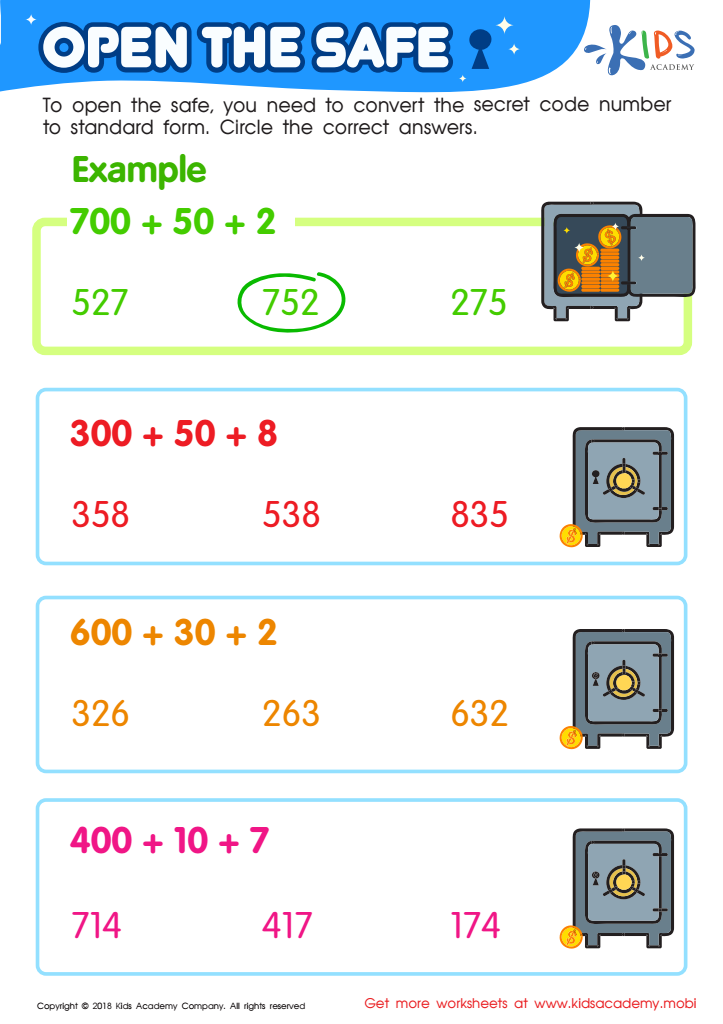
Open the Safe Worksheet
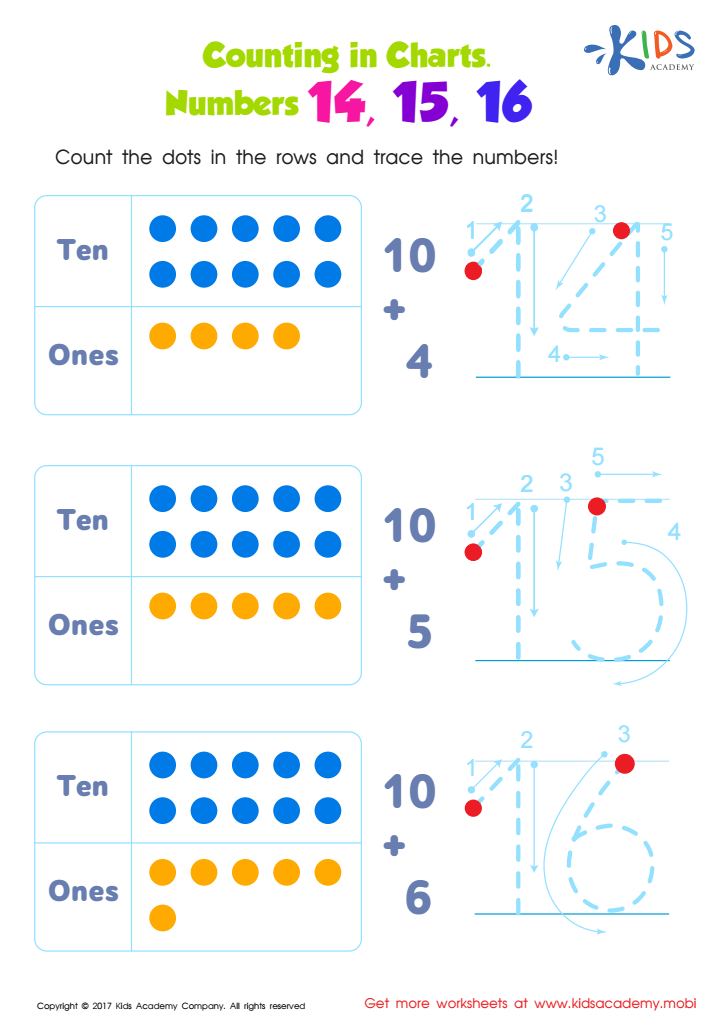
Number Tracing Worksheet



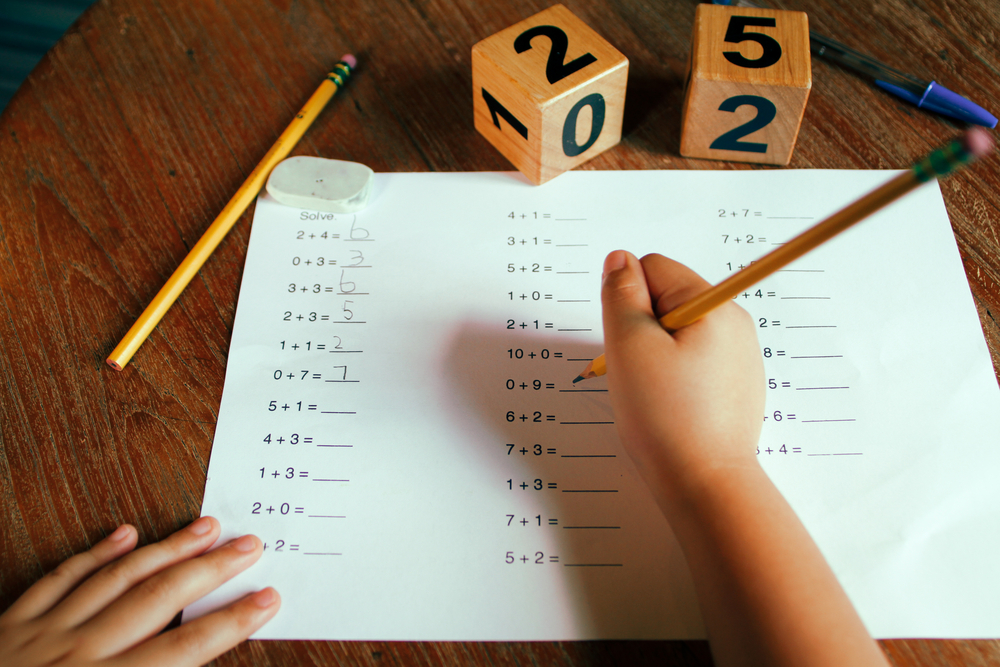



Understanding number sequences is a crucial foundational skill for children aged 4-7, as it lays the groundwork for their future mathematical learning and cognitive development. At this formative age, children's brains are highly receptive to new information. Engaging them in activities that involve number sequences helps develop their ability to recognize patterns, which is instrumental in learning more complex math concepts later, such as addition, subtraction, and multiplication.
For parents and teachers, fostering this understanding early on ensures that children build a strong mathematical foundation. Number sequences aid in developing essential skills such as counting forward and backward, understanding 'before' and 'after' in a numerical sense, and recognizing relationships between numbers. These skills contribute to a child's general number sense, making it easier for them to grasp the 'why' and 'how' behind mathematical operations.
Additionally, number sequences help cultivate problem-solving abilities and logical thinking. As children manipulate different sequences, they learn to predict outcomes and identify patterns, skills that are transferrable to other academic disciplines and everyday problem-solving scenarios. Being proactive in building these skills at an early age enhances their overall confidence in mathematics, thereby creating a positive attitude towards the subject, which is beneficial long-term.
Therefore, parents and teachers investing time in teaching and reinforcing number sequences significantly impact a child's academic journey and cognitive growth.








