Animal identification Math Worksheets for Ages 4-7 - Page 2
33 filtered results
-
From - To
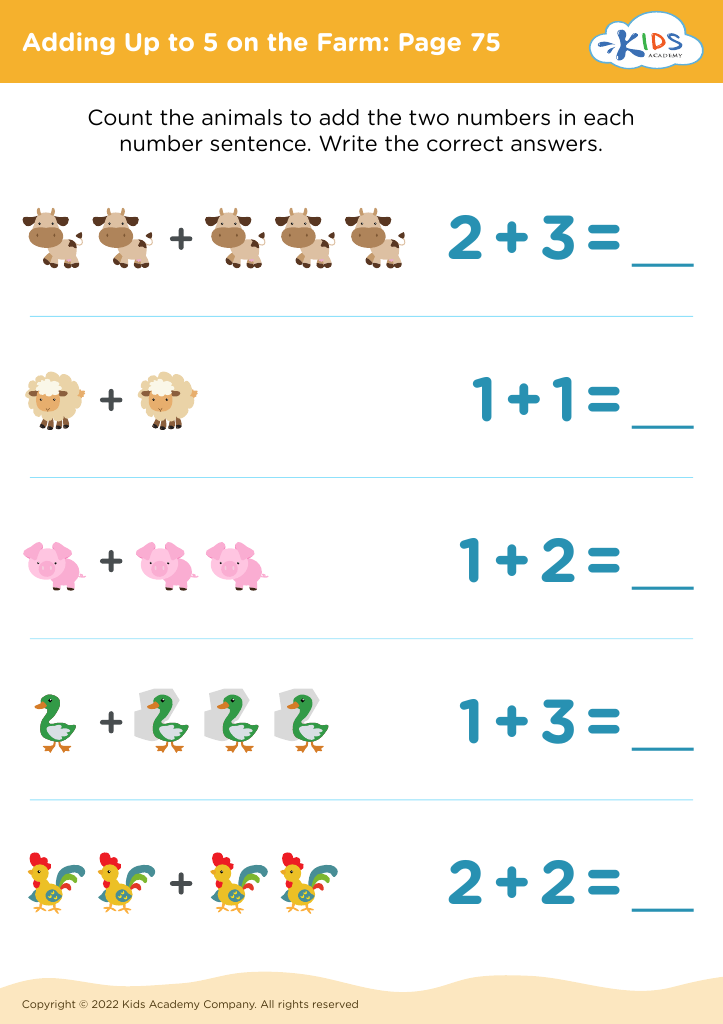
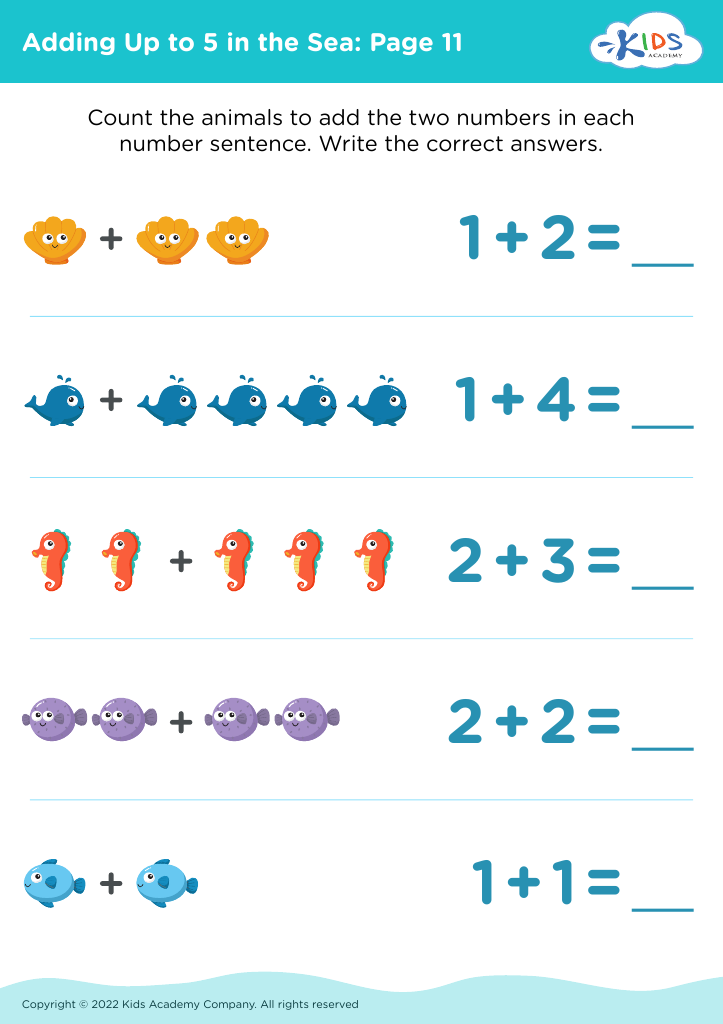
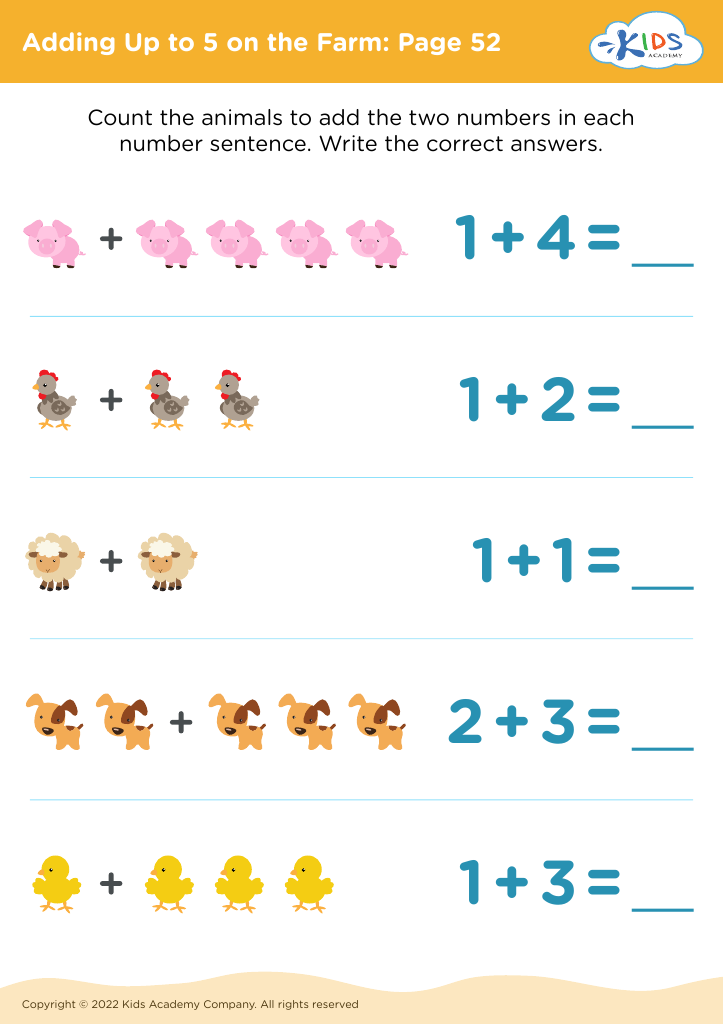
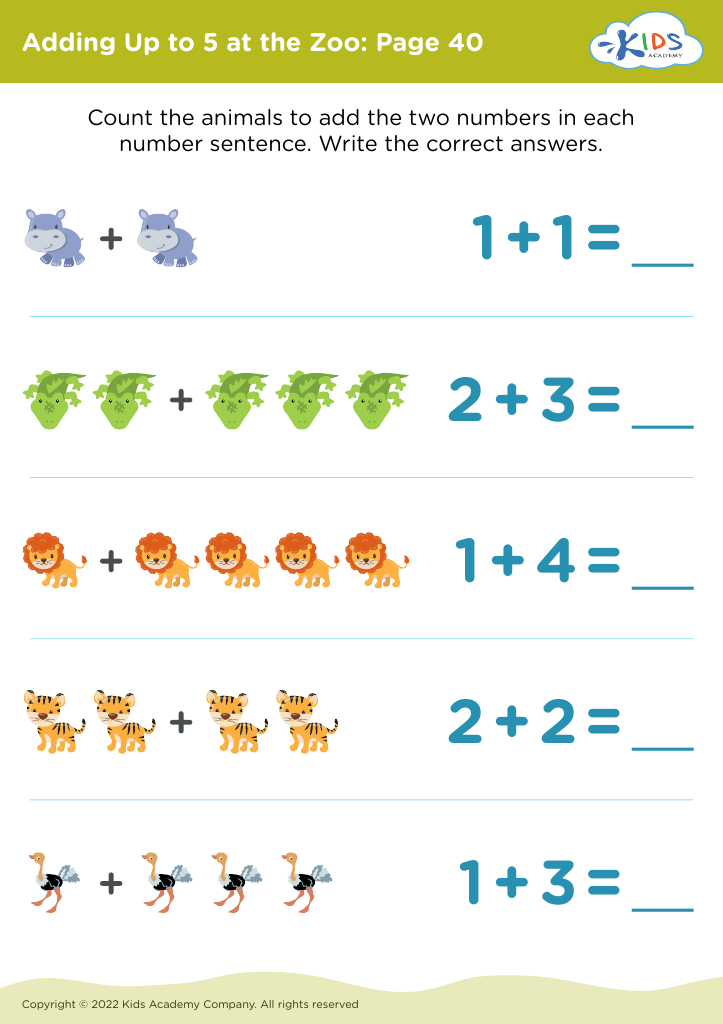
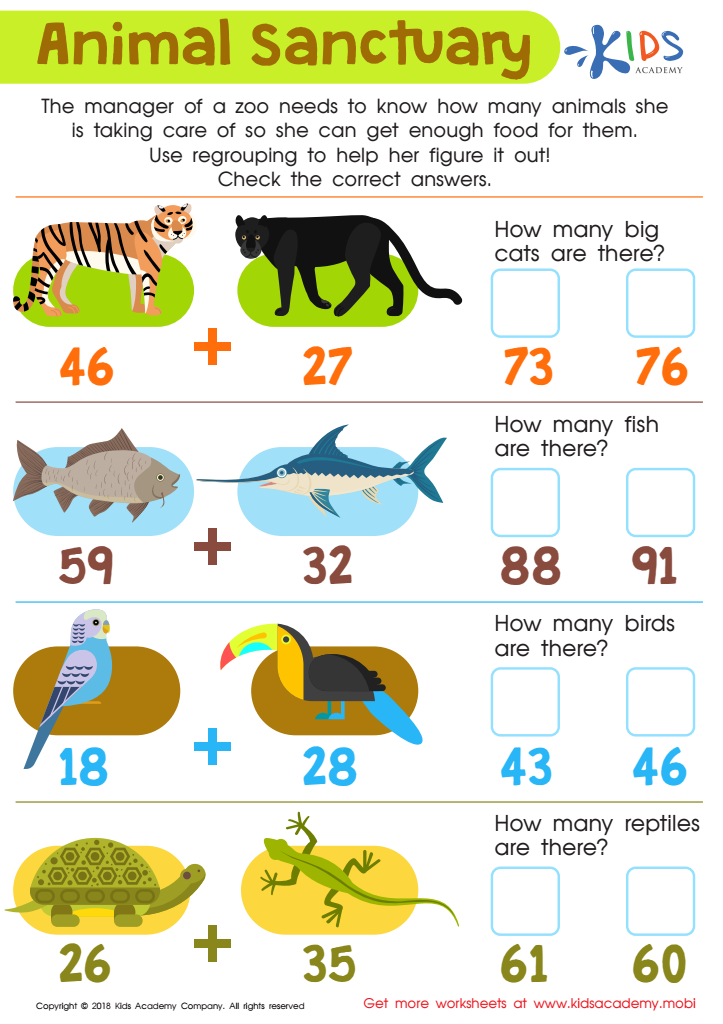
Animal Sanctuary Worksheet
 Assign to My Students







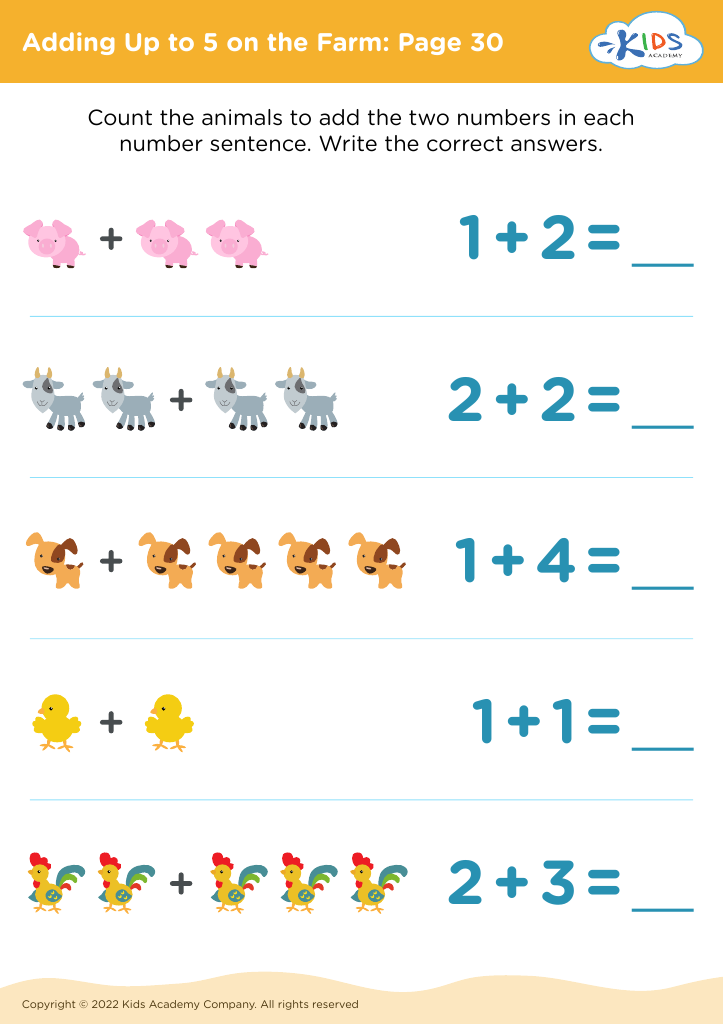
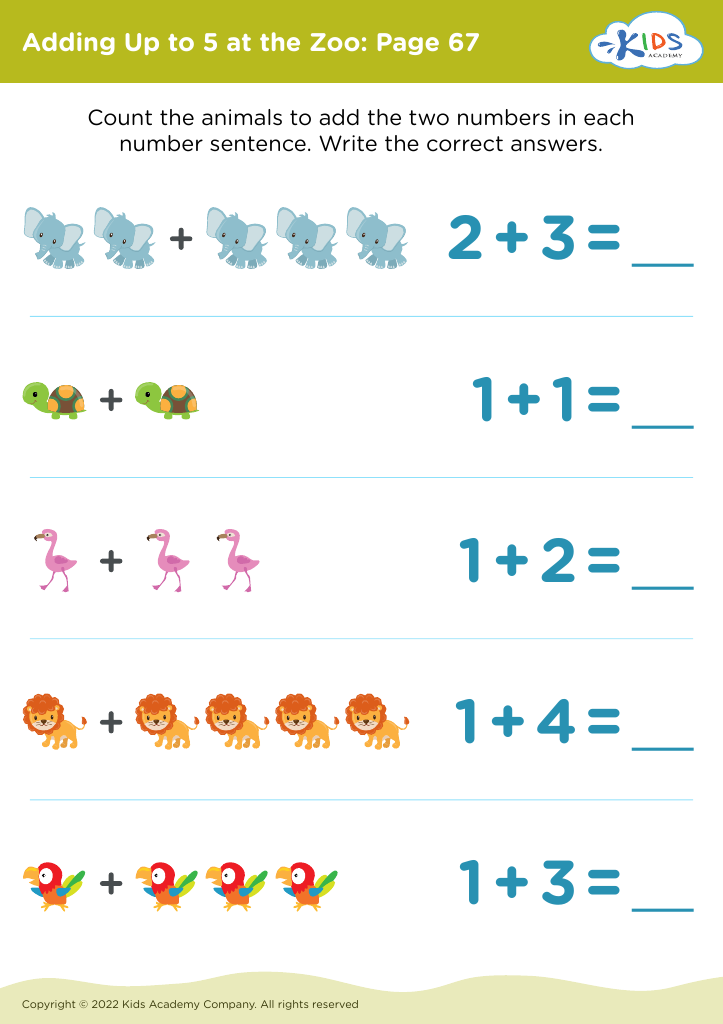
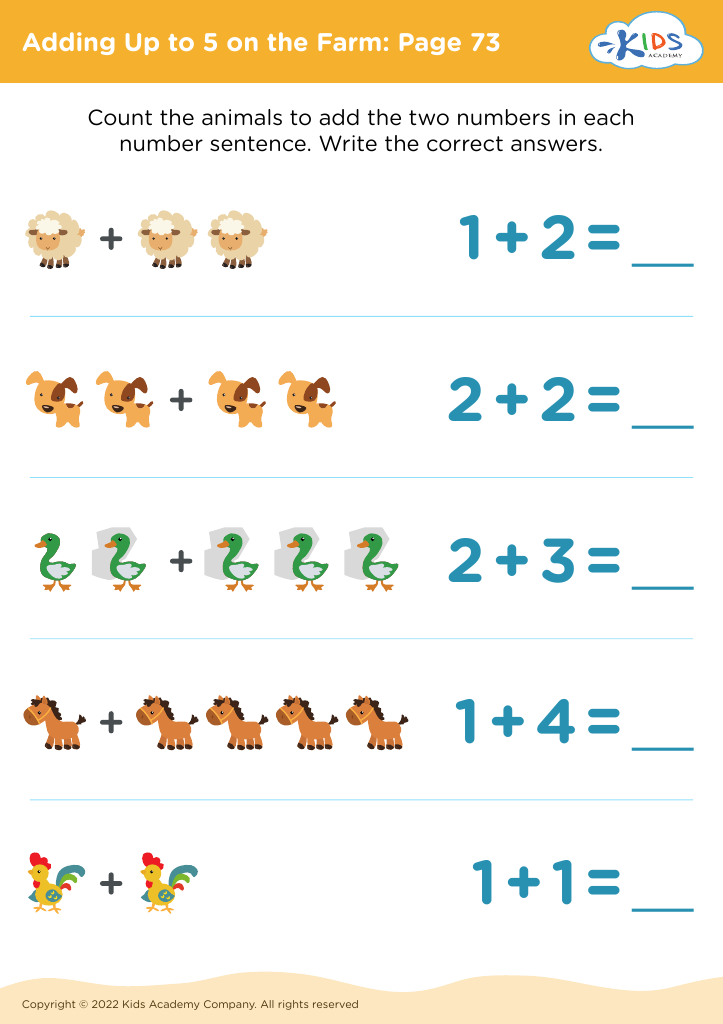
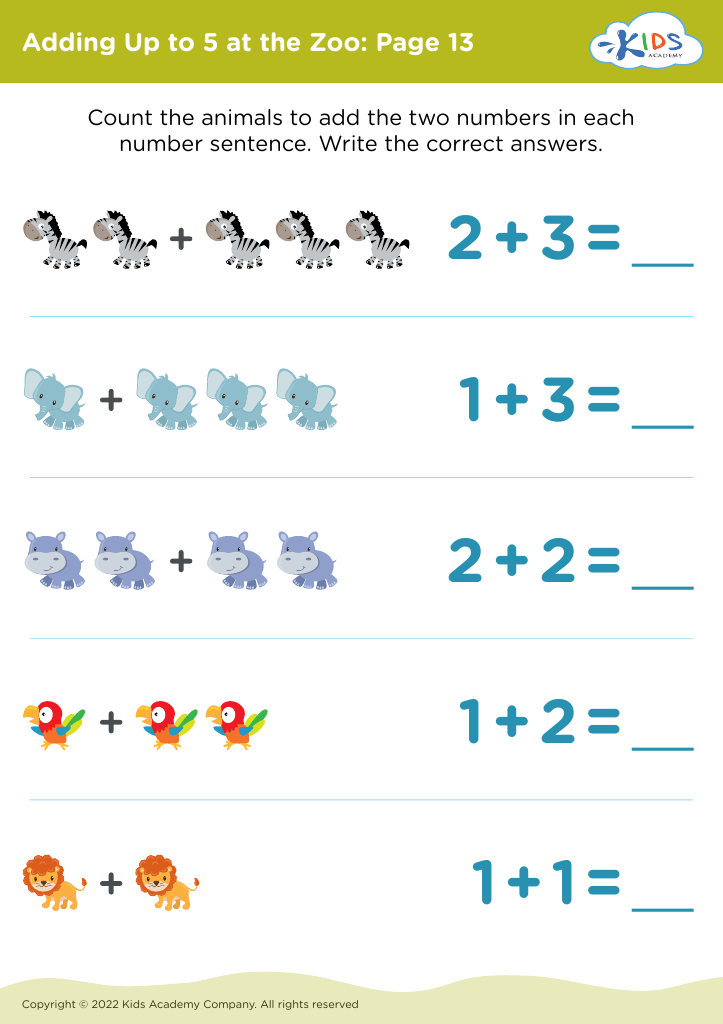
Animal identification math is an engaging educational tool for young children aged 4-7, blending math with the fascination children have for animals. Parents and teachers should care about it because this approach not only fosters mathematical skills but also enhances other developmental areas, such as critical thinking and observational skills.
Firstly, learning to identify animals involves categorization, which teaches children about sorting and classifying—key mathematical skills. For instance, counting the number of legs of various animals introduces basic addition and subtraction without the dryness of traditional methods.
Moreover, animal identification encourages curiosity and exploration. Children learn to associate numeric values with real-world objects, reinforcing their understanding of quantity and counting in a tangible way. This context-rich learning creates a more meaningful and memorable experience.
Additionally, discussing animals promotes vocabulary development, as children encounter new words related to different species and their habitats. This multidisciplinary approach—integrating math, science, and language—supports holistic development.
Ultimately, caring about animal identification math enables parents and teachers to create enriching learning environments that develop a child’s foundational skills, inspiring a lifelong love for learning.








