Check out this FREE Trial Lesson on Math for age 4-7!

Z

Favorites
With answer key
Interactive
  • 4-7
  • Basic Addition Skills
  • Math
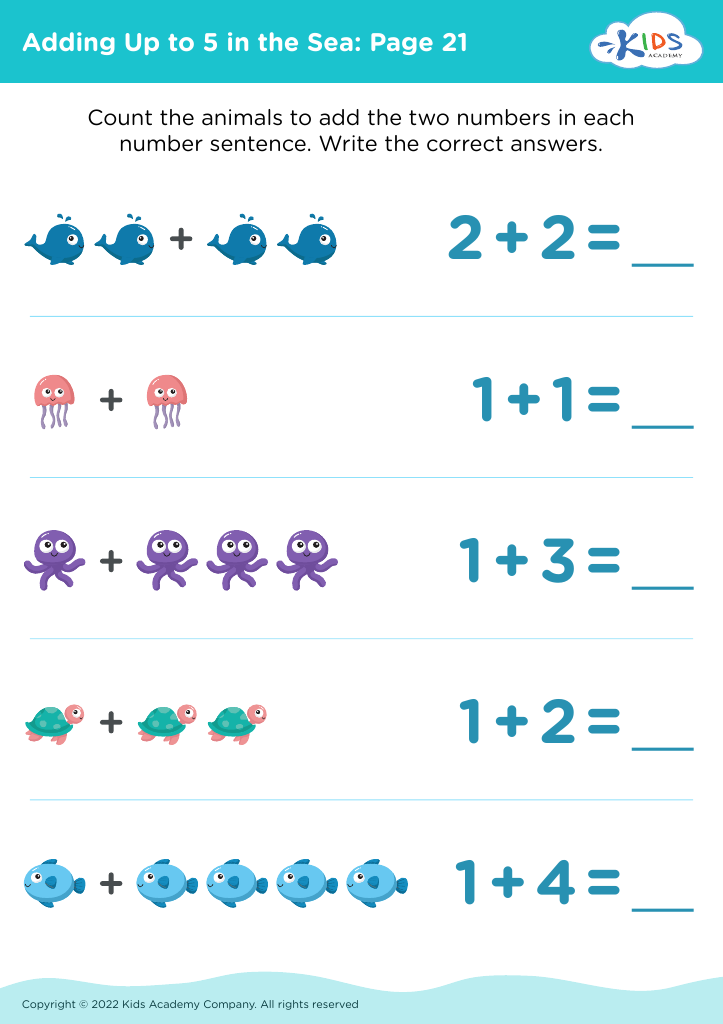
Adding Up to 5 in the Sea: Page 21
Worksheet
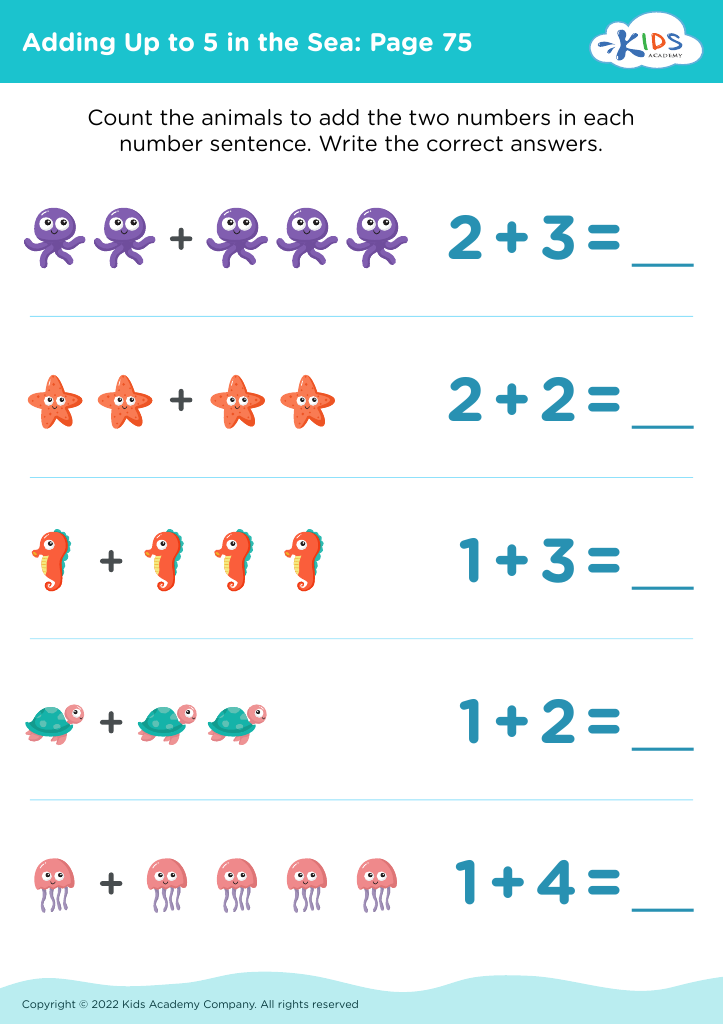
Adding Up to 5 in the Sea: Page 75
Worksheet
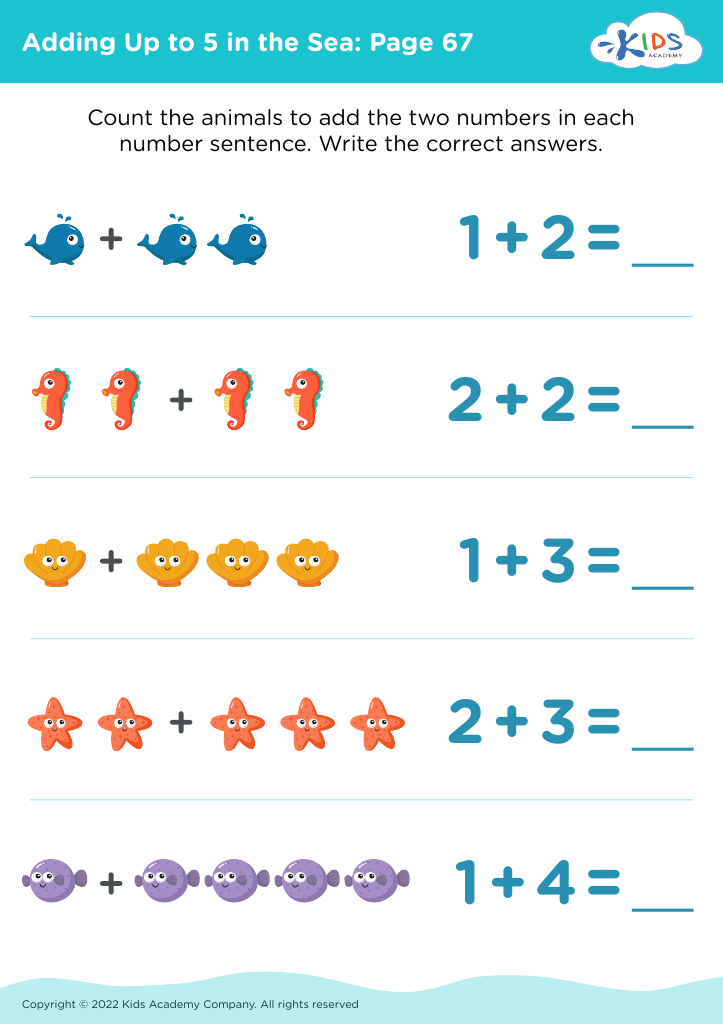
Adding Up to 5 in the Sea: Page 67
Worksheet
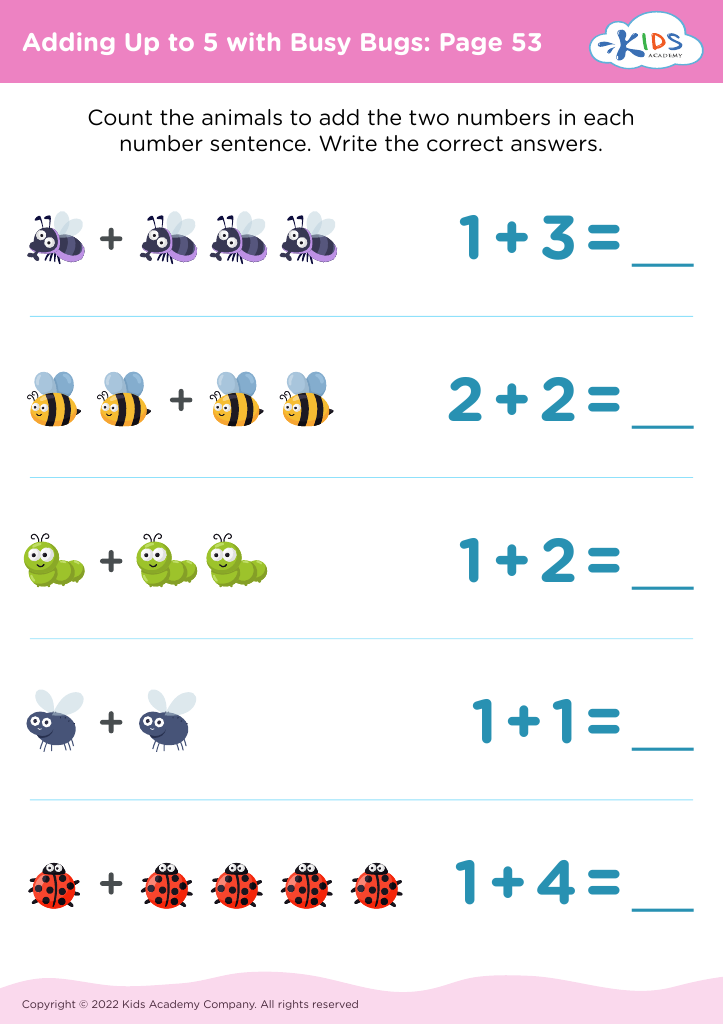
Adding Up to 5 with Busy Bugs: Page 53
Worksheet
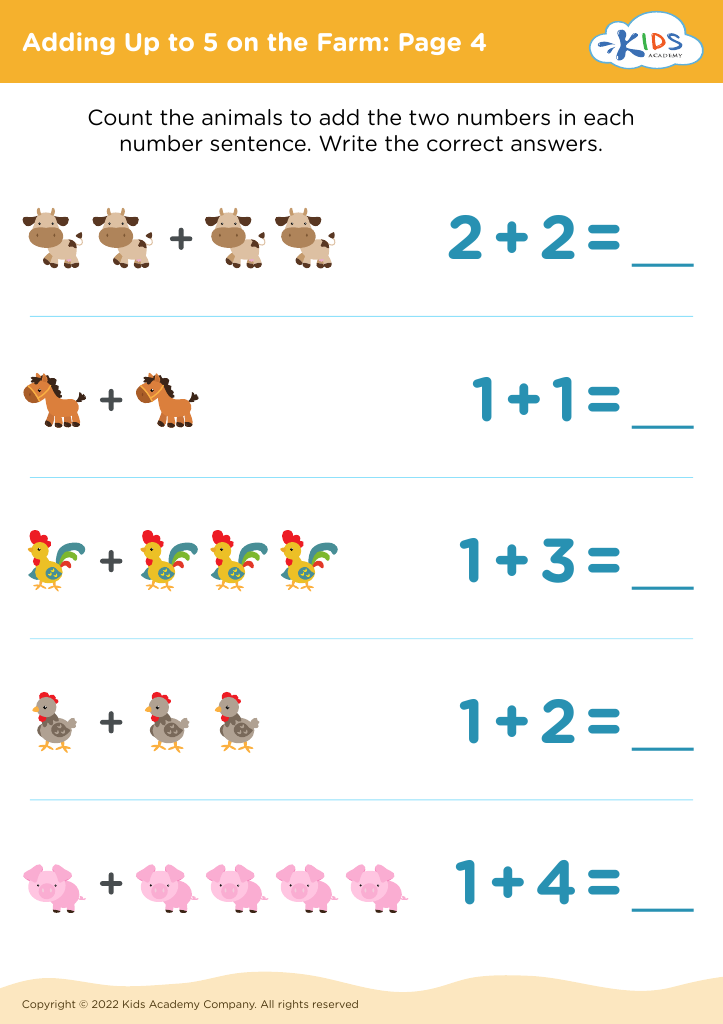
Adding Up to 5 on the Farm: Page 4
Worksheet
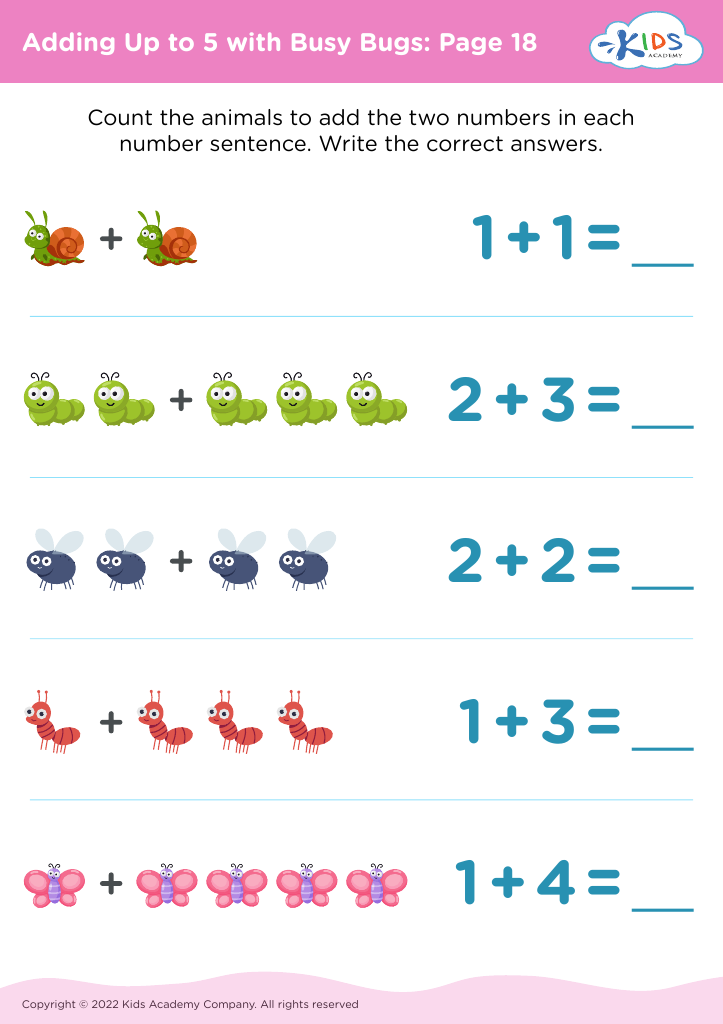
Adding Up to 5 with Busy Bugs: Page 18
Worksheet
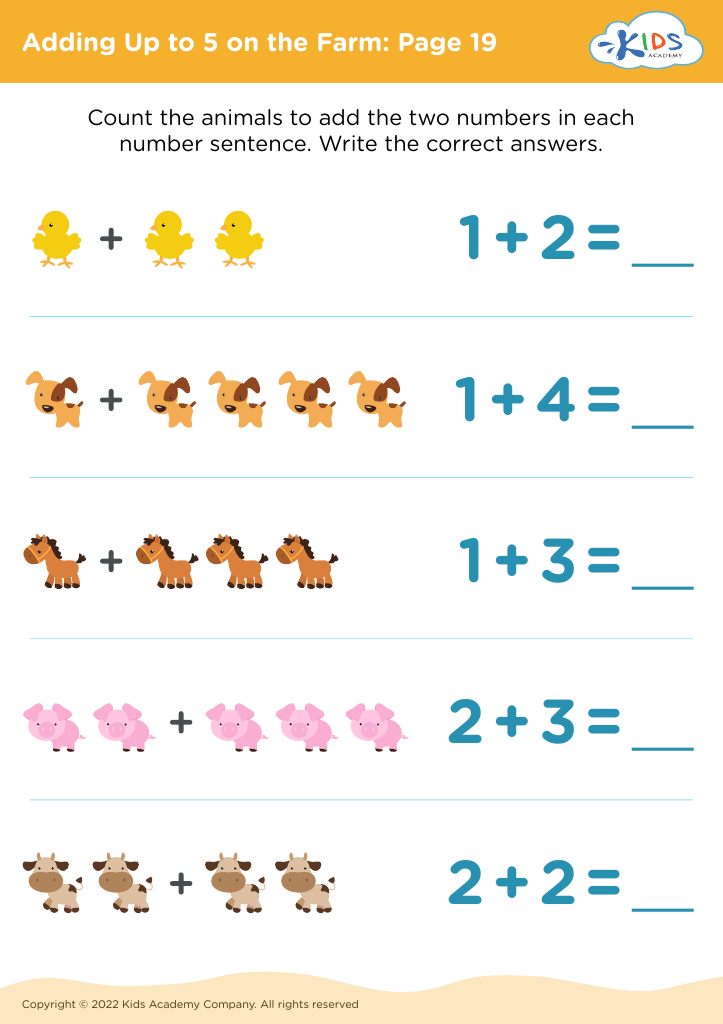
Adding Up to 5 on the Farm: Page 19
Worksheet
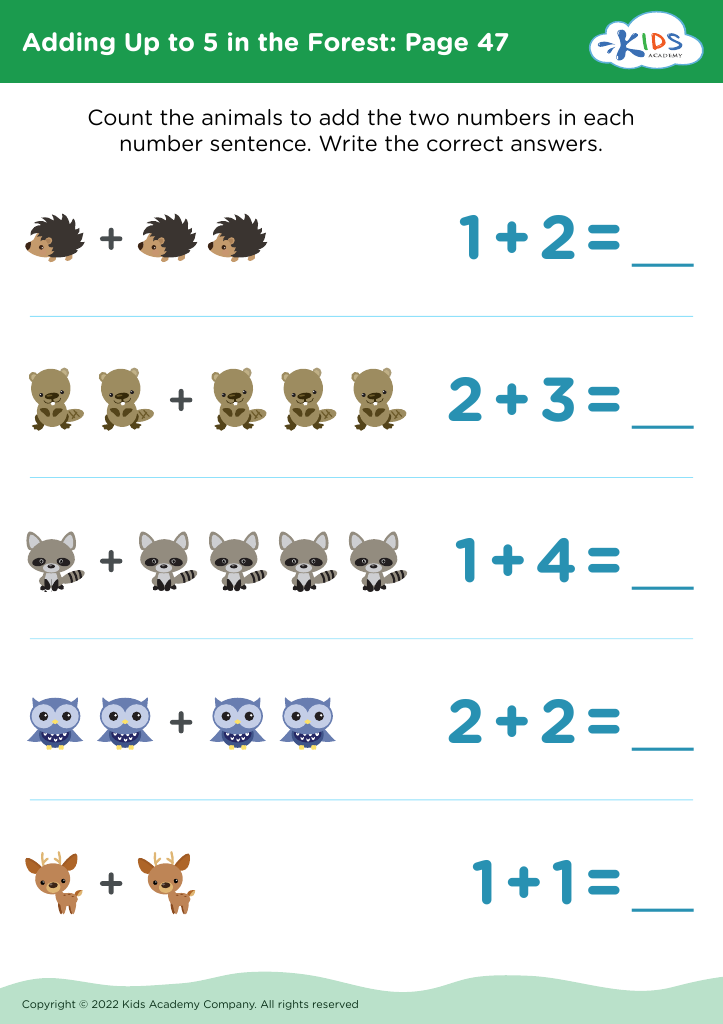
Adding Up to 5 in the Forest: Page 47
Worksheet
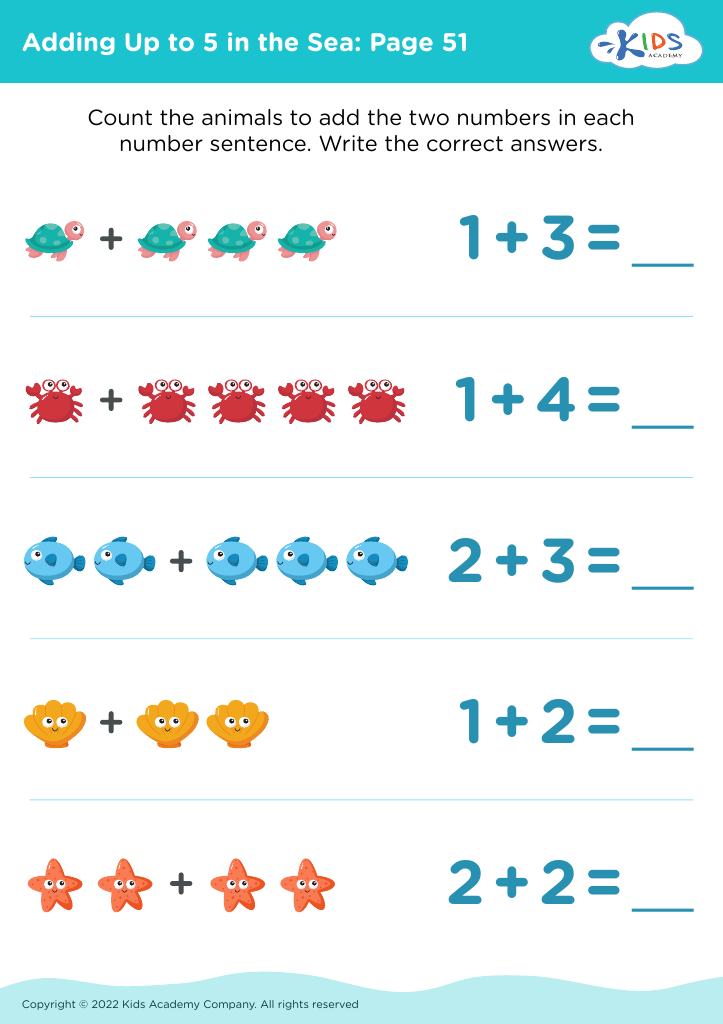
Adding Up to 5 in the Sea: Page 51
Worksheet
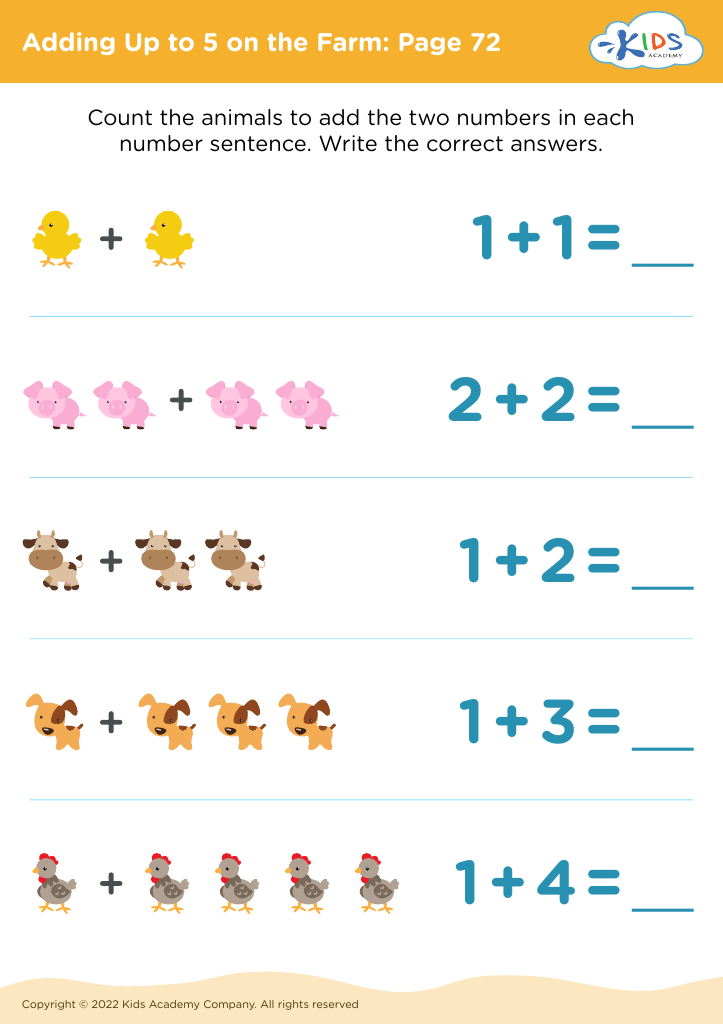
Adding Up to 5 on the Farm: Page 72
Worksheet
Party Arrays Worksheet

Party Arrays Worksheet

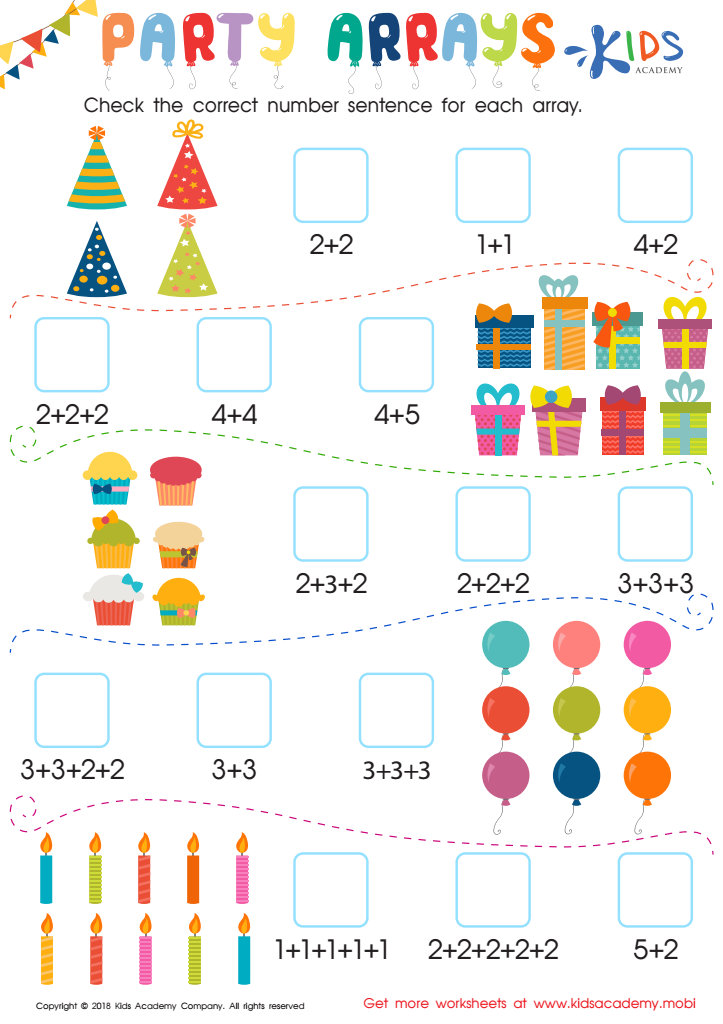
Help your child count the objects in each of the five arrays, then check the correct number sentence for each. This exercise will test their math skills and understanding of number sentences. Guide them to select the appropriate boxes.
Party Arrays Worksheet
Worksheet
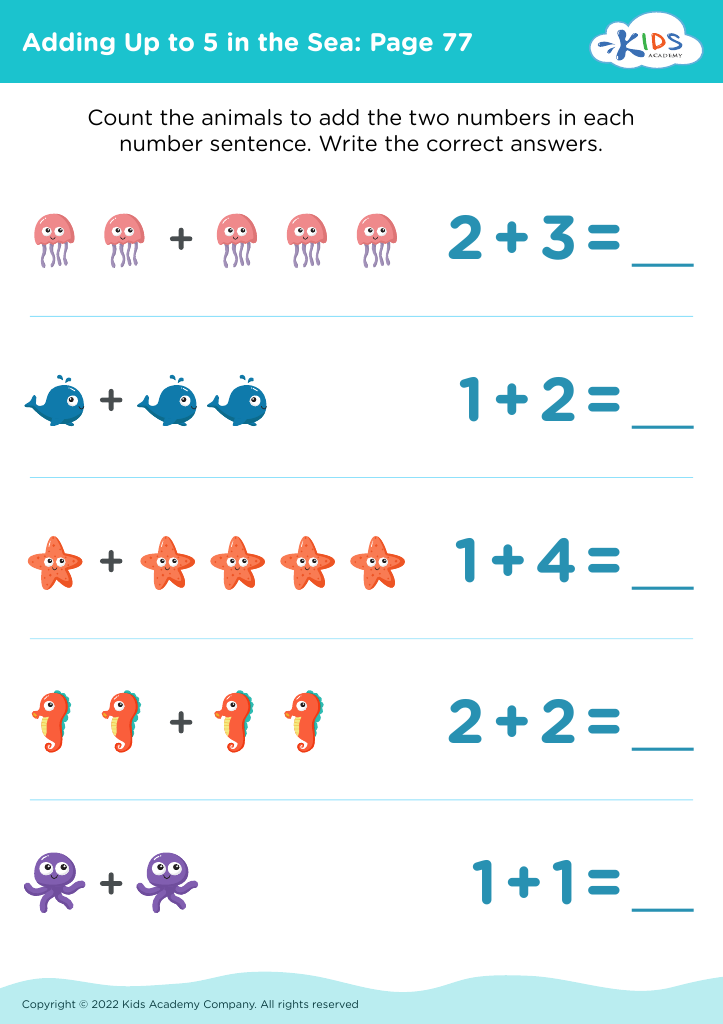
Adding Up to 5 in the Sea: Page 77
Worksheet
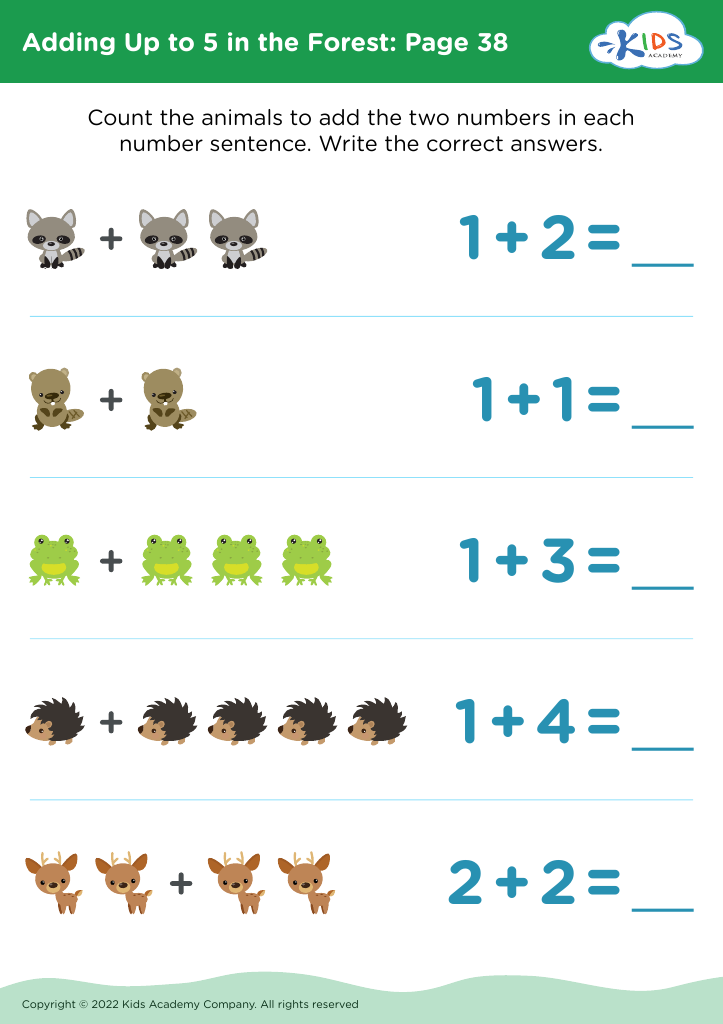
Adding Up to 5 in the Forest: Page 38
Worksheet
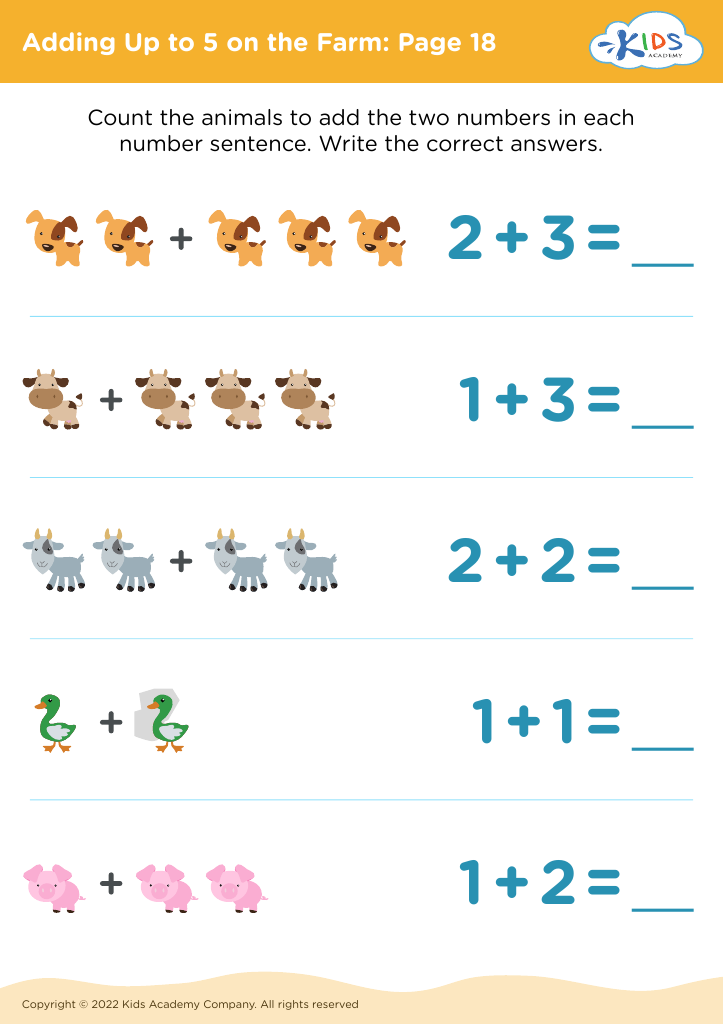
Adding Up to 5 on the Farm: Page 18
Worksheet
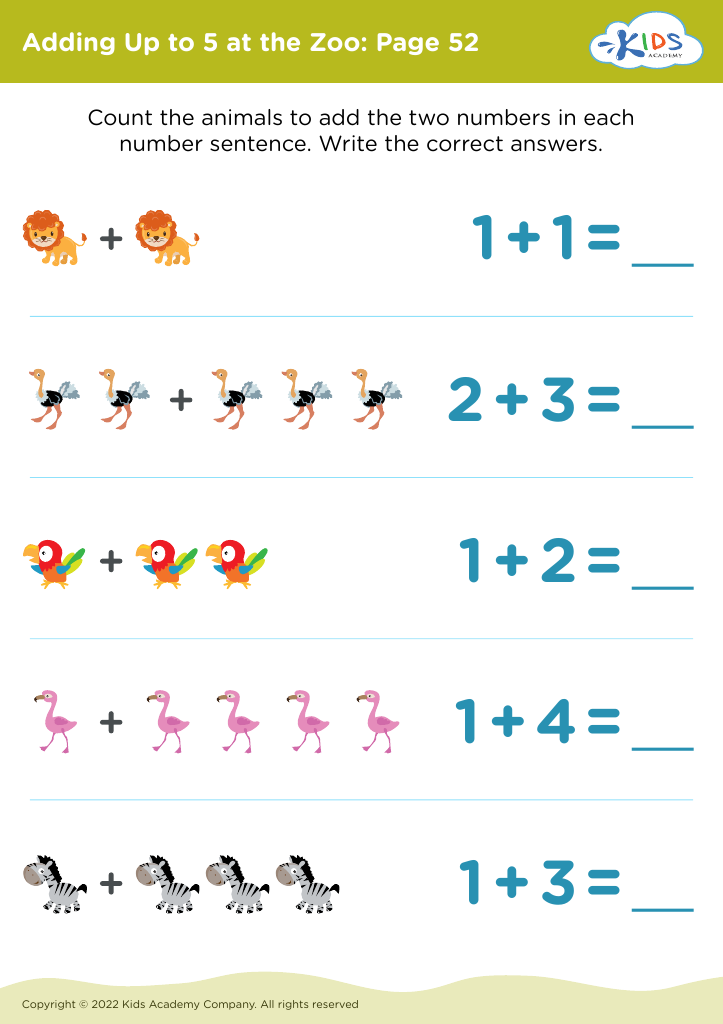
Adding Up to 5 at the Zoo: Page 52
Worksheet
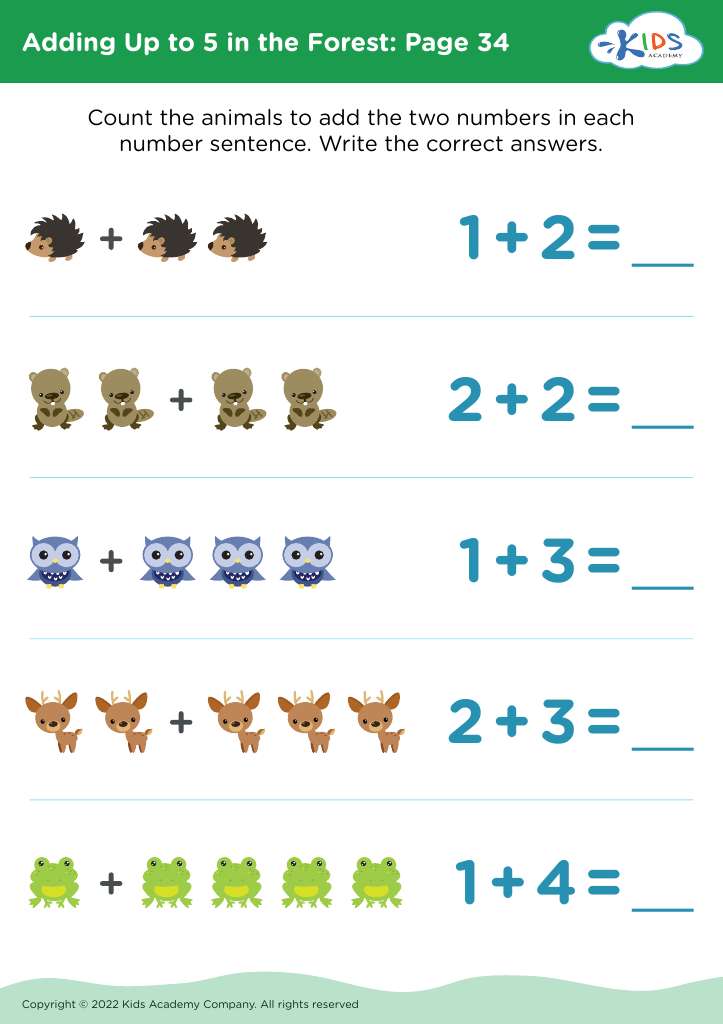
Adding Up to 5 in the Forest: Page 34
Worksheet
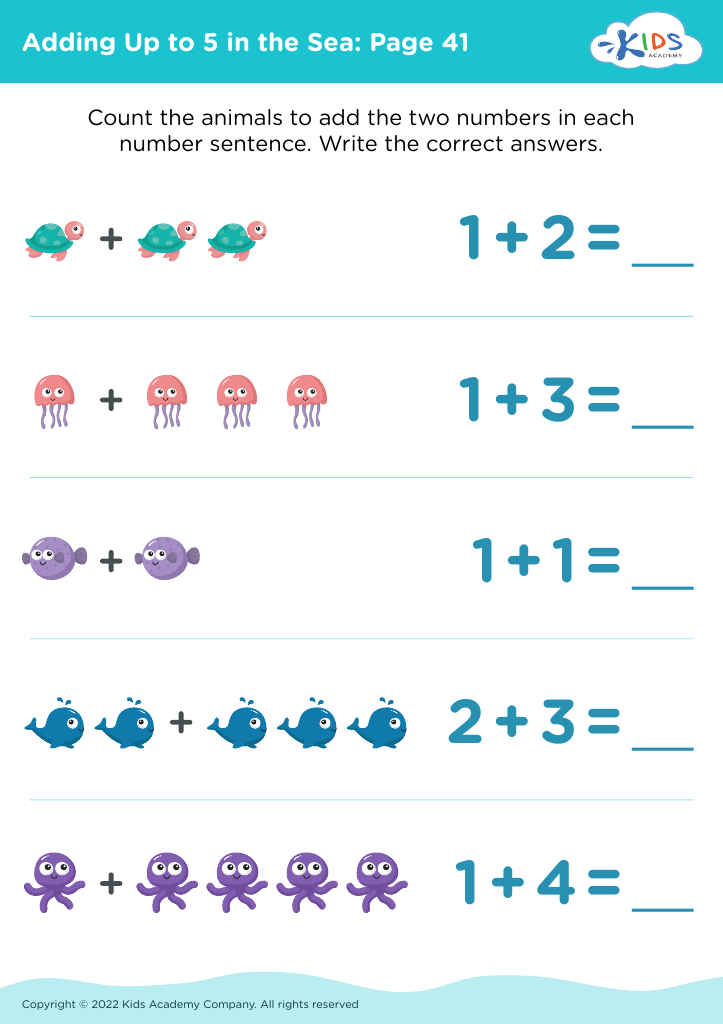
Adding Up to 5 in the Sea: Page 41
Worksheet
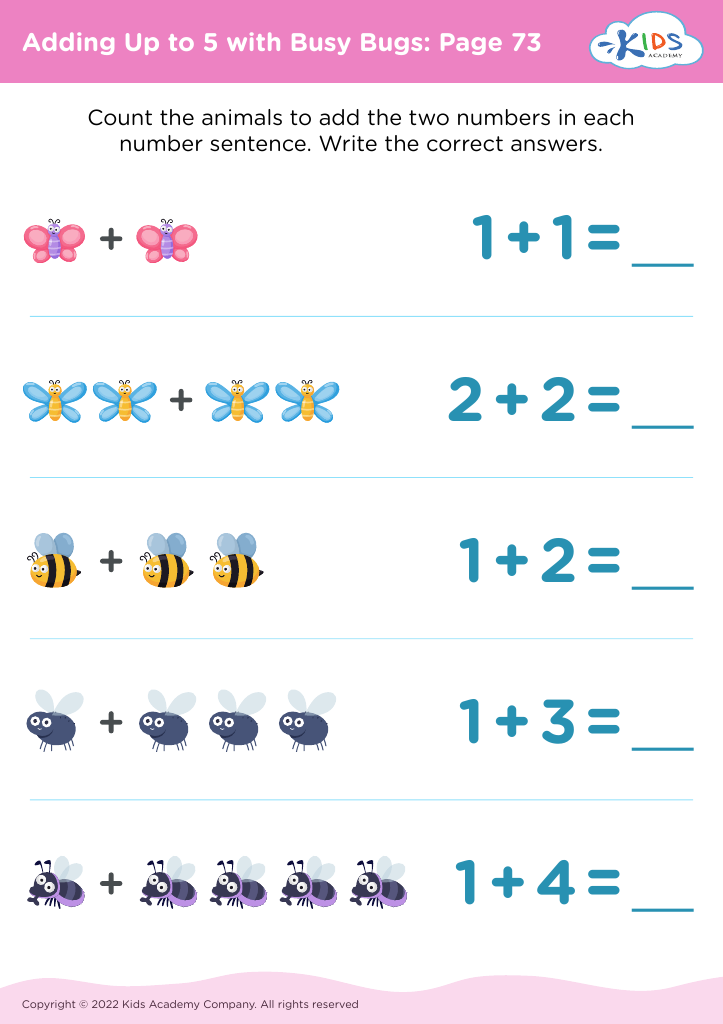
Adding Up to 5 with Busy Bugs: Page 73
Worksheet
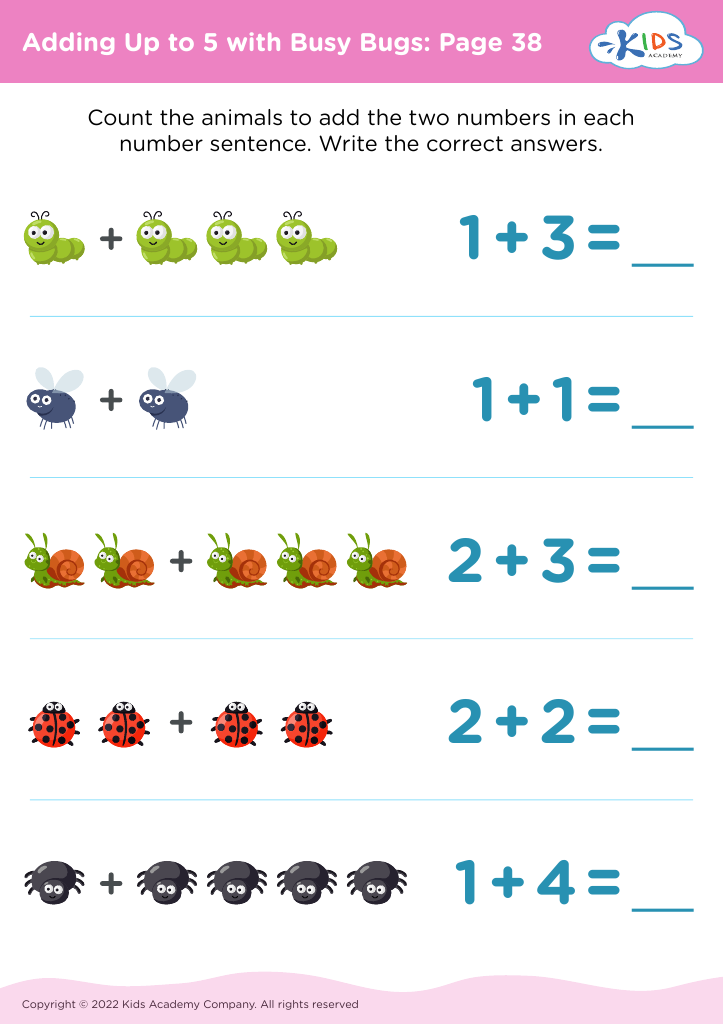
Adding Up to 5 with Busy Bugs: Page 38
Worksheet
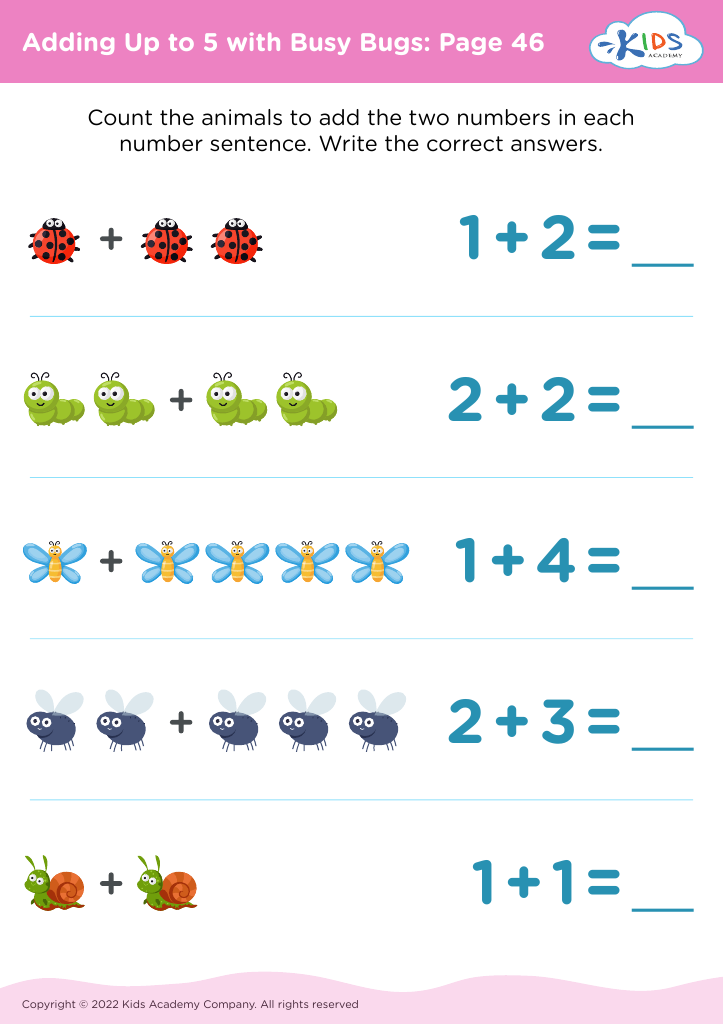
Adding Up to 5 with Busy Bugs: Page 46
Worksheet
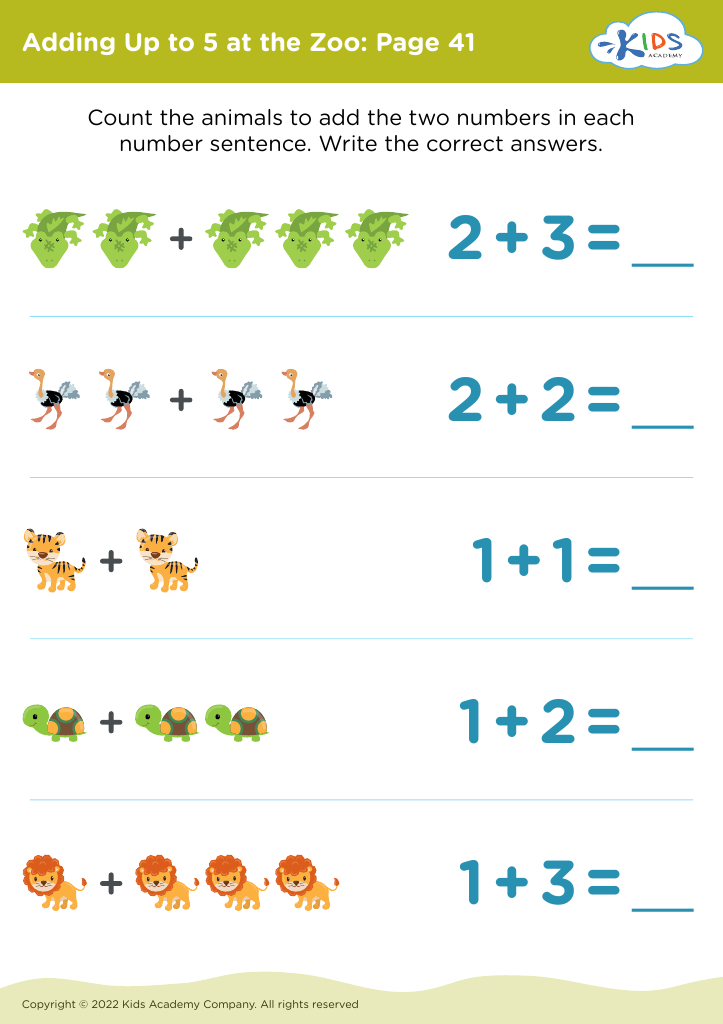
Adding Up to 5 at the Zoo: Page 41
Worksheet
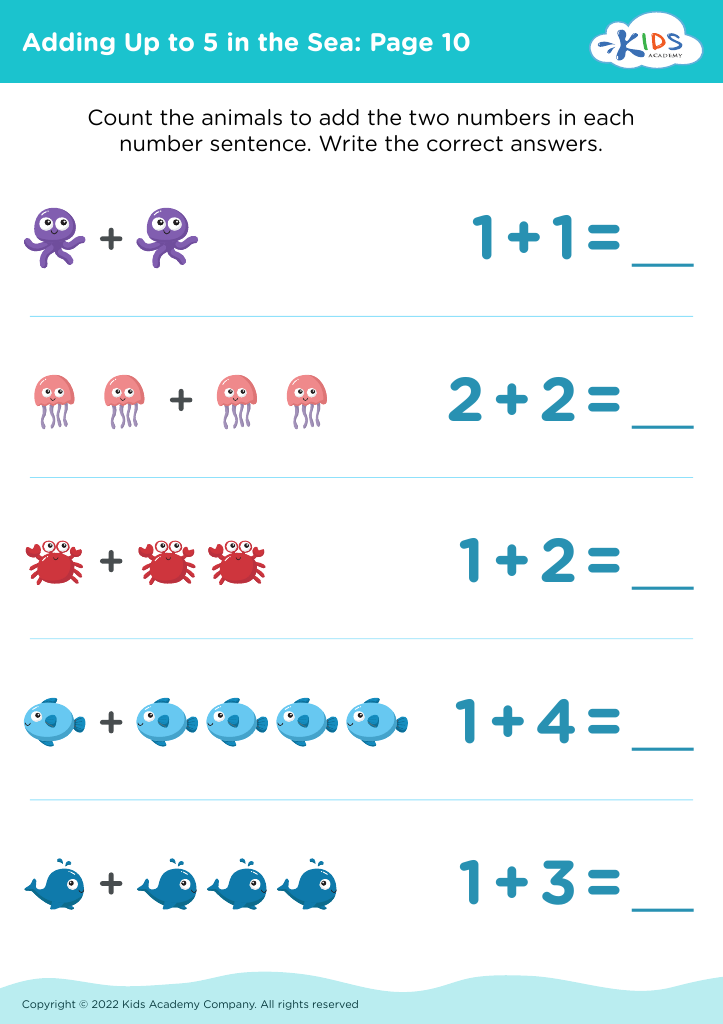
Adding Up to 5 in the Sea: Page 10
Worksheet
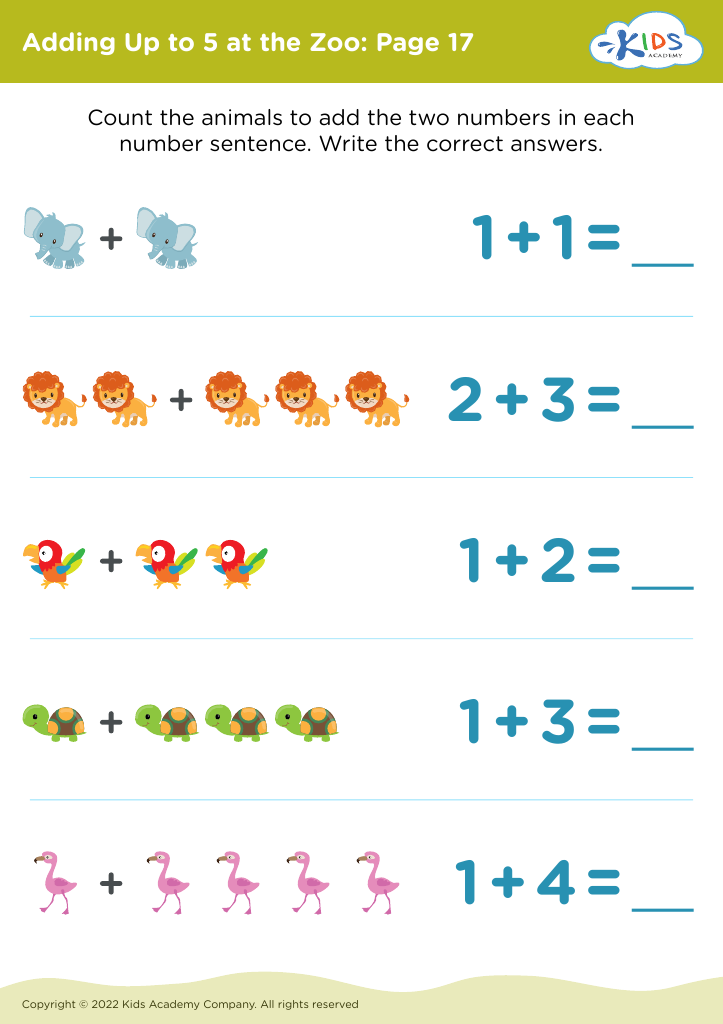
Adding Up to 5 at the Zoo: Page 17
Worksheet
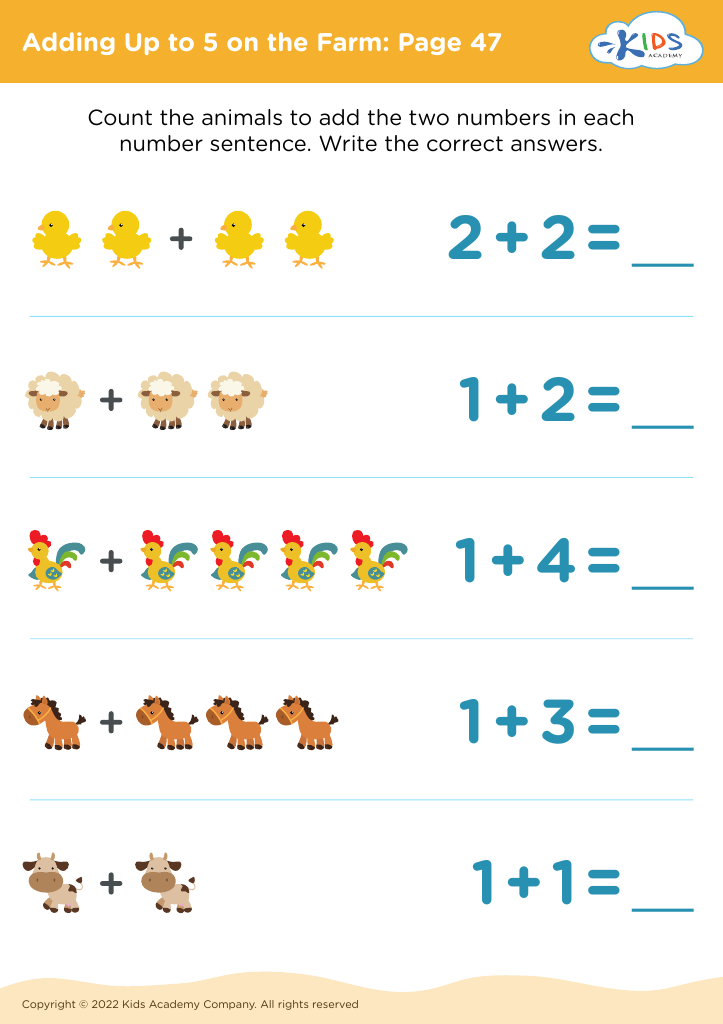
Adding Up to 5 on the Farm: Page 47
Worksheet


Basic addition skills form a foundational element of a child's math education, especially between the ages of 4-7. This stage is crucial as it sets the groundwork for more complex mathematical concepts and problem-solving techniques that children will encounter later in their academic journey. Understanding basic addition helps develop critical thinking and logical reasoning skills. As children start recognizing patterns and relationships between numbers, they become better equipped to approach a variety of important tasks, both in and out of the classroom.

For parents and teachers, focusing on basic addition helps ensure a smoother learning progression. It boosts a child's confidence, making them more apt to engage in and enjoy math-related activities. Moreover, learning addition at an early age aids in everyday scenarios, such as counting objects, understanding time, and measuring quantities. These practical applications not only enhance a child's cognitive development but also foster a sense of independence and competence.

Investing time in teaching basic addition also supports children's social-emotional development. Success in these fundamental skills can encourage a positive attitude towards learning and perseverance. Early achievements in mathematics can provide a solid base for future success, making it essential for parents and teachers to nurture these skills in the formative years.