Basic geometry knowledge Math Worksheets for Ages 4-7
4 filtered results
-
From - To
Discover our "Basic Geometry Knowledge Math Worksheets" designed for children aged 4-7! These engaging and interactive worksheets introduce young learners to fundamental geometry concepts such as shapes, spatial awareness, and basic measurements. With colorful illustrations and age-appropriate activities, kids will enjoy exploring circles, squares, triangles, and more in a fun and stimulating way. Our worksheets are perfect for home learning or classroom activities, helping to build a strong mathematical foundation. Enhance your child's understanding of geometry while developing critical thinking and problem-solving skills. Start their journey into the world of shapes today with our easy-to-use, printable resources!
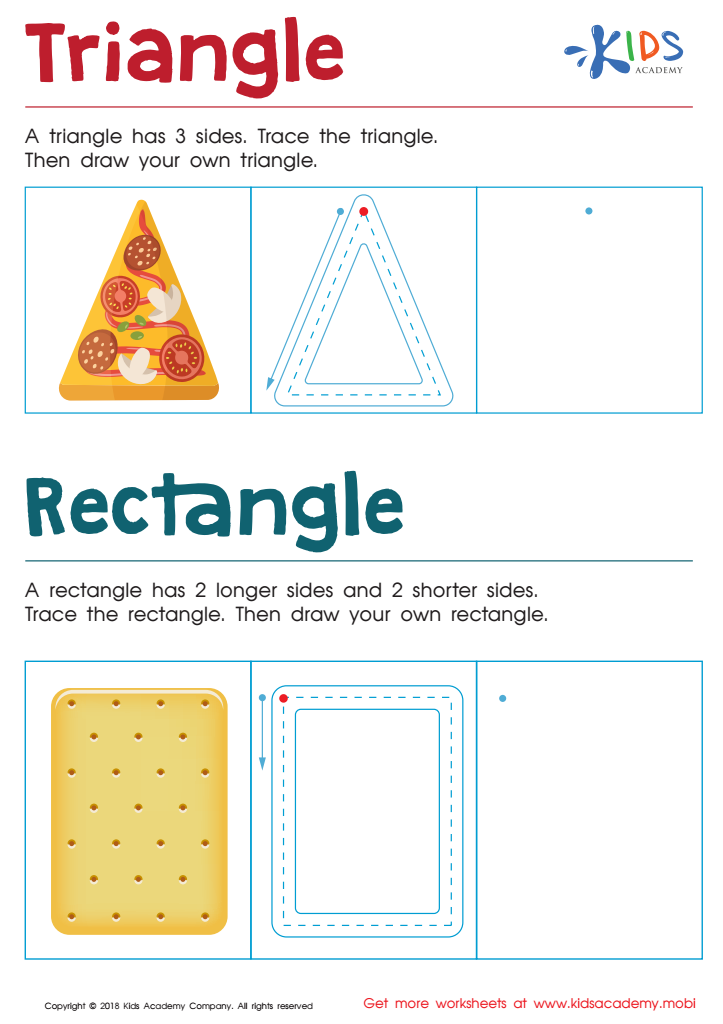
Triangle Rectangle Worksheet
 Assign to My Students
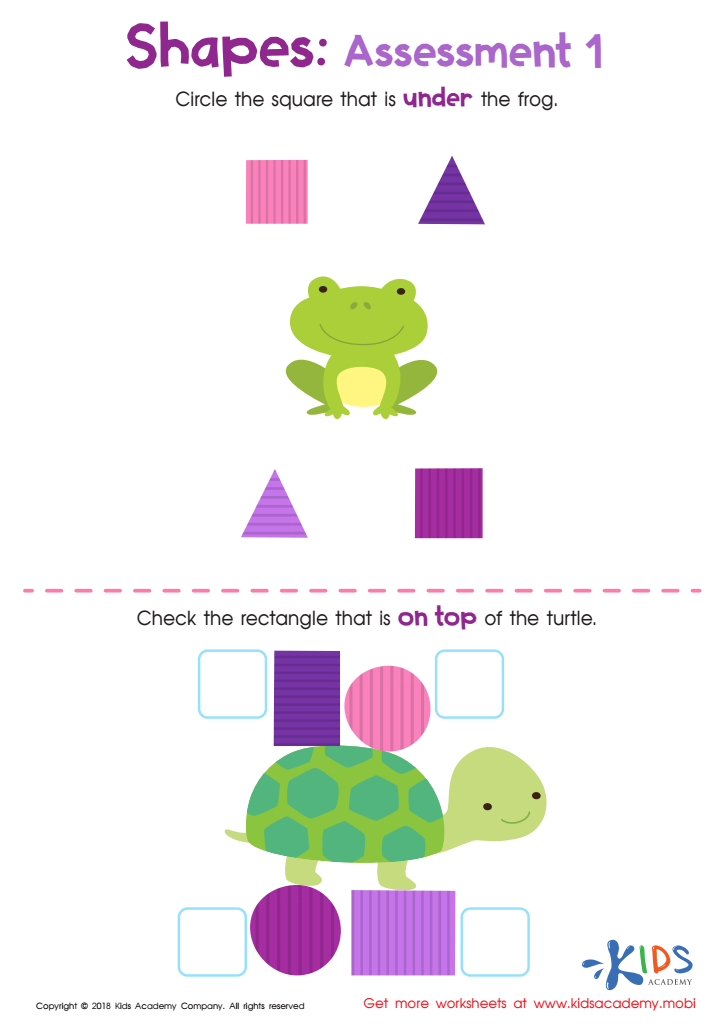
Geometry – Assessment 1 Worksheet
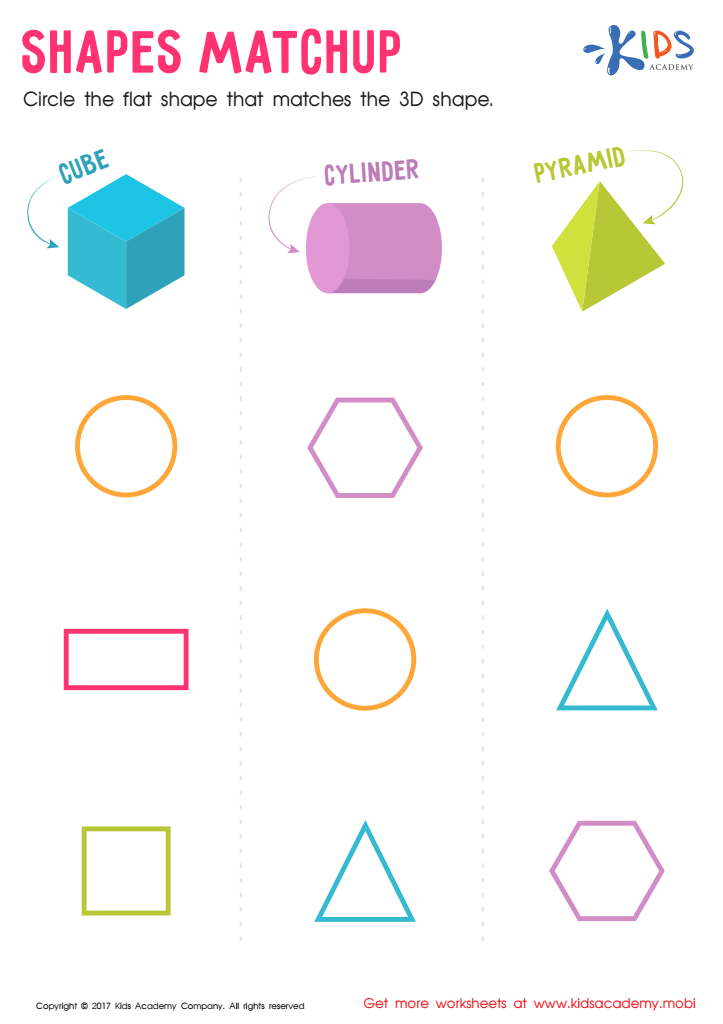
Shapes Matchup Worksheet








Basic geometry knowledge for children aged 4-7 is crucial for several reasons. First, it lays the foundation for spatial awareness, enabling children to understand how shapes relate to one another and their environment. This understanding is essential for daily activities, such as organizing their space, packing, or recognizing patterns in nature.
Moreover, engaging with shapes and spatial relationships fosters critical thinking and problem-solving skills. By learning about geometric concepts, children enhance their ability to visualize and manipulate objects mentally, which benefits mathematics later on. For instance, learning about symmetry and angles can lead to a deeper understanding of various subjects, including art and science.
Additionally, geometry introduces young learners to mathematical language and reasoning. Through discussing shapes, sizes, and positions, children build vocabulary and communication skills that aid not only in math but across all subjects. Moreover, early exposure to geometry can ignite an interest in STEM fields, opening pathways for future educational pursuits.
Lastly, recognizing and appreciating geometry in everyday life cultivates observation skills. Whether through building blocks, drawing, or nature walks, children learn to see the world in a new light, making education both fun and relevant. Consequently, parents and teachers play a vital role in nurturing this foundational knowledge.








