Basic measurement skills Math Worksheets for Ages 4-7
4 filtered results
-
From - To
Welcome to our Basic Measurement Skills Math Worksheets for Ages 4-7! Designed to engage young learners, these worksheets provide fun and interactive exercises that introduce key concepts in measurement. Children will explore activities such as measuring lengths, comparing sizes, and understanding weight through illustrations and hands-on practice. Perfect for home or classroom settings, our resources promote skill development while fostering a love for math. With clear instructions and colorful visuals, these worksheets make learning measurement enjoyable and accessible for every child. Start building a strong mathematical foundation today with our imaginative and educational materials! Explore and grow your child’s confidence in math skills!
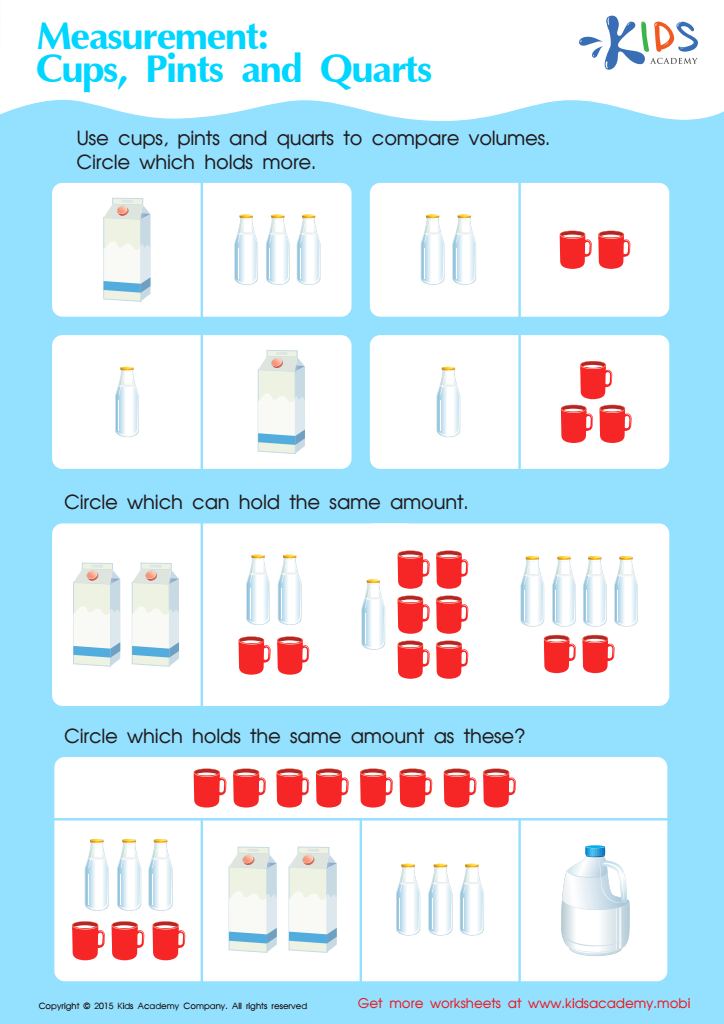
Measurement: Compare Volumes Worksheet
 Assign to My Students
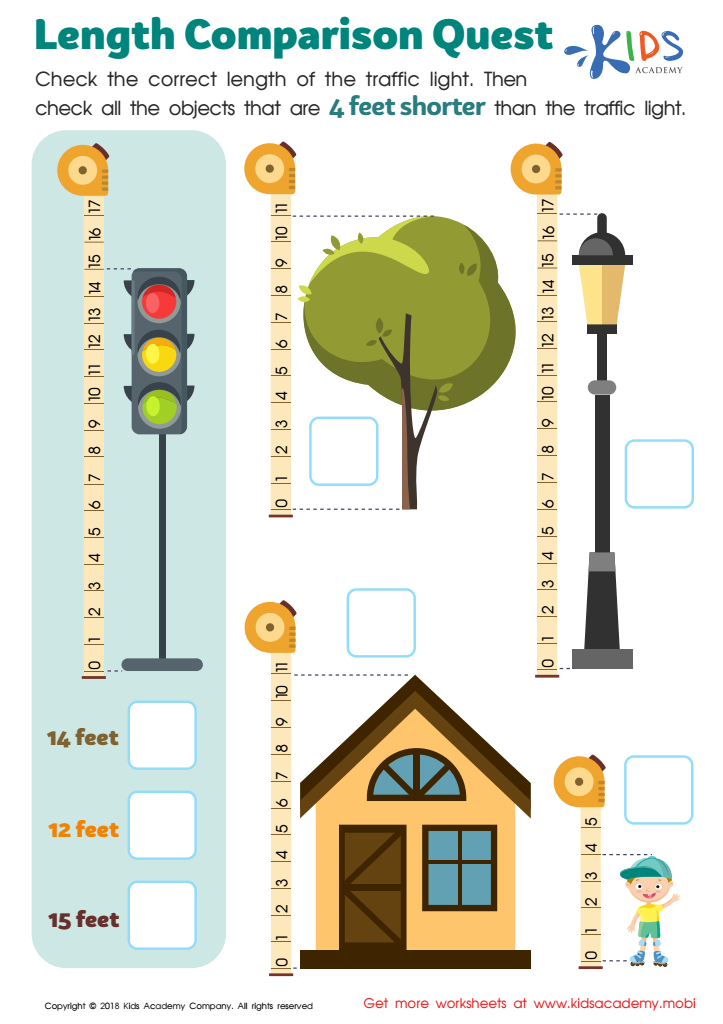
Length Comparison Quest Worksheet
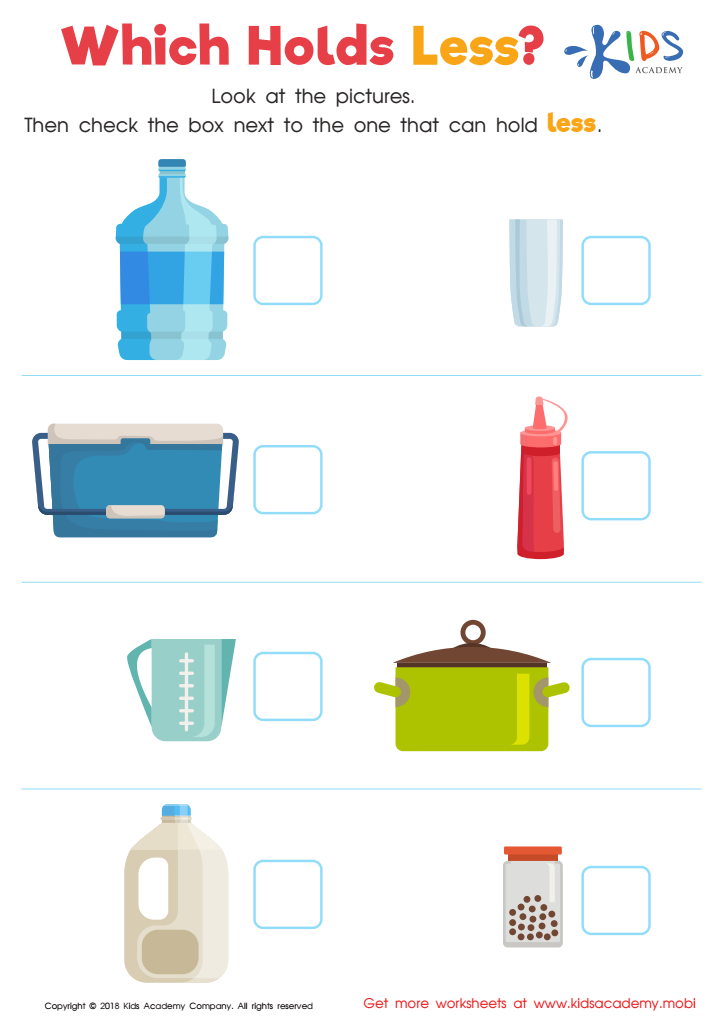
Which Holds Less? Worksheet


.jpg)





Basic measurement skills in math for ages 4-7 are foundational for a child's cognitive development and everyday life. First, these skills enhance children's understanding of their environment. At this age, children begin to comprehend concepts like length, weight, and volume, helping them make sense of the world around them. For instance, when measuring the height of a plant or the weight of a fruit, they engage in hands-on learning that celebrates curiosity.
Additionally, measurement skills play a crucial role in developing critical thinking and problem-solving abilities. By learning to compare and contrast different objects and their attributes, children enhance their analytical skills. This paves the way for more complex mathematical concepts later on.
Moreover, mastering basic measurement fosters confidence in young learners. When children successfully measure objects, they experience a sense of achievement, encouraging a positive attitude towards math that can last throughout their educational journey.
Ultimately, parents and teachers should prioritize measurement skills to cultivate readiness for future academic challenges, promote practical life skills, and instill a lifelong appreciation for mathematics. Early foundational skills in measurement set the stage for future learning and success in STEM-related areas.








