
Comparing numbers Math Worksheets for Ages 4-7
8 filtered results
Difficulty Level
Grade
Age
-
From - To
Subject
Activity
Standards
Explore our engaging "Comparing Numbers" math worksheets designed specifically for children aged 4-7. These interactive worksheets help young learners develop essential math skills by teaching them how to compare and identify greater, lesser, and equal numbers. Utilizing vibrant visuals and straightforward exercises, these resources make learning fun while reinforcing critical concepts. Perfect for both classroom learning and at-home practice, our worksheets cater to different skill levels and include activities like number lines, comparison games, and fill-in-the-blank challenges. Boost your child's confidence and math proficiency with our engaging tools, ensuring a strong foundation for future learning in mathematics.
Favorites
With answer key
Interactive
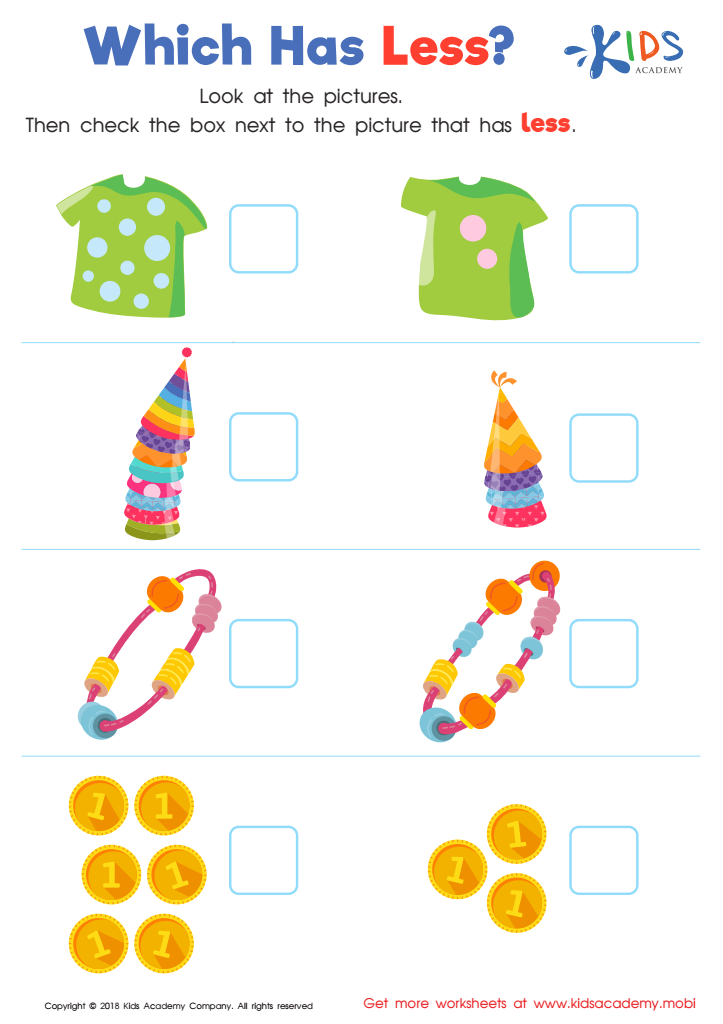
Which Has Less? Worksheet
Kids can develop their number sense by comparing and contrasting objects to identify which has less. This worksheet helps them practice: it's bright and colorful, featuring familiar objects and pictures to count, strengthening basic counting skills. It's the perfect warm-up for comparing and contrasting larger numbers.
 Assign to My Students
Which Has Less? Worksheet
Worksheet
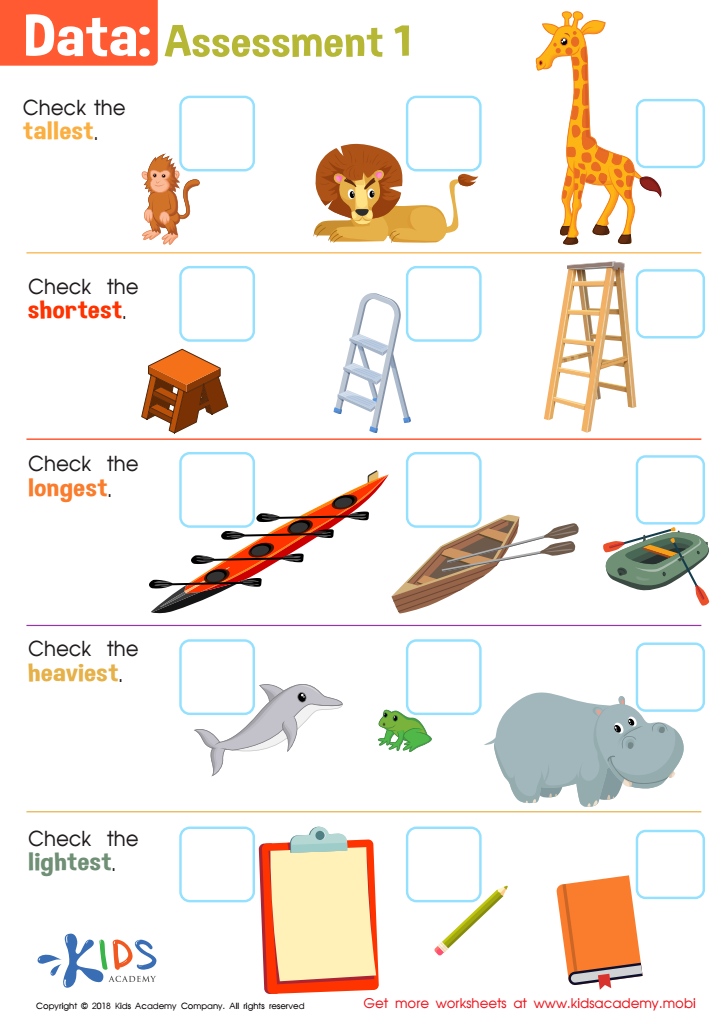
Data: Assessment 1 Worksheet
This free worksheet helps you assess where your young students are with measurement superlatives like tallest, shortest, heaviest, longest and lightest. It features cute, colorful pics of familiar objects so your kids have a reference, and helps you identify areas to work on.
Data: Assessment 1 Worksheet
Worksheet
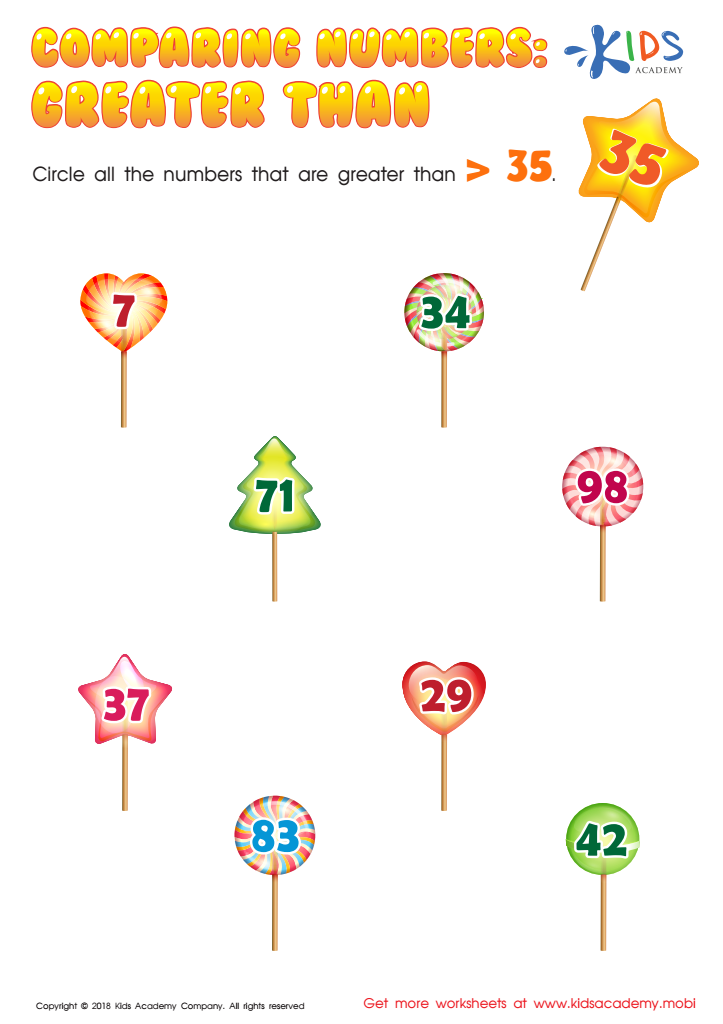
Greater Than Worksheet
Tired of generic maths problems? Try this fun pdf worksheet! With your child or student, carefully look through the numbers in the balloon and circle those greater than 35. Enjoyable and educational!
Greater Than Worksheet
Worksheet
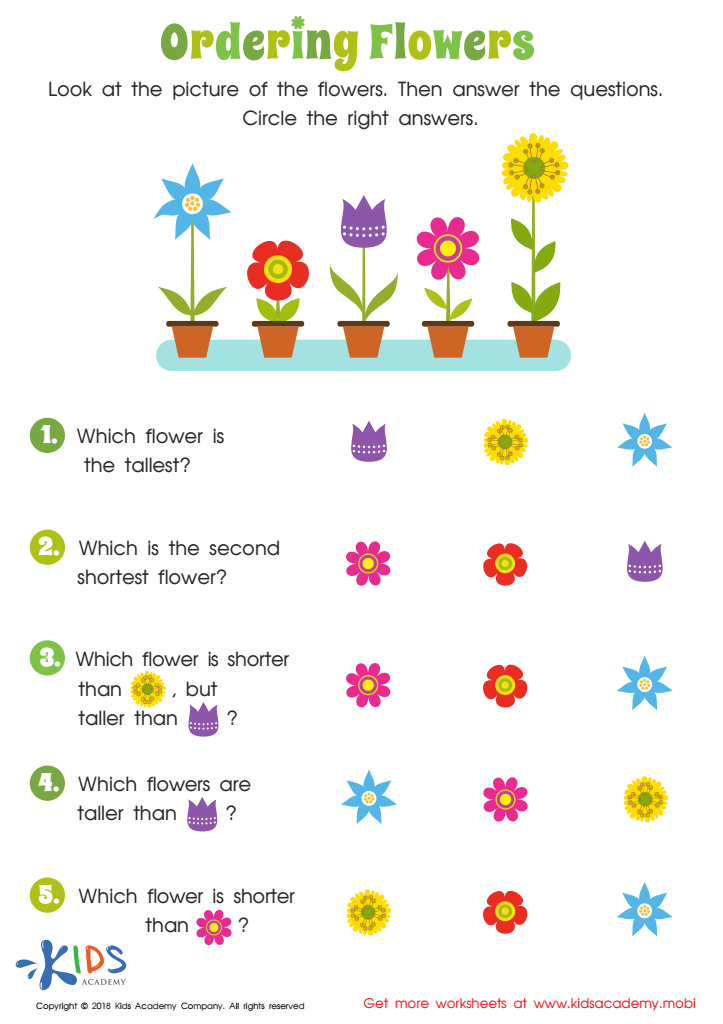
Ordering Flowers Worksheet
Preschoolers can start learning measurement with visuals! This worksheet uses colorful flowers of different heights. Ask your learner to observe the flowers, then help them compare/answer which is taller/shorter. It's an easy way for them to begin learning about measurement.
Ordering Flowers Worksheet
Worksheet
Join Kids Academy for Free
Who is primarily going to use this learning content?







Comparing numbers is a foundational mathematical skill that is crucial for children aged 4-7. At this age, kids are developing their cognitive abilities and understanding of number sense, which lays the groundwork for all future math learning. Like building blocks, strong number comparison skills help children recognize that numbers have value and can be both quantified and analyzed.
Parents and teachers should care about this skill for several reasons. Firstly, comparing numbers enhances children's problem-solving abilities. By understanding concepts such as "more than," "less than," or "equal to," children can make informed decisions and develop logical thinking skills. Secondly, this skill promotes confidence in math, as children learn to articulate their understanding through comparison. Using real-world examples, such as comparing the number of apples in different groups or counting toys, makes learning engaging and relevant.
Furthermore, fostering a strong grasp on comparing numbers early on can help prevent math anxiety later in life. When students feel equipped with basic skills, they are more likely to enjoy and pursue higher-level math. Ultimately, supporting young learners in comparing numbers not only enriches their math knowledge but also empowers them in their overall academic journey and daily lives.








