
Comparing weights Math Worksheets for Ages 4-7
3 filtered results
Difficulty Level
Grade
Age
-
From - To
Subject
Activity
Standards
Our "Comparing Weights Math Worksheets" for ages 4-7 provide a fun and engaging way for young learners to explore the concept of weight. Designed with vibrant visuals and age-appropriate challenges, these worksheets help children develop essential skills such as measurement and comparison. Each activity encourages kids to identify heavier and lighter items, fostering critical thinking and reasoning abilities. Ideal for classroom settings or home practice, our worksheets promote hands-on learning and make math accessible and enjoyable. Perfect for early grade teachers and parents, these resources are sure to captivate your child's interest while enhancing their foundational math skills!
Favorites
With answer key
Interactive
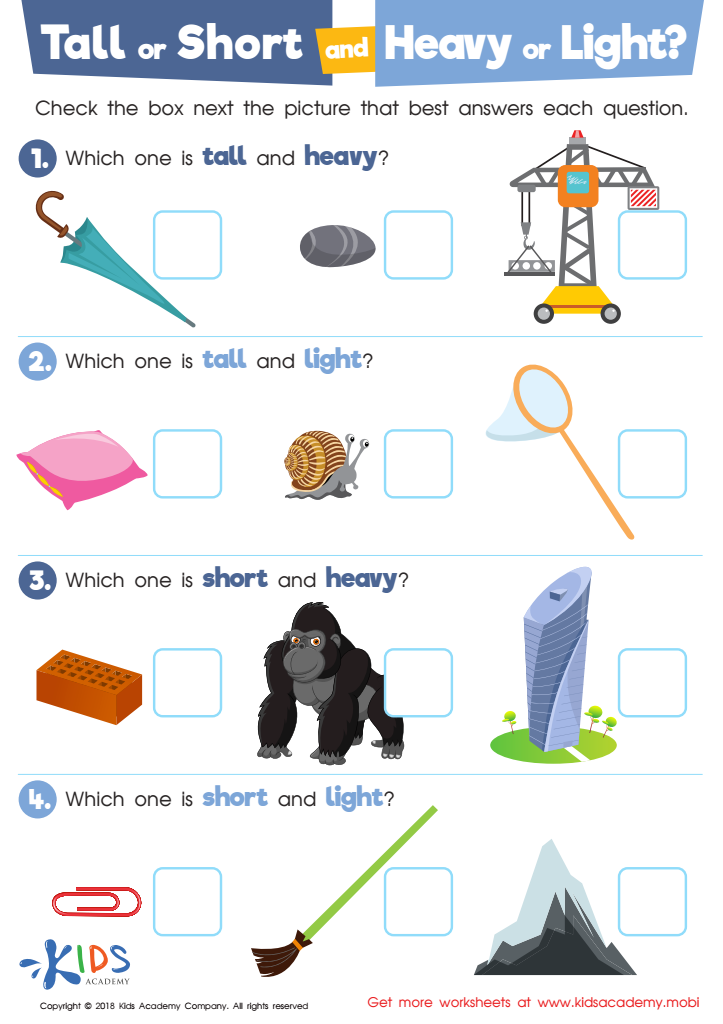
Tall or Short and Heavy or Light? Worksheet
Young children can find basic measurement concepts tricky. This PDF introduces them to the appropriate vocabulary for describing heavy, light, tall and short items, by using familiar pictures. It helps them accurately select which items fit each category.
 Assign to My Students
Tall or Short and Heavy or Light? Worksheet
Worksheet
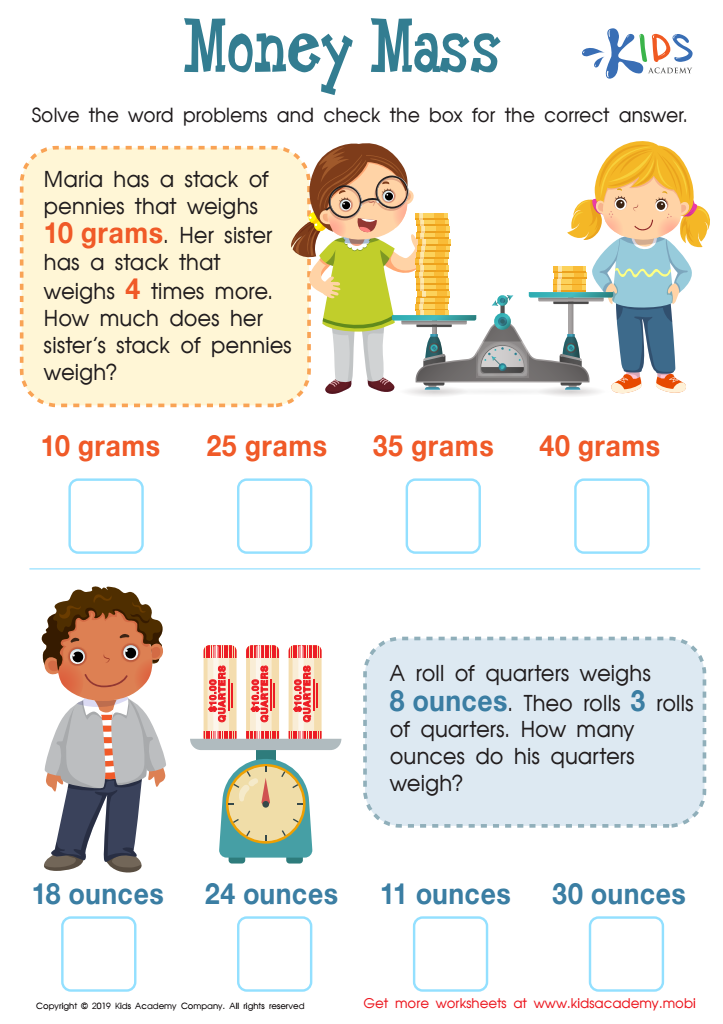
Money Mass Worksheet
By regularly working on math with your kids, they will become more confident. Ensure they understand the word problems in this printout, and help them solve it. Check the box for the correct answer of each to verify their work. With this practice, they will gradually get used to math and make progress.
Money Mass Worksheet
Worksheet
Join Kids Academy for Free
Who is primarily going to use this learning content?




.jpg)


Comparing weights is an essential foundational math skill for children aged 4-7, and it holds significant value for both parents and teachers. Engaging children in weight comparison activities cultivates number sense and enhances their understanding of measurement, which forms the basis for more complex mathematical concepts later on.
When children learn to compare weights, they develop critical thinking and analytical skills. For instance, lifting items to perceive their weight differences helps in the understanding of heavier and lighter, along with introducing other concepts like balance and force. This hands-on activity fosters curiosity and encourages exploration, making math relatable and enjoyable.
Moreover, weight comparison can seamlessly integrate lessons about health, nutrition, and everyday life, as discussions arise about the weight of food items or personal belongings. Parents and teachers who emphasize this skill are not only solidifying a child's math abilities but also supporting their overall cognitive development and comprehension of the world.
Ultimately, introducing weight comparison early fosters confidence in mathematical reasoning and reinforces the idea that math is not just numbers on a page; it’s a practical tool for understanding their environment. Emphasizing this skill now will lead to stronger math problem-solving abilities in the future.








