Decision making skills Math Worksheets for Ages 4-7
4 filtered results
-
From - To
Enhance your child’s decision-making skills with our engaging math worksheets designed specifically for ages 4-7. These worksheets blend fun activities with essential math concepts, encouraging young learners to think critically and make informed choices. Through interactive exercises, children practice problem-solving, comparing values, and understanding quantitative relationships. Our resources not only reinforce math skills but also promote essential cognitive development, helping kids to become confident decision-makers. Perfect for home or classroom learning, these worksheets offer a consistent framework to support early mathematics education while keeping children entertained. Unlock your child's potential in math and decision-making today!
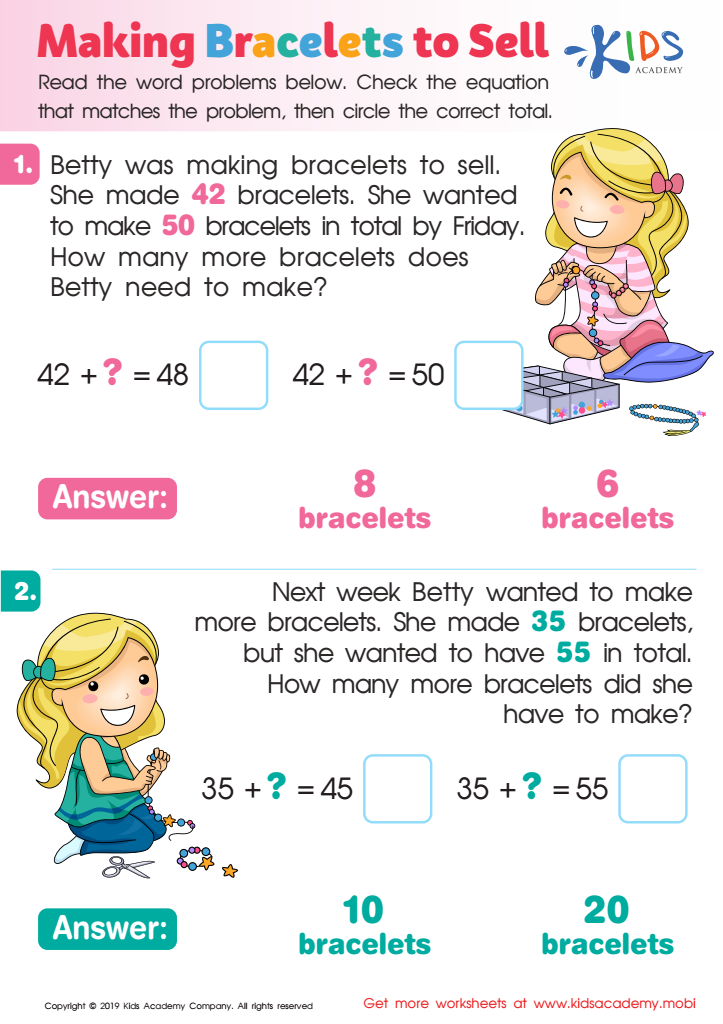
Making Bracelets to Sell Worksheet
 Assign to My Students
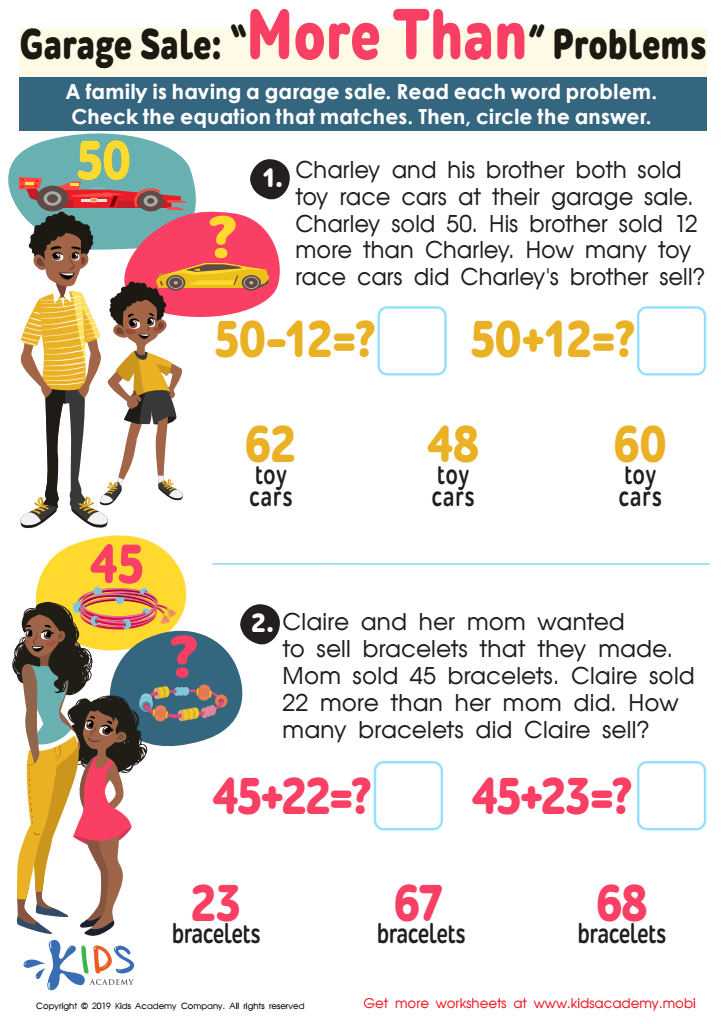
Garage Sale - More yhan Worksheet
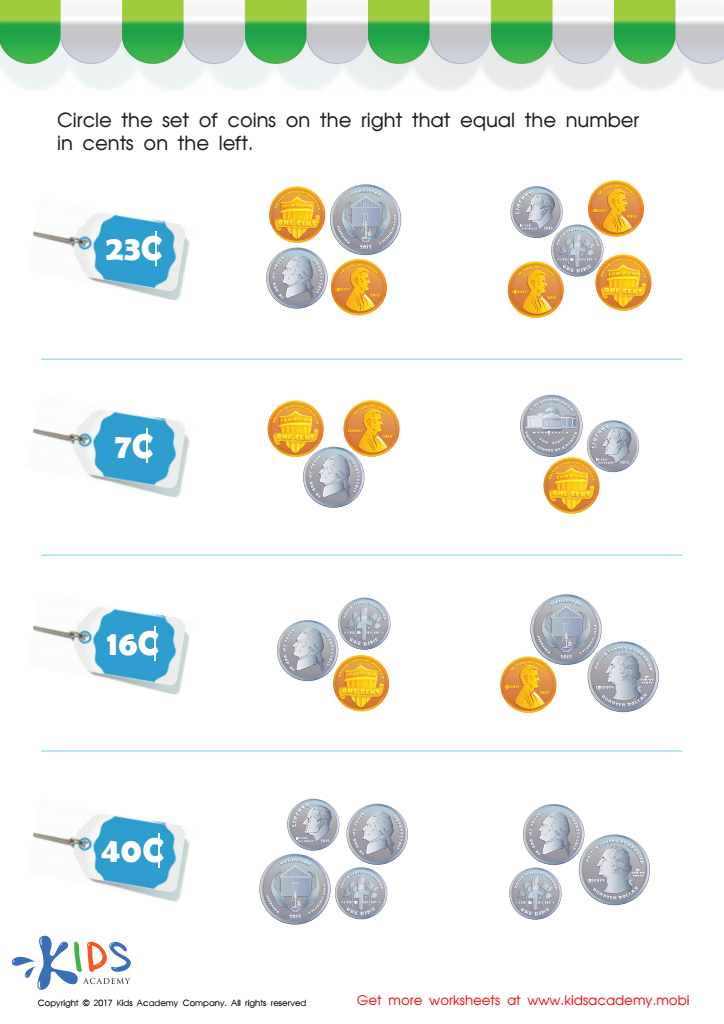
Picking the Coins You Need Money Worksheet








Decision-making skills in early math education for children aged 4-7 are essential for several reasons. Firstly, this stage is critical for cognitive development, where children learn to analyze, evaluate, and choose options. Effective decision-making in mathematics fosters critical thinking and enhances problem-solving abilities, serving as a foundation for future academic success.
Engaging in math-related decision-making helps children develop autonomia and confidence. They begin to understand that mathematics is not just about memorizing facts but involves making informed choices based on available data, which prepares them for real-life situations. For instance, deciding how to share resources equally among friends or which materials to use for a particular project encourages reasoning and social skills.
Moreover, teaching decision-making in math can actively nurture a child's interest and enjoyment in the subject. When children see the practical implications of math in everyday choices, they are more likely to engage with the subject and reduce anxiety around math learning.
Finally, math decision-making skills align with the development of essential social-emotional competencies—like resilience and adaptability—critical in an increasingly complex world. Thus, parents and educators play a pivotal role in facilitating this learning, ensuring children are well-prepared for future challenges both in school and in life.








