Develops fine motor skills Math Worksheets for Ages 4-7
3 filtered results
-
From - To
Enhance your child's learning journey with our "Develops Fine Motor Skills Math Worksheets" designed for ages 4-7. These engaging worksheets seamlessly integrate essential math concepts while fostering fine motor skill development. Through fun activities like tracing, coloring, and cutting, children will strengthen their hand-eye coordination and dexterity as they explore numbers, shapes, and patterns. Perfect for early learners, these worksheets provide a playful way to build confidence in math and motor skills. Empower your young learners with essential tools that prepare them for future academic success, all while maintaining the joy of learning! Discover our collection today!
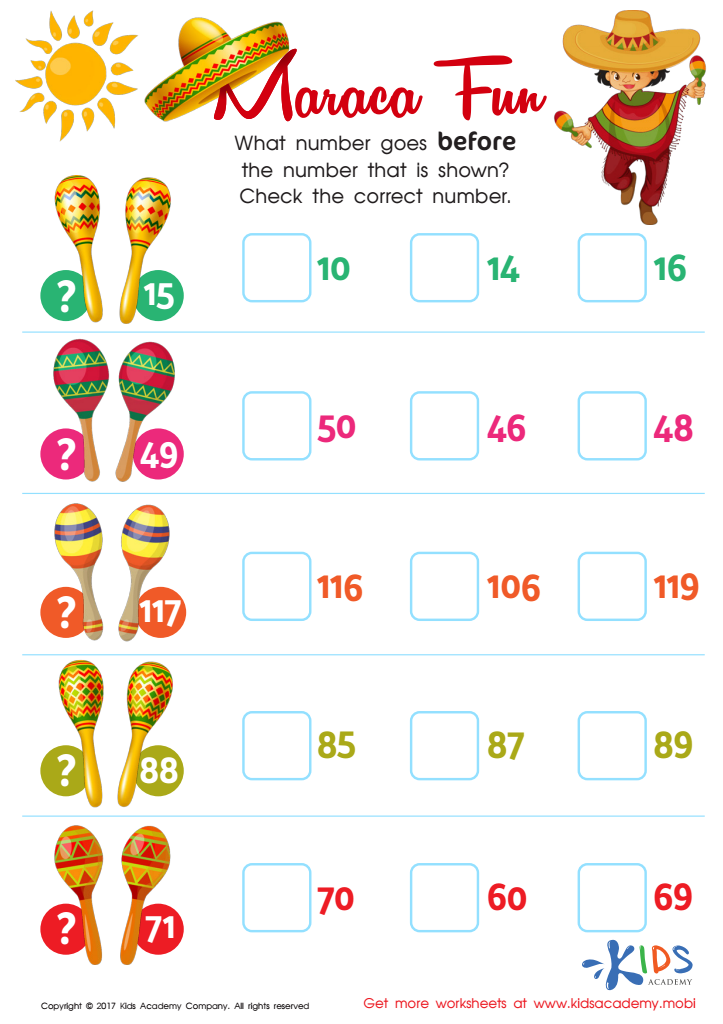
Counting: Maraca Fun Worksheet
 Assign to My Students
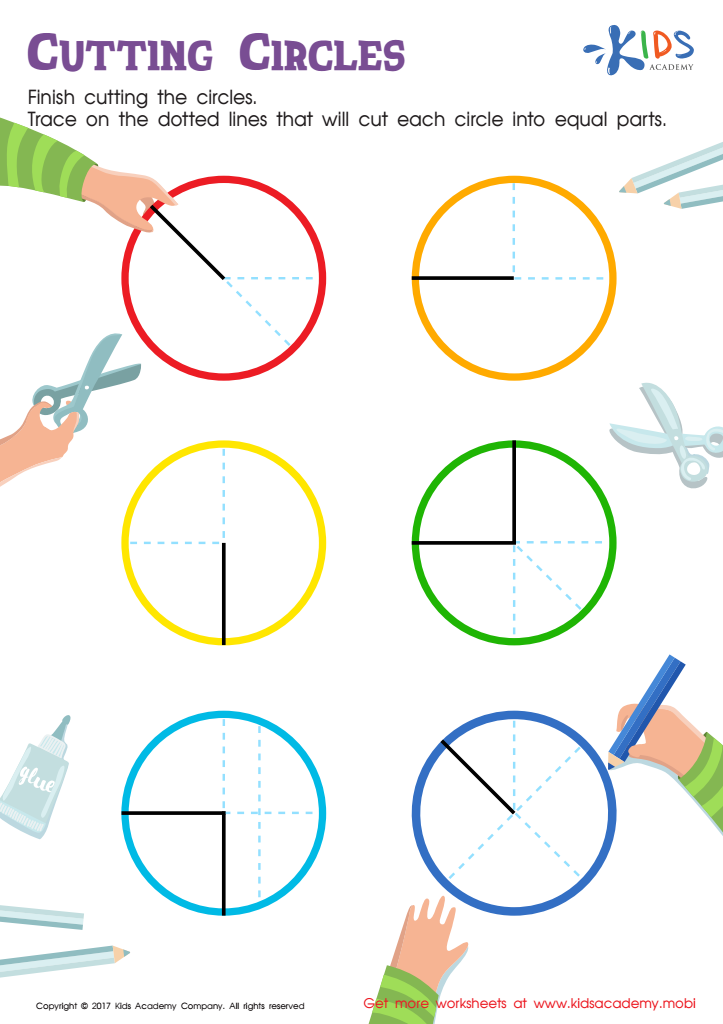
Cutting Circles Worksheet








Developing fine motor skills in children ages 4-7 is crucial for their overall growth, particularly in mathematical reasoning. Fine motor skills involve the coordination of small muscles in hands and fingers, allowing children to perform tasks such as writing, manipulating small objects, and using tools. These skills are foundational for mathematical activities, including the ability to grasp and manipulate counting objects, align numbers, and write digits legibly.
When children engage in activities that strengthen their fine motor skills, they also enhance their cognitive abilities. This development helps them understand spatial relationships and patterns, essential components of math. For instance, stacking blocks promotes geometric understanding, while threading beads can aid in basic counting and pattern recognition.
Educators and parents should prioritize fine motor skill development as it fosters independence and confidence in children, paving the way for more complex problem-solving in later years. Additionally, strong fine motor skills improve handwriting, which is vital for math-related tasks in the classroom. Recognizing the interplay between fine motor development and mathematical success, caregivers should incorporate play-based learning experiences that build these skills, ultimately setting their children up for a brighter academic future.








