Enhances number recognition Math Worksheets for Ages 4-7
5 filtered results
-
From - To
Discover our engaging Math Worksheets for ages 4-7 designed to enhance number recognition skills in young learners. Tailored for preschool and early elementary students, these printable activities turn learning numbers into a fun and interactive experience. Each worksheet is crafted to improve counting, number tracing, matching, and identification exercises, crucial for building a strong mathematical foundation. Perfect for both classroom use and at-home practice, our worksheets help kids boost their confidence and excel in math. Download today to support your child's educational journey with experts-approved resources at Kids Academy!
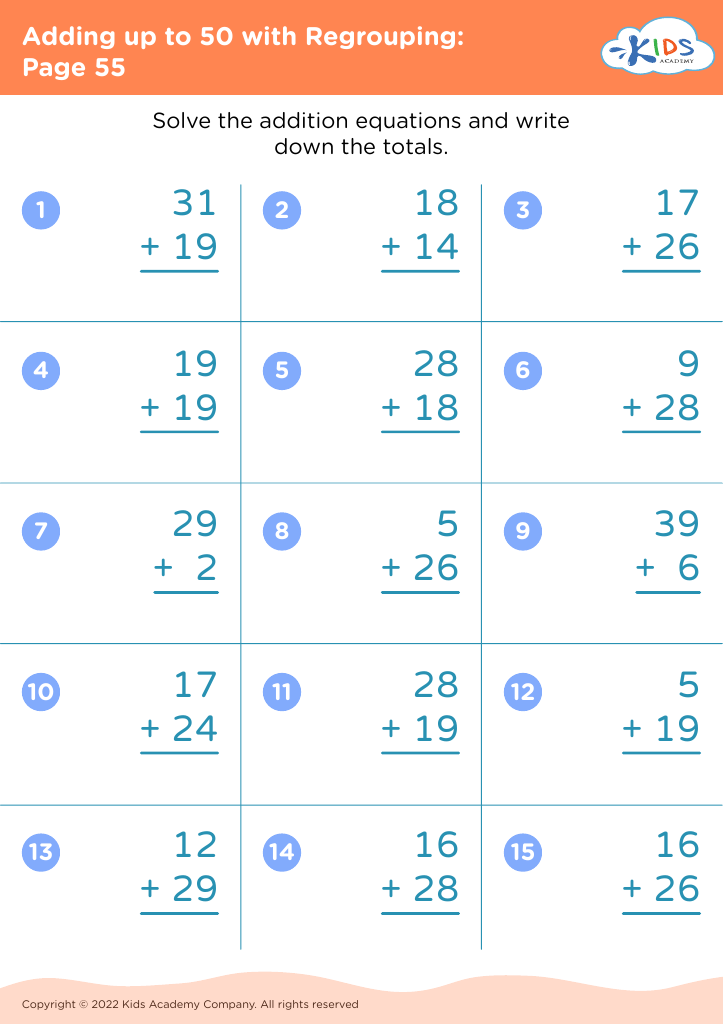
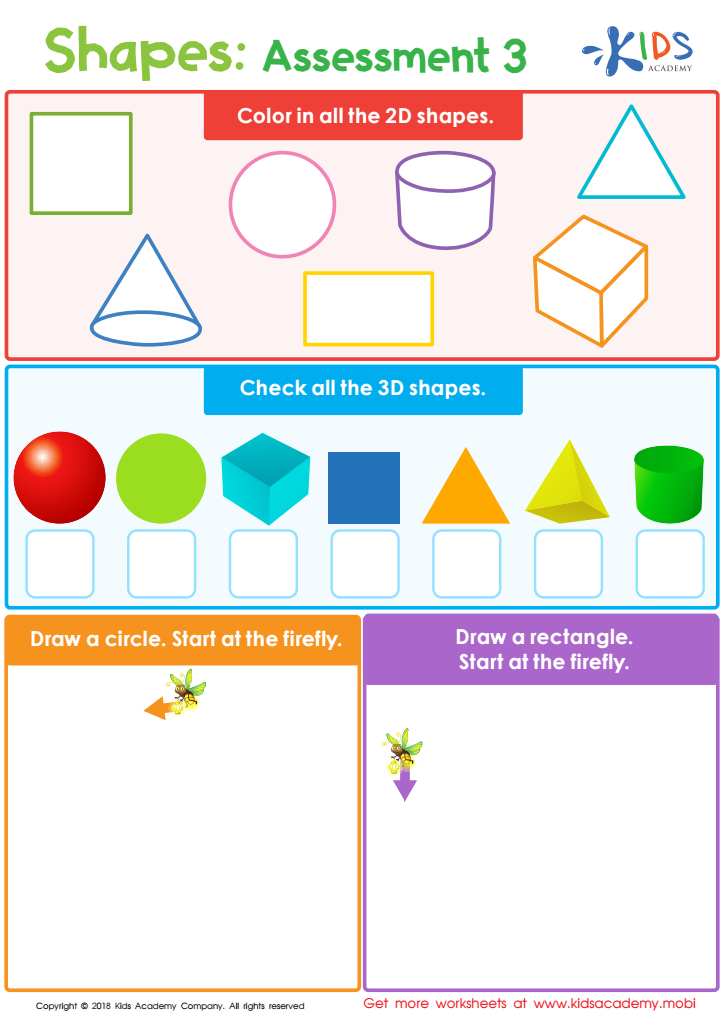
Shapes: Assessment 3 Worksheet
 Assign to My Students








Enhancing number recognition in children aged 4-7 is a cornerstone of early mathematics education. During these formative years, young learners develop foundational cognitive skills that support their future academic achievement. Number recognition is pivotal as it lays the groundwork for more complex mathematical concepts such as addition, subtraction, and problem-solving.
For parents, fostering number recognition equips their children with essential tools to navigate everyday tasks, like counting objects, understanding time, and managing basic finances. It stimulates mental exercise that sharpens memory, improves concentration, and builds confidence in a child's abilities.
Teachers recognize that early math proficiency is strongly correlated with overall academic success. A solid grasp of numbers enables smooth transitions to higher-order math functions and reduces math-related anxieties. Activities that promote number recognition—like counting games, interactive flashcards, and hands-on manipulatives—also make learning engaging and enjoyable.
Moreover, numerical literacy is fundamental in preparing young children for a technology-driven world where quantitative skills are increasingly paramount. When parents and teachers prioritize enhancing number recognition, they are not only boosting their children's academic preparedness but also empowering them with life skills essential for future success. Investing time and resources into early math education yields lasting dividends for both individuals and society at large.








