Enhancing number recognition Math Worksheets for Ages 4-7
3 filtered results
-
From - To
Enhance your child's number recognition skills with our engaging Math Worksheets designed for ages 4-7! These worksheets are specifically crafted to make learning fun and interactive. Featuring vibrant illustrations and varied activities, children will practice identifying numbers, associating them with quantities, and honing their counting abilities. Our resources cater to different learning styles, ensuring that every child can thrive. Perfect for at-home practice or classroom use, these worksheets support early math development and build a strong foundation for future learning. Explore our collection and watch your child’s confidence in numbers grow! Start their mathematical journey today!
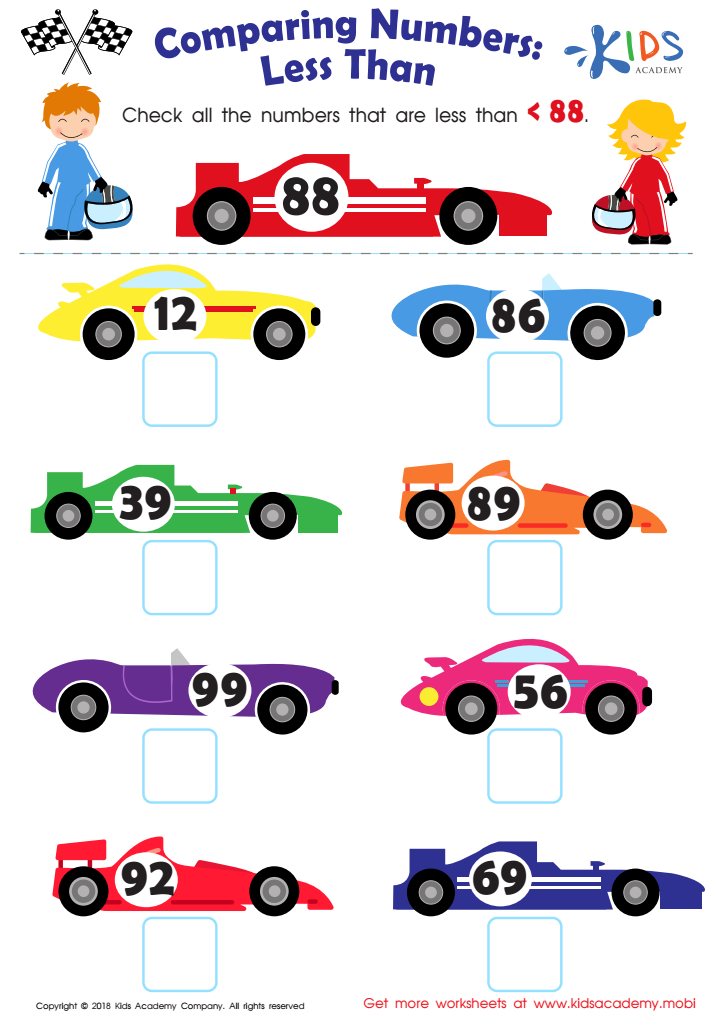
Less Than Worksheet
 Assign to My Students
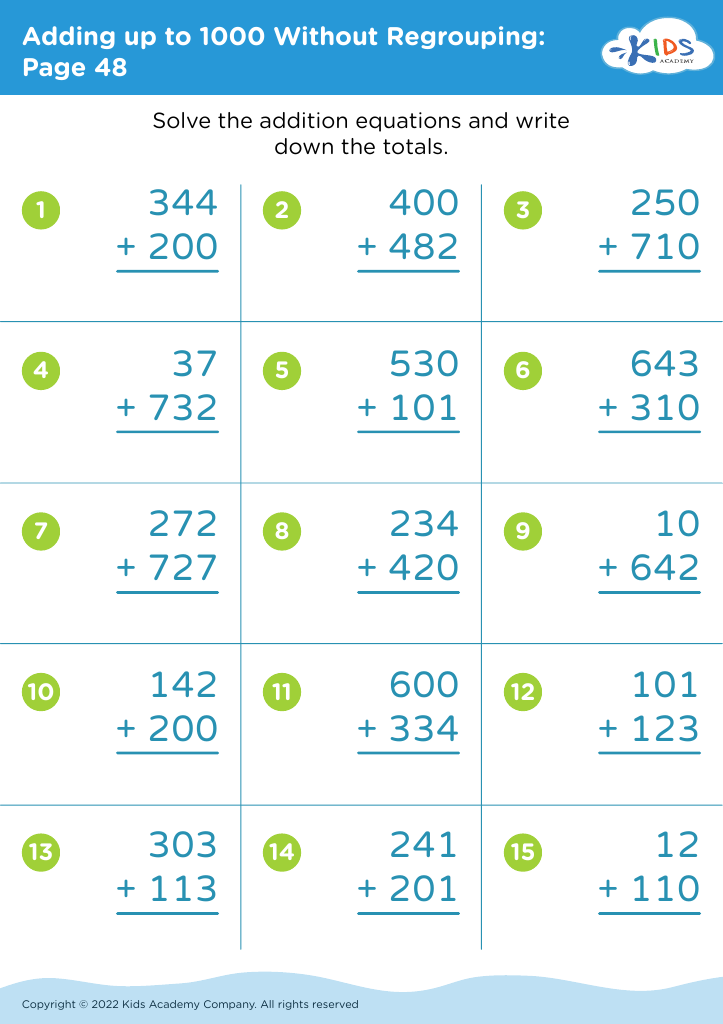
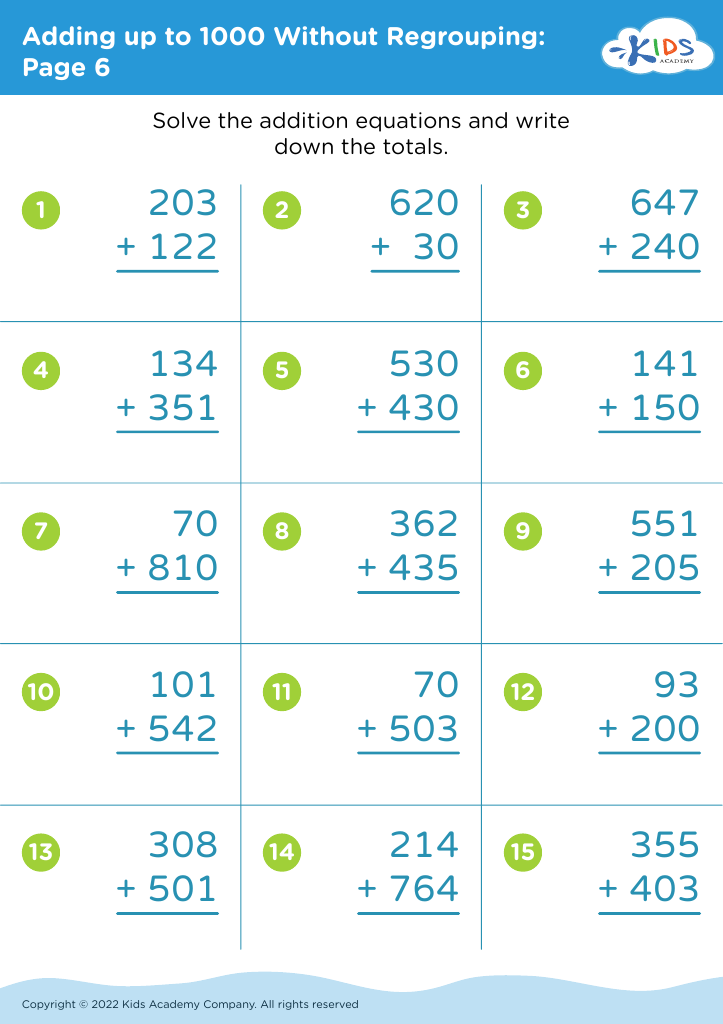




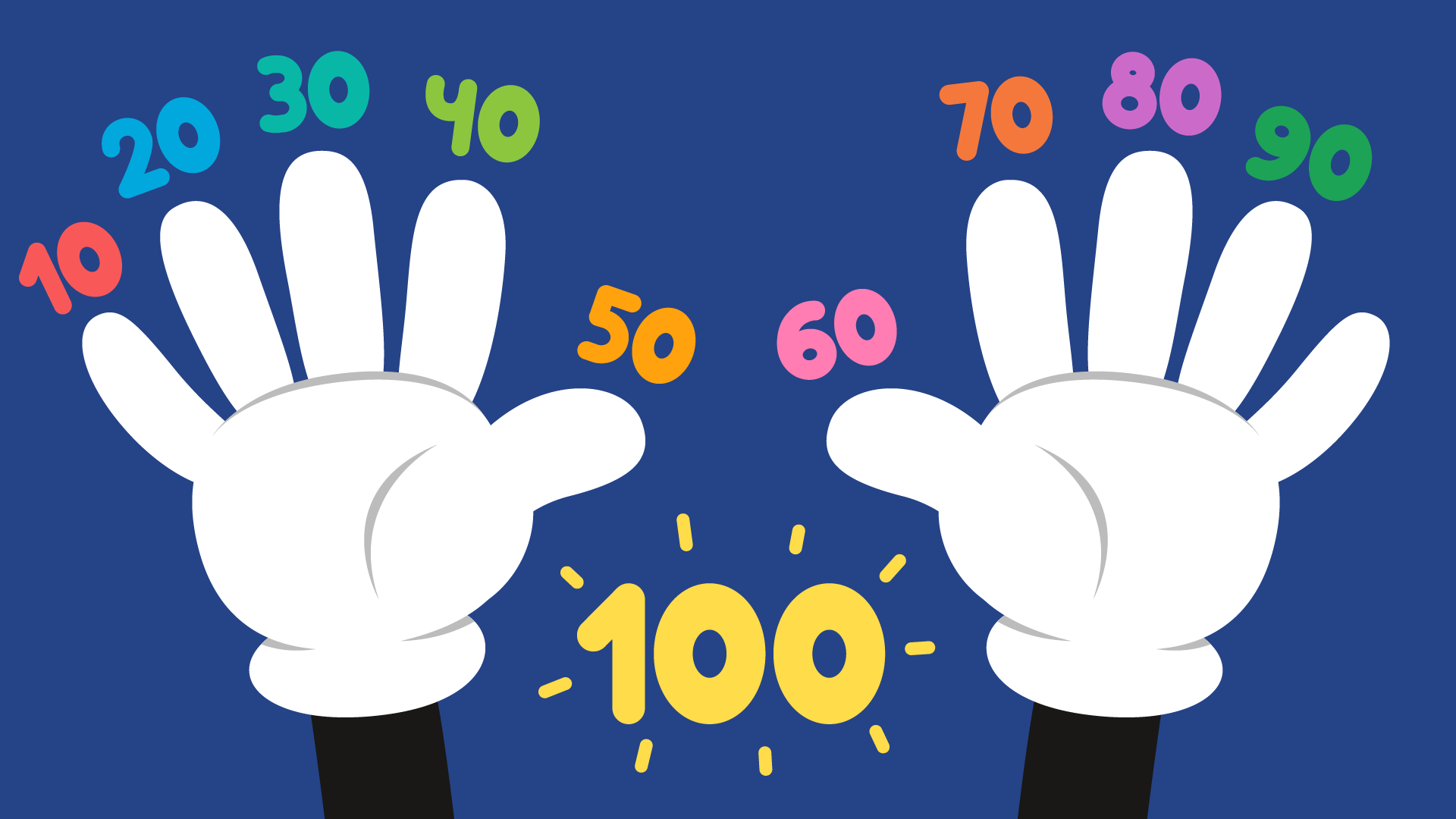



Enhancing number recognition in children aged 4-7 is crucial for their overall mathematical development and future academic success. During these formative years, children are not only learning to recognize numbers but also laying the foundation for essential skills such as counting, basic arithmetic, and problem-solving.
By focusing on number recognition, parents and teachers help children develop spatial awareness and cognitive skills that are vital for understanding more complex mathematical concepts later on. Early proficiency in number recognition boosts children's confidence, making them more willing to engage in math-related activities and challenges.
Furthermore, strong number recognition skills are linked to improved math performance in higher grades, establishing a solid basis for critical thinking and analytical skills required in everyday life. When parents and teachers actively participate in these learning experiences—whether through interactive games, storytelling, or practical applications—they create an enriching environment that fosters a love for math, encouraging lifelong learning.
Additionally, by being attentive to children's progress in number recognition, adults can identify potential learning difficulties early on and provide the support needed, ensuring that every child can thrive in their mathematical journey. Incorporating number recognition into daily activities is a thoughtful investment in children's future cognitive development and academic success.








