Mathematical thinking Math Worksheets for Ages 4-7
7 filtered results
-
From - To
Unlock your child's potential with our engaging Mathematical Thinking Math Worksheets designed specifically for ages 4-7. These interactive worksheets foster critical thinking skills through fun, age-appropriate activities that promote early math comprehension. Children will explore essential concepts like patterns, sorting, and problem-solving, setting a strong foundation for future learning. With colorful illustrations and hands-on exercises, our resources make math enjoyable and accessible, encouraging kids to think creatively as they tackle various challenges. Ideal for at-home learning or classroom use, our worksheets help develop confidence in young learners while cultivating a love for mathematics! Empower your child's learning journey today!
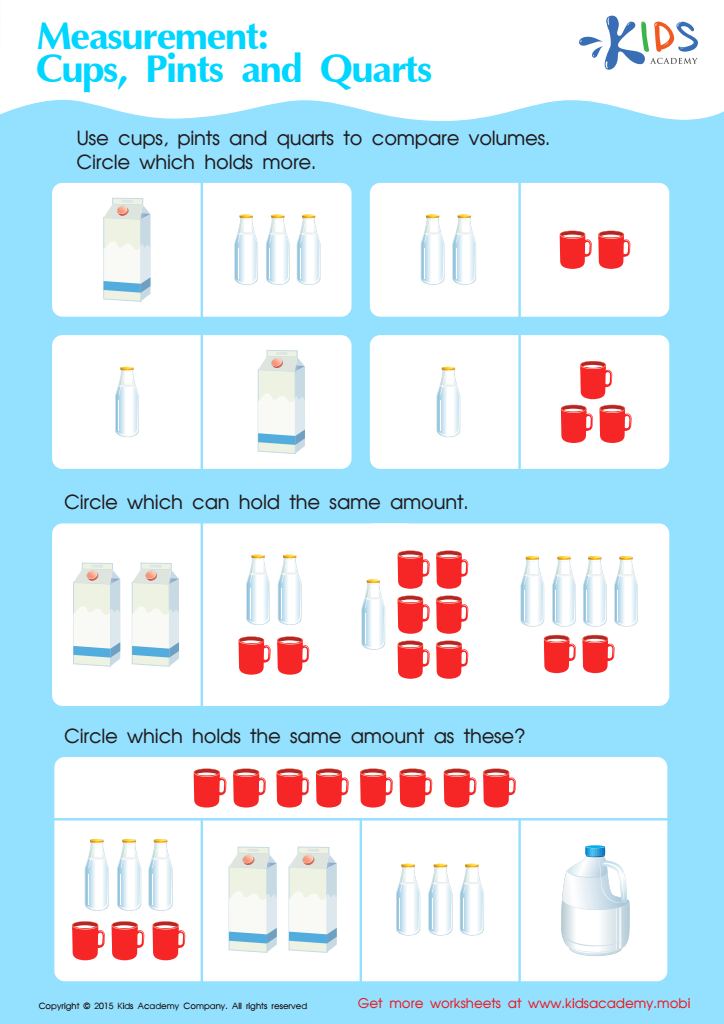
Measurement: Compare Volumes Worksheet
 Assign to My Students
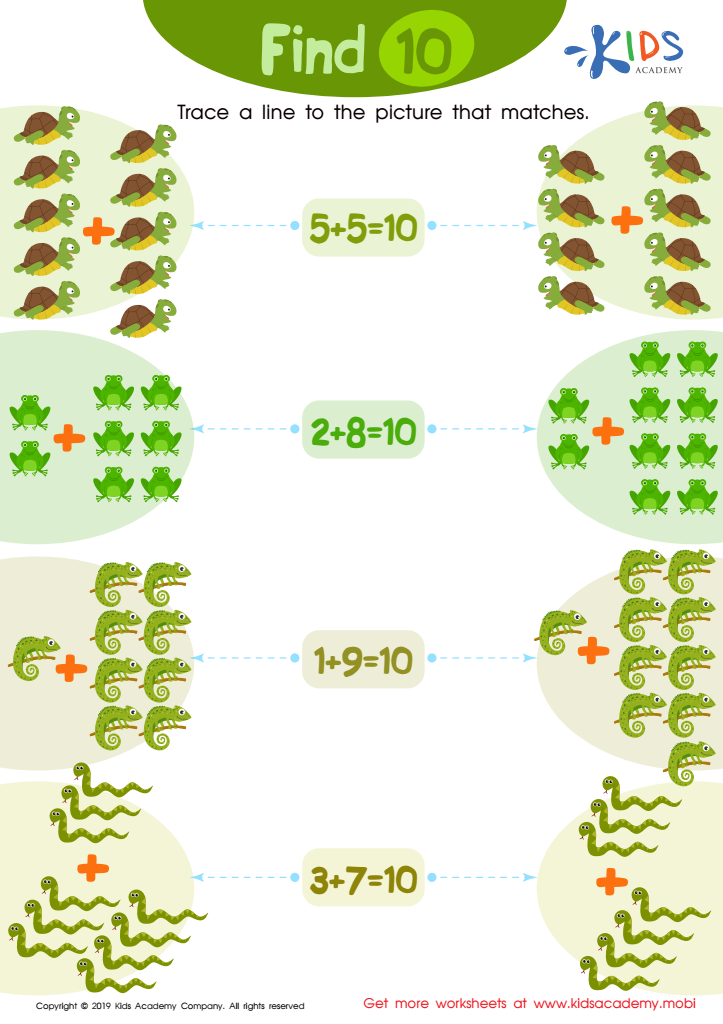
Find 10 Worksheet
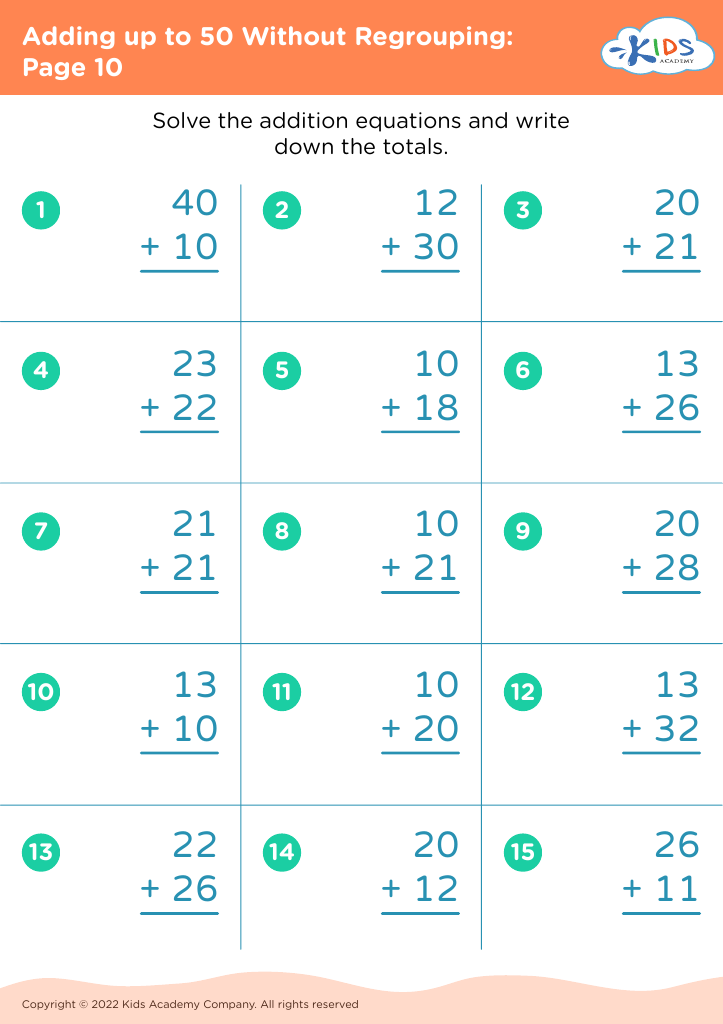
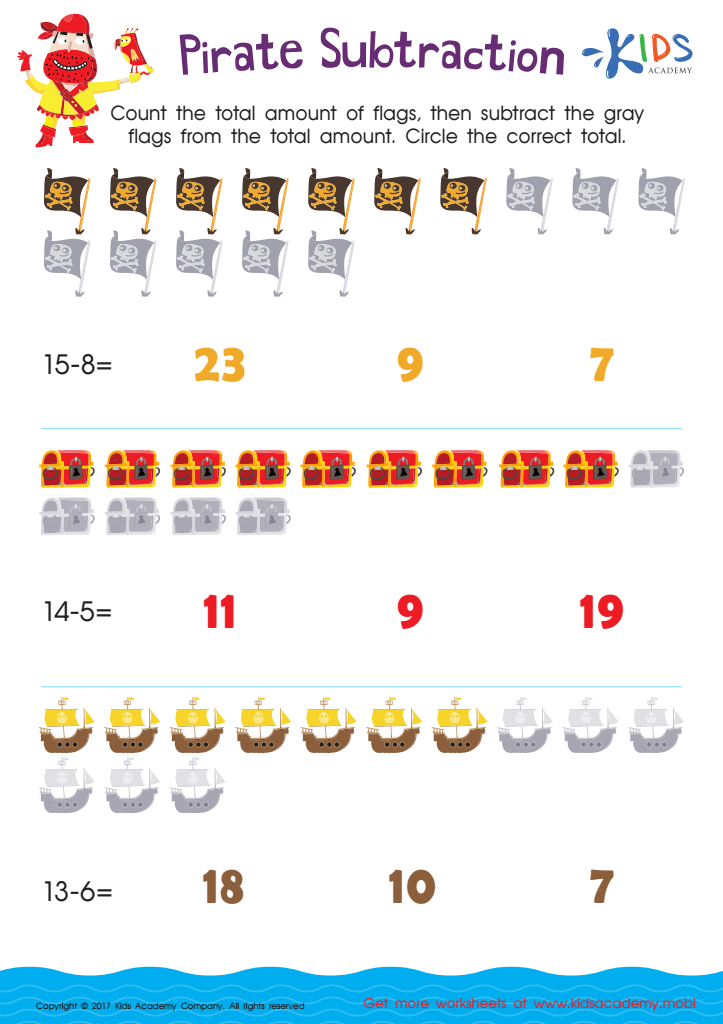
Pirate Subtraction Substraction Worksheet
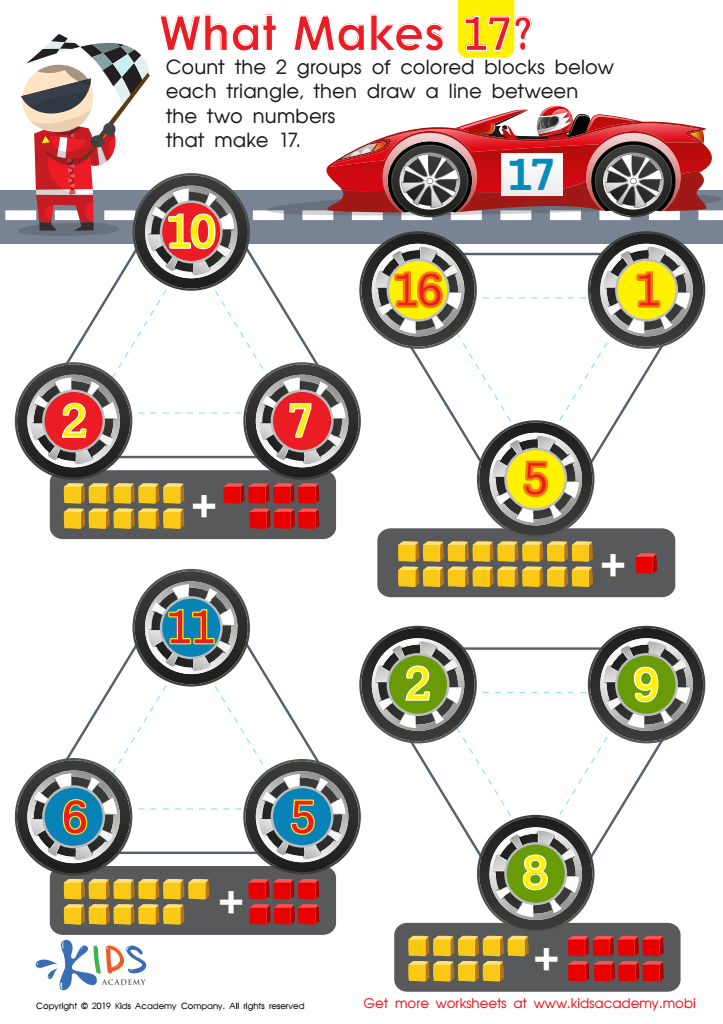
What Makes 17 Worksheet
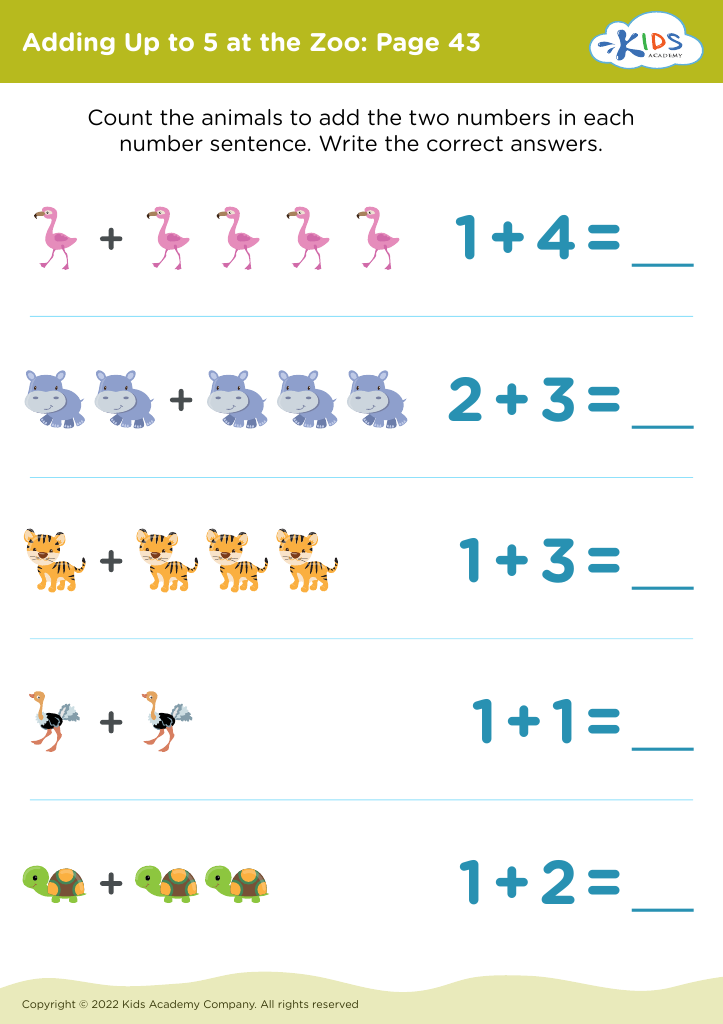
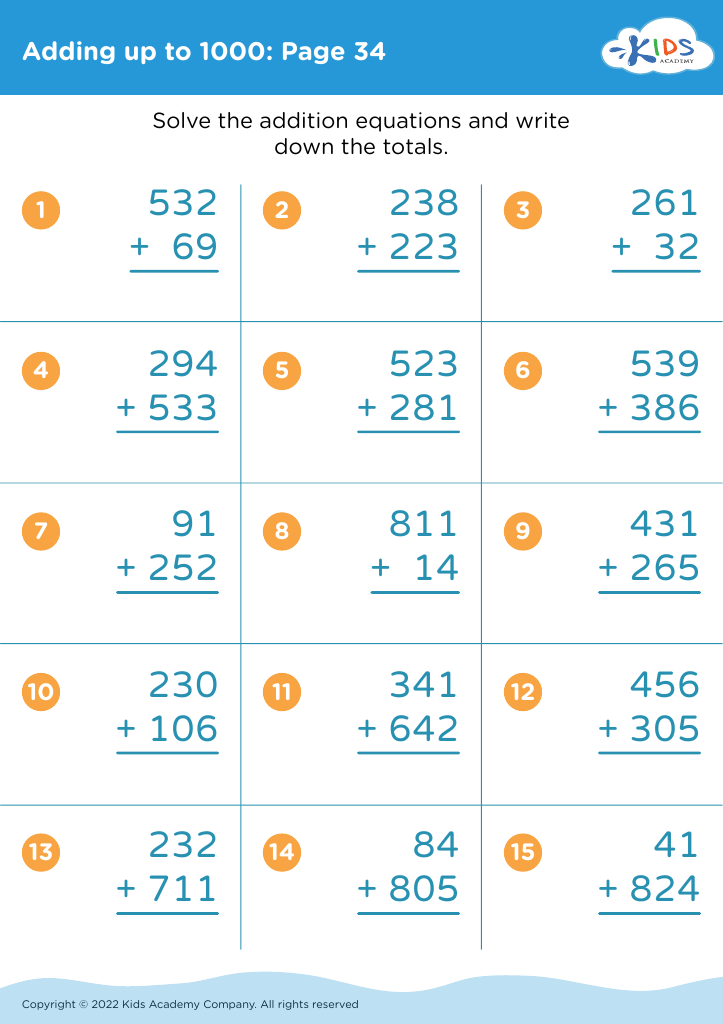








Mathematical thinking is crucial for children aged 4-7 as it lays the foundation for future learning and problem-solving skills. During these formative years, young learners develop critical cognitive abilities, such as logical reasoning, pattern recognition, and the ability to think abstractly. By engaging children in mathematical activities, we nurture their curiosity and strengthen their resilience when facing challenges.
Parents and teachers should care about fostering mathematical thinking because the skills acquired in early childhood directly influence a child's academic performance later in life. Studies show that strong numerical understanding in early education correlates with success in later mathematics and other subject areas. Additionally, incorporating math into daily life helps children see its relevance, making the learning experience more meaningful and enjoyable.
Moreover, developing a positive attitude towards math at a young age can combat common fears and anxieties associated with the subject. A supportive and engaging environment helps to instill confidence, encouraging children to explore and express their ideas and reasoning.
Ultimately, nurturing mathematical thinking helps children learn to analyze, communicate, and make informed decisions, setting them on a path toward becoming capable and confident learners. Therefore, it's vital for parents and teachers to prioritize math in early childhood education.








