Money recognition Math Worksheets for Ages 4-7
9 filtered results
-
From - To
Unlock effortless learning with our Money Recognition Math Worksheets for Ages 4-7! Designed to engage young minds, these worksheets help kids identify and understand U.S. coins, fostering fundamental math skills through fun exercises and colorful visuals. Each sheet gradually introduces pennies, nickels, dimes, and quarters, aligning with early education standards. Perfect for both classroom and home use, these worksheets nurture confidence and curiosity in financial literacy, paving the way for lifelong numeracy skills. Propel your child’s math adventure with engaging, hands-on money recognition activities—start building a strong educational foundation today!
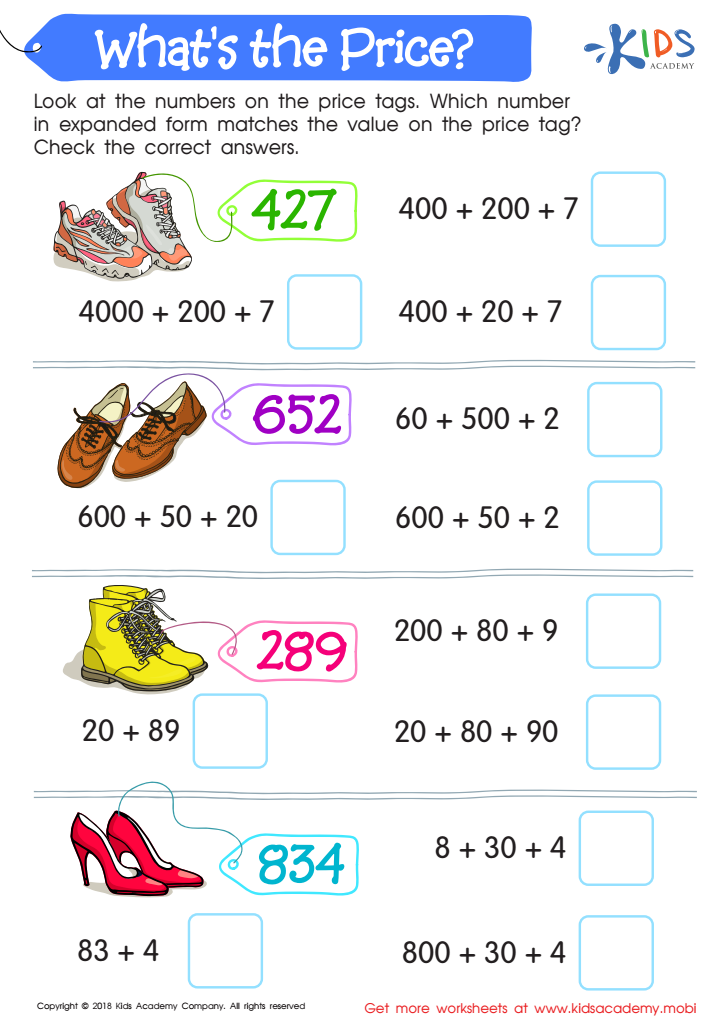
What's the Price? Worksheet
 Assign to My Students
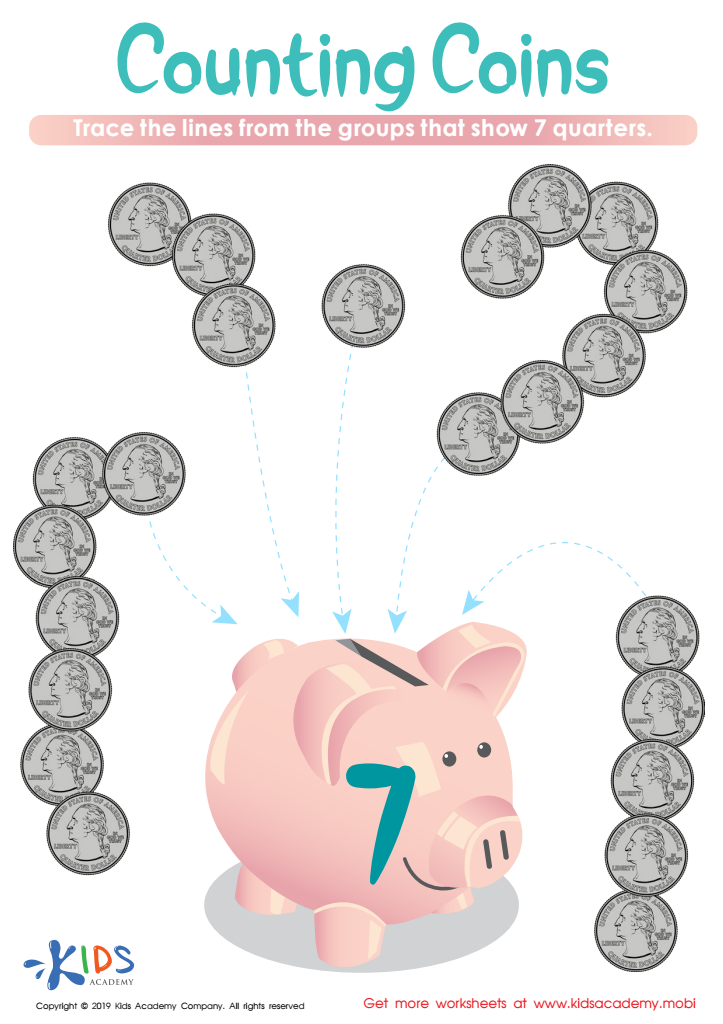
Counting Coins Worksheet
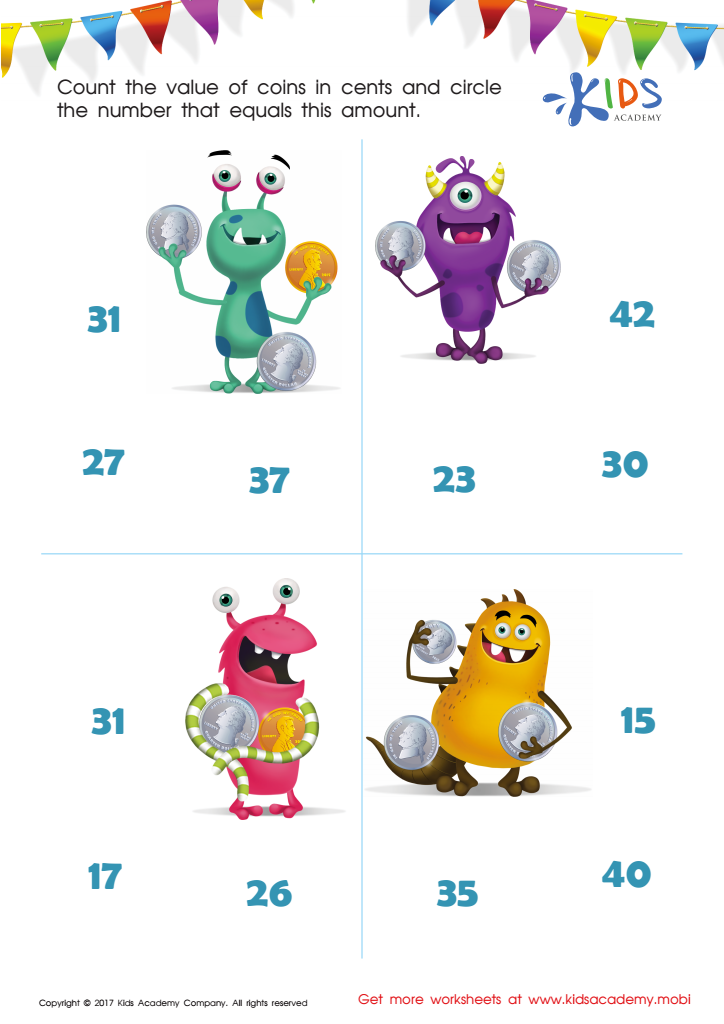
How Many Coins Money Worksheet
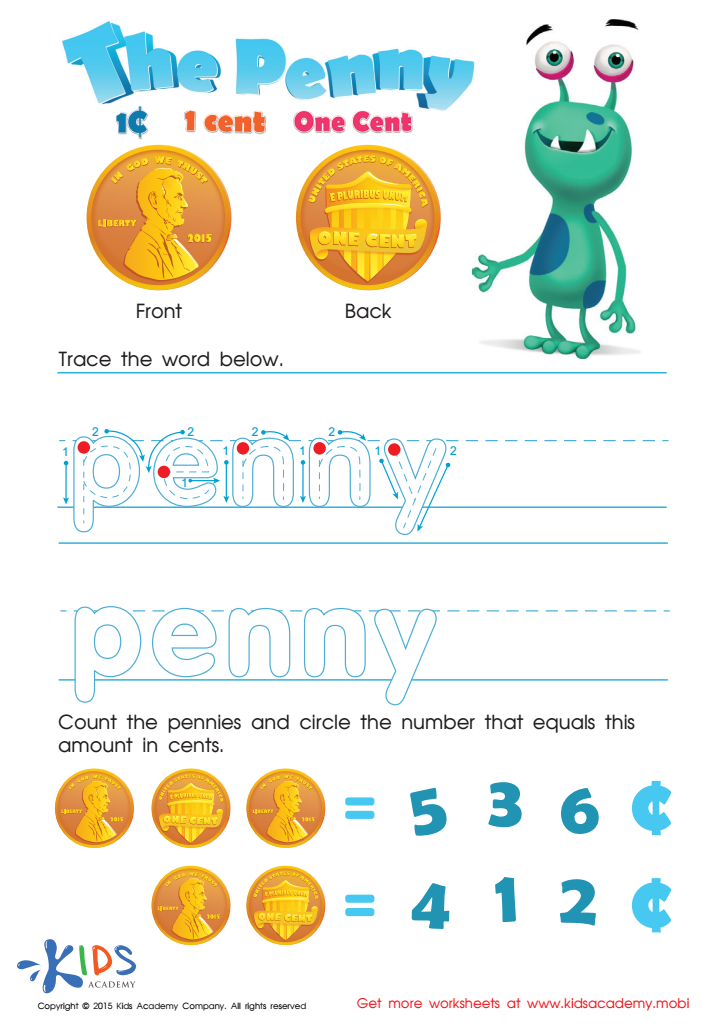
One Cent or the Penny Money Worksheet
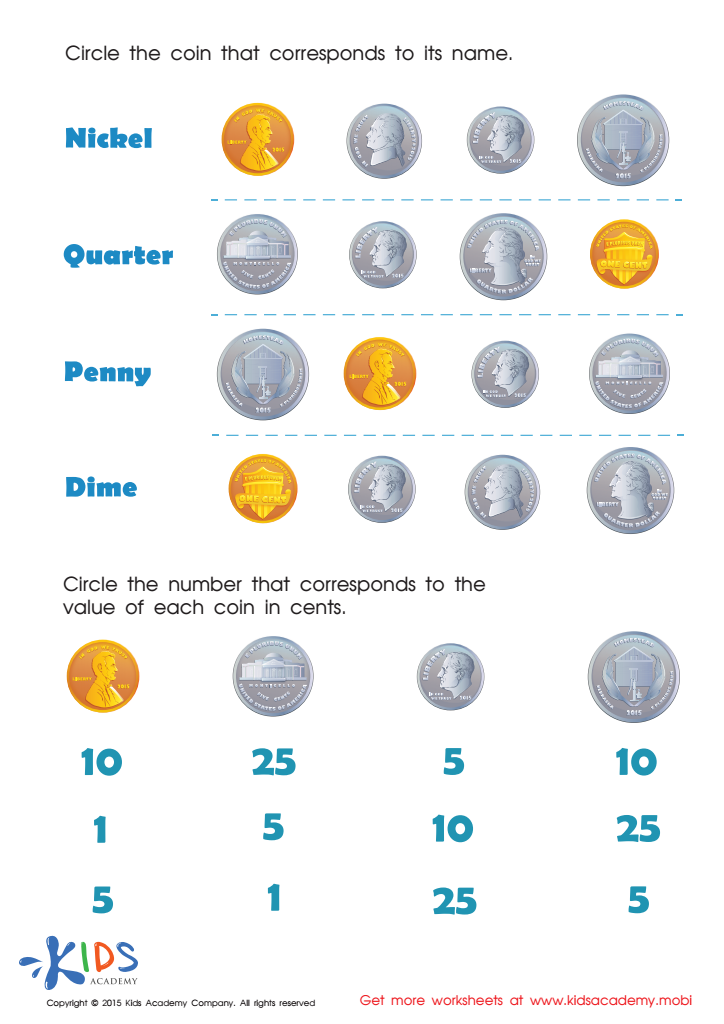
Coin Names and Values Money Worksheet
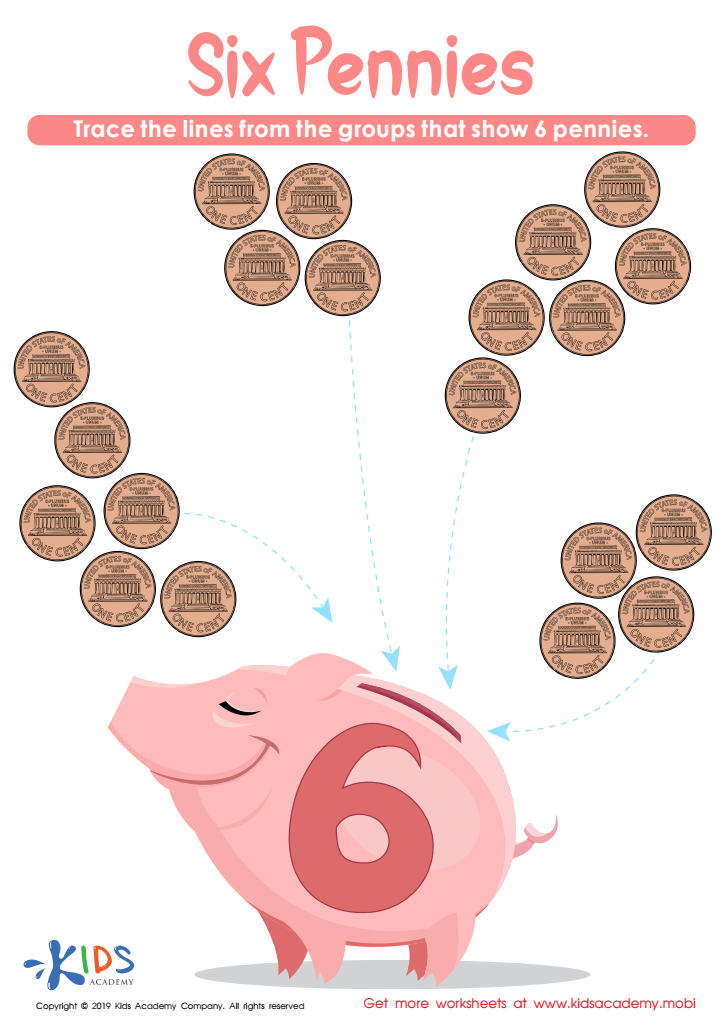
Six Pennies Worksheet
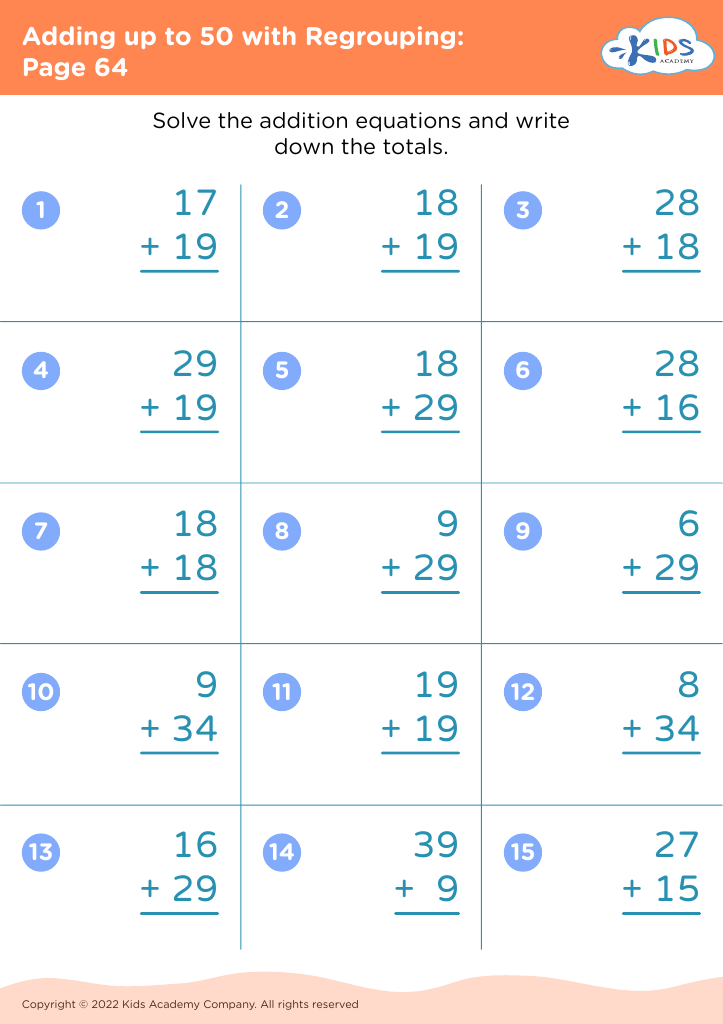
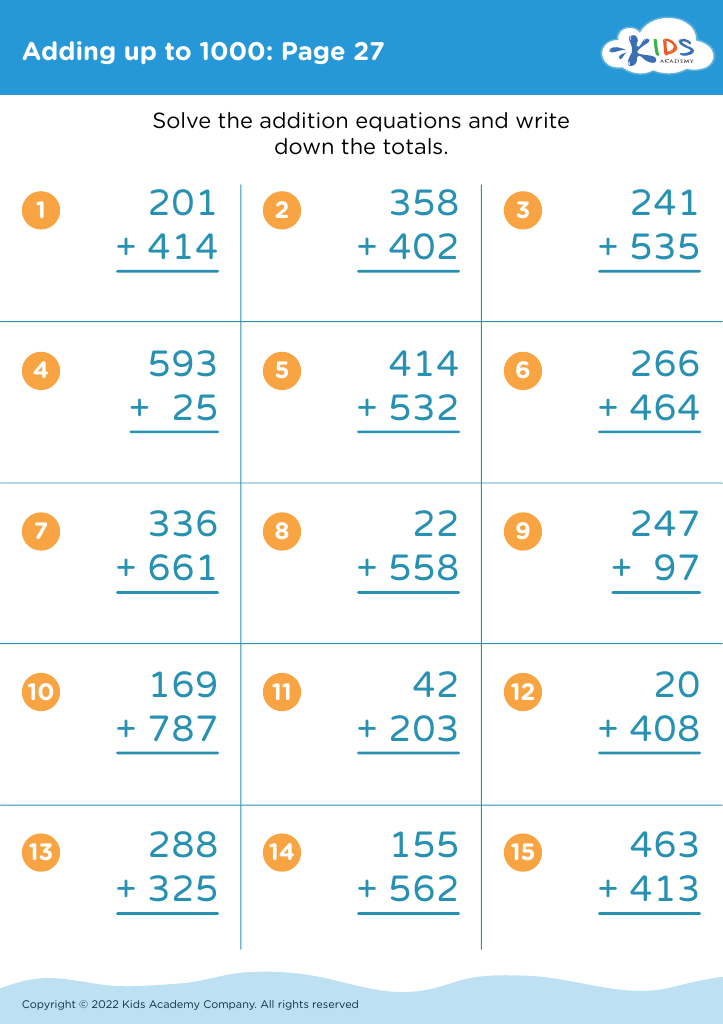
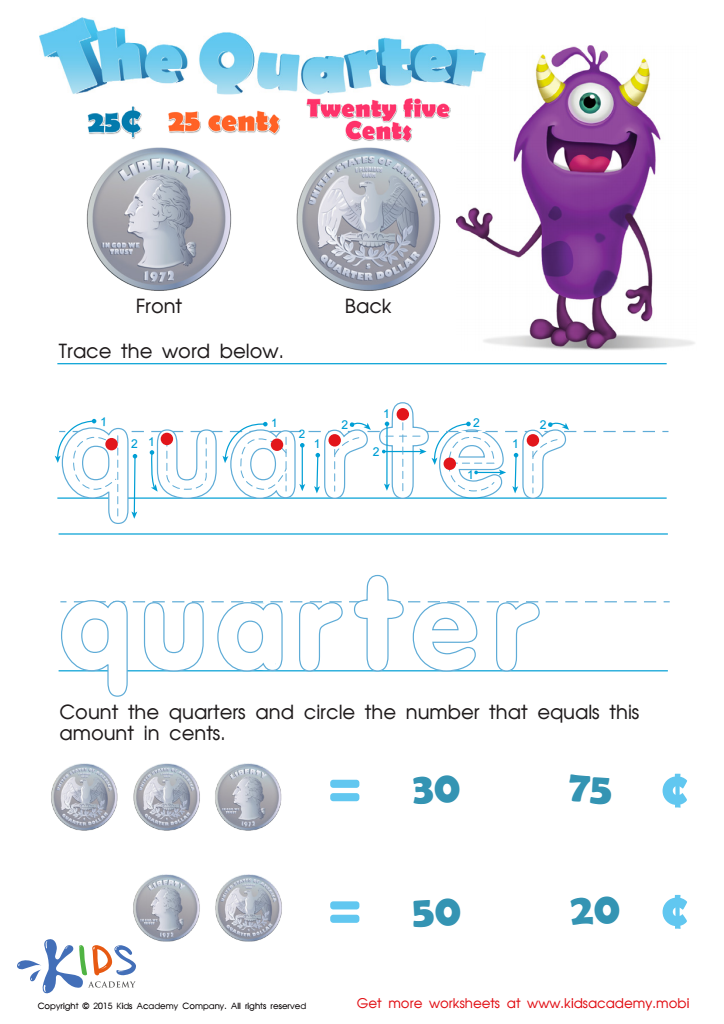
Twenty Five Cents or the Quarter Money Worksheet








Teaching money recognition math to children ages 4-7 is a pivotal aspect of their early education, benefiting them in numerous ways. Firstly, it instills foundational mathematical skills such as counting, addition, and subtraction through engaging, real-world applications. Learning to identify coins and bills, and understanding their values helps children grasp the concept of numerical relationships and reinforces the importance of numbers in everyday life.
Moreover, money recognition cultivates a sense of financial literacy and responsibility from a young age. It empowers children to make informed decisions about saving and spending, laying the groundwork for healthy financial habits in the future. By distinguishing between different denominations, children also enhance their cognitive skills, including attention to detail, critical thinking, and problem-solving abilities.
Parents and teachers should also consider the practical importance: kids with basic money skills are better prepared to navigate everyday situations, such as buying snacks or toys, boosting their independence and confidence. This early exposure creates a familiar and comfortable understanding of financial transactions, reducing the potential for math anxiety about money matters later in life.
Incorporating money recognition into early education thus not only builds essential math skills but also equips children with the tools needed for prudent financial decisions, fostering both numerical competence and lifelong financial health.








