Number comparison skills Math Worksheets for Ages 4-7
3 filtered results
-
From - To
Enhance your child's number comparison skills with our engaging math worksheets designed specifically for ages 4-7. These worksheets help young learners grasp essential concepts of greater than, less than, and equal to through fun activities. Using colorful visuals and interactive exercises, kids will develop critical thinking and problem-solving abilities. Our printable materials are perfect for home or classroom use, allowing for personalized learning experiences. Parents and educators can easily track progress and ensure a solid foundation in math. Start building confidence in your child's math abilities today with our thoughtfully crafted worksheets, tailored to make learning both effective and enjoyable!
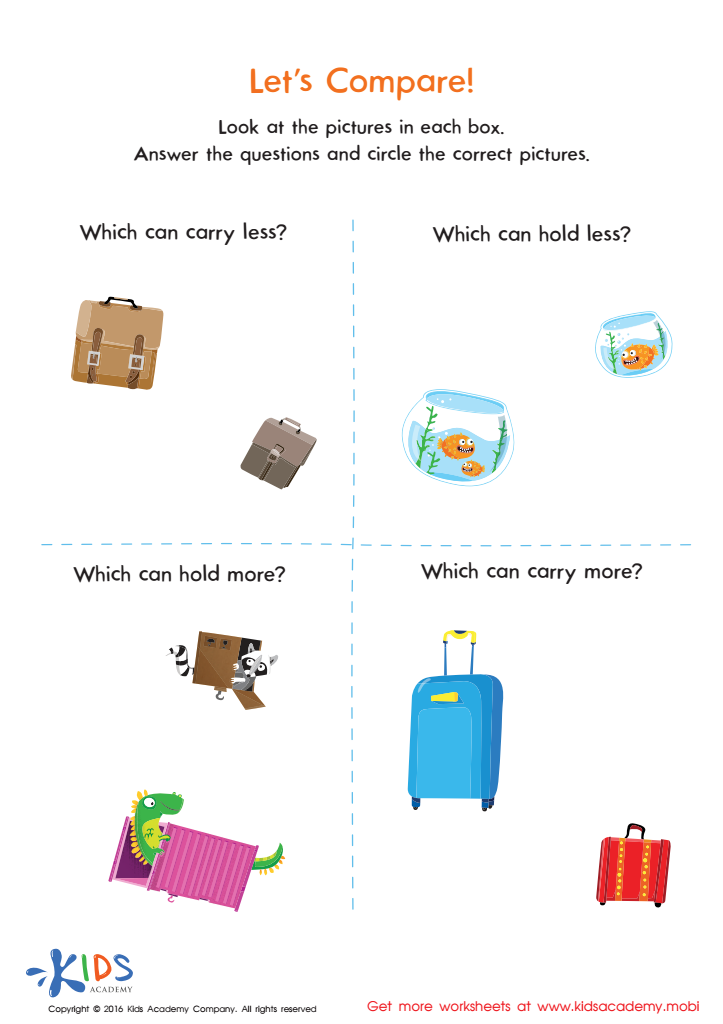
Let's Compare Worksheet: Big or Small
 Assign to My Students
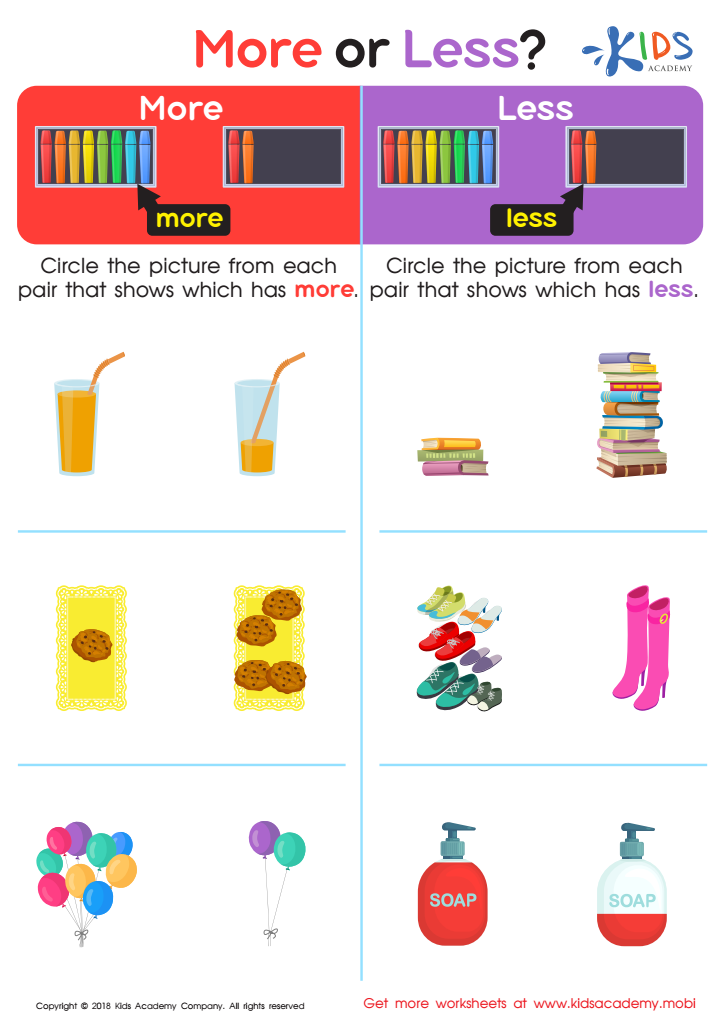
More or Less? Worksheet
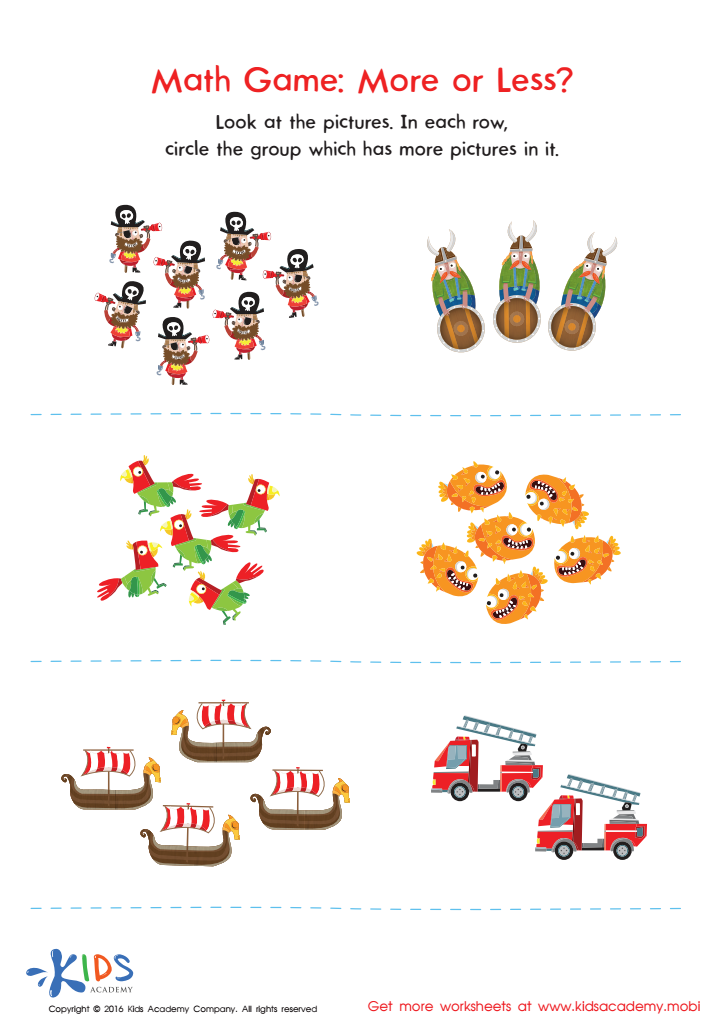
More or Less Worksheet





.jpg)


Number comparison skills are crucial for young learners aged 4-7 as they form the foundation for more advanced mathematical concepts. At this stage, children begin to understand the relationships between numbers, which helps in developing their overall numerical literacy. When children learn to compare numbers—recognizing which is greater, lesser, or equal—they enhance their critical thinking and problem-solving abilities.
Parents and teachers play a pivotal role in fostering these skills through everyday activities. Engaging children in games and practices that involve counting objects, drawing comparisons, or solving simple word problems can make learning fun and impactful. These experiences not only solidify their understanding of numbers but also bolster their confidence in math.
Moreover, number comparison skills have real-world applications, from managing pocket money to measuring ingredients in cooking. As children master these basic skills, they build a stronger mathematical foundation that will aid them in future academic endeavors. This early competency can also spark a lasting interest in math, encouraging a lifelong love of learning. By nurturing number comparison skills, parents and teachers help children gain essential tools for success both in and outside the classroom.








