Numerical problem solving Math Worksheets for Ages 4-7
3 filtered results
-
From - To
Introduce your child to the exciting world of numerical problem solving with our Math Worksheets for Ages 4-7, designed to develop critical thinking and foundational math skills. Our engaging worksheets incorporate fun, age-appropriate challenges that help young learners practice addition, subtraction, counting, and more. Each activity focuses on building confidence, logical reasoning, and problem-solving abilities. These printable worksheets are crafted by experienced educators to align with educational standards, ensuring a solid math foundation. Perfect for classroom use or at-home practice, help your child foster a love for math while mastering essential skills with Kids Academy’s resources.
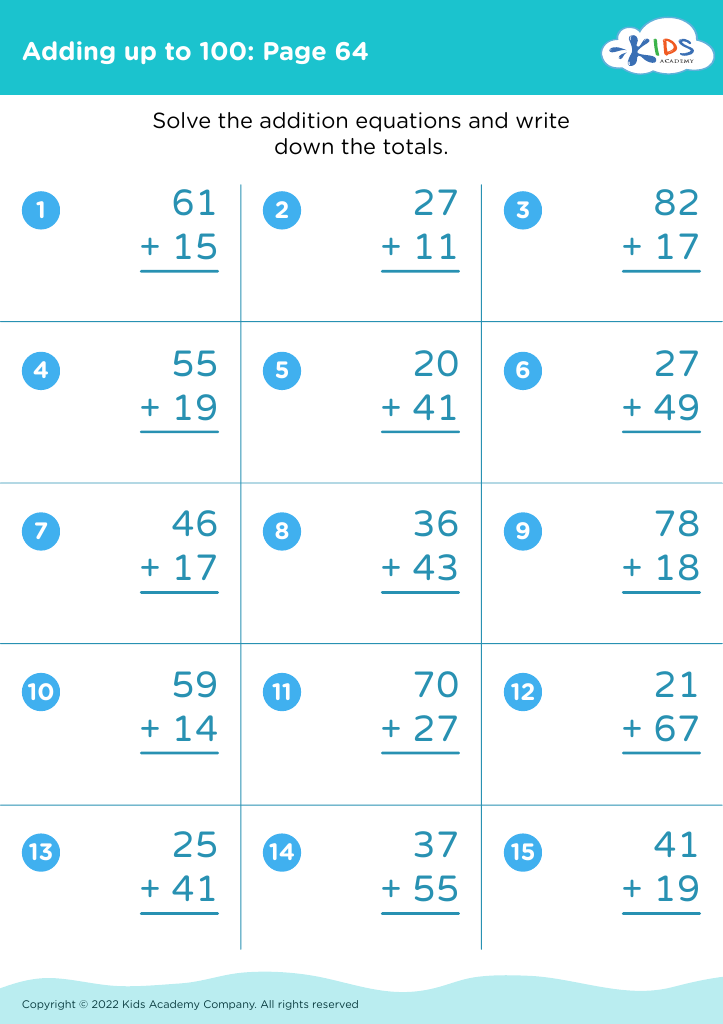
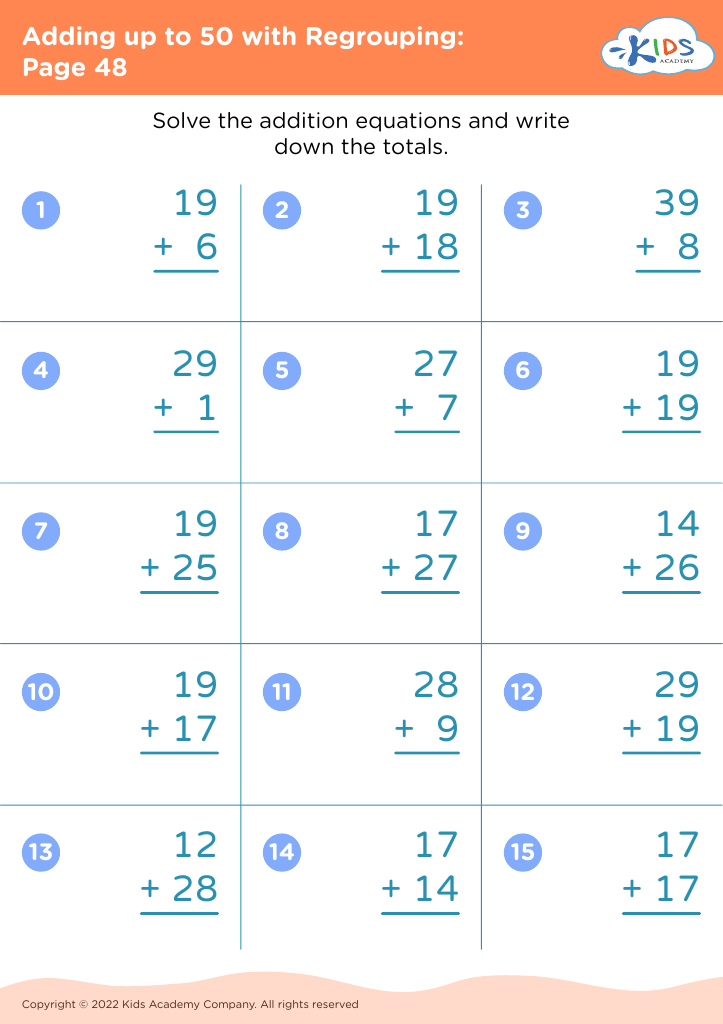
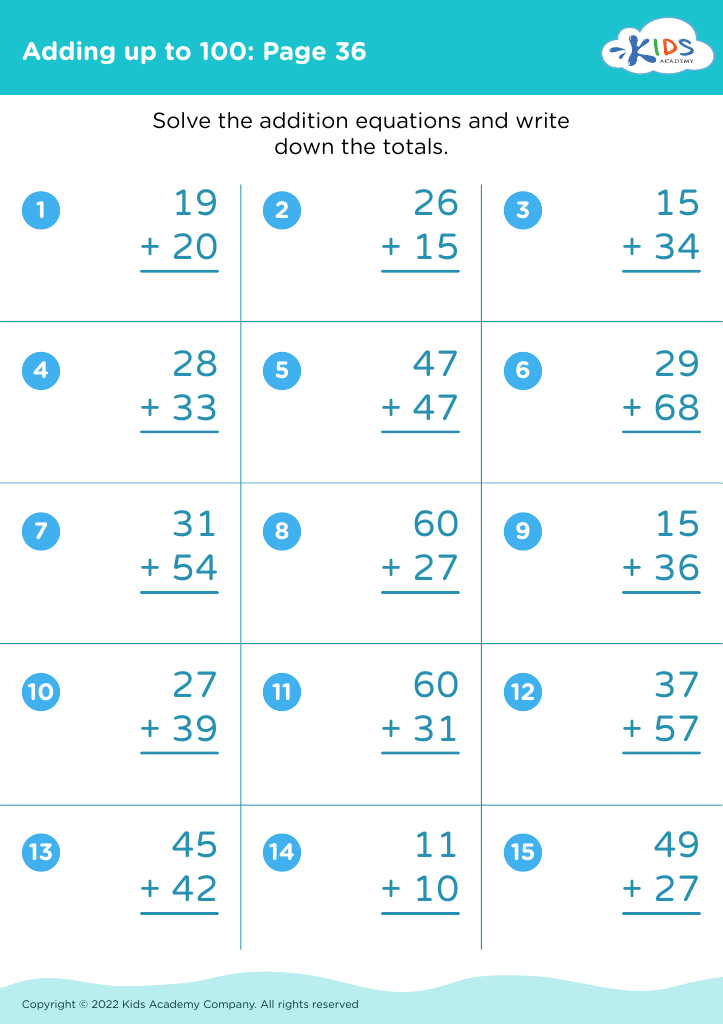








Numerical problem-solving in math is fundamental for children aged 4-7 because it builds the foundation for all future mathematical learning and cognitive development. During these formative years, children’s brains are extraordinarily receptive to new information, making it an ideal time to introduce basic numerical concepts. Math problem-solving helps young learners develop critical thinking skills, enhances their ability to approach problems logically, and improves their confidence in handling numbers.
Early exposure to numerical problem-solving can also foster a positive attitude toward math. If children become comfortable and proficient with numbers at an early age, they are more likely to enjoy and excel in math-related subjects throughout their academic journey. Additionally, early math skills are predictors of later academic achievement, not just in math but across different subjects.
Moreover, engaging in math activities enhances brain development and improves essential life skills such as decision-making, pattern recognition, and spatial awareness. In today’s increasingly data-driven world, numerical literacy is crucial. By nurturing these skills early on, parents and teachers prepare children not just for academic success, but for effective decision-making in everyday life. Overall, caring about numerical problem-solving ensures that children have the tools they need to thrive in a complex and interlinked world.








