Practice inference skills Math Worksheets for Ages 4-7
3 filtered results
-
From - To
Enhance your child's mathematical skills with our engaging "Practice Inference Skills Math Worksheets" designed for ages 4-7! These carefully crafted worksheets focus on developing critical thinking and problem-solving abilities by encouraging students to make logical connections and draw conclusions. Through colorful illustrations and age-appropriate exercises, young learners will practice interpreting data, understanding patterns, and applying their inference skills in fun, meaningful ways. Each worksheet is aligned with educational standards, making it an excellent resource for homeschooling or classroom use. Start building your child's confidence and abilities in math today with our captivating and interactive inference skills worksheets!
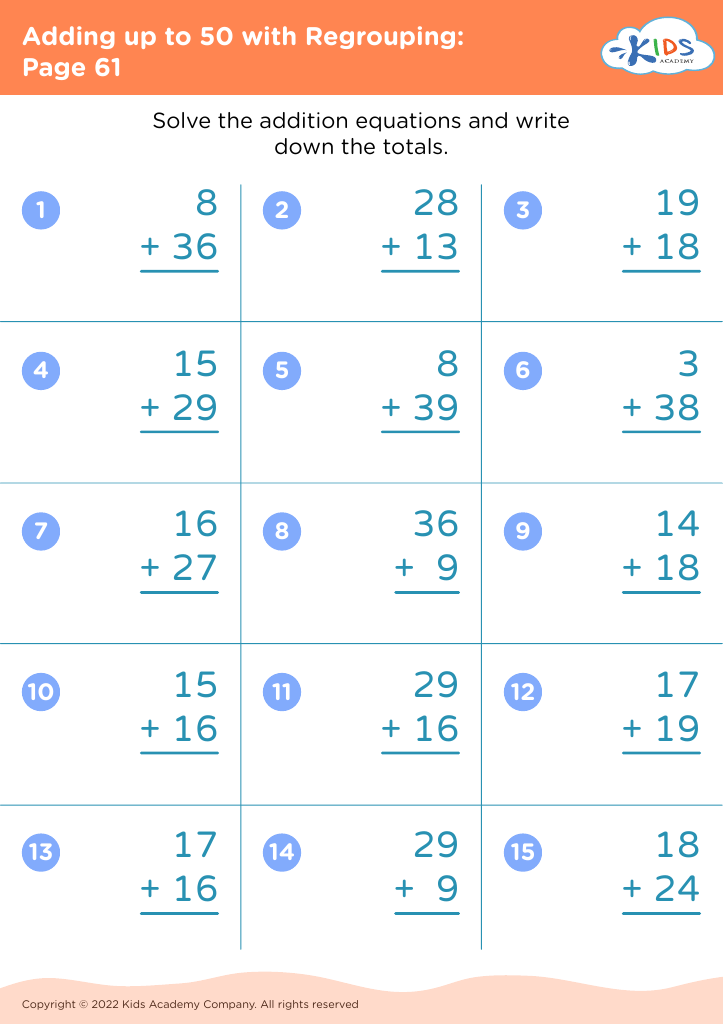
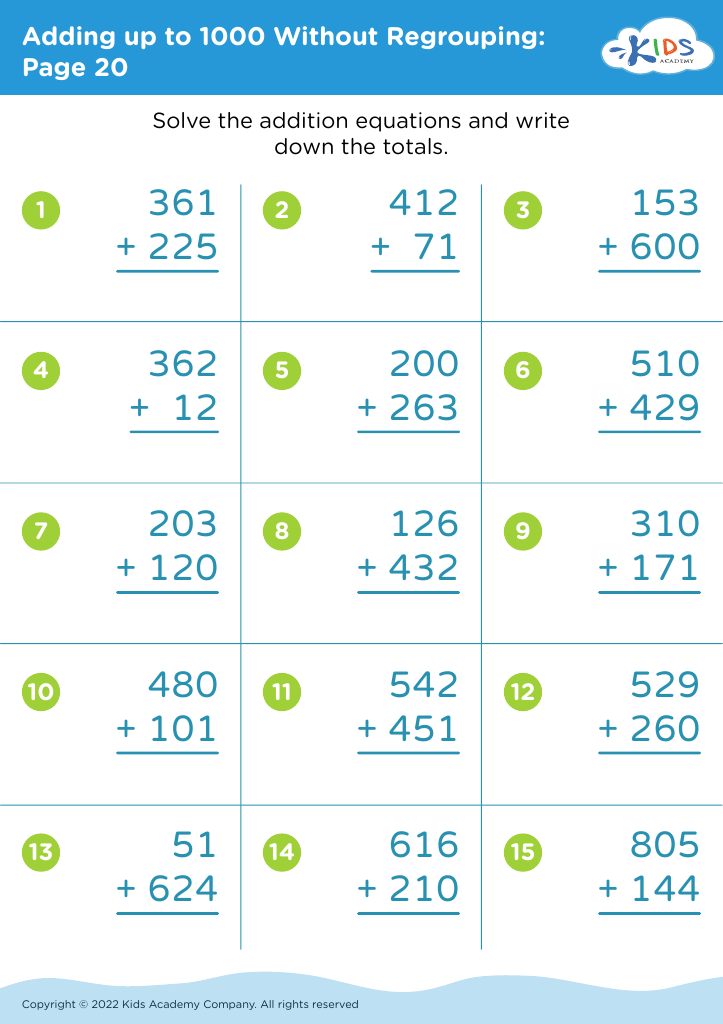









Developing practice inference skills in math for children ages 4-7 is crucial for several reasons. First, inference skills help children to draw logical conclusions from given information, a foundational aspect of critical thinking. At this early age, children are naturally curious and eager to understand the world around them; fostering these skills empowers them to evaluate situations, solve problems, and make predictions based on prior knowledge.
Moreover, as math becomes increasingly complex, the ability to infer patterns, relationships, and rules becomes essential for success. Utilizing practice inference throughout early math education encourages children to analyze situations and recognize underlying mathematical concepts, making it easier for them to transition to more advanced topics later on.
Furthermore, these skills relate closely to other areas of learning, including literacy, social studies, and science. Enhanced inference skills can lead to improved comprehension in reading and communication, providing a holistic foundation for academic achievement.
When parents and teachers prioritize practice inference in math, they are not just teaching numbers and operations; they are fostering critical life skills that contribute to a child’s overall cognitive development, self-confidence, and adaptability in an ever-evolving world.








