Real-life application Math Worksheets for Ages 4-7
6 filtered results
-
From - To
Discover our engaging Real-life Application Math Worksheets for Ages 4-7! These worksheets offer young learners an exciting way to develop essential math skills through practical, real-world scenarios. Our expertly designed activities focus on enhancing counting, addition, subtraction, and problem-solving skills while fostering critical thinking. Perfect for use at home or in the classroom, these worksheets make learning math fun and relevant, helping children understand how math is part of everyday life. With colorful visuals and age-appropriate challenges, our math worksheets support foundational learning, ensuring kids build confidence and proficiency in their early math journey. Ignite a love for math today!
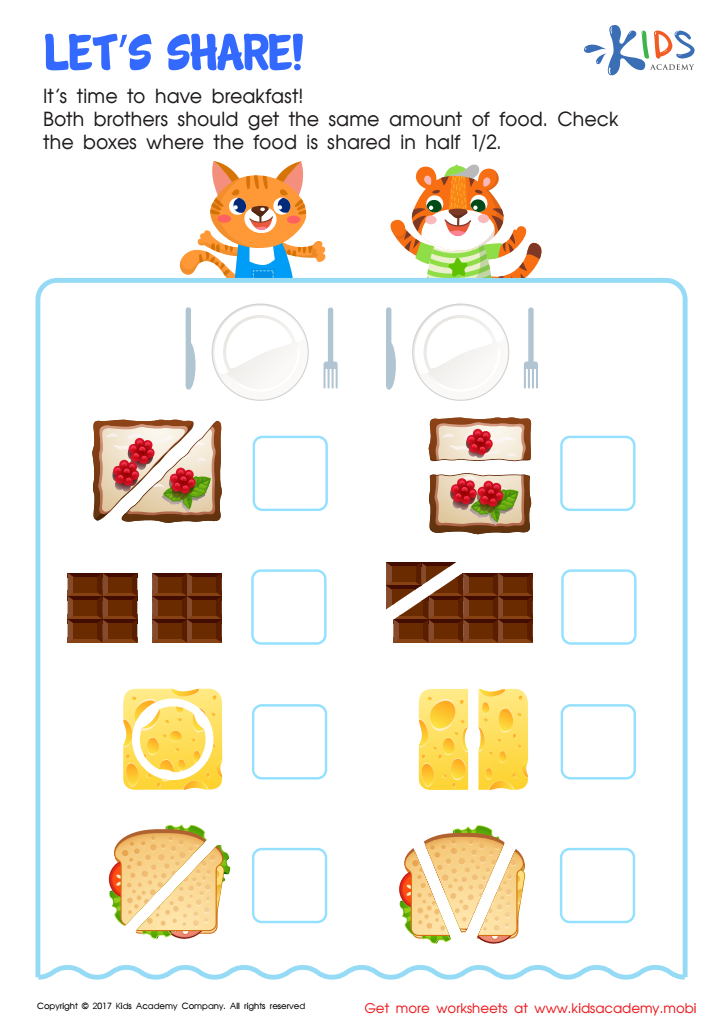
Let's Share Worksheet
 Assign to My Students
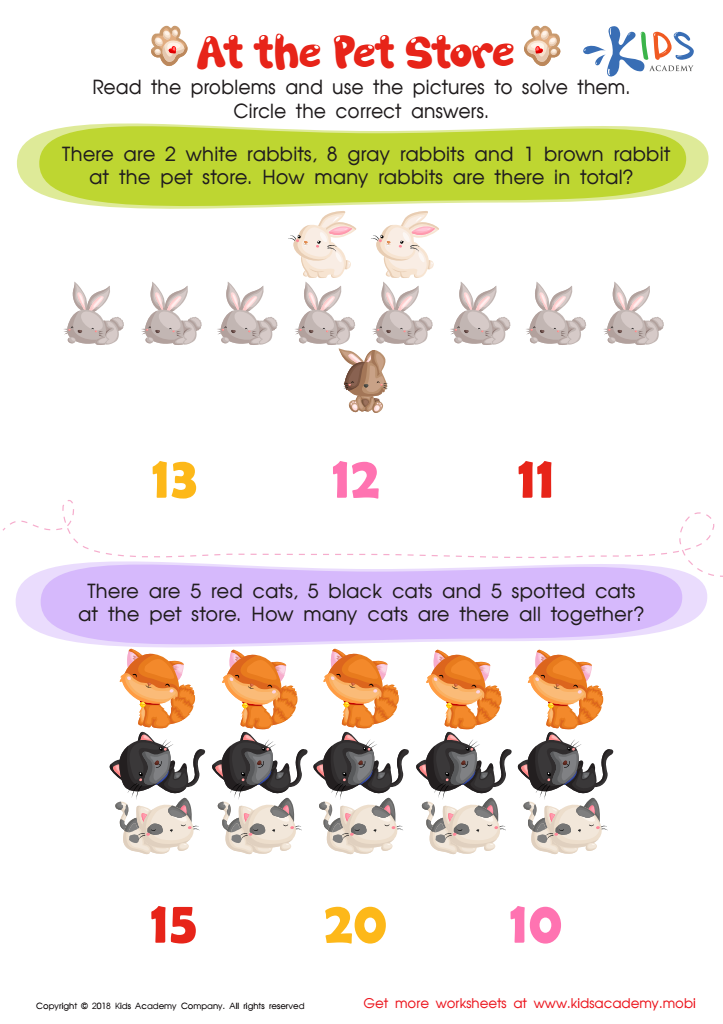
At the Pet Store Word Problems Worksheet
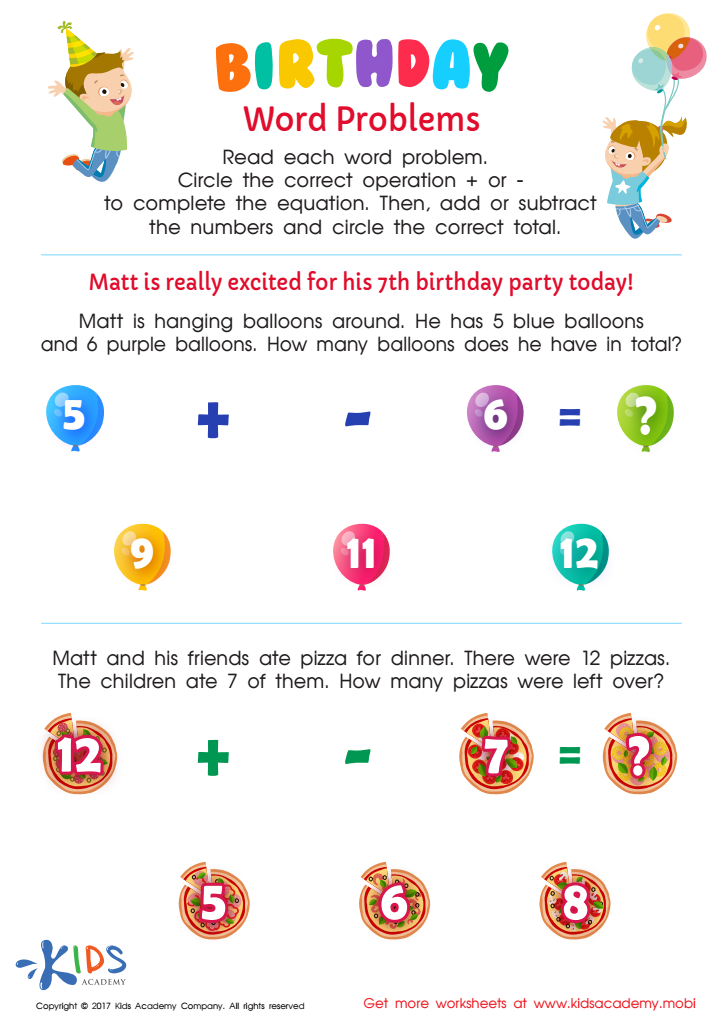
Birthday Word Problems Substraction Worksheet
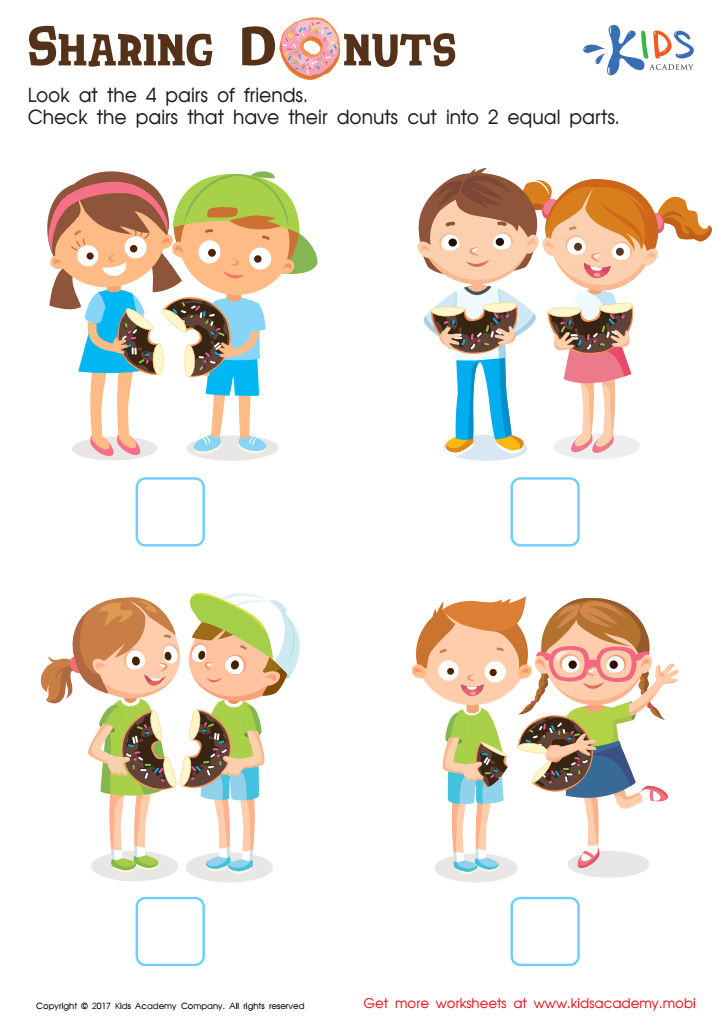
Sharing Donuts Worksheet
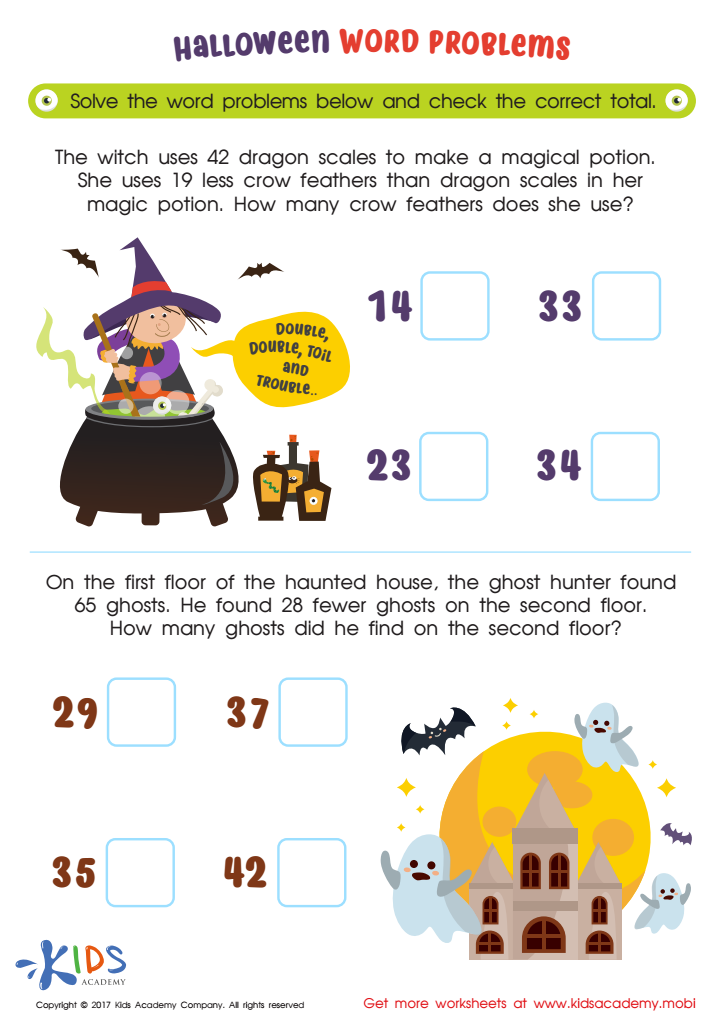
Halloween Word Problems Printable
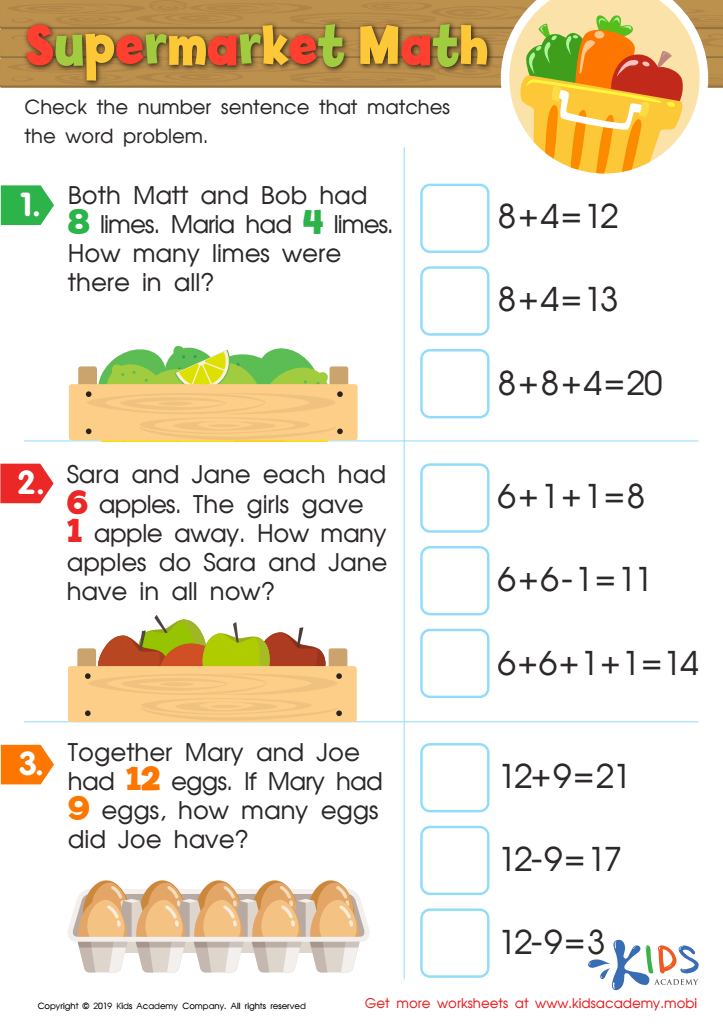
Supermarket Math Worksheet








Parents and teachers should prioritize real-life application math for children aged 4-7 because it lays the foundation for essential life skills and future academic success. During this pivotal developmental stage, young children grasp concepts more effectively through hands-on experiences and practical examples.
Firstly, embedding math in everyday activities, such as counting apples during grocery shopping or sorting toys by shape and size, makes learning contextual and relevant. This approach not only keeps children engaged but also helps them understand that math is not just an abstract subject confined to the classroom – it's a tool they will use throughout their lives.
Secondly, real-life math application promotes problem-solving skills and critical thinking. When children encounter simple mathematical challenges in their daily routines, they learn to think logically, make decisions, and resolve issues independently. For instance, determining the right number of plates needed at a family dinner fosters both numerical understanding and planning abilities.
Furthermore, early exposure to real-life math helps build confidence. As children consistently practice and succeed in small tasks, their sense of competence grows, encouraging a positive attitude towards more complex mathematical concepts they will face later in their education.
Overall, integrating math into everyday experiences provides a solid educational foundation, fosters independence, and cultivates lifelong numeracy skills.








