Discover the world of patterns with our engaging "Recognizing Patterns Math Worksheets" designed specifically for children ages 4-7. These worksheets help young learners identify and create patterns through fun activities that promote critical thinking and cognitive skills. Each printable worksheet features colorful visuals and interactive exercises that make learning enjoyable. From simple patterns to more complex sequences, our resources cater to various skill levels. Perfect for preschool and early elementary environments, these worksheets are ideal for enhancing math skills while encouraging creativity. Nurture your child’s love for learning and challenge their minds with our delightful pattern recognition activities today!

Check out this FREE Trial Lesson on Math for age 4-7!

Objects in the Environment- Circle, Square, Triangle & Rectangle

Favorites
With answer key
Interactive
  • 4-7
  • Recognizing Patterns
  • Math
Preschool geometry worksheet

Geometry Worksheet

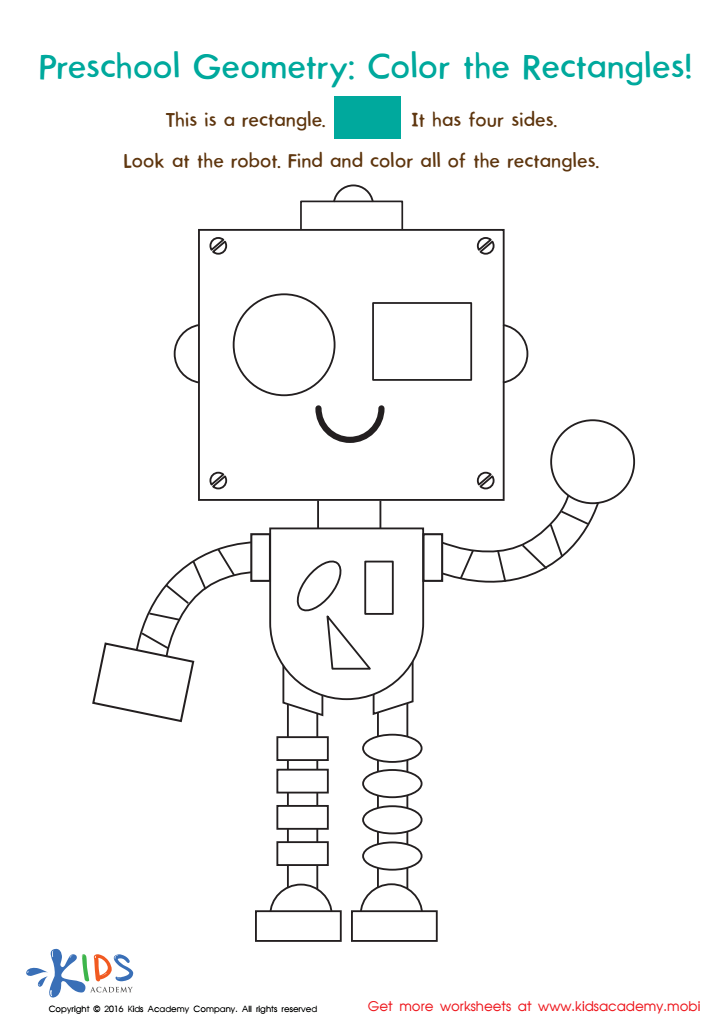
Geometry can be fun for kids! They explore shapes that create their favorite pics and objects. This preschool worksheet explains that rectangles have four sides, then kids color rectangles on a funny robot!
Geometry Worksheet
Worksheet
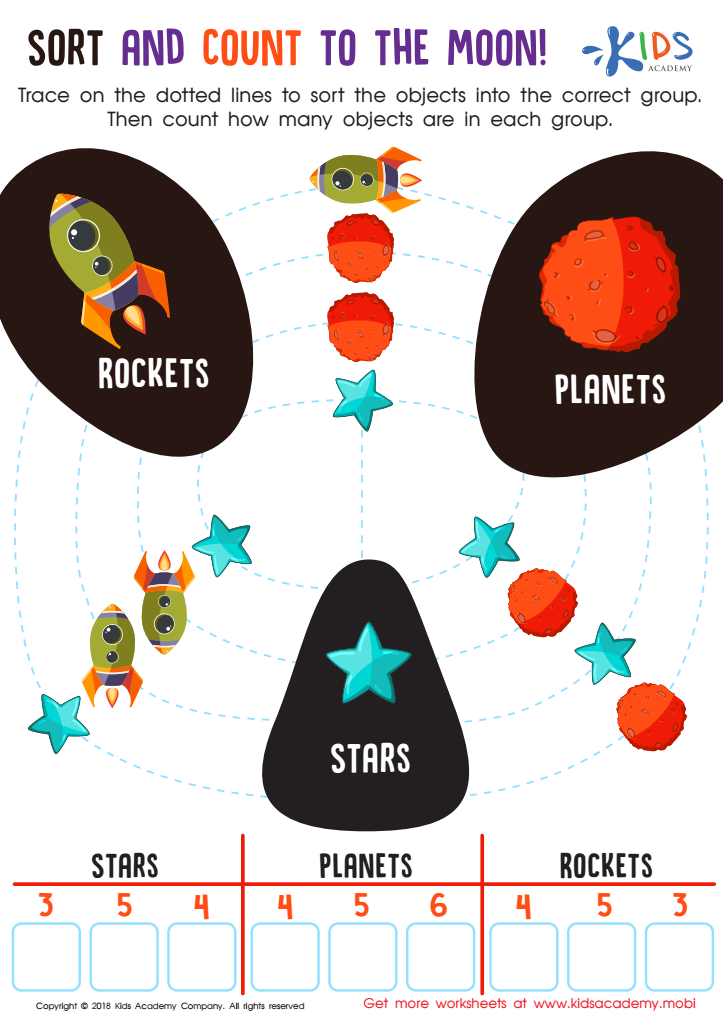
Sort and Count to the Moon Worksheet
Sort and Count to the Moon Worksheet
Little space explorers will love counting, sorting and strengthening number sense with this galactic worksheet! They'll use traceable lines to sort pictures of stars, planets and rockets into categories according to properties. After sorting, they'll count each item and fill in the boxes. Bold pictures make it fun and build critical thinking skills.
Sort and Count to the Moon Worksheet
Worksheet
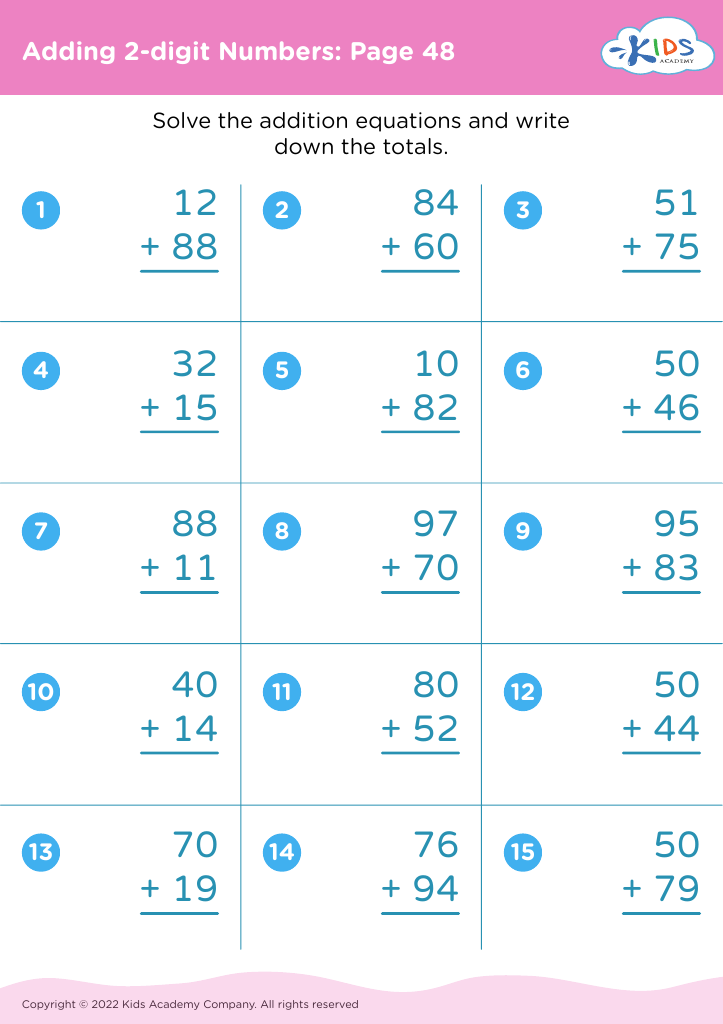
Adding 2-digit Numbers: Page 48

Adding 2-digit Numbers: Page 48

Adding 2-digit Numbers: Page 48
Worksheet
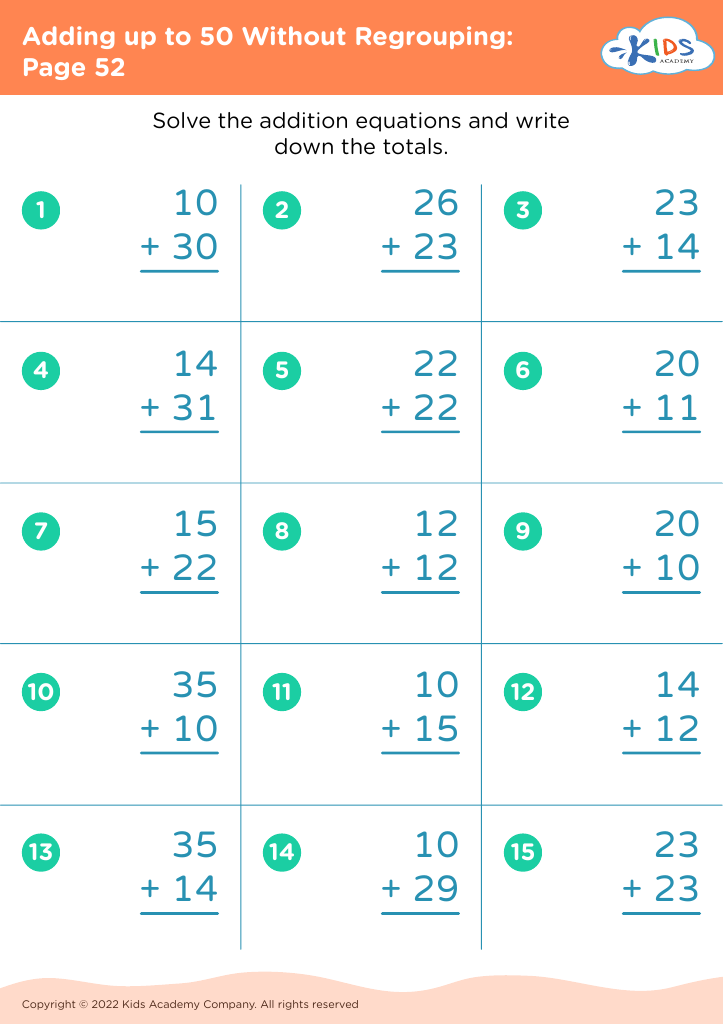
Adding up to 50 Without Regrouping: Page 52
Worksheet
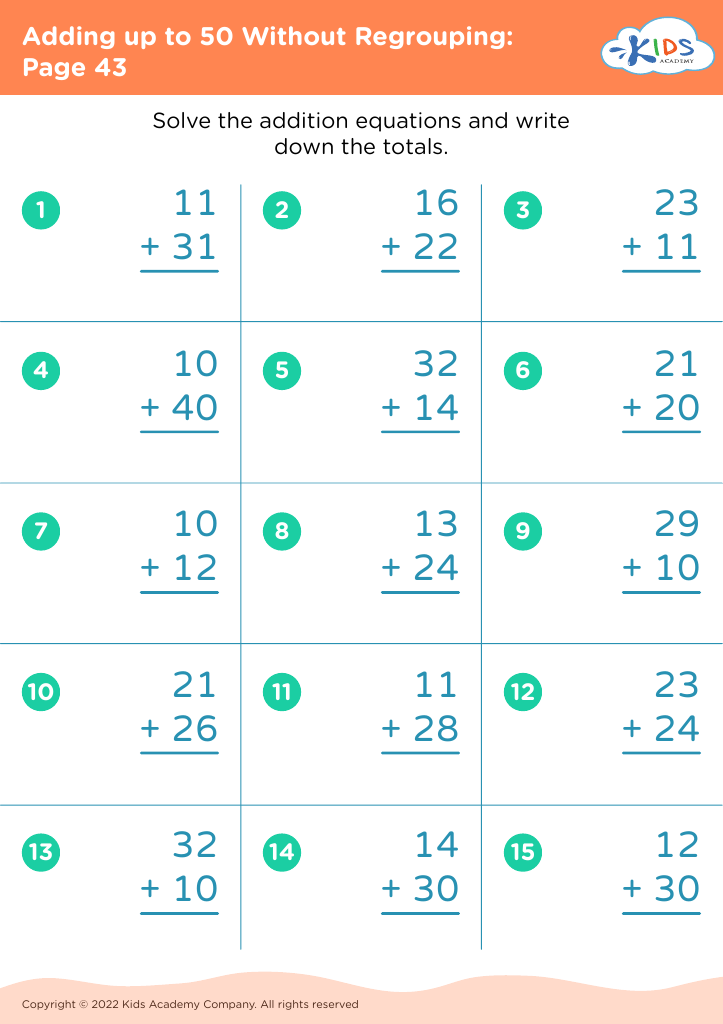
Adding up to 50 Without Regrouping: Page 43
Worksheet
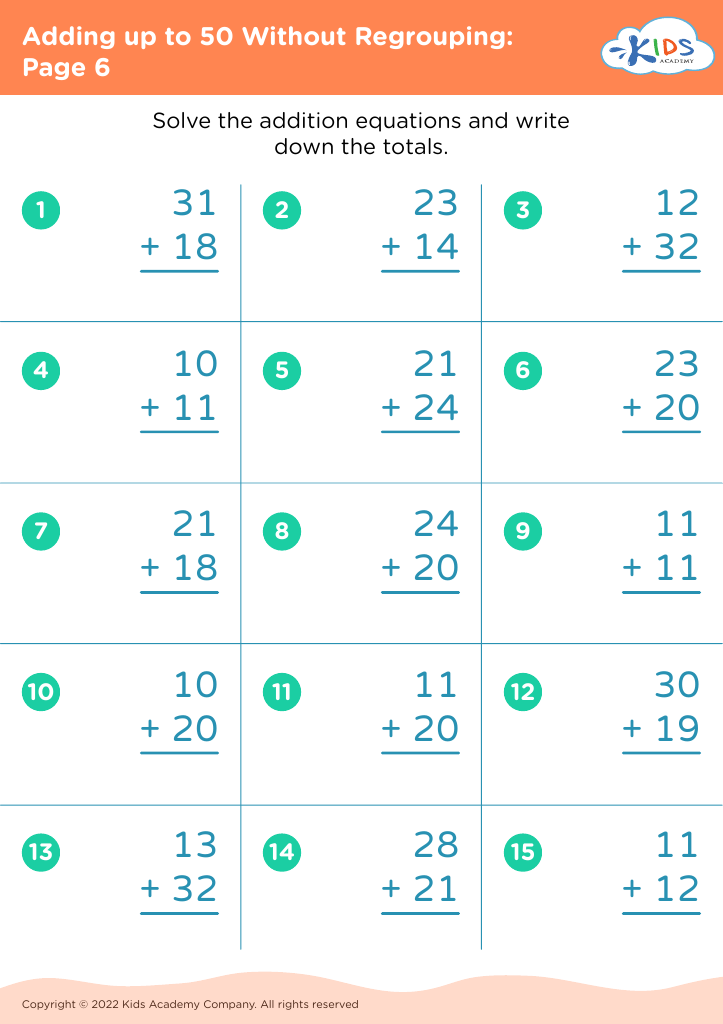
Adding up to 50 Without Regrouping: Page 6
Worksheet
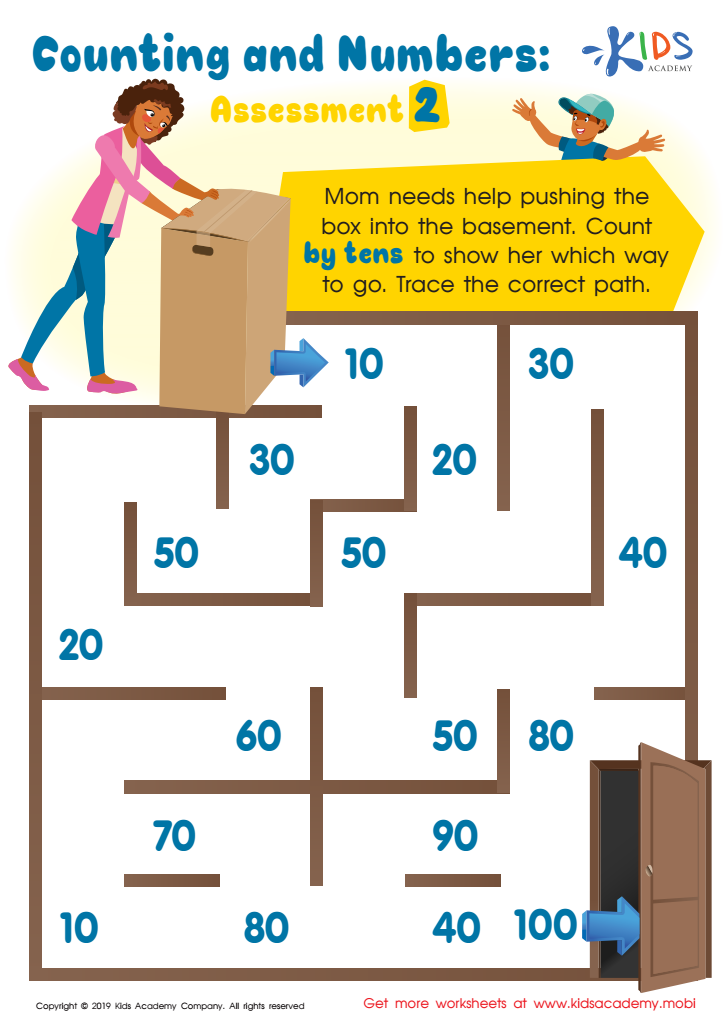
Counting and Numbers: Assessment 2 Worksheet
Counting and Numbers: Assessment 2 Worksheet
Kids love mazes and this free assessment worksheet helps them master counting by 10s. As they navigate the path, they'll improve their math skills and reach 100! It's a fun way to check your child's understanding of counting and chunking, and you'll quickly know their skill level.
Counting and Numbers: Assessment 2 Worksheet
Worksheet
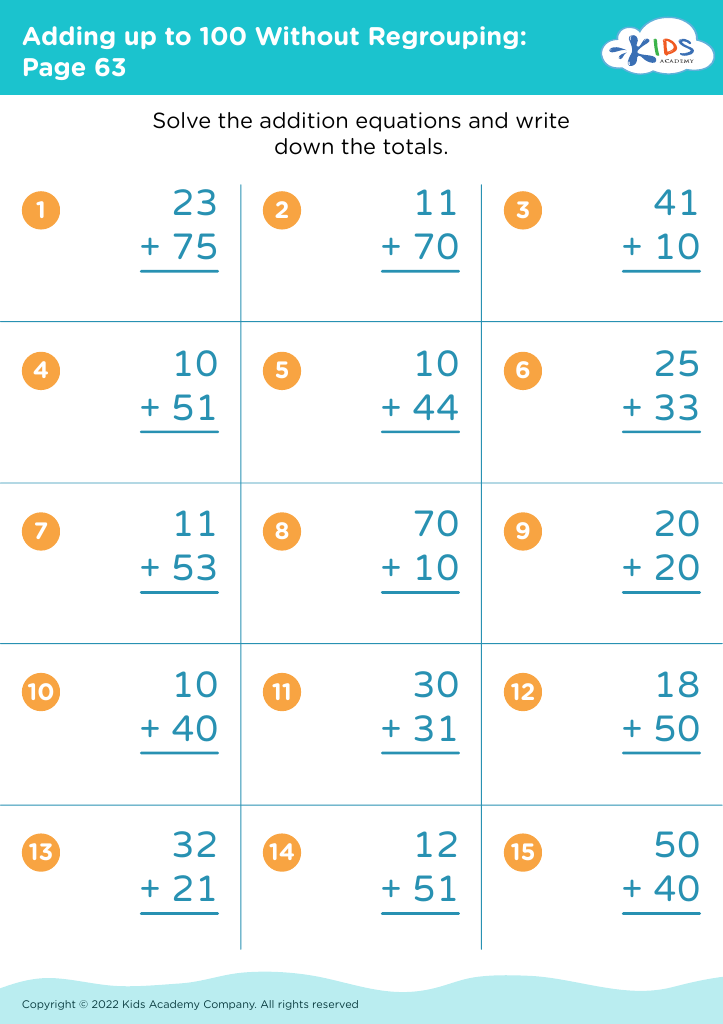
Adding up to 100 Without Regrouping: Page 63
Worksheet
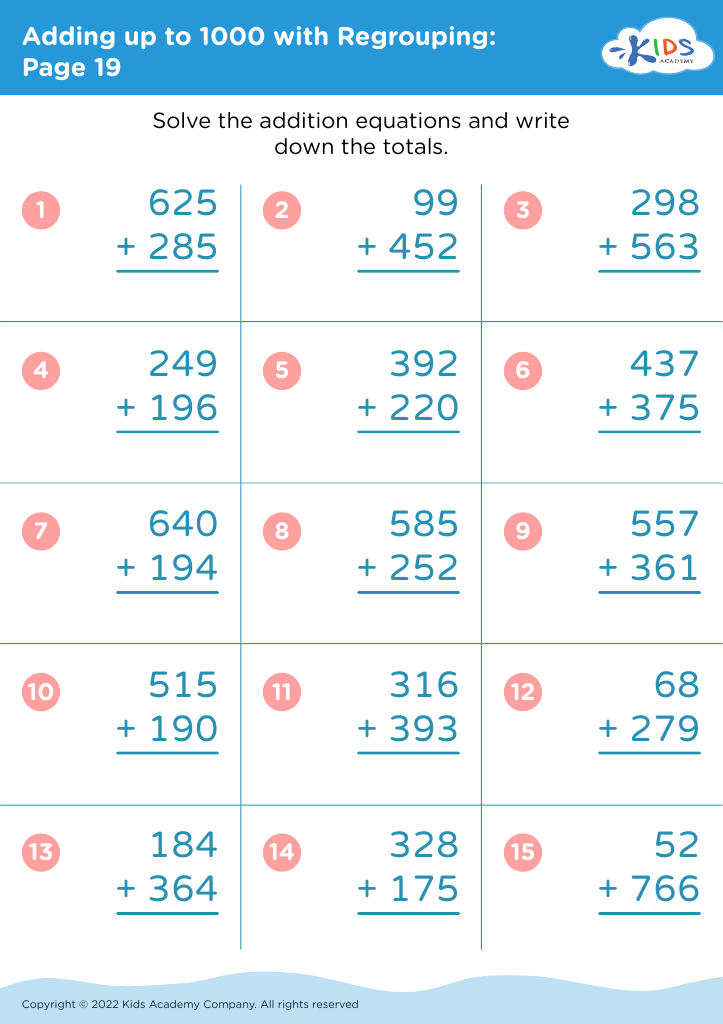
Adding up to 1000 with Regrouping: Page 19
Worksheet
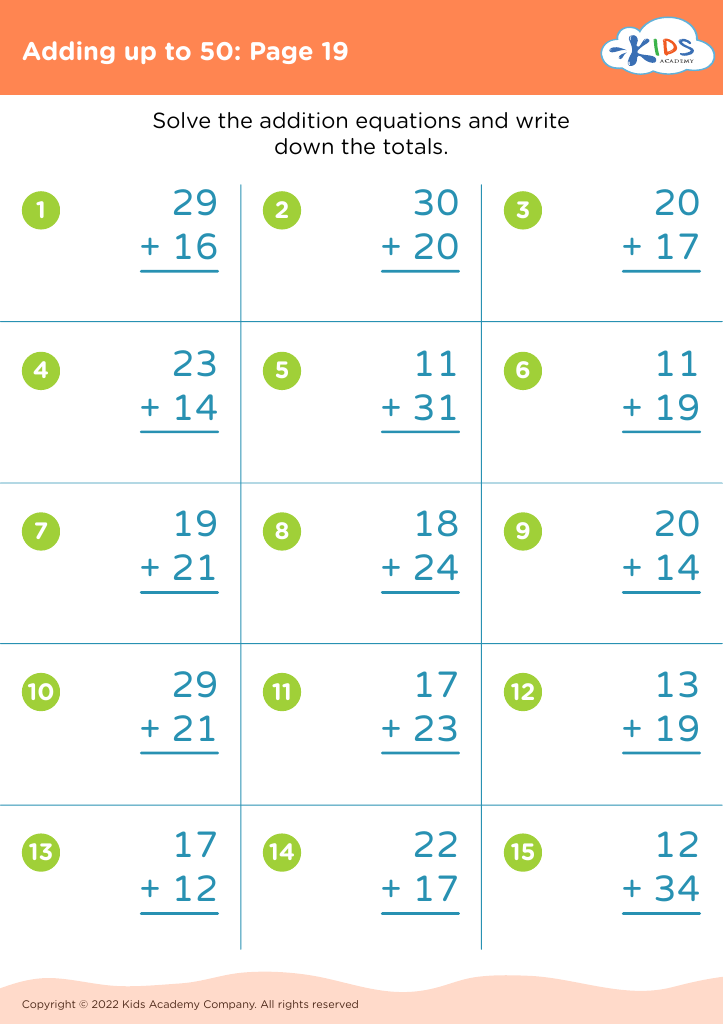
Adding up to 50: Page 19

Adding up to 50: Page 19

Adding up to 50: Page 19
Worksheet
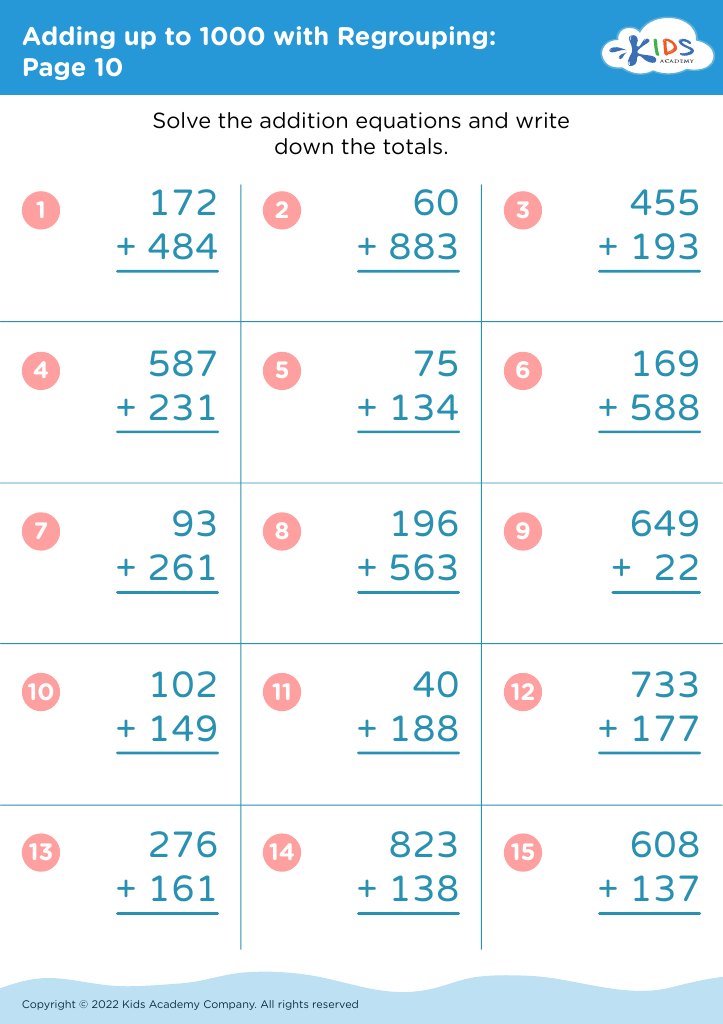
Adding up to 1000 with Regrouping: Page 10
Worksheet
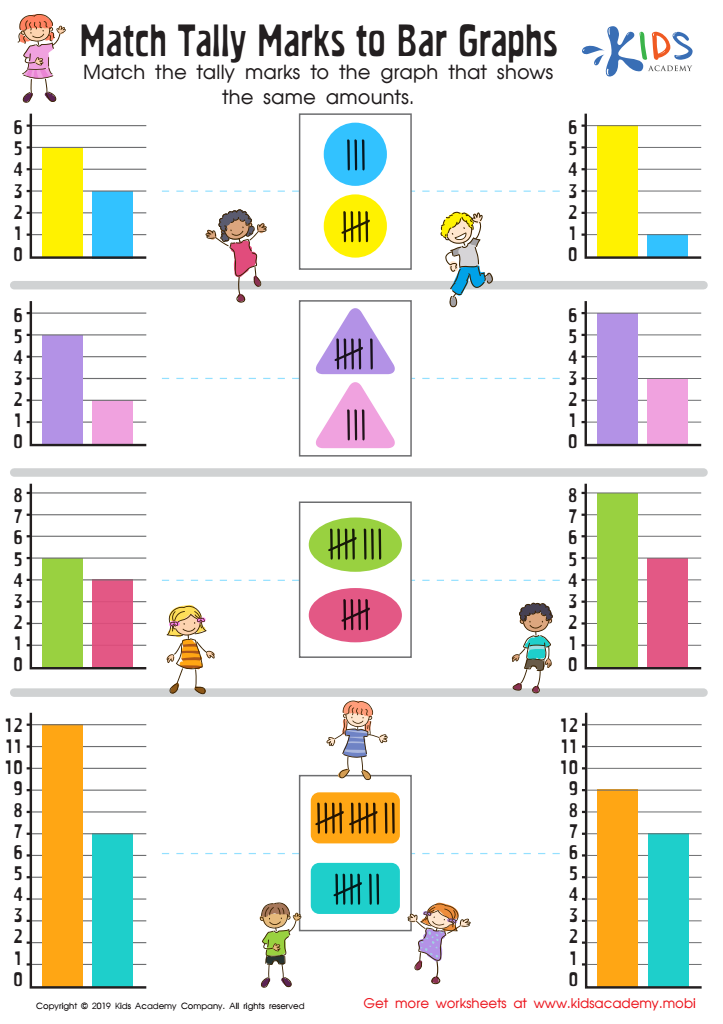
Match Tally Marks to Bar Graphs Worksheet
Match Tally Marks to Bar Graphs Worksheet
Learning math can be tough for kids. Rules and formulas can be confusing. Don't worry, this worksheet can help them understand graphs better. Show them how to match the tally marks with the graph that shows the same amount. It will help them grasp the basics and prepare them for more complex equations.
Match Tally Marks to Bar Graphs Worksheet
Worksheet
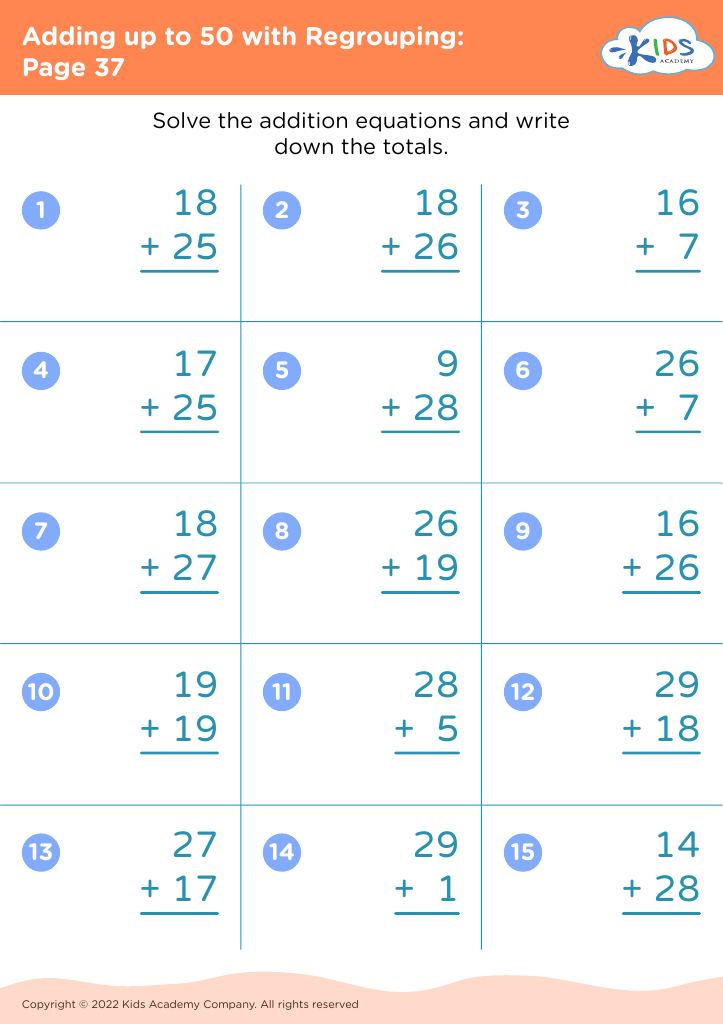
Adding up to 50 with Regrouping: Page 37
Worksheet
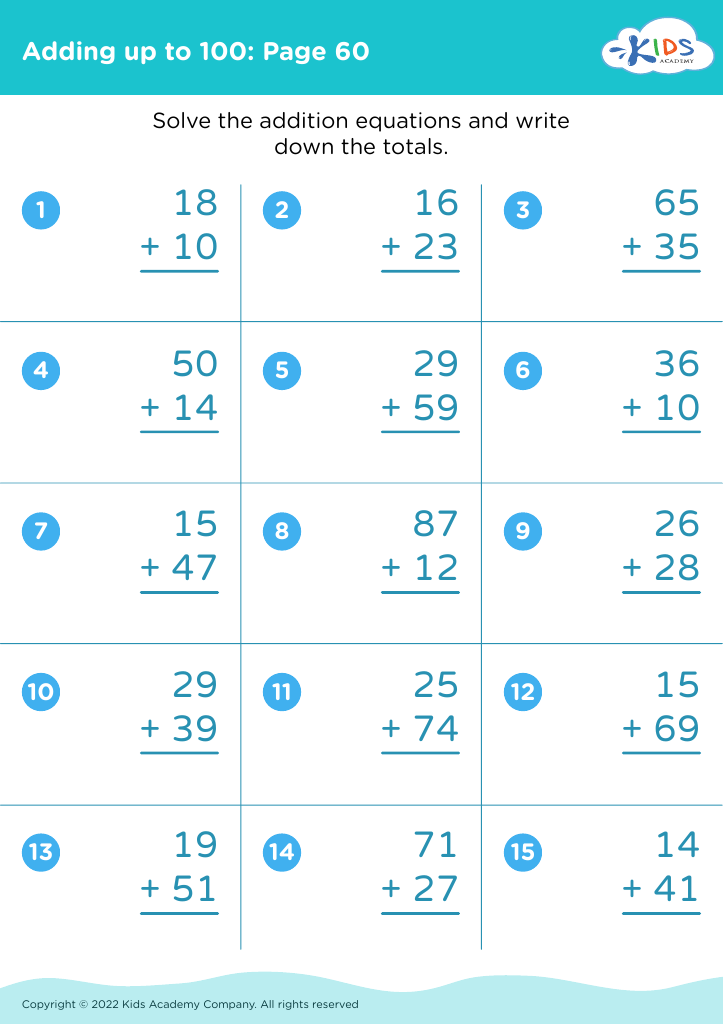
Adding up to 100: Page 60

Adding up to 100: Page 60

Adding up to 100: Page 60
Worksheet
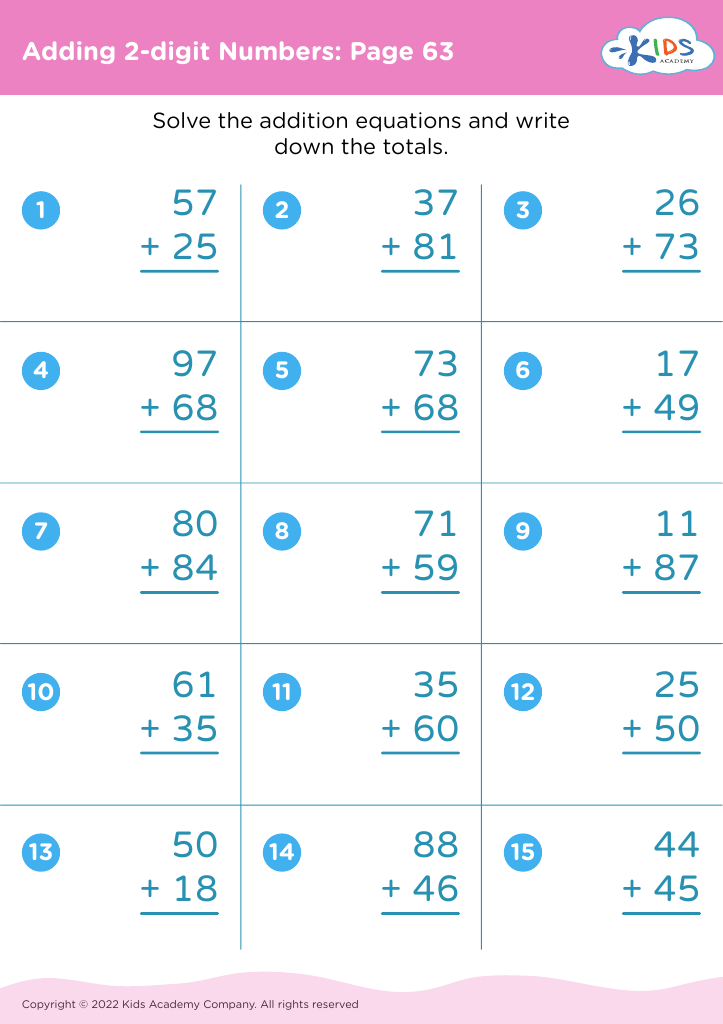
Adding 2-digit Numbers: Page 63

Adding 2-digit Numbers: Page 63

Adding 2-digit Numbers: Page 63
Worksheet
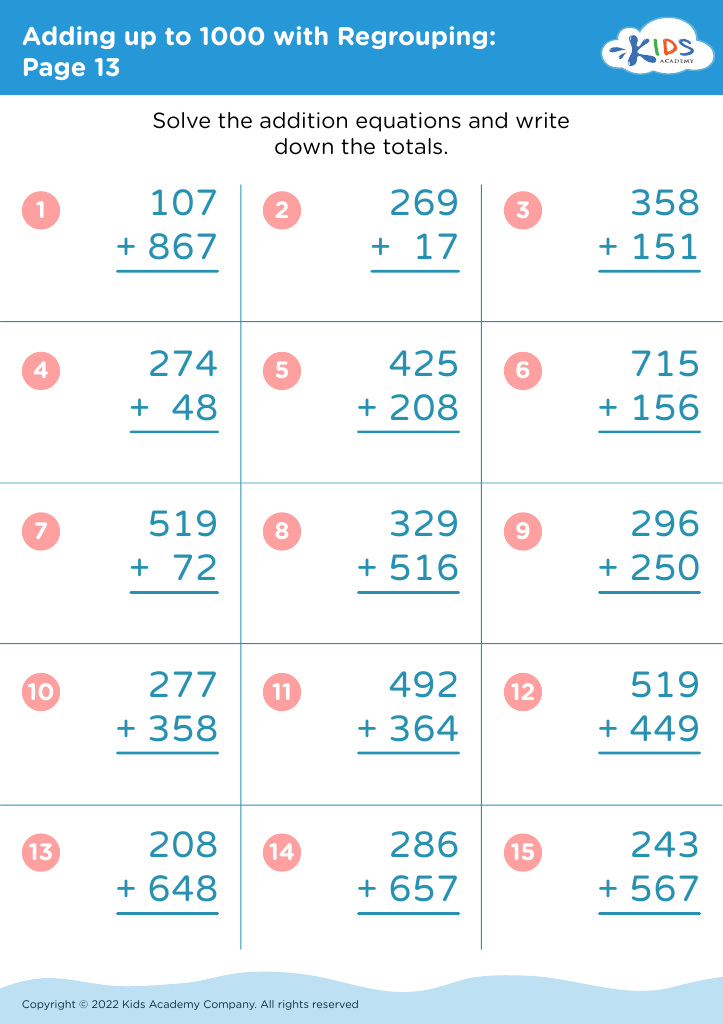
Adding up to 1000 with Regrouping: Page 13
Worksheet
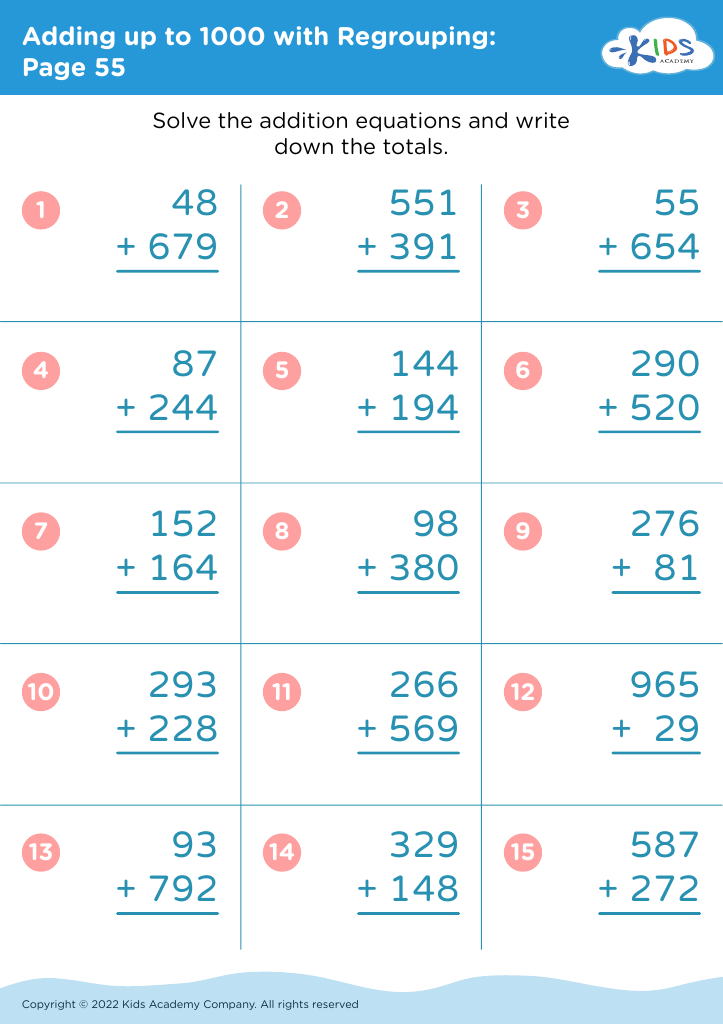
Adding up to 1000 with Regrouping: Page 55
Worksheet
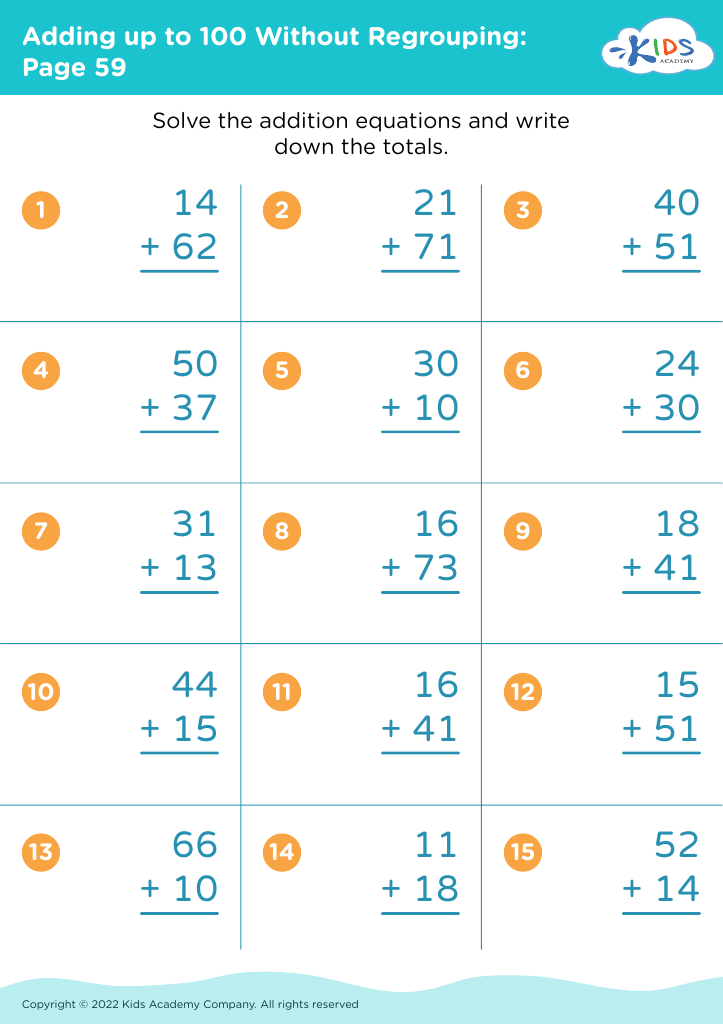
Adding up to 100 Without Regrouping: Page 59
Worksheet
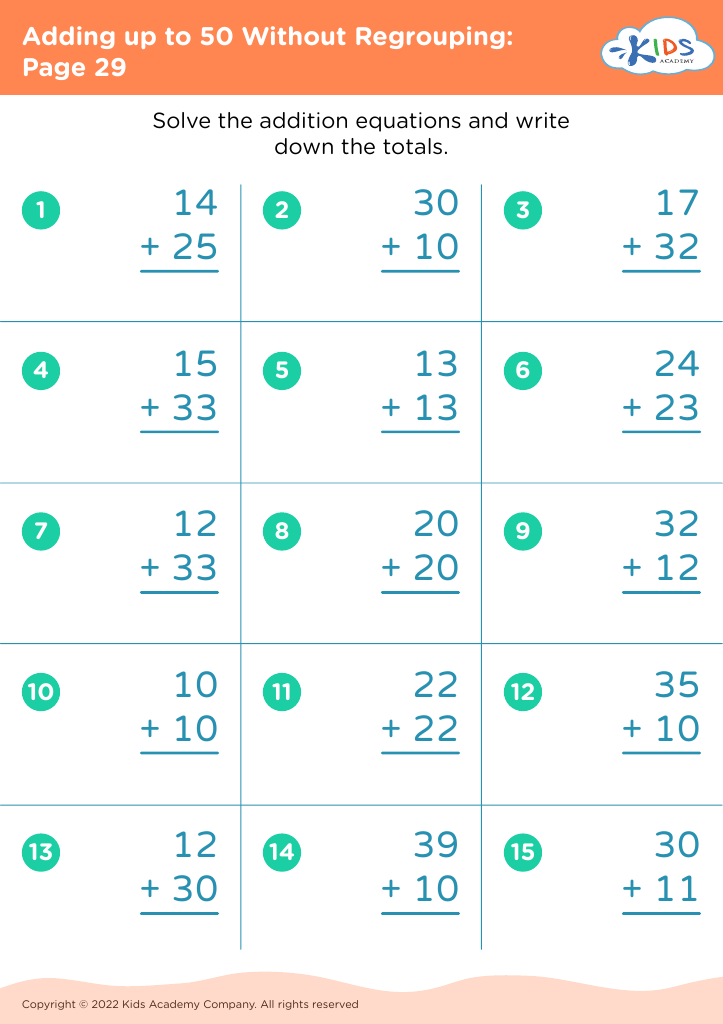
Adding up to 50 Without Regrouping: Page 29
Worksheet
Understanding Pictures as Equations Worksheet
Understanding Pictures as Equations Worksheet
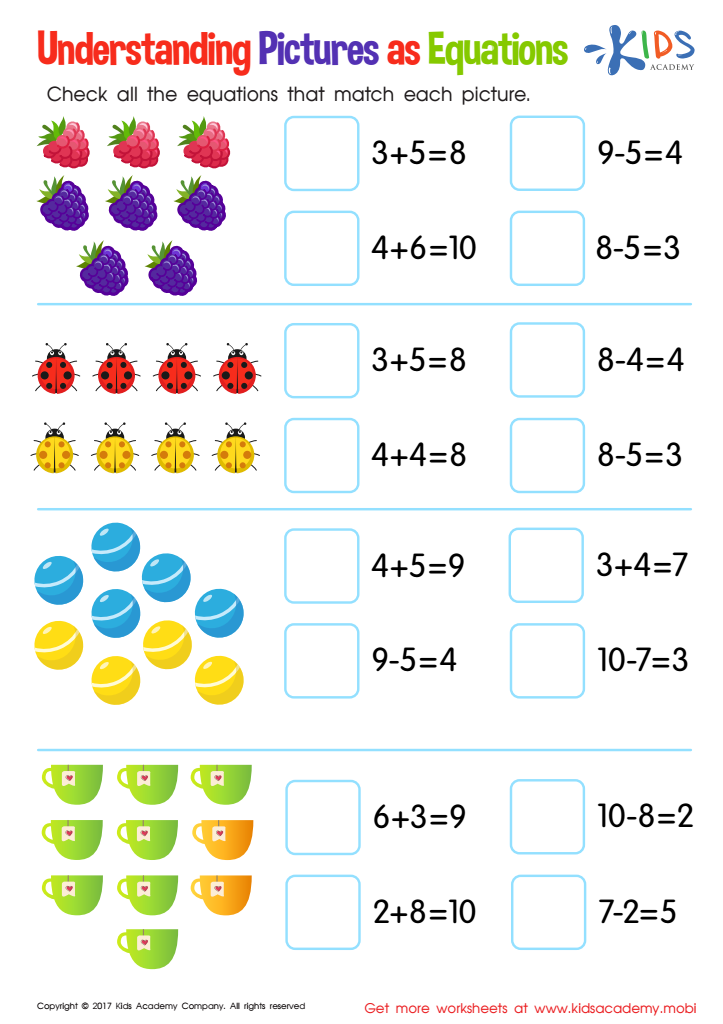
This worksheet helps your child interpret pictures into numbers and equations. Colourful grapes, ladybirds, balls and cups represent numbers which must be added to reach the total. Your child must also choose the equations that match the pictures correctly. A great way to practice math!
Understanding Pictures as Equations Worksheet
Worksheet
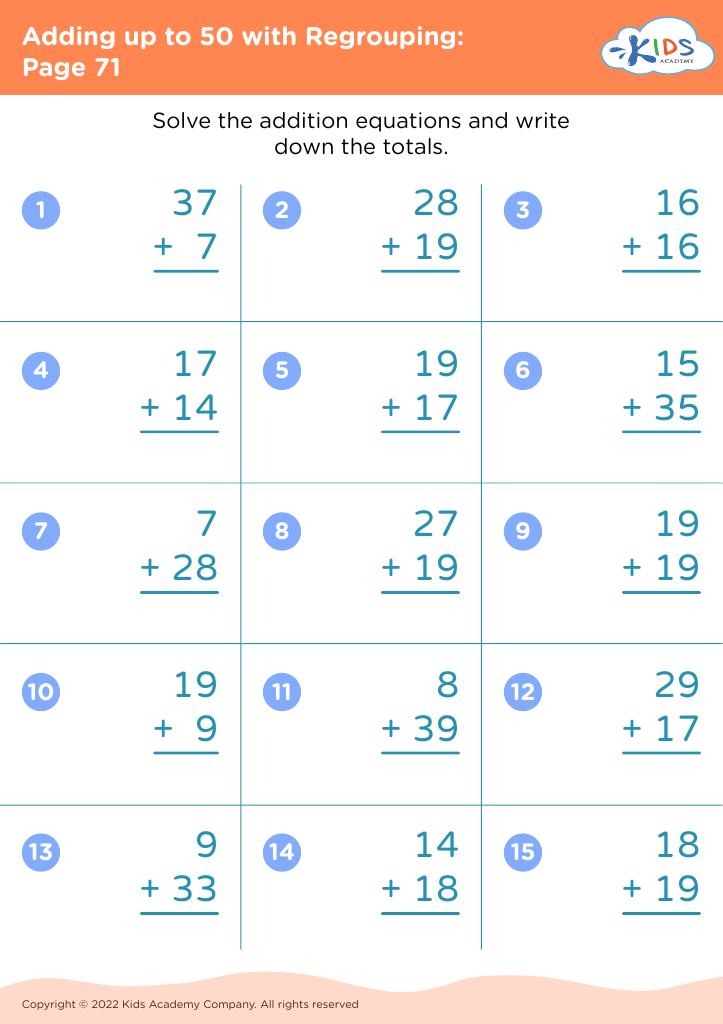
Adding up to 50 with Regrouping: Page 71
Worksheet
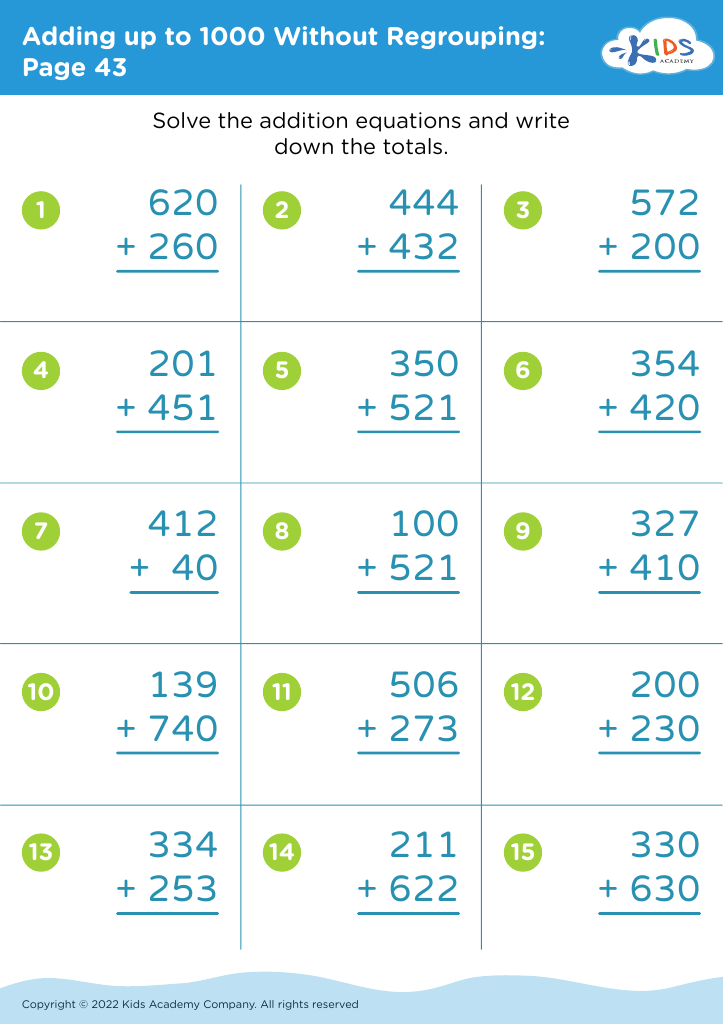
Adding up to 1000 Without Regrouping: Page 43
Worksheet
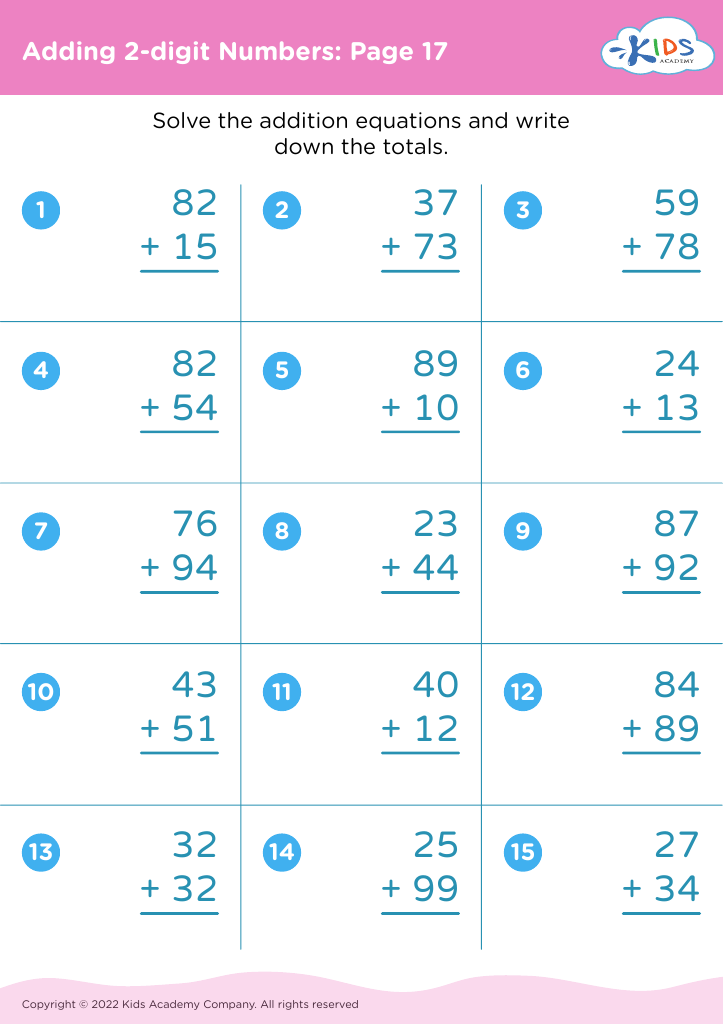
Adding 2-digit Numbers: Page 17

Adding 2-digit Numbers: Page 17

Adding 2-digit Numbers: Page 17
Worksheet
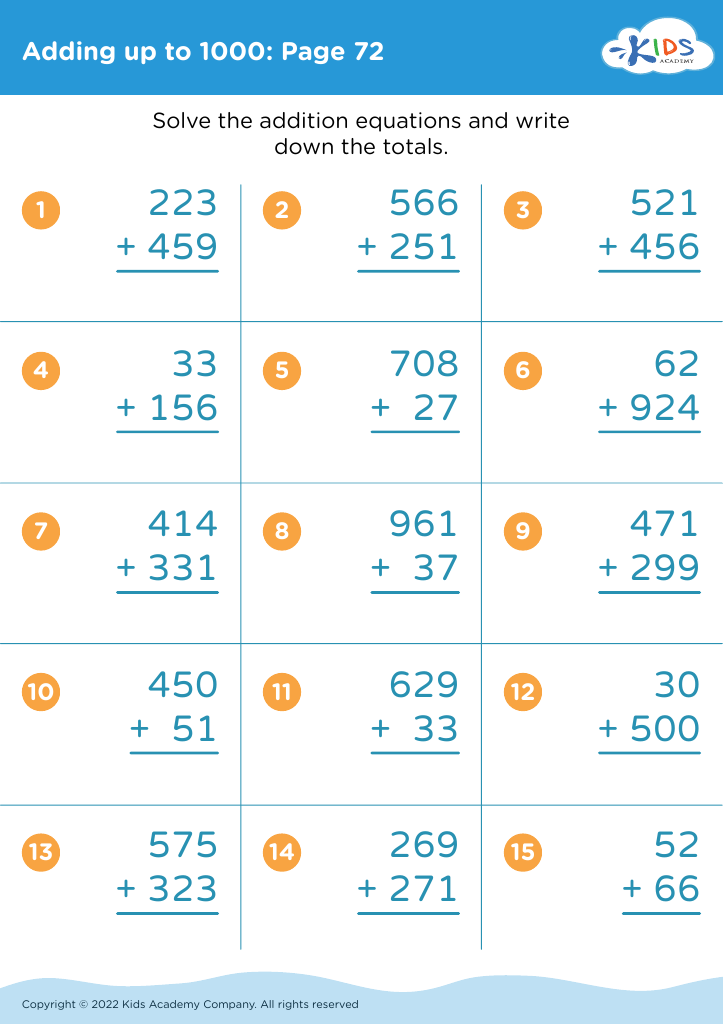
Adding up to 1000: Page 72

Adding up to 1000: Page 72

Adding up to 1000: Page 72
Worksheet


Recognizing patterns in math is a critical foundational skill for children aged 4-7, making it essential for parents and teachers to prioritize its development. This practice fosters logical thinking and enhances problem-solving abilities, both vital for later mathematical concepts and everyday life scenarios. When children identify and create patterns, they learn to predict and make connections between ideas, which strengthens their cognitive skills.

Additionally, recognizing patterns aids in building early number sense. It sets the stage for understanding basic arithmetic concepts such as addition and subtraction, as many mathematical operations rely on recognizing numerical patterns. For example, patterns can help children comprehend the concept of skip counting, essential for multiplication.

Beyond mathematics, pattern recognition has implications for language development and literacy. Children who engage in pattern-related activities often improve their vocabulary and comprehension skills, as they learn to identify and interpret sequences in language as well.

Lastly, pattern recognition can be an enjoyable and interactive process. Engaging activities, such as games and art, promote social skills and collaboration, contributing to a well-rounded educational experience. For all these reasons, supporting children in recognizing patterns equips them with essential skills for future learning and personal growth.