
Understand sequences Math Worksheets for Ages 4-7
5 filtered results
Difficulty Level
Grade
Age
-
From - To
Subject
Activity
Standards
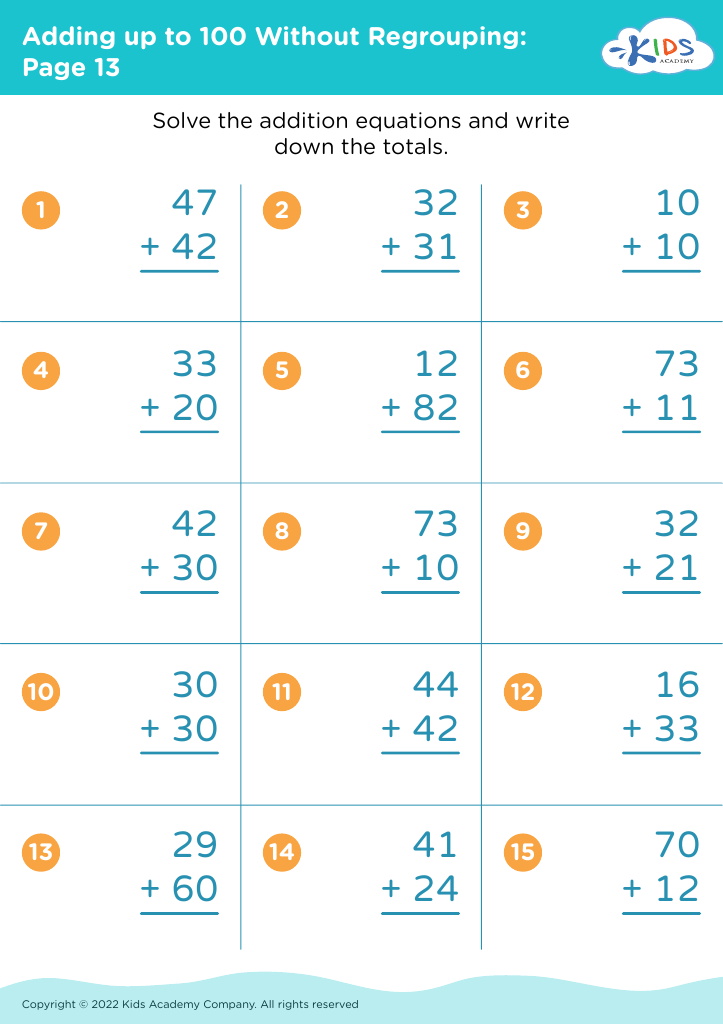
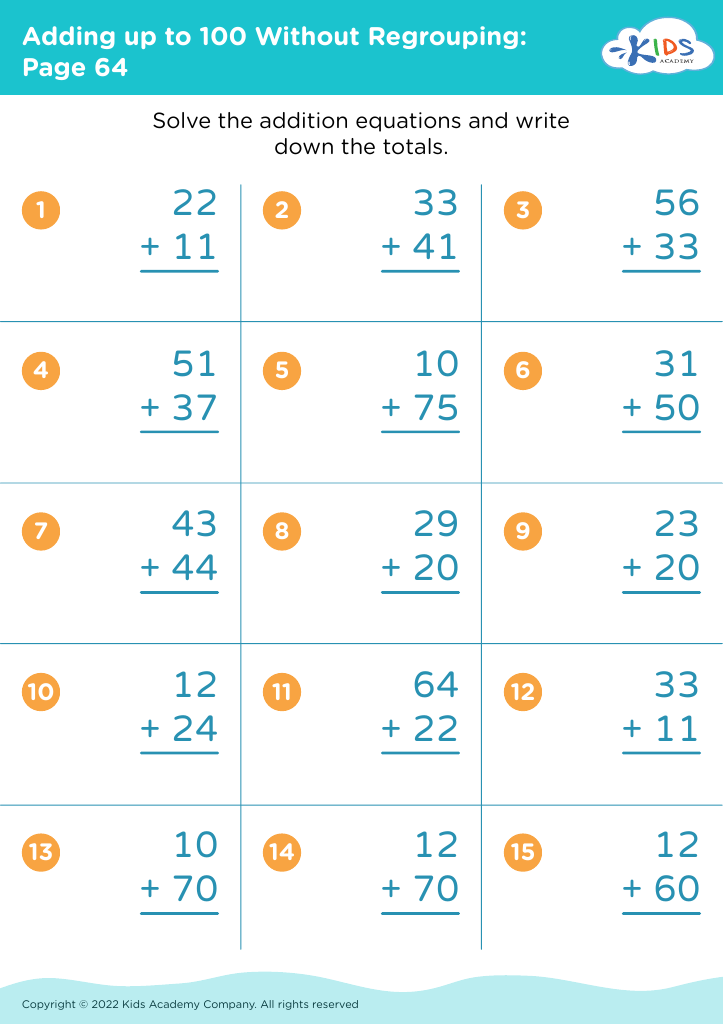
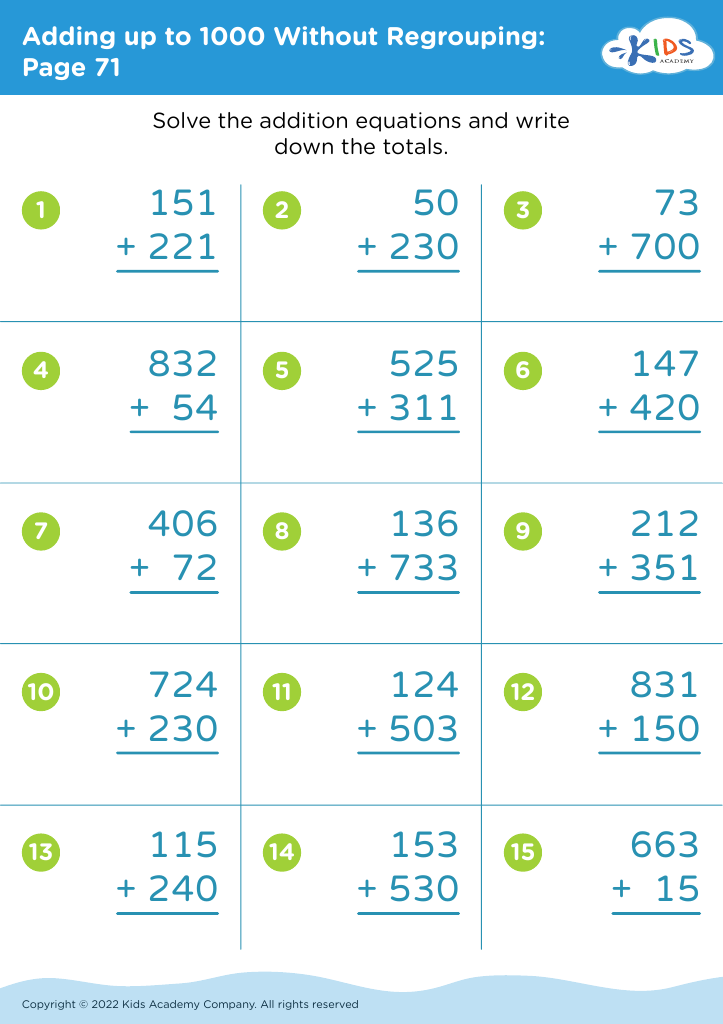
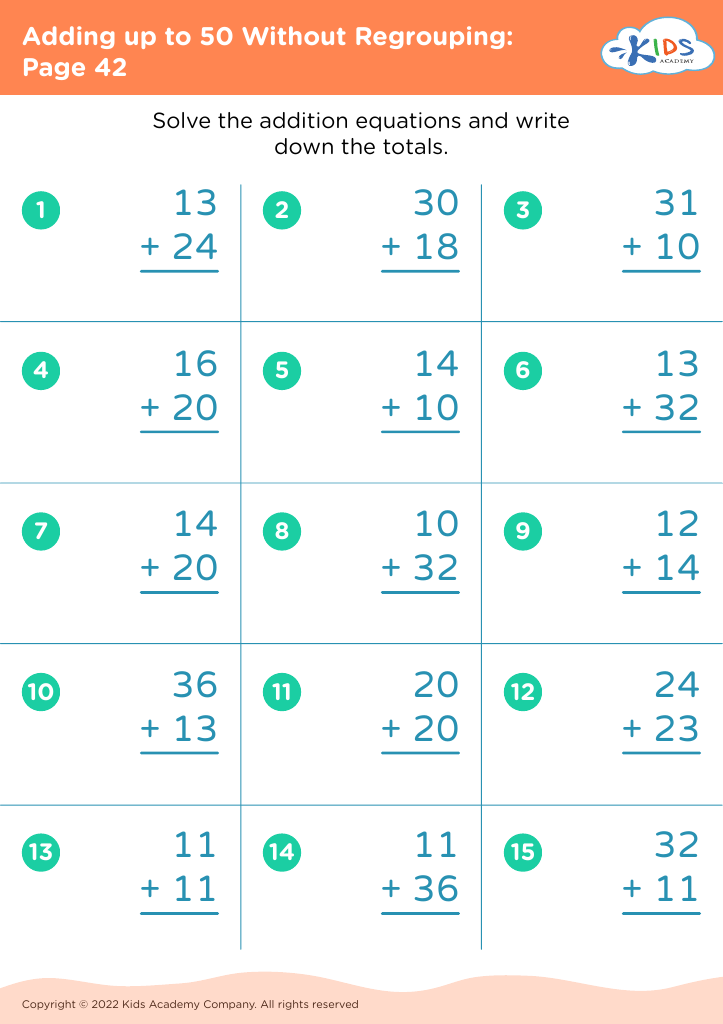
Unlock your child's mathematical potential with our "Understand Sequences Math Worksheets" designed for ages 4-7. These interactive printables facilitate the introduction of sequencing concepts in a fun and engaging way. Through colorful visuals and age-appropriate activities, young learners will master the ability to identify and complete sequences, enhancing their critical thinking and problem-solving skills. Our worksheets cater to diverse learning styles, ensuring that every child can grasp the notion of order and patterns. Perfect for classroom settings or at-home practice, these resources aim to build a strong foundation for future math success. Start your child's journey to mathematical confidence today!
Favorites
With answer key
Interactive
Join Kids Academy for Free
Who is primarily going to use this learning content?







Understanding sequences is fundamental for young children aged 4-7, as it lays the groundwork for various mathematical concepts and critical thinking skills. Parents and teachers should prioritize this skill because it fosters logical reasoning and enhances cognitive development. Recognizing patterns and sequences helps children develop the ability to predict outcomes and solve problems, which are essential life skills.
In these early years, children begin to grasp the concept of order, which is vital not only in mathematics but also in everyday activities. For example, understanding sequences can aid in daily routines, like dressing or following directions. Additionally, learning about sequences enhances literacy skills as children recognize the importance of narrative structures in stories.
Moreover, focusing on sequences introduces children to foundational skills in mathematics, such as counting, addition, and subtraction. Engaging with sequences through fun activities—like counting games, rhythm exercises, or sorting objects—can create a positive learning experience and foster a love for math.
Incorporating sequences into early education promotes collaborative learning and improves communication skills, as children explain patterns and engage in discussions. Overall, understanding sequences cultivates resilience and persistence, essential traits for academic success. Therefore, parents and teachers should actively support and enrich children's experiences with sequences.








