Check out this FREE Trial Lesson on Math for age 4-7!

H

Favorites
With answer key
Interactive
  • 4-7
  • Understanding fractions
  • Math
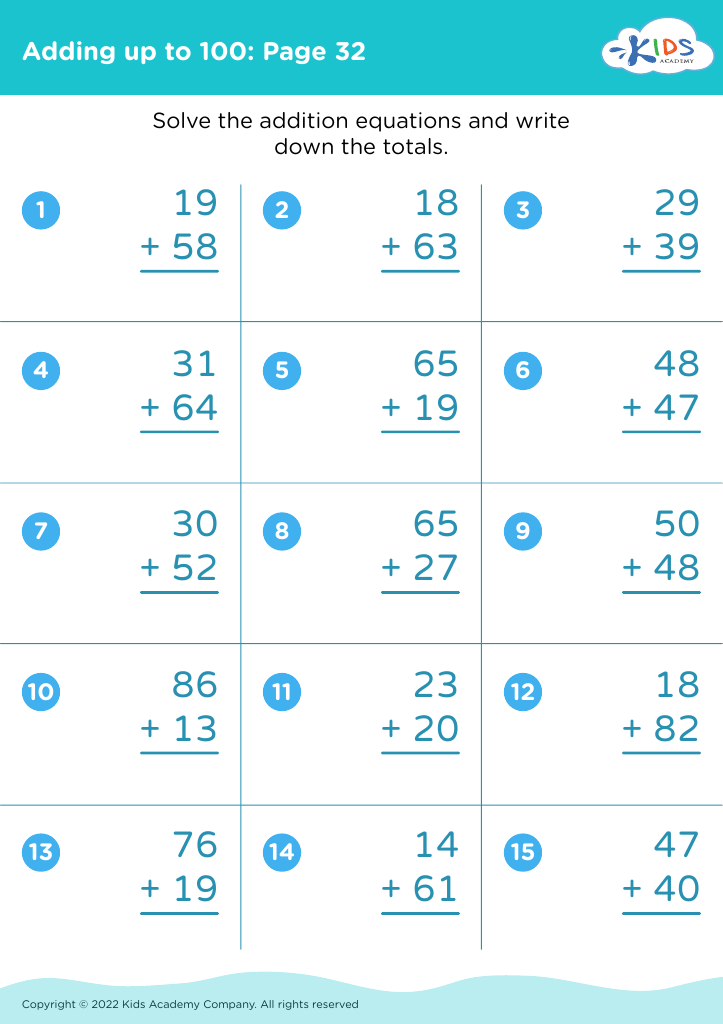
Adding up to 100: Page 32

Adding up to 100: Page 32

Adding up to 100: Page 32
Worksheet
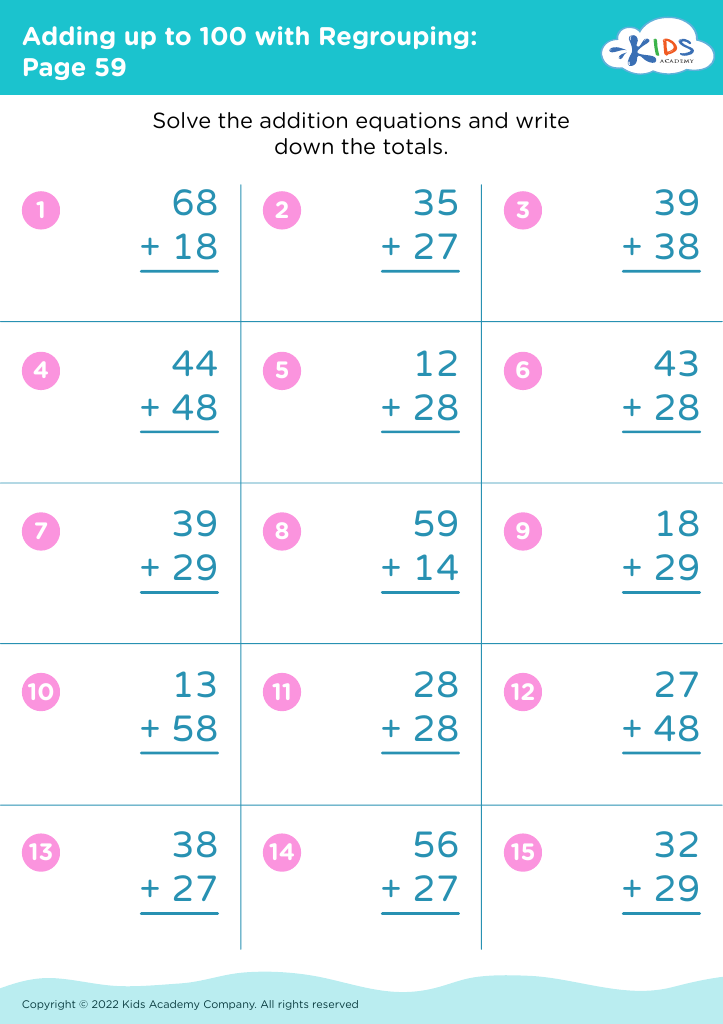
Adding up to 100 with Regrouping: Page 59
Worksheet
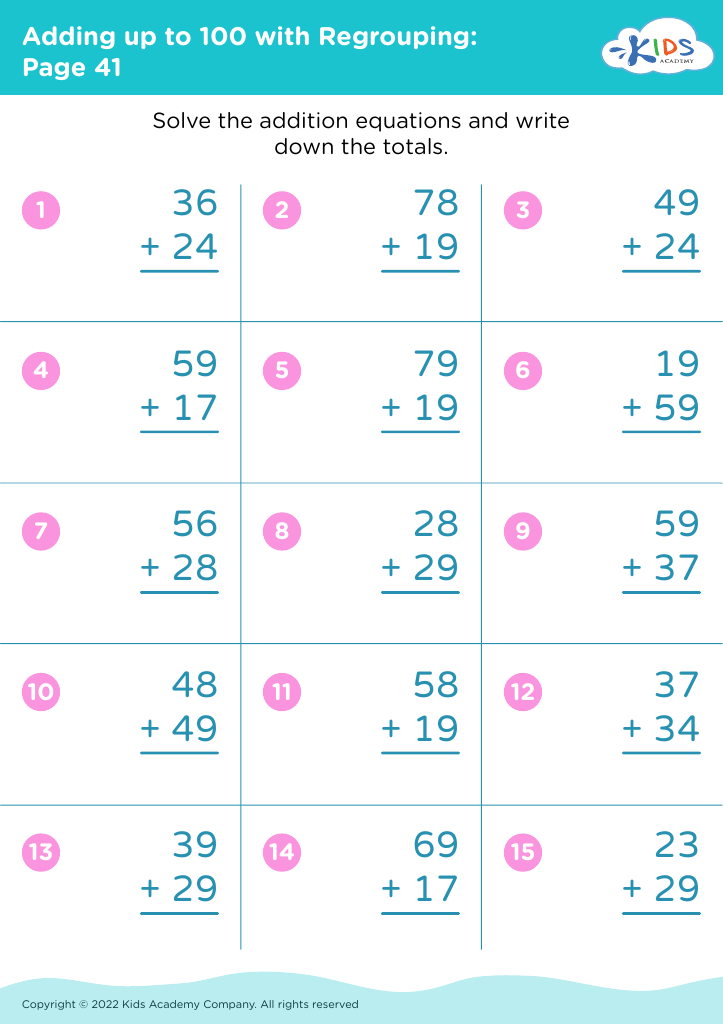
Adding up to 100 with Regrouping: Page 41
Worksheet
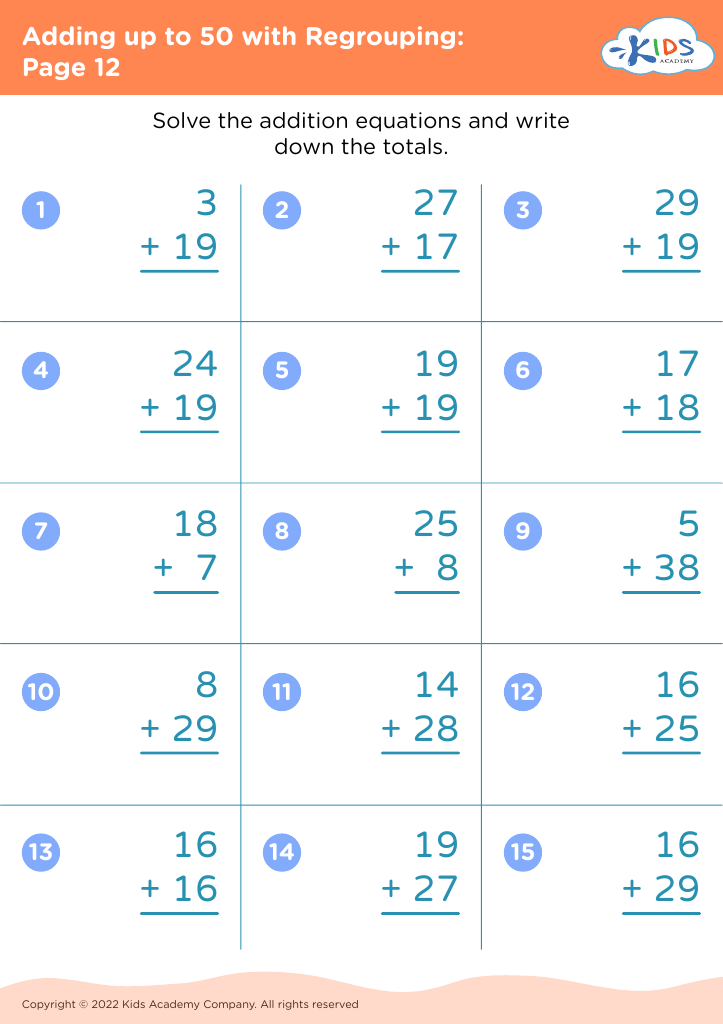
Adding up to 50 with Regrouping: Page 12
Worksheet
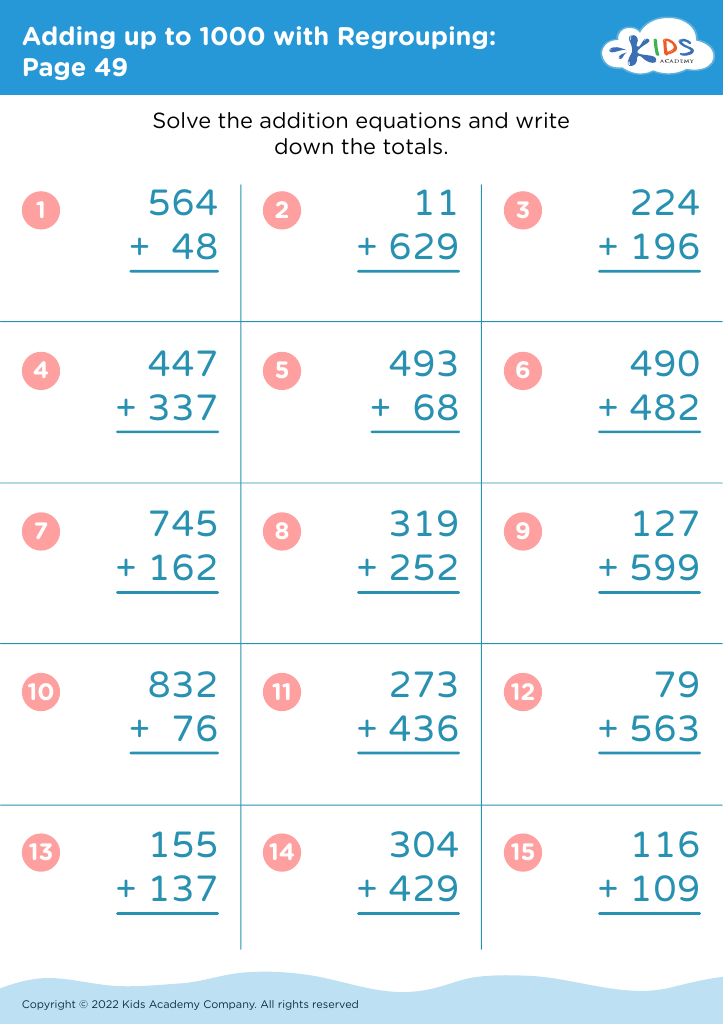
Adding up to 1000 with Regrouping: Page 49
Worksheet
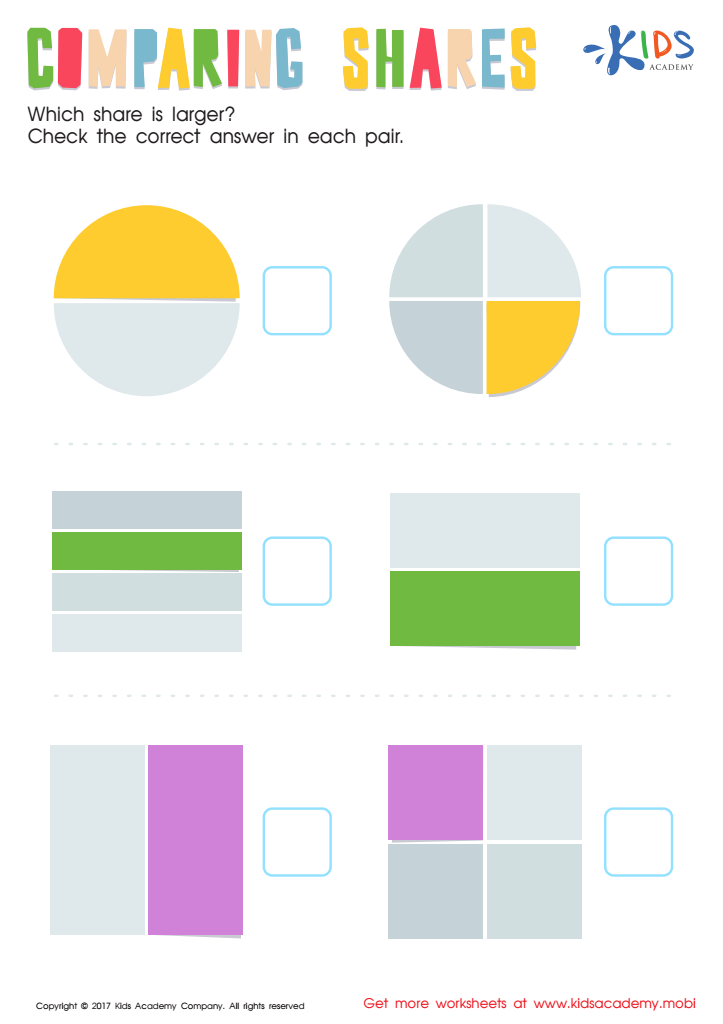
Comparing Shares Worksheet

Comparing Shares Worksheet

Can your students identify and draw shapes correctly? If so, this exercise may be too easy. For those who are still learning, extra help may be needed. The worksheet requires students to select which shape is larger in each pair; circles and squares are included.
Comparing Shares Worksheet
Worksheet
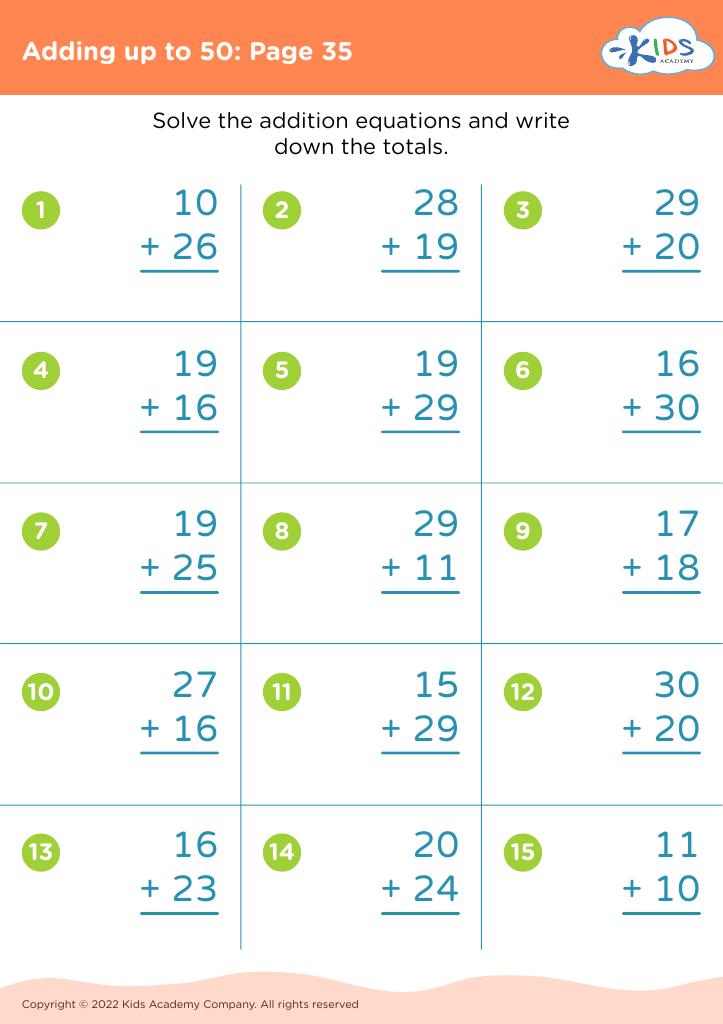
Adding up to 50: Page 35

Adding up to 50: Page 35

Adding up to 50: Page 35
Worksheet
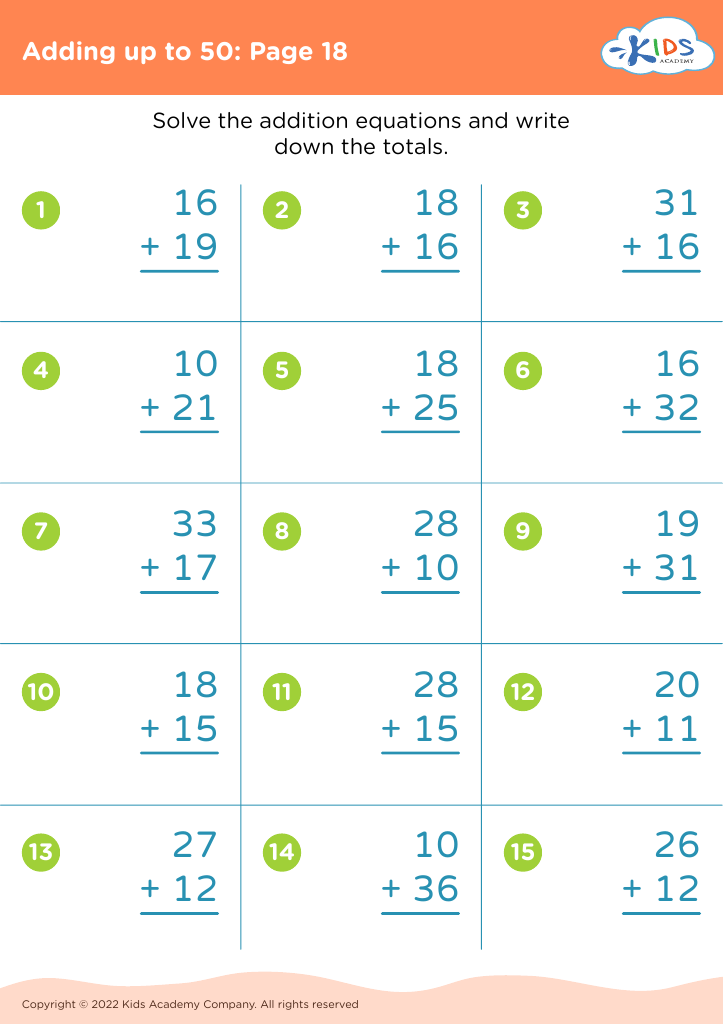
Adding up to 50: Page 18

Adding up to 50: Page 18

Adding up to 50: Page 18
Worksheet
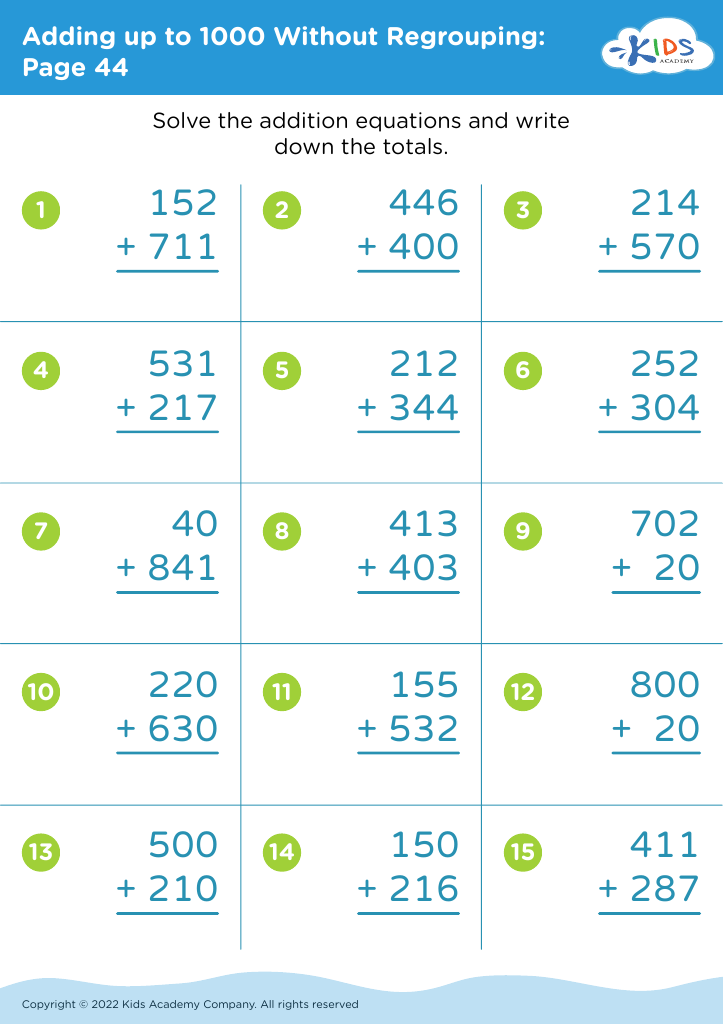
Adding up to 1000 Without Regrouping: Page 44
Worksheet
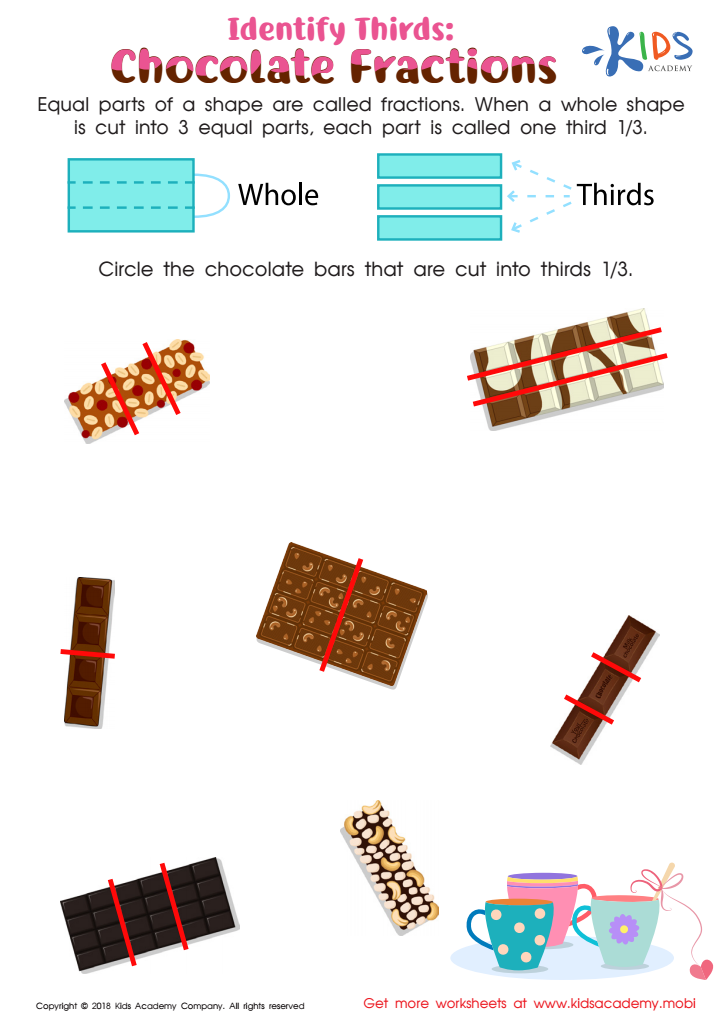
Identify Thirds: Chocolate Fractions Worksheet
Identify Thirds: Chocolate Fractions Worksheet

Divide shapes into equal parts and explain fractions to your child. Show them a worksheet with pictures of chocolate bars cut into thirds (1/3) and ask them to circle them.
Identify Thirds: Chocolate Fractions Worksheet
Worksheet
Adding up to 50: Page 23

Adding up to 50: Page 23

Adding up to 50: Page 23
Worksheet
Shapes: Assessment 1 Worksheet

Shapes: Assessment 1 Worksheet

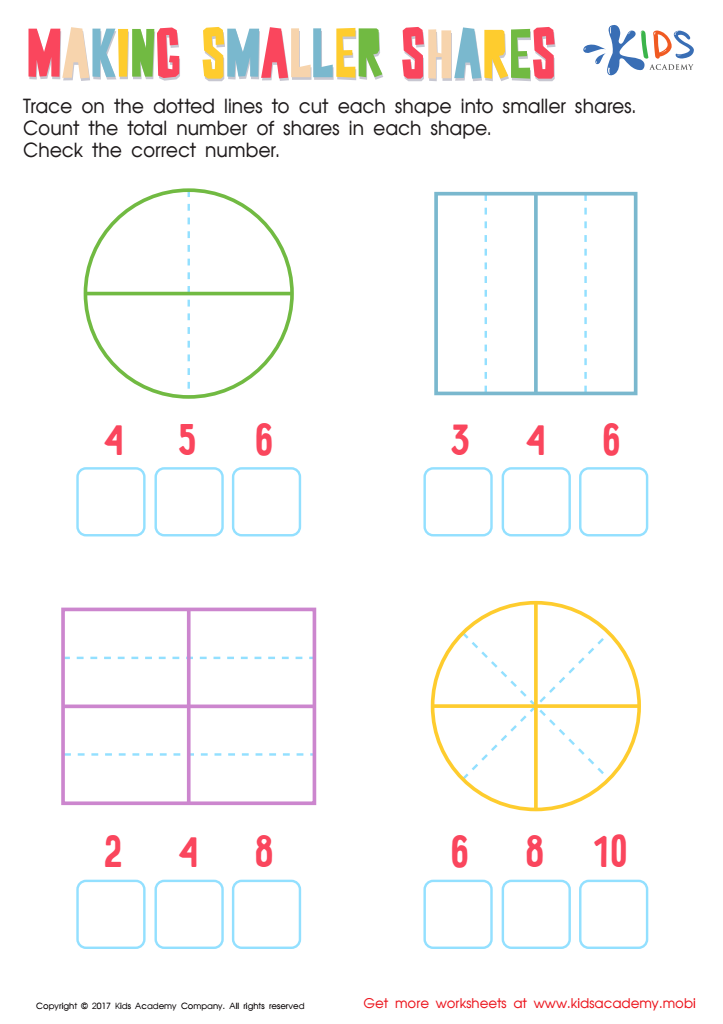
Test your students' understanding of the four basic shapes - circle, square, triangle and rectangle - with this assessment worksheet. Get them to draw a line over or under the shape indicated in the directions to show they can identify it correctly.
Shapes: Assessment 1 Worksheet
Worksheet
Making Smaller Shares Worksheet
Making Smaller Shares Worksheet
Help your kids learn shapes by having them cut out shapes on this tracing sheet. Point out the dotted lines, then guide their hand as they trace them, breaking shapes into smaller parts. Ask your children to count the number of parts and check the answers given.
Making Smaller Shares Worksheet
Worksheet
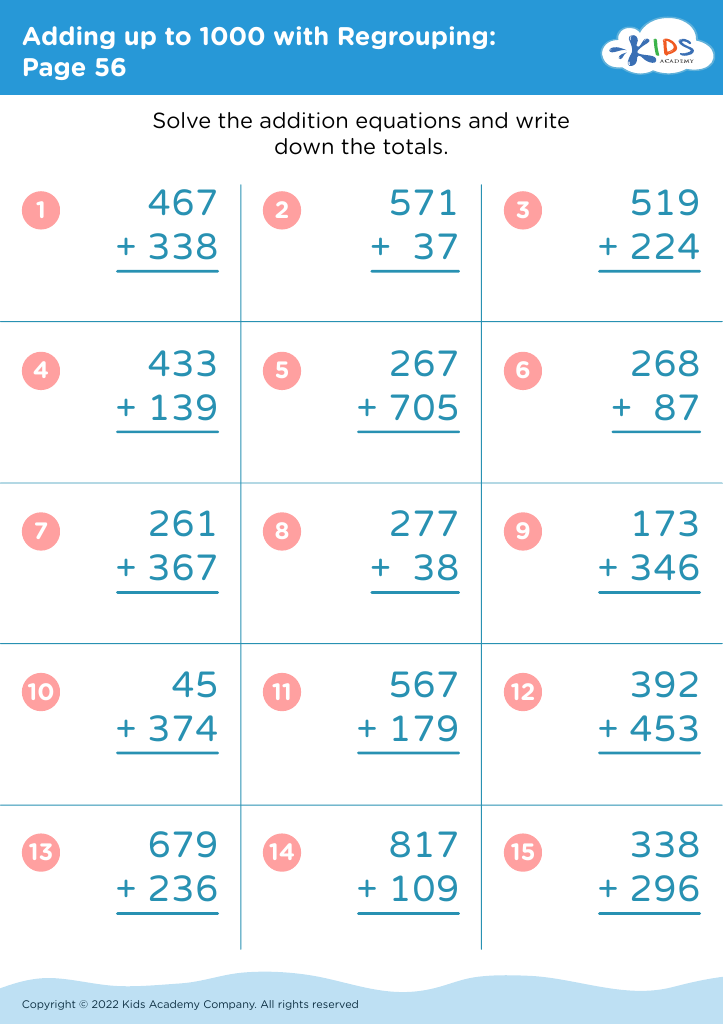
Adding up to 1000 with Regrouping: Page 56
Worksheet
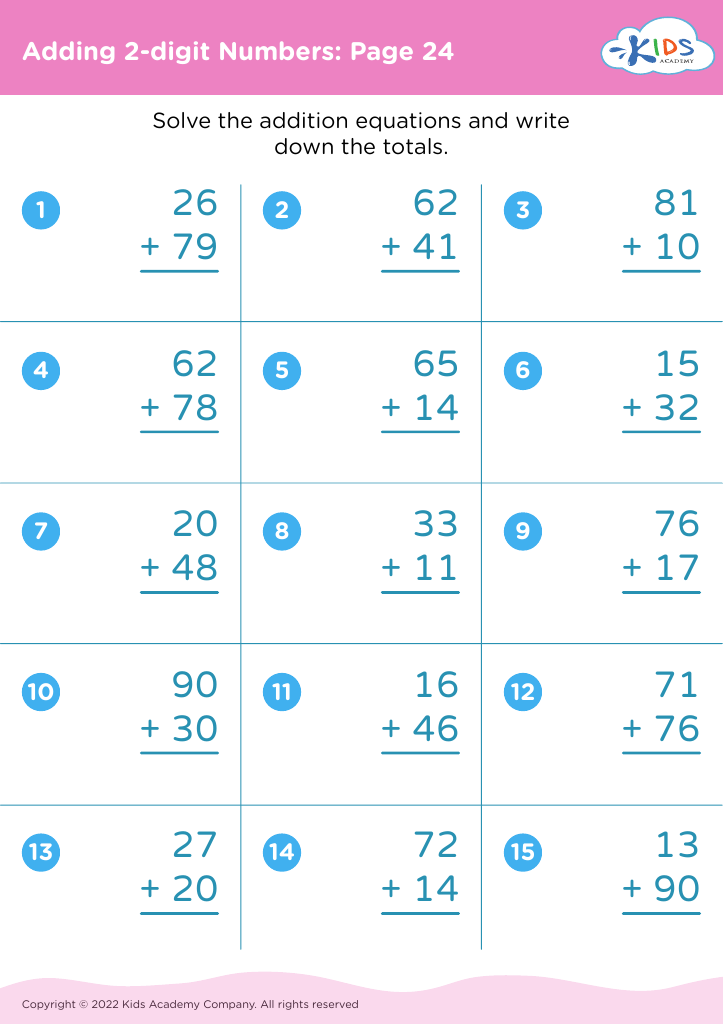
Adding 2-digit Numbers: Page 24

Adding 2-digit Numbers: Page 24

Adding 2-digit Numbers: Page 24
Worksheet
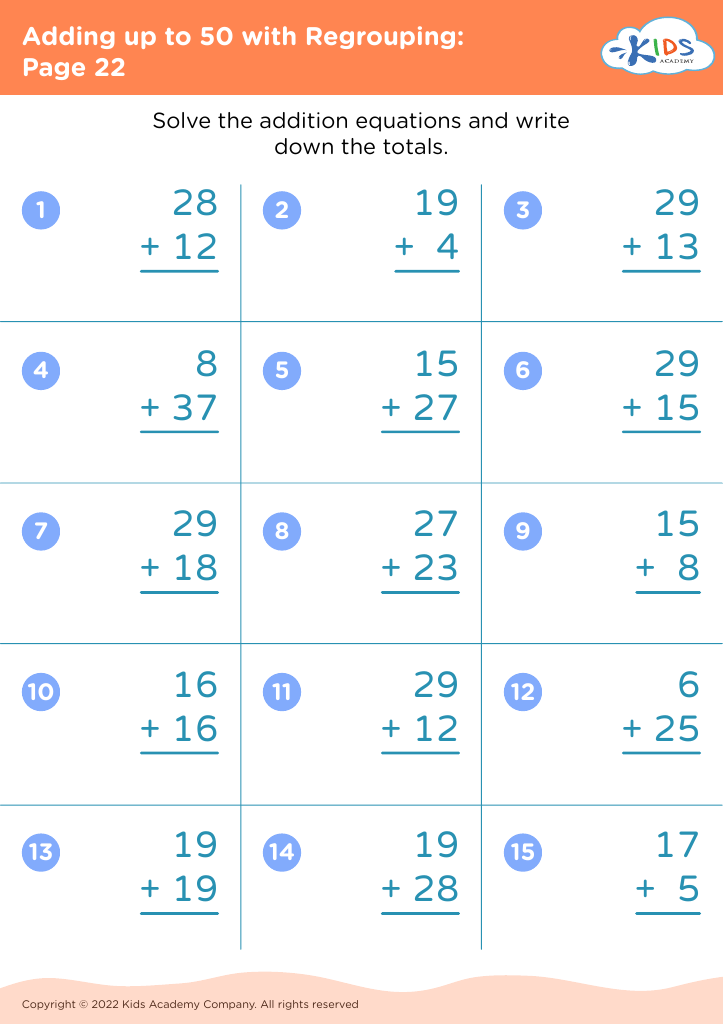
Adding up to 50 with Regrouping: Page 22
Worksheet
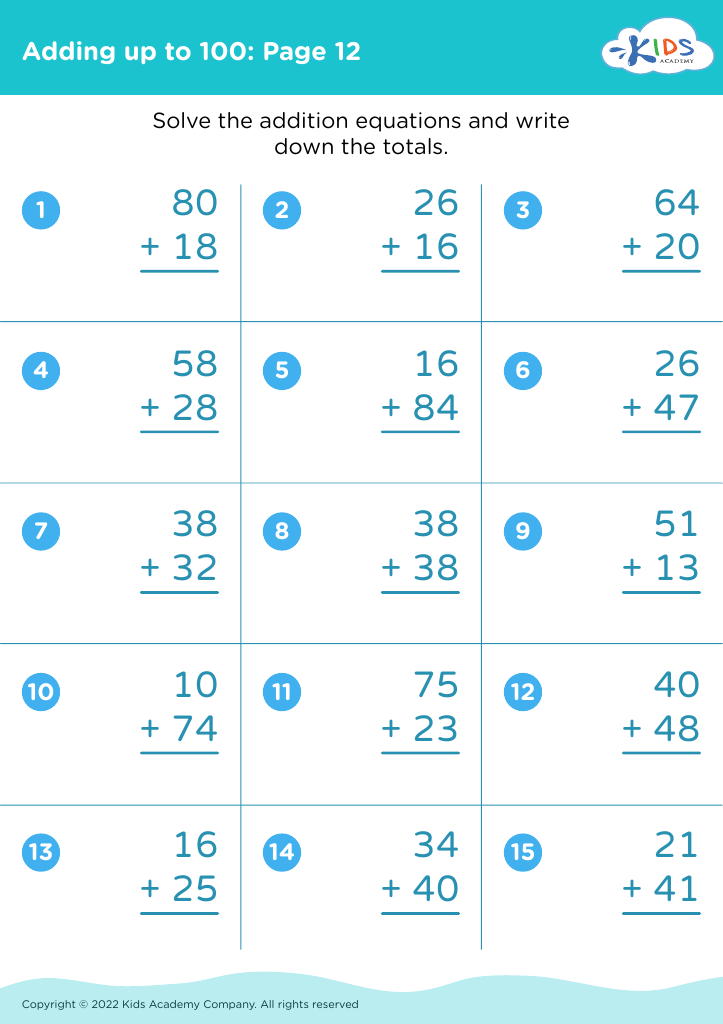
Adding up to 100: Page 12

Adding up to 100: Page 12

Adding up to 100: Page 12
Worksheet
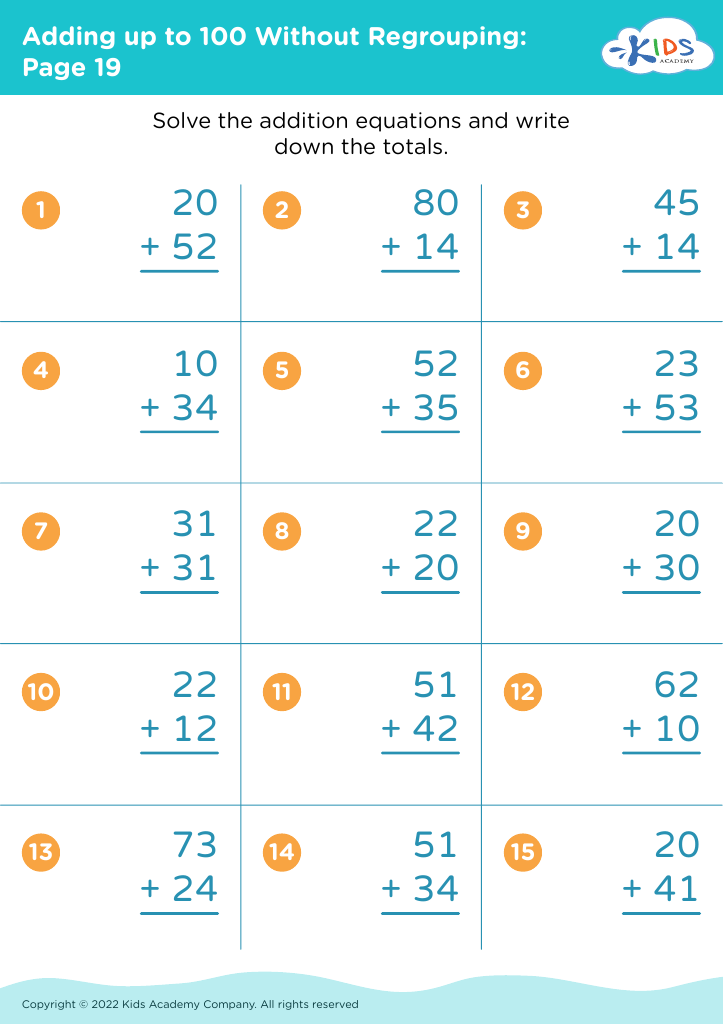
Adding up to 100 Without Regrouping: Page 19
Worksheet
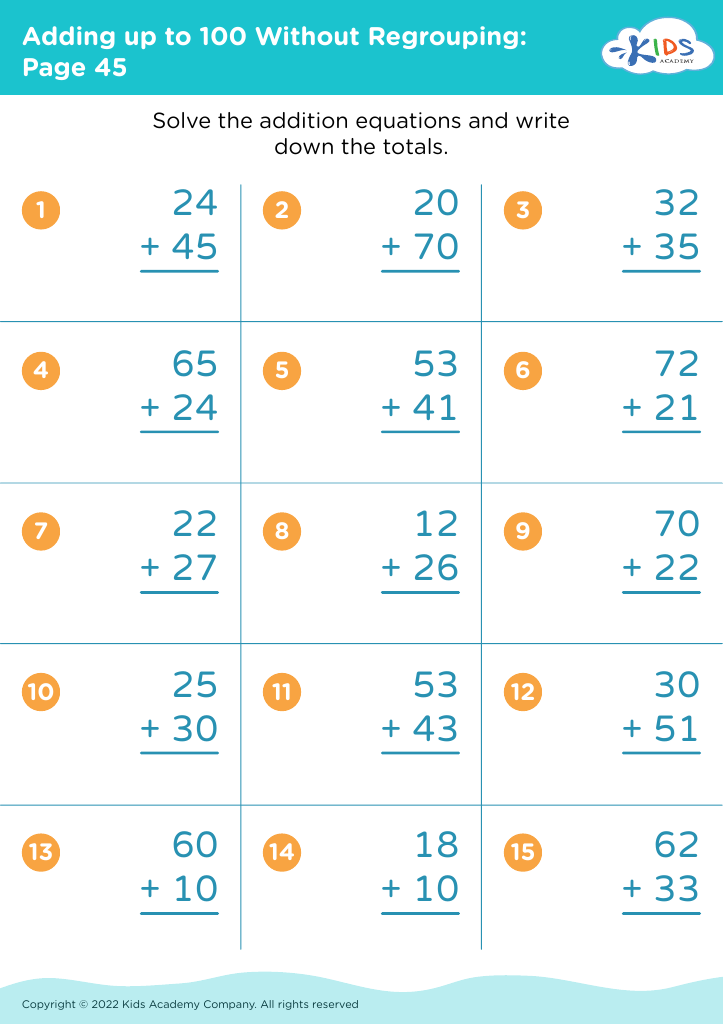
Adding up to 100 Without Regrouping: Page 45
Worksheet
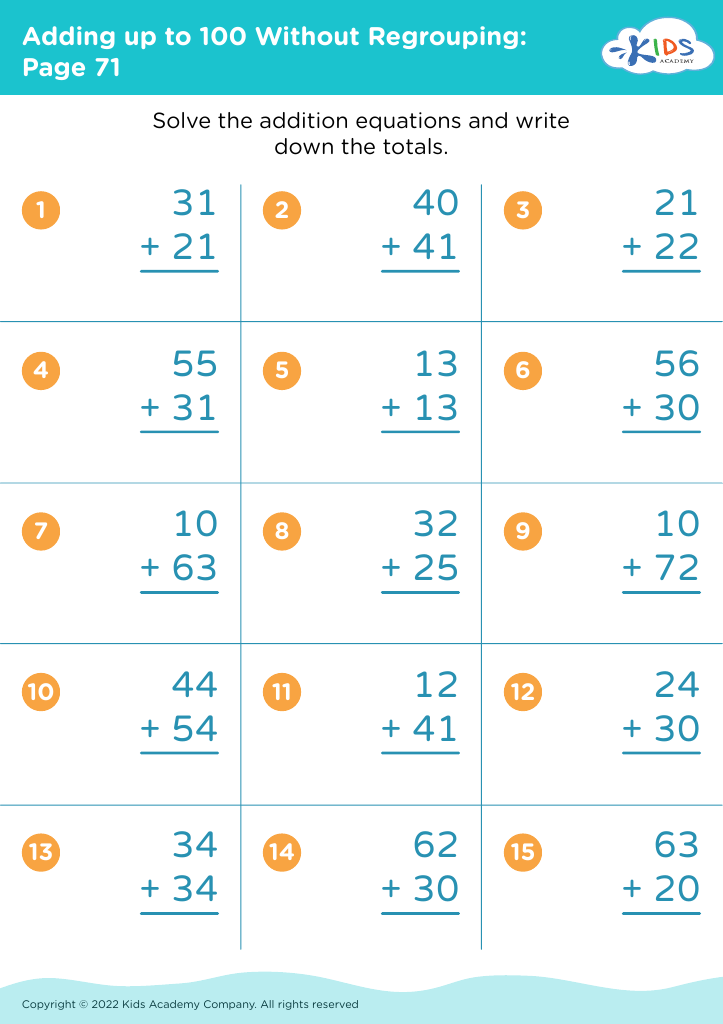
Adding up to 100 Without Regrouping: Page 71
Worksheet
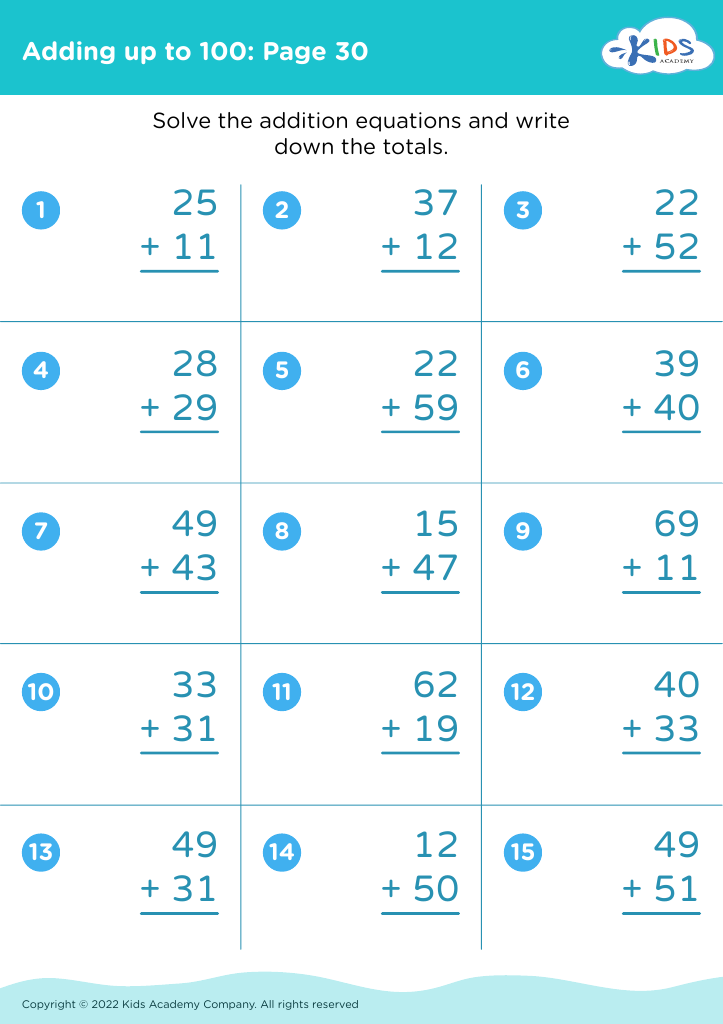
Adding up to 100: Page 30

Adding up to 100: Page 30

Adding up to 100: Page 30
Worksheet
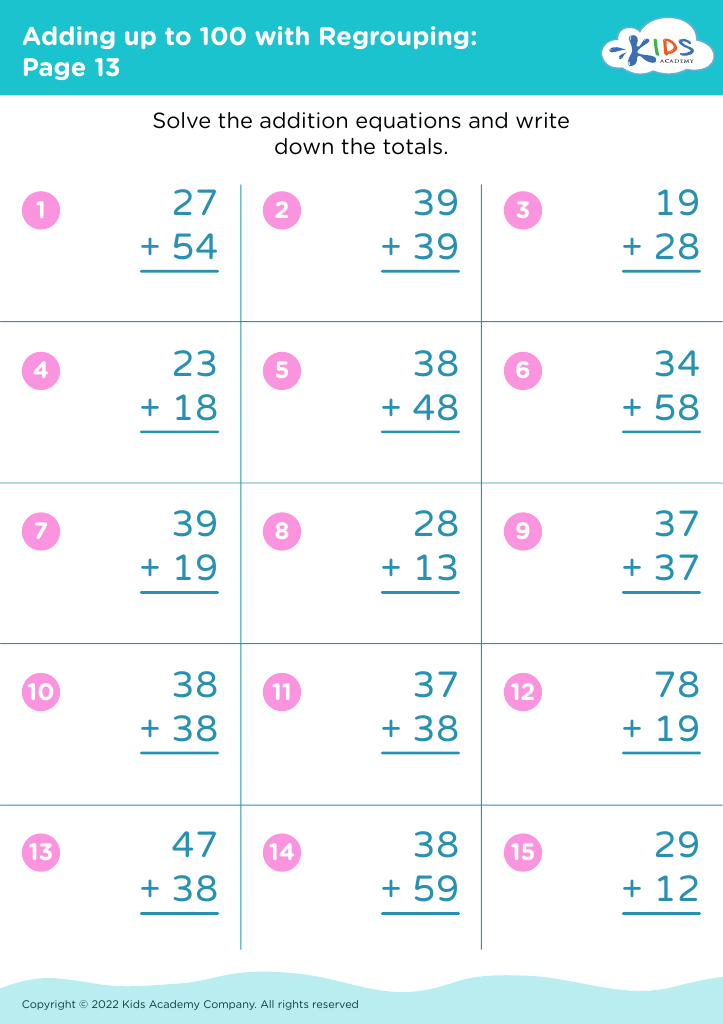
Adding up to 100 with Regrouping: Page 13
Worksheet
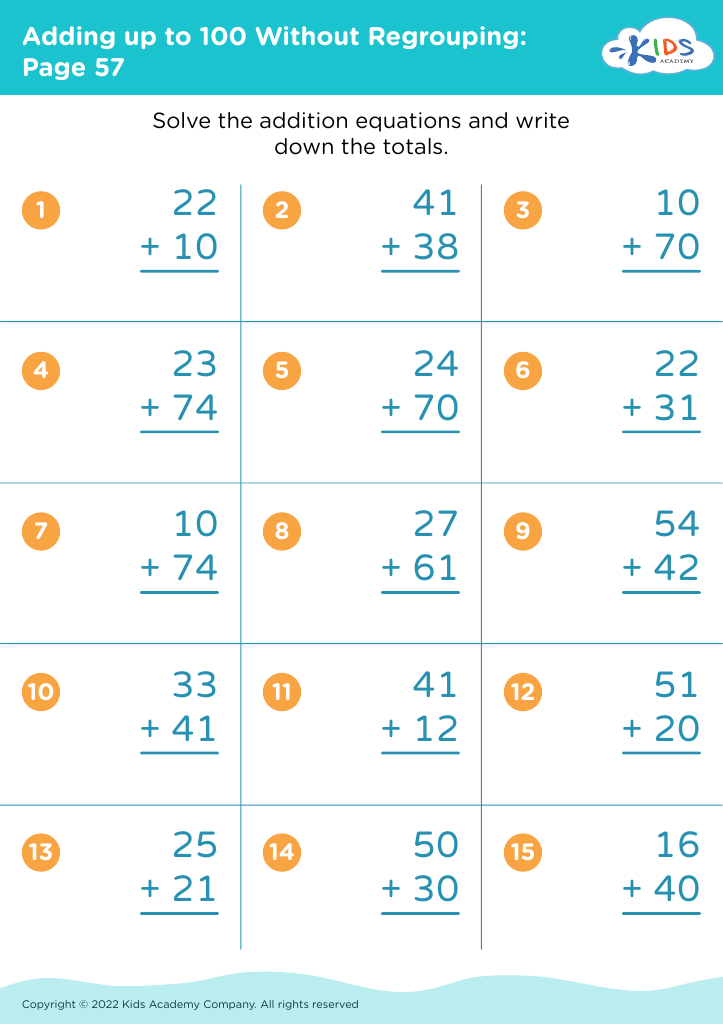
Adding up to 100 Without Regrouping: Page 57
Worksheet
Adding up to 1000 with Regrouping: Page 1
Worksheet


Understanding fractions for children aged 4 to 7 is crucial for several reason. Firstly, during these formative years, children develop foundational mathematical skills that form the basis for future learning. Fractions introduce key concepts like part-whole relationships, which are essential in understanding numbers, measurement, and division.

Engaging with fractions helps foster critical thinking and problem-solving skills. For example, when children divide a pizza or share toys, they practice fairness and resource distribution, reinforcing division concepts practically. Additionally, learning about fractions can enhance their spatial awareness, as they visualize and manipulate different parts of a whole.

Moreover, introducing fractions early makes math more relatable and less intimidating. Experiencing fractions through hands-on activities—such as cooking with measurements or using visual aids like pie charts—can spark joy and interest in mathematics, making learning enjoyable.

Lastly, parents and teachers play a pivotal role in nurturing a positive mathematical mindset. By promoting an understanding of fractions, they are not only equipping children with essential math skills but also cultivating a sense of curiosity, confidence, and a lifelong love for learning. Prioritizing fractional understanding sets the stage for more complex mathematical concepts as students progress.