
Understanding greater/less than Math Worksheets for Ages 4-7
3 filtered results
Difficulty Level
Grade
Age
-
From - To
Subject
Activity
Standards
Enhance your child's math skills with our "Understanding Greater/Less Than" worksheets, designed for ages 4-7. These engaging printables help young learners grasp fundamental concepts of comparing numbers through fun activities and colorful illustrations. Each worksheet fosters critical thinking as children practice identifying which numbers are greater or less than each other. With varied exercises that cater to different learning styles, kids will develop confidence and proficiency in math. Ideal for classroom or home use, our worksheets provide a solid foundation for future math learning. Start your child's mathematical journey today by making learning enjoyable and interactive!
Favorites
With answer key
Interactive
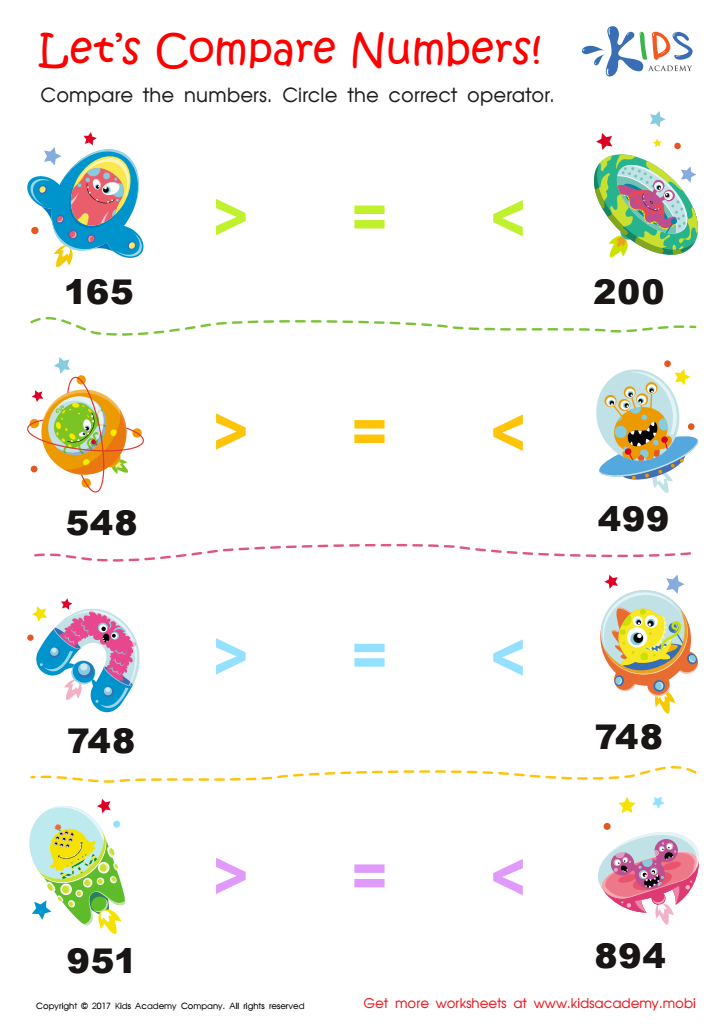
Comparing Numbers Worksheet for 2nd Grade
Alien friends are back to help your child learn to compare numbers using >, < and = symbols. This 2nd grade worksheet will challenge them with larger numbers!
 Assign to My Students
Comparing Numbers Worksheet for 2nd Grade
Worksheet
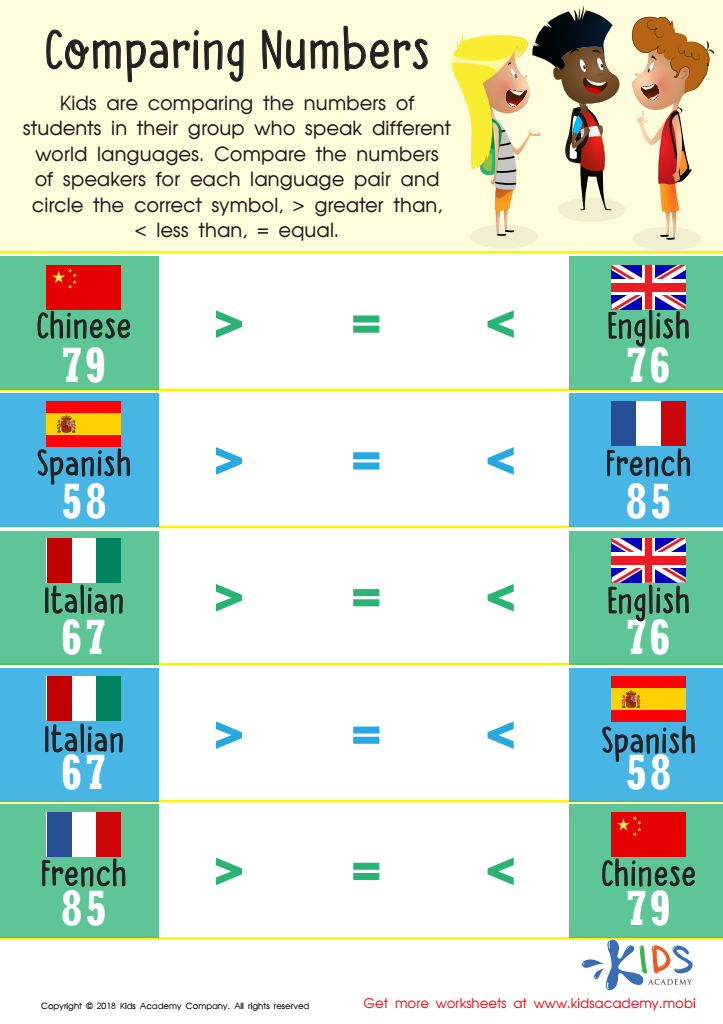
Comparing Numbers Worksheet for 1st Grade
Children can build number sense by exploring the relationship between numbers. This worksheet uses bright international flags to compare numerical groups. Kids will love the cheerful colors and flags from different countries. It encourages them to compare numbers and reinforces their number sense with tens and ones place values.
Comparing Numbers Worksheet for 1st Grade
Worksheet
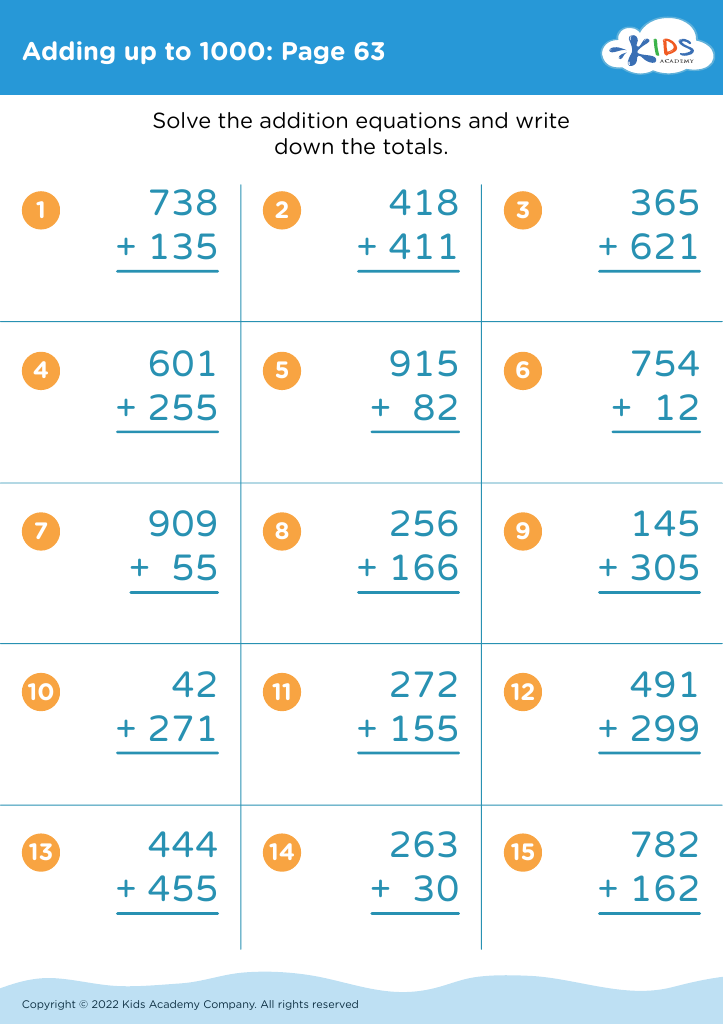
Join Kids Academy for Free
Who is primarily going to use this learning content?



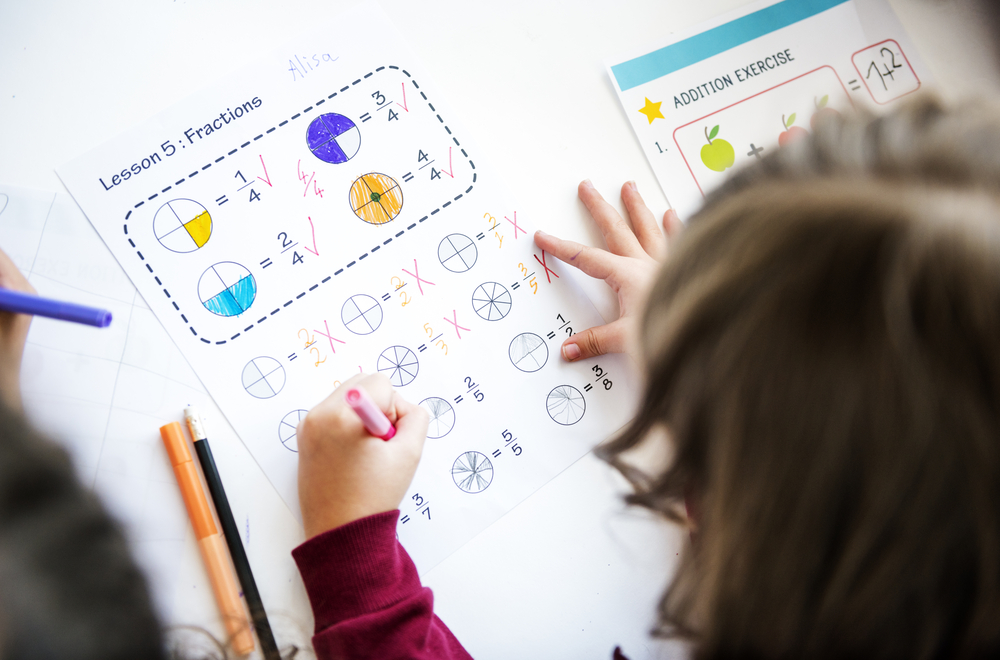



Understanding the concepts of greater than and less than is crucial for children ages 4-7 as it lays the foundation for their mathematical skills and cognitive development. At this early stage, children begin to grasp numerical relationships, which is essential for problem-solving, comparisons, and logical thinking.
Parents and teachers should prioritize this understanding because it enhances children's ability to make informed decisions and develop critical thinking skills. Recognizing which numbers are greater or lesser helps in real-life situations, such as determining quantities while shopping or sharing items among peers. These concepts also pave the way for more complex mathematical operations, including addition, subtraction, and eventually multiplication and division.
Furthermore, mastering the concept of greater than and less than can boost a child's confidence in math-related activities, making them more engaged and willing to explore deeper mathematical concepts. Enjoyable practices, such as games and hands-on activities focused on these concepts, make learning fun and memorable. By fostering a strong grasp of these foundational ideas, parents and teachers play a vital role in building students' mathematical literacy, ultimately supporting their academic journey and everyday life skills.








