Understanding number relationships Math Worksheets for Ages 4-7
9 filtered results
-
From - To
Understanding Number Relationships Math Worksheets for Ages 4-7
Introduce your child to foundational math skills with our engaging and educational worksheets designed for ages 4-7. These carefully crafted activities focus on helping young learners grasp essential number relationships, including counting, comparing, and ordering numbers. With vibrant visuals and enjoyable exercises, children will develop critical thinking and problem-solving abilities while having fun. Whether at home or in the classroom, our worksheets provide a solid mathematical foundation, ensuring your child is confident and prepared for future learning. Foster a love for math early on with resources that make understanding number relationships easy and enjoyable!
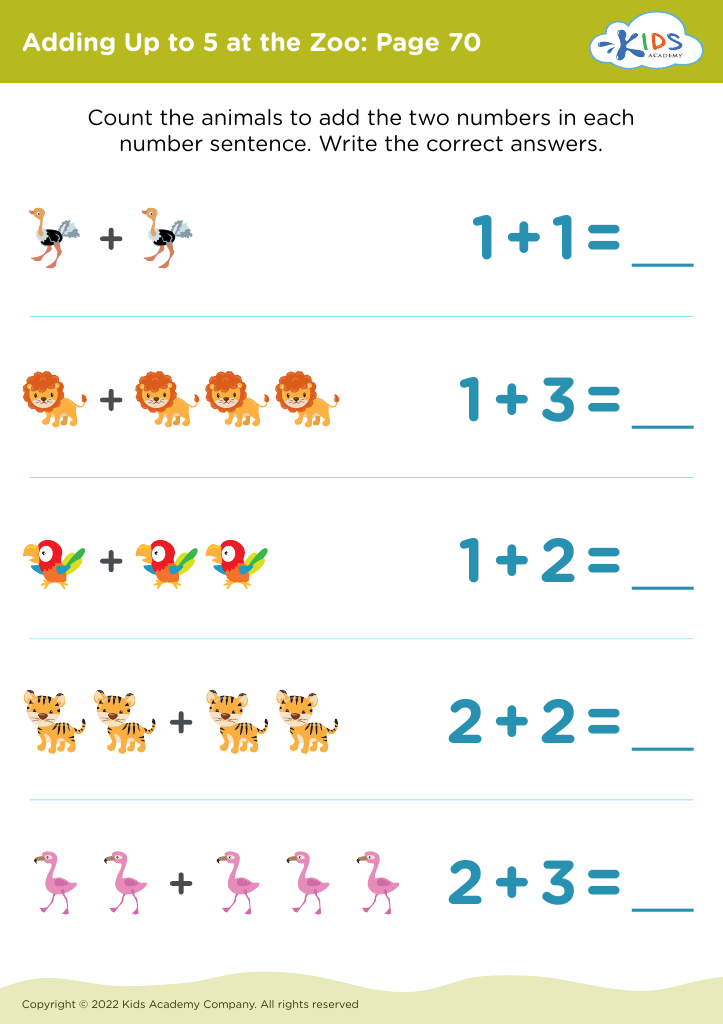
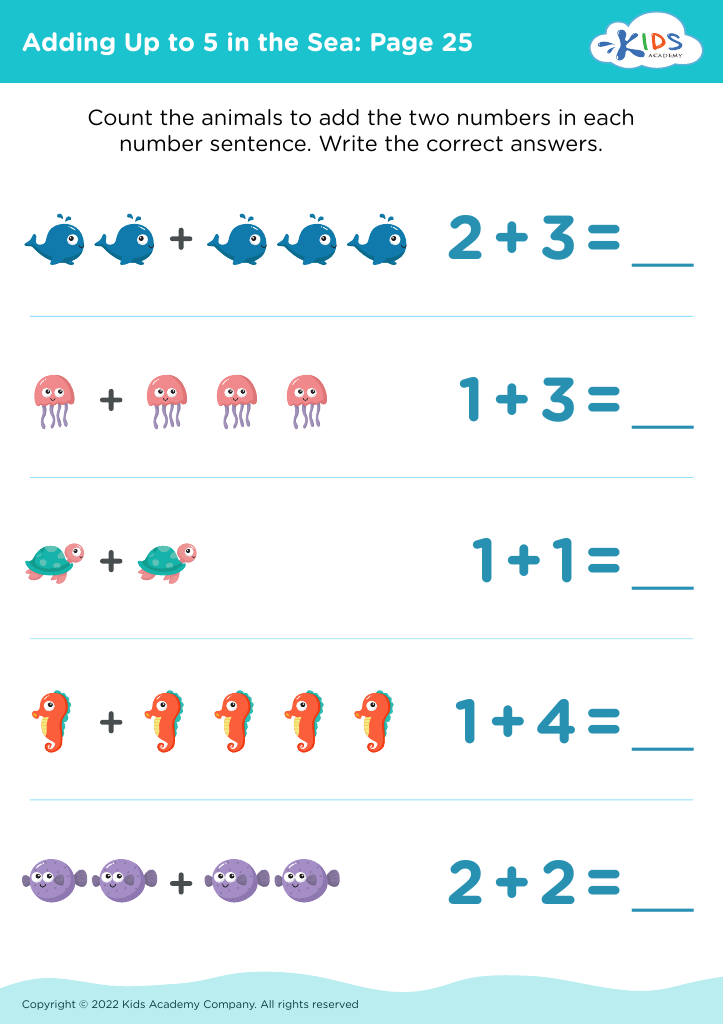
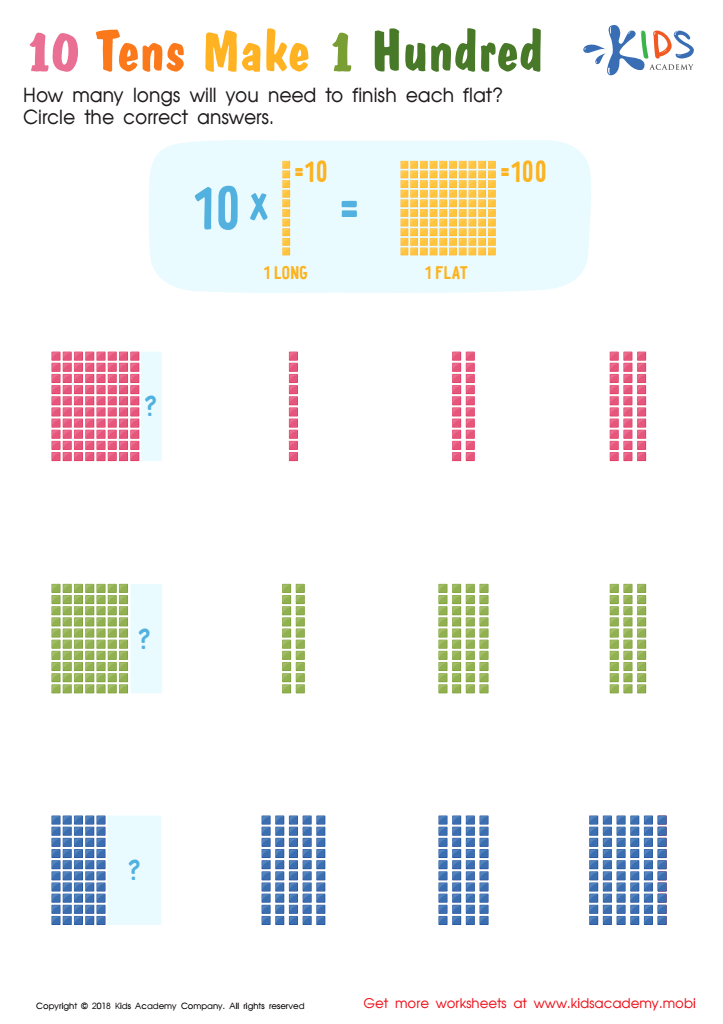
10 Tens Make 1 Hundred Worksheet
 Assign to My Students
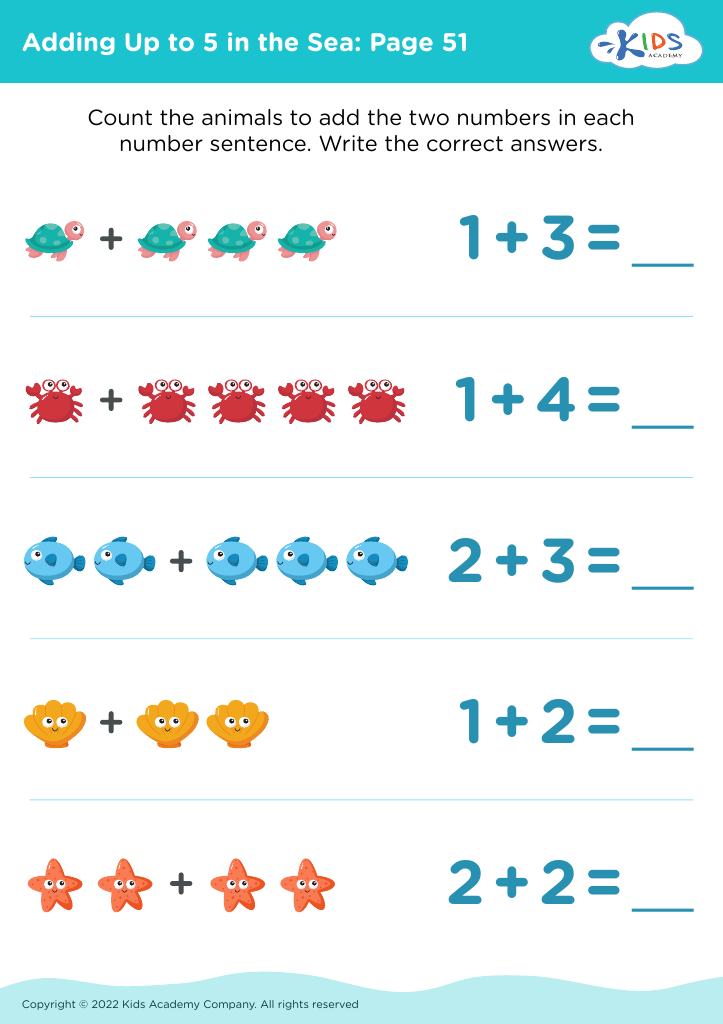
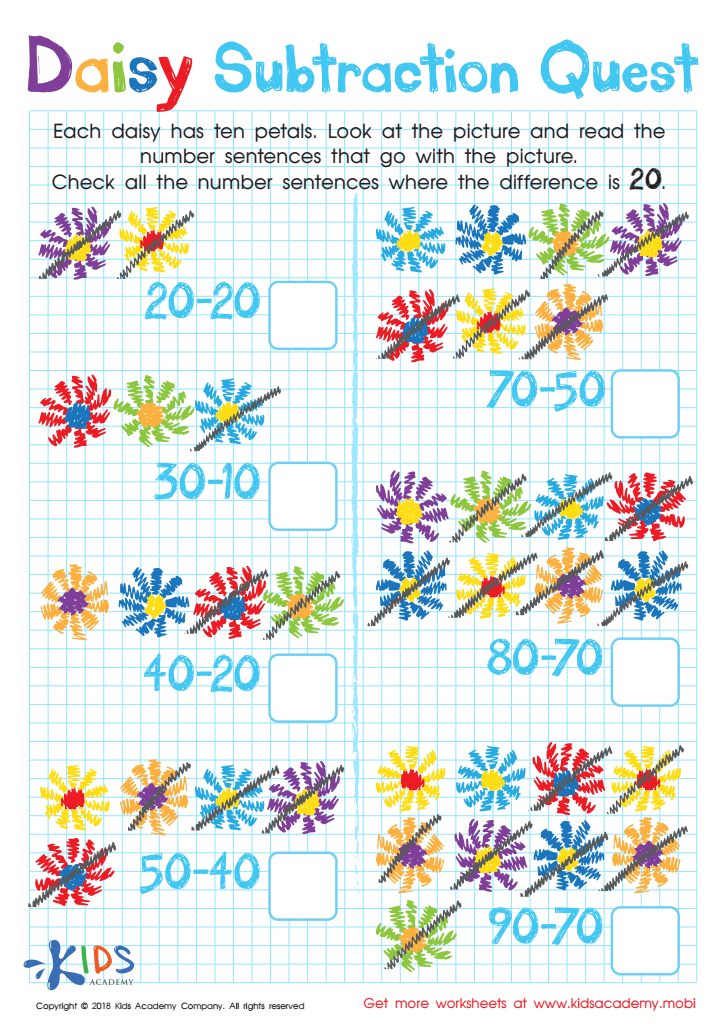
Daisy Subtraction Quest Worksheet
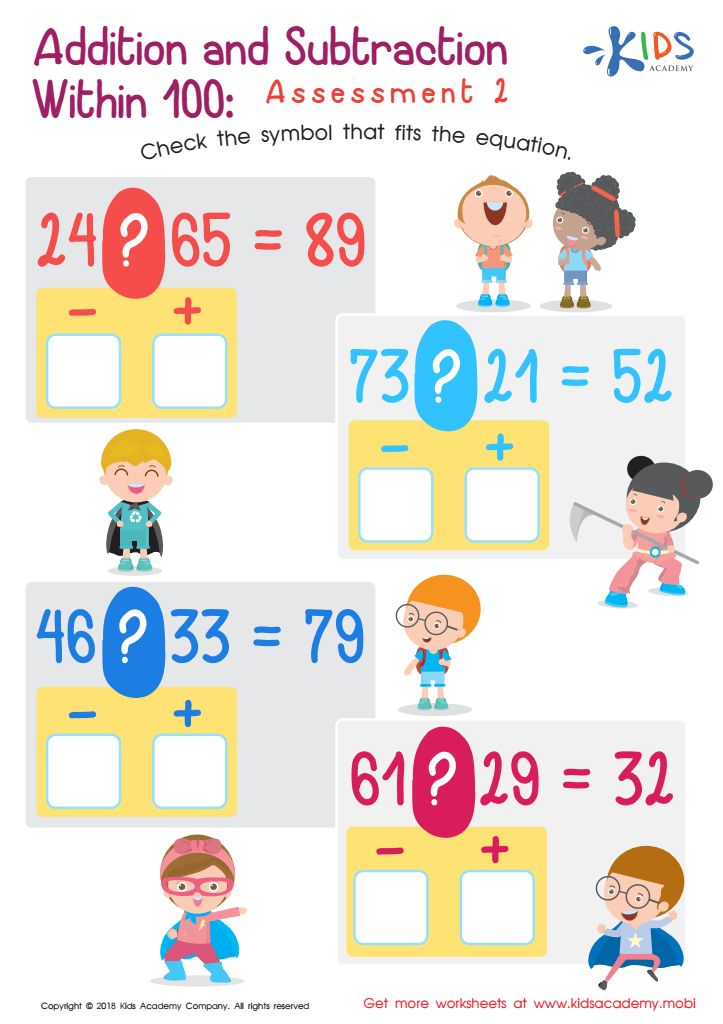
Addition and Subtraction Within 1: Assessment 2 Worksheet
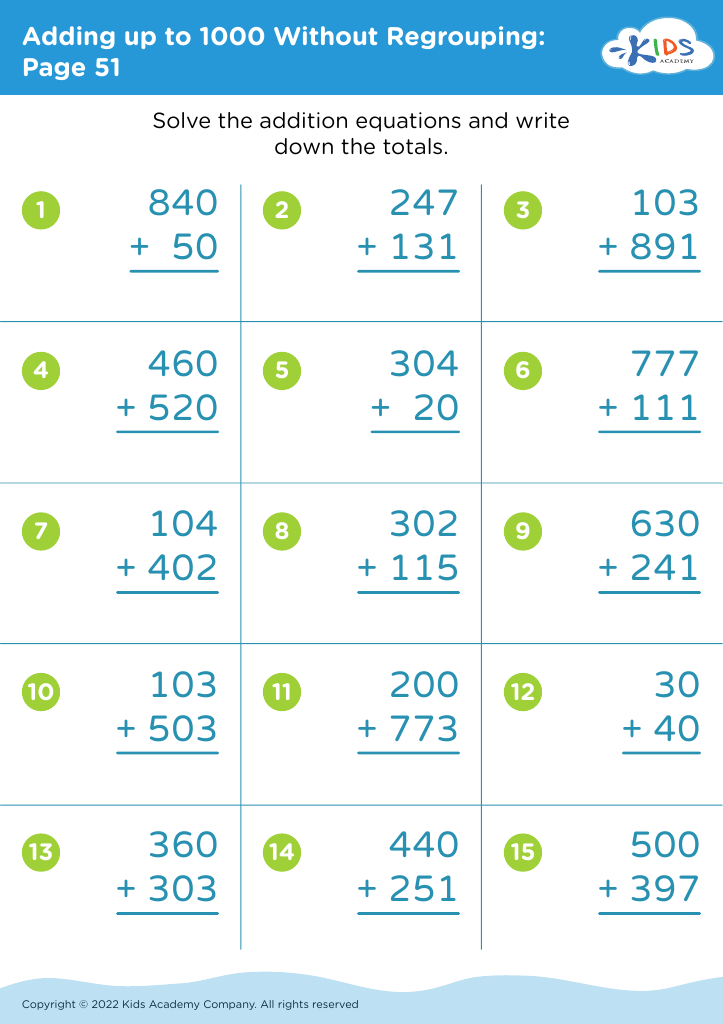
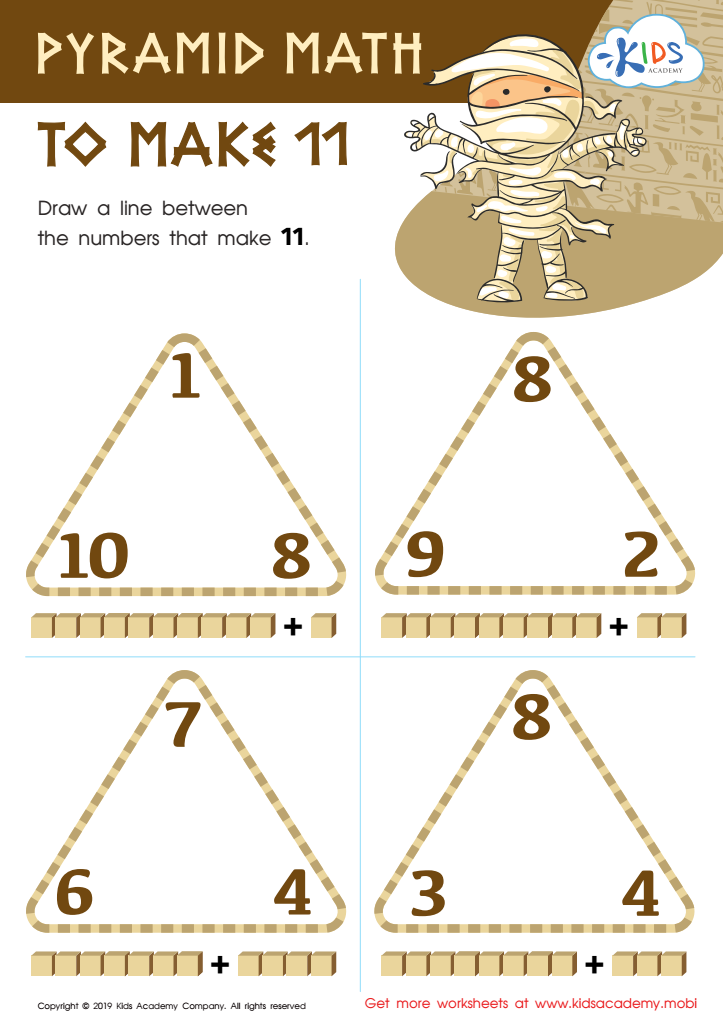
Pyramid Math to Make 11 Worksheet
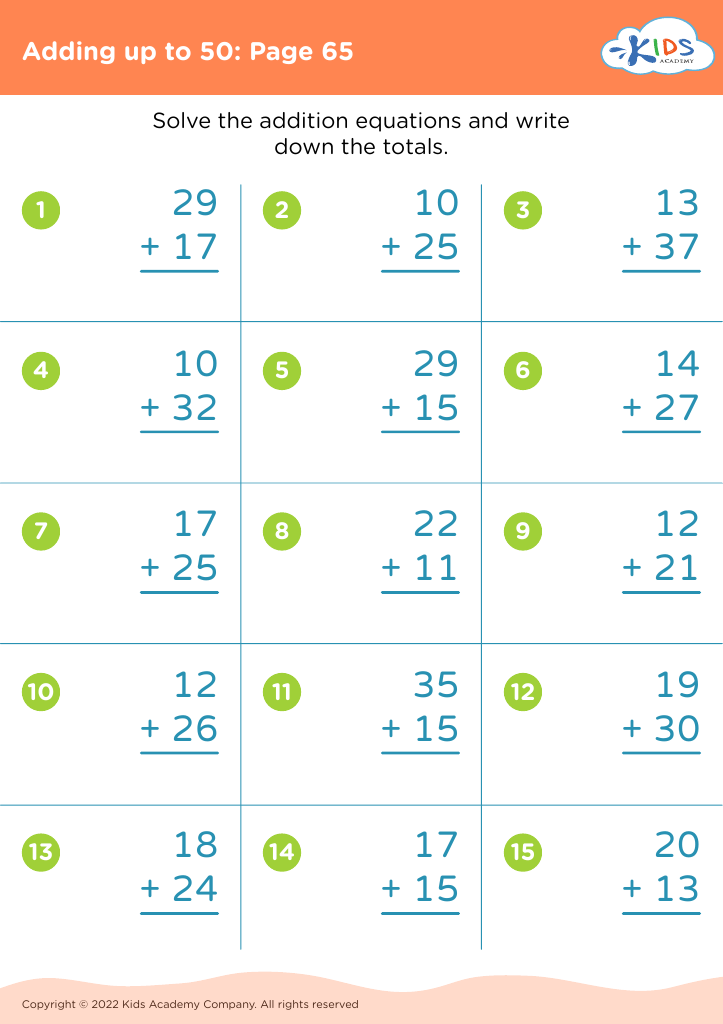





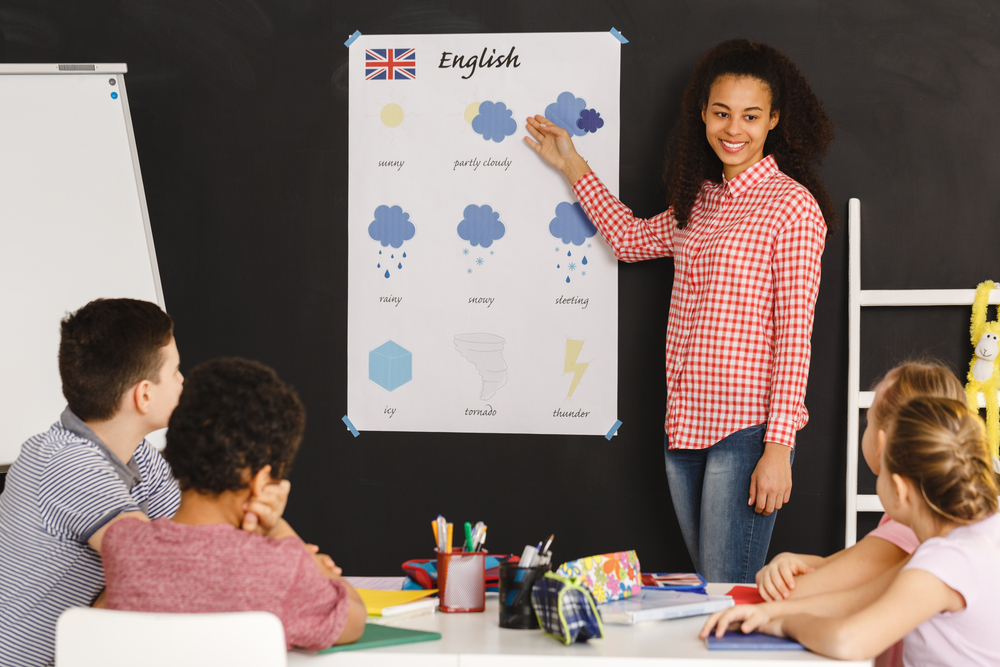


Understanding number relationships in math is crucial for young children, ages 4-7, as it lays the foundation for future mathematical learning and problem-solving. When children grasp number relationships, such as counting, comparing quantities, and recognizing patterns, they develop essential cognitive skills that support broader academic success.
For parents and teachers, fostering these skills promotes numerical fluency and confidence. Early exposure to basic concepts like more than, less than, and equal to helps children comprehend mathematical logic and build a strong number sense. Recognizing patterns and simple arithmetic relationships (like 1+1=2) encourages critical thinking and analytical abilities.
Moreover, early math skills are closely related to language development and general educational achievement. Children who understand number relationships are also likely to excel in reading and other subjects, as these foundational skills underpin complex thinking and learning processes.
Introducing math through engaging, hands-on activities—such as counting games, puzzles, and playful tasks—makes learning interactive and fun, ensuring children are motivated and interested. Overall, parents and teachers should care about understanding number relationships in young children as it equips them with the skills and confidence needed to navigate more advanced math concepts and succeed across various domains in school and life.








