Understanding quantity Math Worksheets for Ages 4-7 - Page 2
30 filtered results
-
From - To
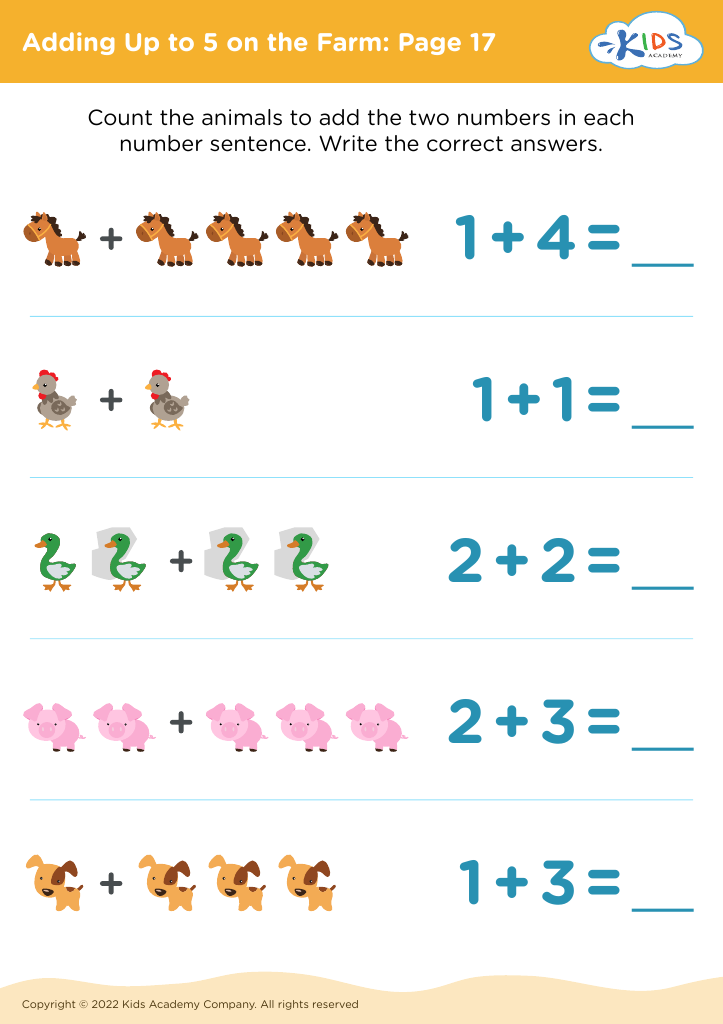
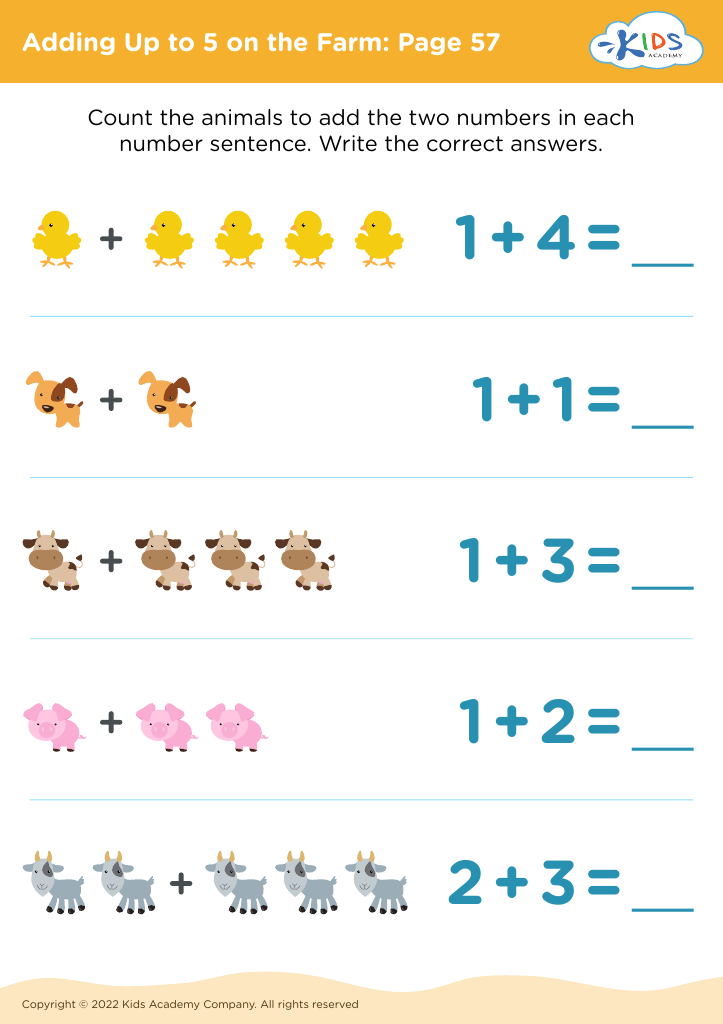
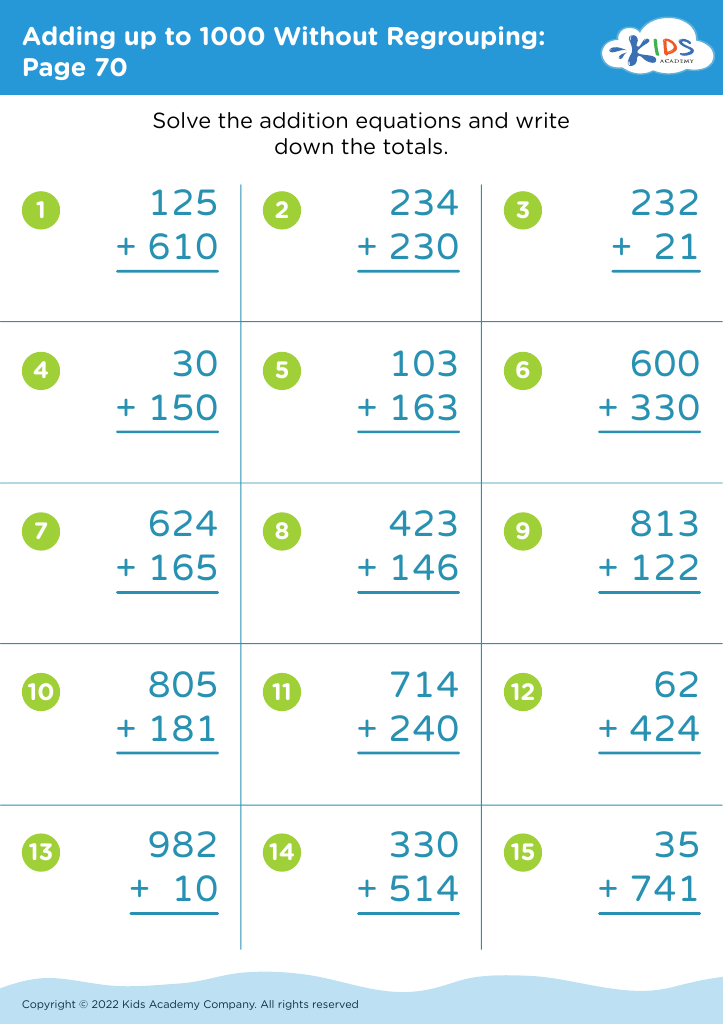
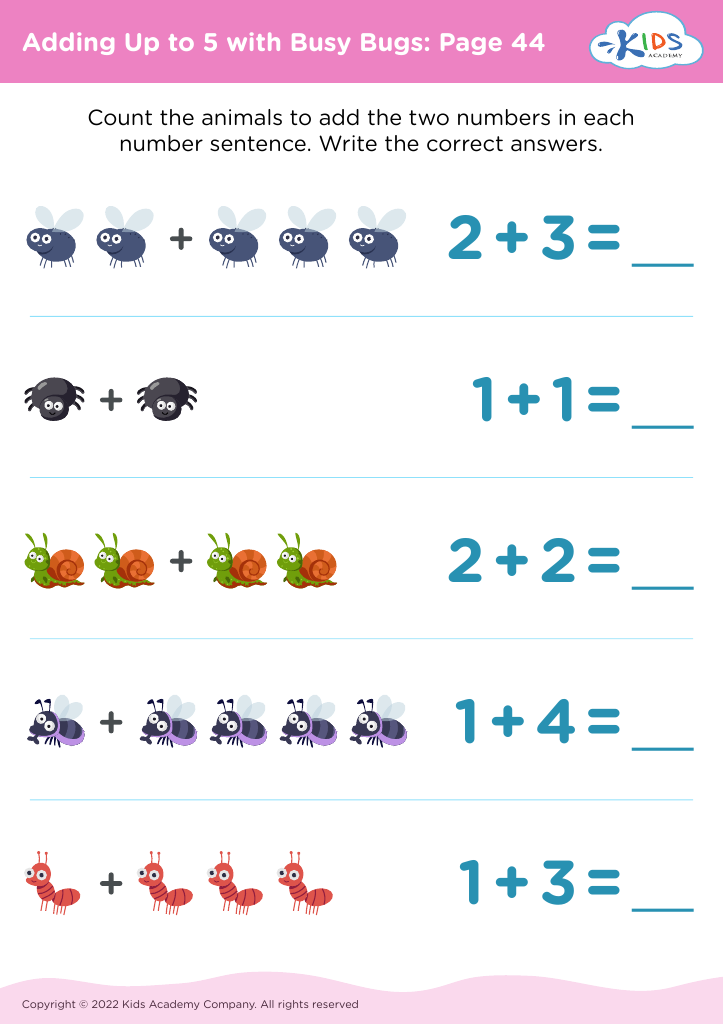
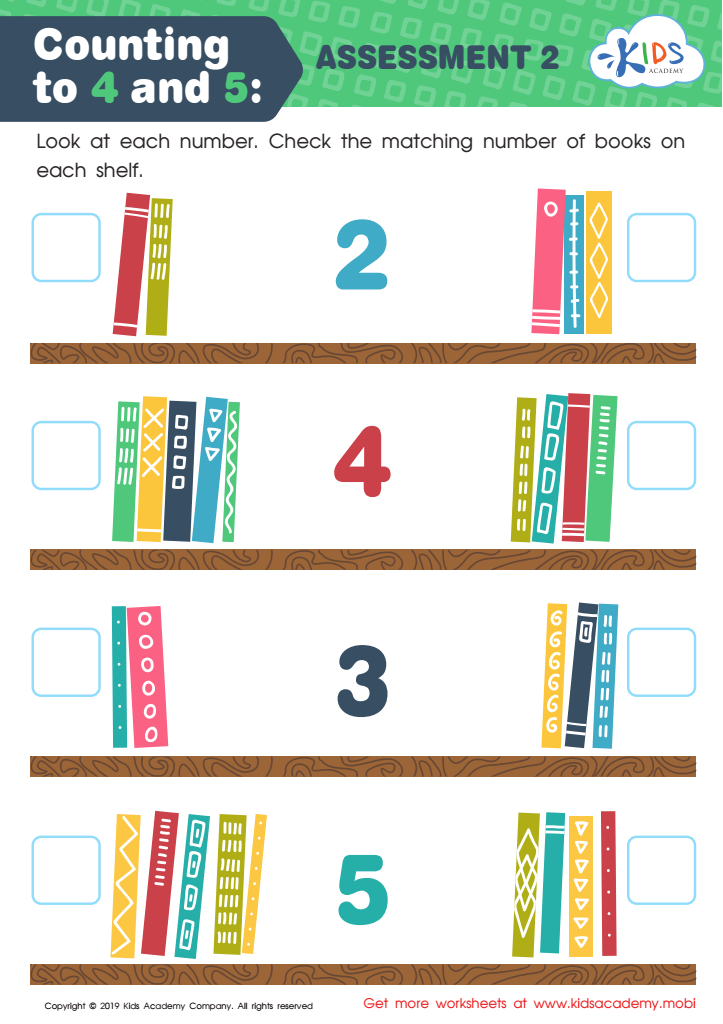
Counting to 4 and 5: Assessment 2 Worksheet
 Assign to My Students








Understanding quantities in mathematics is crucial for children ages 4 to 7, as it forms the foundation for all future math skills. During this critical stage of development, children are naturally curious and eager to explore their surroundings, which provides an excellent opportunity to introduce them to basic numerical concepts. Parents and teachers should care about this subject because a solid grasp of quantity can enhance problem-solving abilities, boost cognitive skills, and foster mathematical reasoning.
By learning about quantities, children can develop their skills in comparing, measuring, and grouping objects, which are fundamental operations in numeracy. This understanding also aids in building confidence as they engage with math-related activities. Furthermore, research shows that early exposure to mathematical concepts significantly impacts later academic success. It prepares children for more complex ideas, such as addition and subtraction, which will come into play in higher grades.
Moreover, an emphasis on quantity helps incorporate hands-on learning experiences, making math enjoyable and relevant. By nurturing an early interest in mathematics, parents and teachers can set the groundwork for lifelong learning. Ultimately, fostering quantity understanding is essential for children to navigate and succeed in an increasingly quantitative world.








