Understanding skip-counting Math Worksheets for Ages 4-7
3 filtered results
-
From - To
Boost your child's math skills with our engaging "Understanding Skip-Counting Math Worksheets" tailored for ages 4-7. Designed to make learning fun, these worksheets help young learners grasp the fundamental concept of skip-counting, enhancing their number sense and preparing them for more complex math tasks. Perfect for home or classroom use, each worksheet features colorful, kid-friendly illustrations and exercises. By practicing skip-counting by 2s, 5s, and 10s, kids will build a strong foundation in mathematics. Start their journey to math mastery today with our easy-to-download, print-friendly resources!
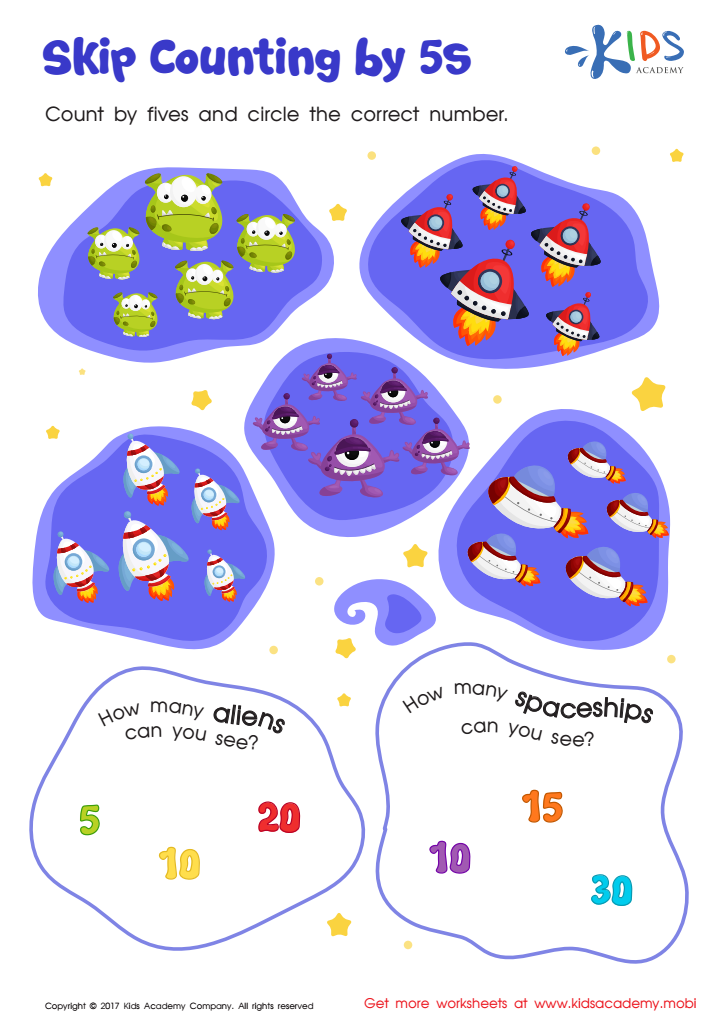
Skip Counting by 5s: Aliens and Spaceships Printable
 Assign to My Students
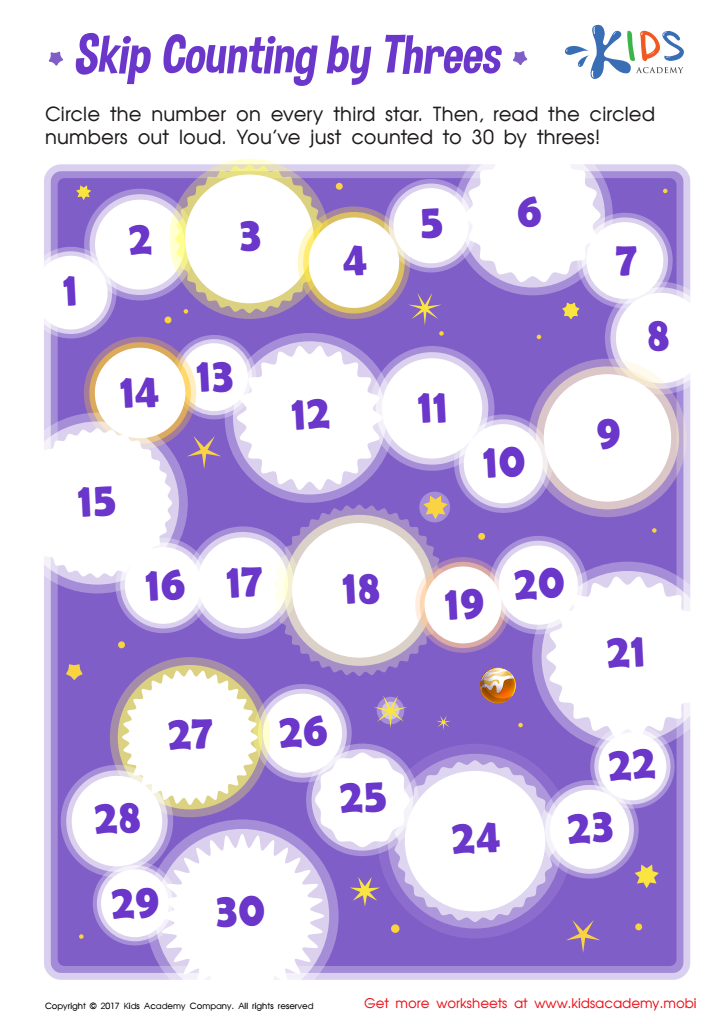
Skip Counting By Three Printable
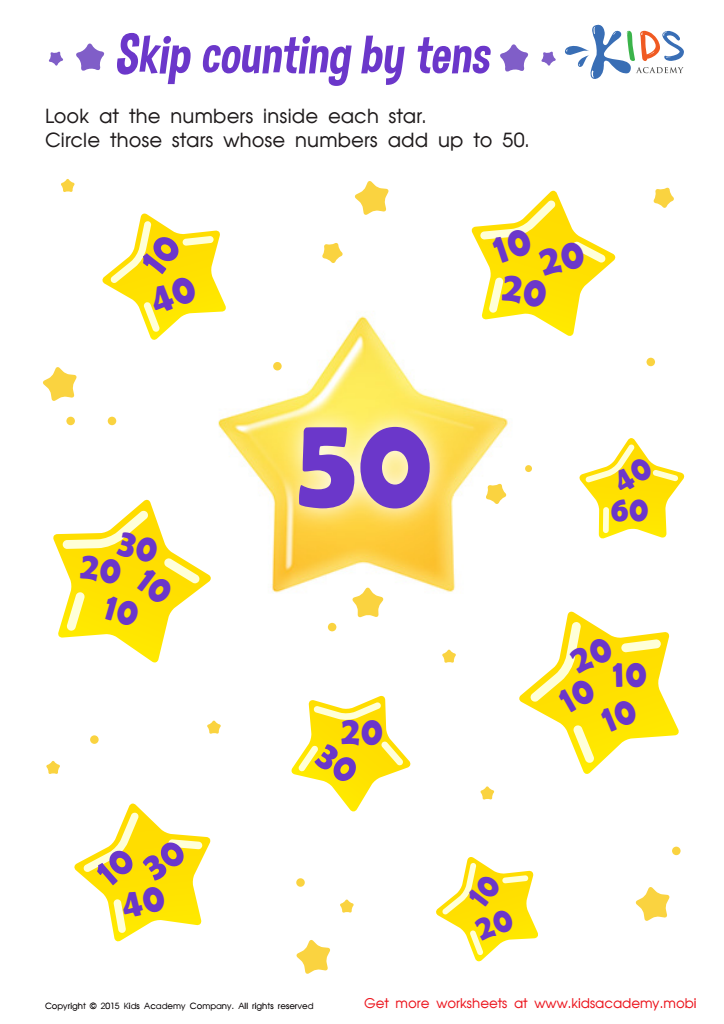
Learn Dozens: Skip Counting by Tens Printable








Understanding skip-counting is crucial for young students aged 4-7 because it forms the basis for essential math skills they will use in their academic journey. Skip-counting involves counting by numbers other than one, such as by twos, fives, or tens, and it's a foundational skill that introduces children to concepts of addition, multiplication, and number patterns.
For parents and teachers, fostering a strong grasp of skip-counting prepares children for more complex math tasks. It aids in the development of counting fluency and speed, making arithmetic operations more intuitive and less cumbersome. For example, knowing how to skip-count by fives and tens simplifies both multiplication and division in the future, transforming potentially intimidating concepts into more manageable steps.
Additionally, skip-counting strengthens number sense, helping children recognize numerical relationships and patterns. This skill translates to real-world applications like telling time (counting by fives) and handling money (counting coins). It enhances their problem-solving abilities and self-confidence in math, contributing to a positive attitude towards learning.
By giving attention to skip-counting, parents and teachers enable children to build a solid mathematical foundation, setting the stage for their success in future math endeavors and everyday situations. Understanding and practicing skip-counting equips young learners with tools they will repeatedly use throughout their education.








