
Understanding time Math Worksheets for Ages 4-7
10 filtered results
Difficulty Level
Grade
Age
-
From - To
Subject
Activity
Standards
Discover the perfect blend of fun and learning with our "Understanding Time" Math Worksheets for ages 4-7. These engaging and visually appealing worksheets are expertly crafted to help young learners grasp the concept of time. Through a variety of interactive activities, kids will learn to read clocks, differentiate between hours and minutes, and understand concepts such as morning, afternoon, and evening. Ideal for both classroom use and at-home practice, these worksheets provide the foundation for essential time-telling skills. Fuel your child's curiosity and build their confidence in math with our expertly designed resources. Visit our page to explore more!
Favorites
With answer key
Interactive
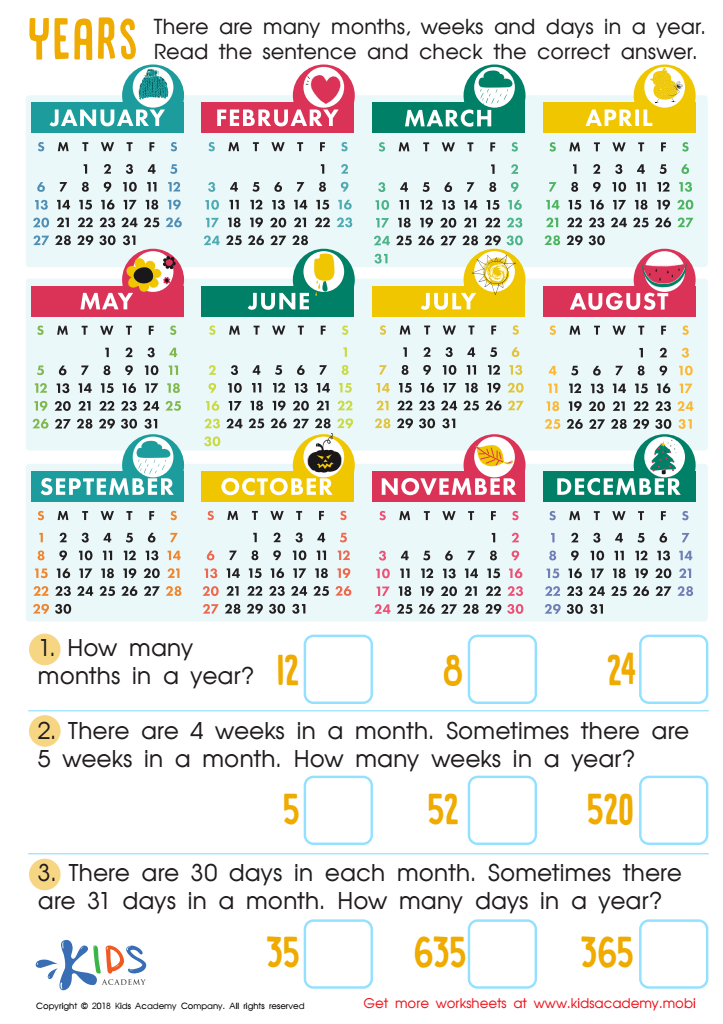
Years Worksheet
This worksheet is a great way to test your children's knowledge of the calendar. Ask them if they can name the days of the week and months in a year. Read and discuss the questions with them and help them find the right answers. Encourage them to check their answers.
 Assign to My Students
Years Worksheet
Worksheet
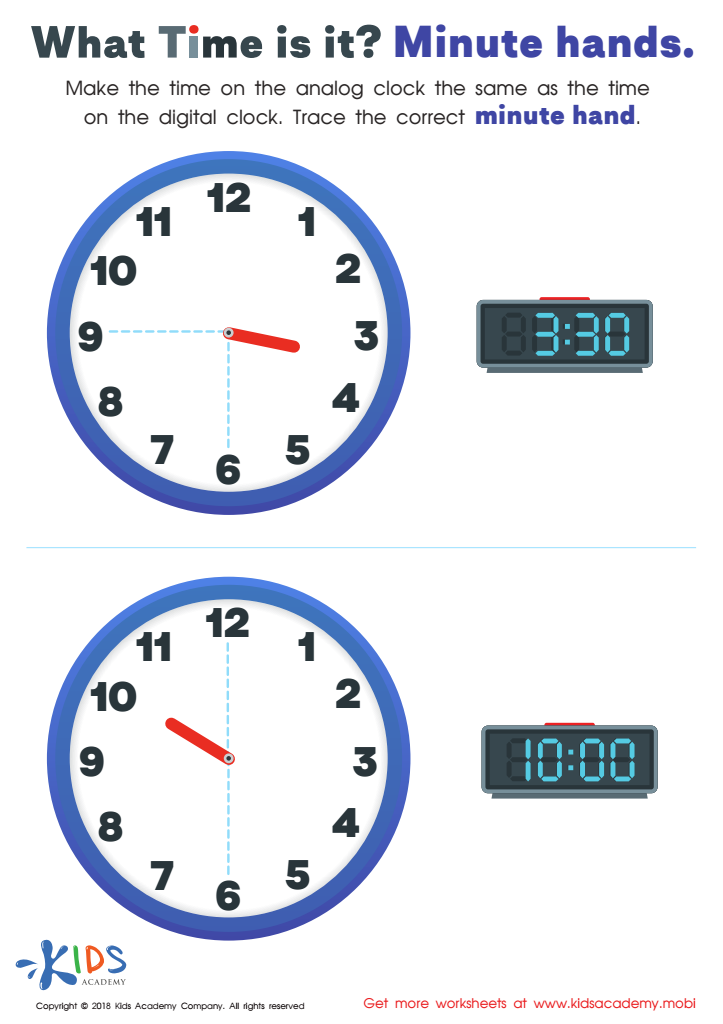
What Time Is it? Minute Hands Worksheet
Help your kids telling time with the minute hand correctly with this tracing sheet. Trace the correct minute hand to make the time on the analog clock the same as the time on the digital clock. Give them a pictured demonstration of how to do it and you'll be all set!
What Time Is it? Minute Hands Worksheet
Worksheet
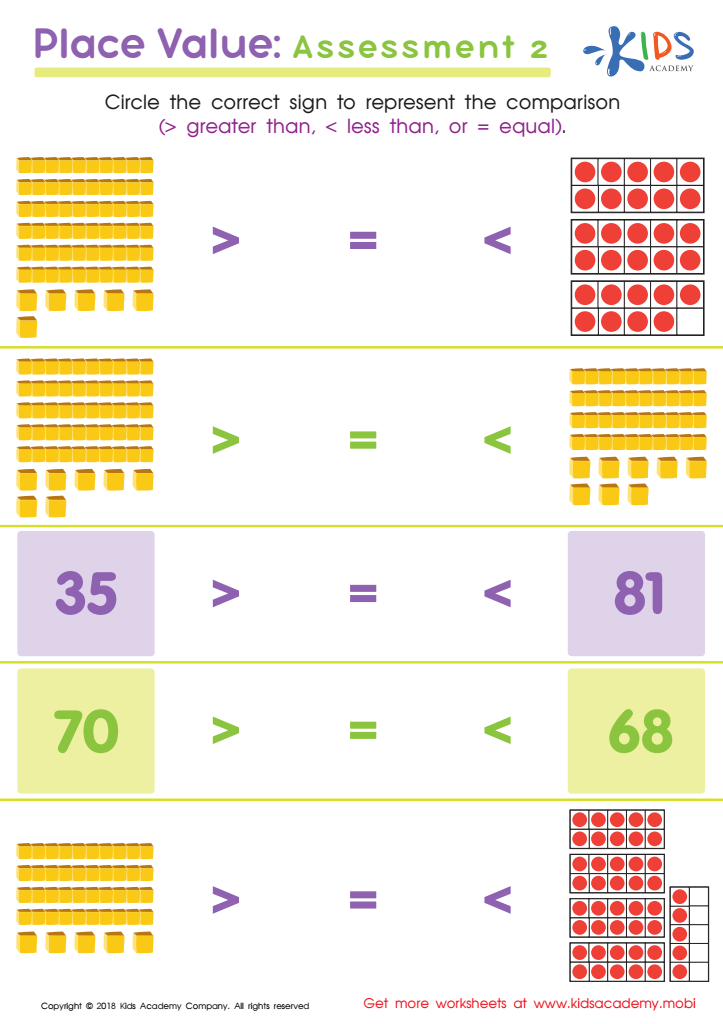
Place Value: Assessment 2 Worksheet
Children must learn to recognize the value of numbers and break them into chunks of ten. They must also be able to compare numbers to know if one is greater, less than or equal to another. The Place Value Assessment PDF is a great tool to assess their skills and identify what requires more practice.
Place Value: Assessment 2 Worksheet
Worksheet
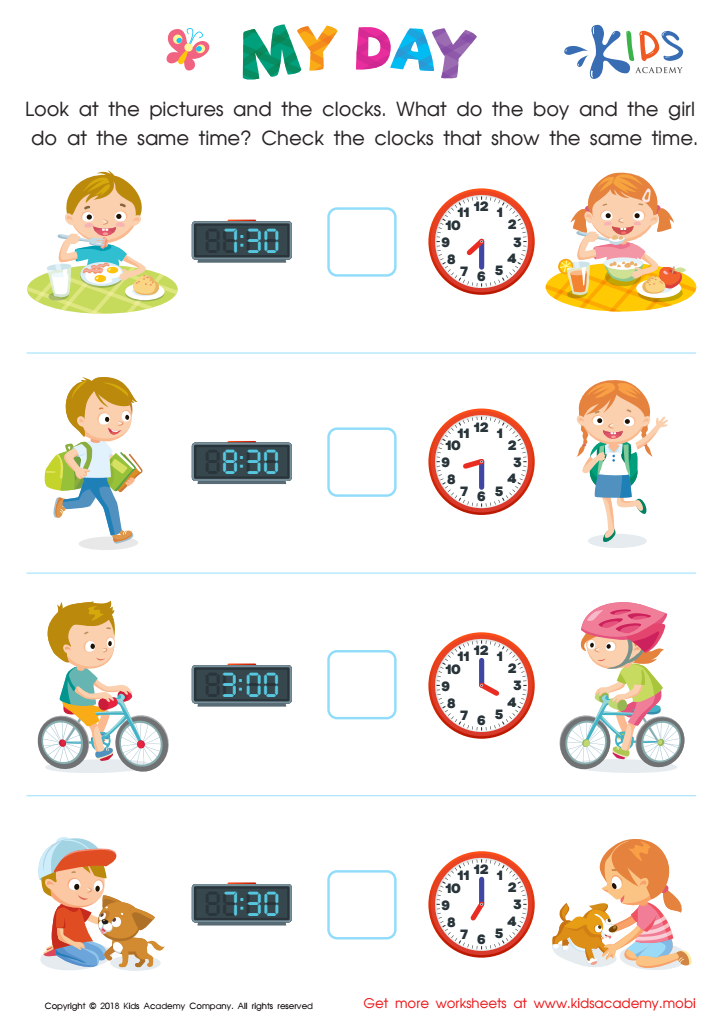
My Day Worksheet
Show your students the pictures and clocks in the colorful worksheet. Ask what the boy and girl are doing in each, then what time the clocks show. Finally, ask what activities they both do at the same time. Help them check the clocks showing the same time in both pictures.
My Day Worksheet
Worksheet
Join Kids Academy for Free
Who is primarily going to use this learning content?








Understanding time is a fundamental skill that plays a crucial role in a child's daily life and overall development, and parents and teachers should prioritize teaching it to children ages 4-7. First, learning to tell time helps children develop a sense of routine and structure. By grasping the concepts of hours, minutes, and the passage of time, children can better predict and manage their daily activities, fostering independence.
Furthermore, understanding time is closely connected to enhancing mathematical skills. Telling time involves recognizing numbers, understanding sequences, and performing simple calculations. These skills lay a foundation for more advanced mathematical concepts that will be introduced as they progress in school.
Moreover, learning about time encourages cognitive development. It requires abstract thinking and allows children to understand more complex concepts like elapsed time, future planning, and the distinction between past, present, and future.
Socially, understanding time facilitates better communication and cooperation. When children grasp basic time concepts, they can more effectively coordinate with peers and adults about schedules, deadlines, and appointments.
In summary, investing in teaching time skills to young children supports their academic growth, cognitive development, independence, and social skills, thus helping them navigate everyday life more successfully.








