Visual discrimination skills Math Worksheets for Ages 4-7
4 filtered results
-
From - To
Enhance your child's learning with our engaging Visual Discrimination Skills Math Worksheets for Ages 4-7. Tailored for young learners, these printable worksheets are designed to develop essential visual skills, allowing kids to recognize differences in shapes, colors, and sizes. By completing these worksheets, children will improve their ability to distinguish between similar visuals, a crucial skill for problem-solving in math. These fun activities make learning enjoyable, reinforcing cognitive development and attention to detail. Perfect for teachers and parents seeking to support early education, our worksheets offer a great way to boost confidence and math readiness. Start fostering your child's skills today!
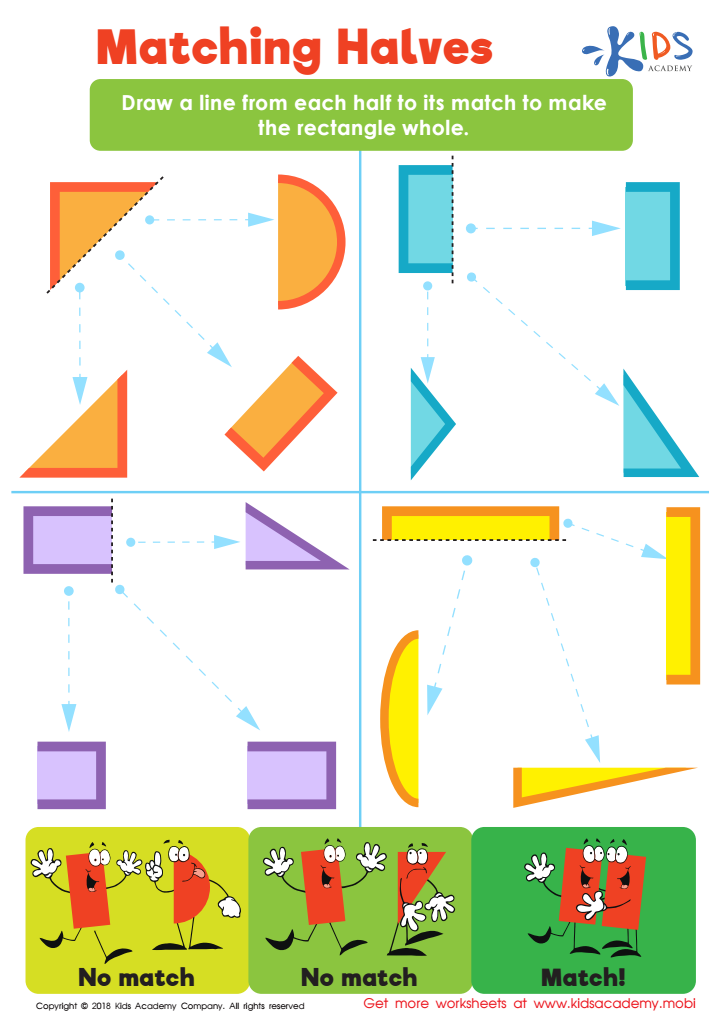
Matching Halves Worksheet
 Assign to My Students
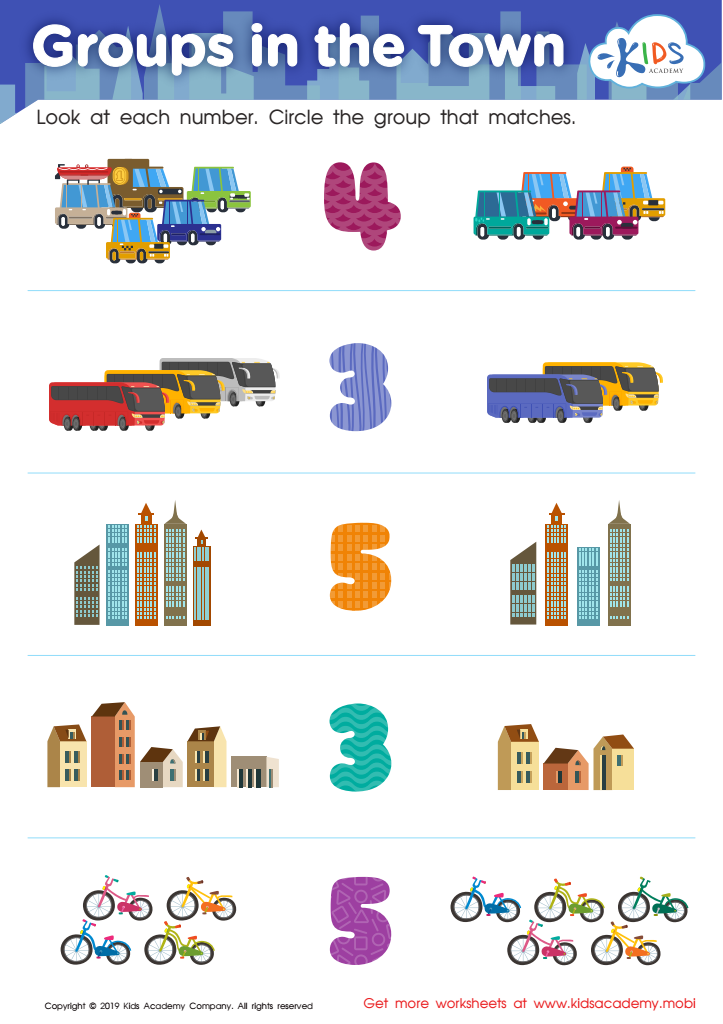
Groups in the Town Worksheet
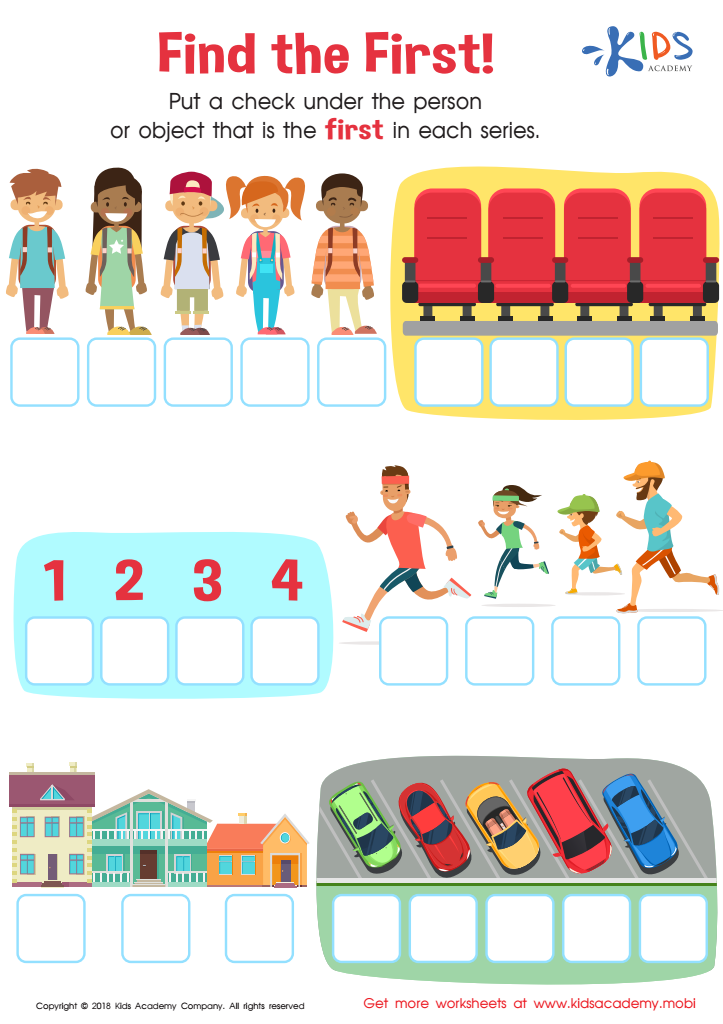
Find the First! Worksheet








Visual discrimination skills are essential for young learners, particularly in the context of math. For children ages 4-7, these skills enable them to differentiate between similar shapes, numbers, and patterns, which are foundational concepts in early mathematics. By fostering strong visual discrimination, parents and teachers can help children identify differences and similarities in quantities, shapes, and sizes, enhancing their overall mathematical understanding.
These skills play a crucial role in problem-solving and critical thinking. When children can distinguish between various visual elements, they are better equipped to understand basic math operations such as addition, subtraction, and sorting. Moreover, visual discrimination aids in recognizing numerical patterns, which is key to developing skills in more advanced mathematical concepts as they progress through school.
Supporting visual discrimination also impacts a child's confidence and engagement in math-related activities. When children are comfortable recognizing and manipulating visual elements, they are more likely to participate enthusiastically in lessons and activities, leading to a more positive attitude toward math.
Ultimately, by prioritizing visual discrimination skills, parents and teachers can set a strong foundation for successful math learning, paving the way for children's future academic achievements and fostering a love for learning.








