
Visual recognition Math Worksheets for Ages 4-7
6 filtered results
Difficulty Level
Grade
Age
-
From - To
Subject
Activity
Standards
Enhance your child's math skills with our Visual Recognition Math Worksheets for Ages 4-7! Designed to engage young learners, these educational resources help kids develop vital math abilities through fun and interactive activities. Perfect for preschool to early elementary students, each worksheet focuses on recognizing numbers, patterns, shapes, and colors. By combining visual learning with practical exercises, our worksheets boost mathematical confidence and problem-solving skills. Ideal for homeschooling or supplemental practice, these printables make mastering foundational math enjoyable. Jumpstart your child's learning journey and explore our extensive collection of visual recognition worksheets today!
Favorites
With answer key
Interactive
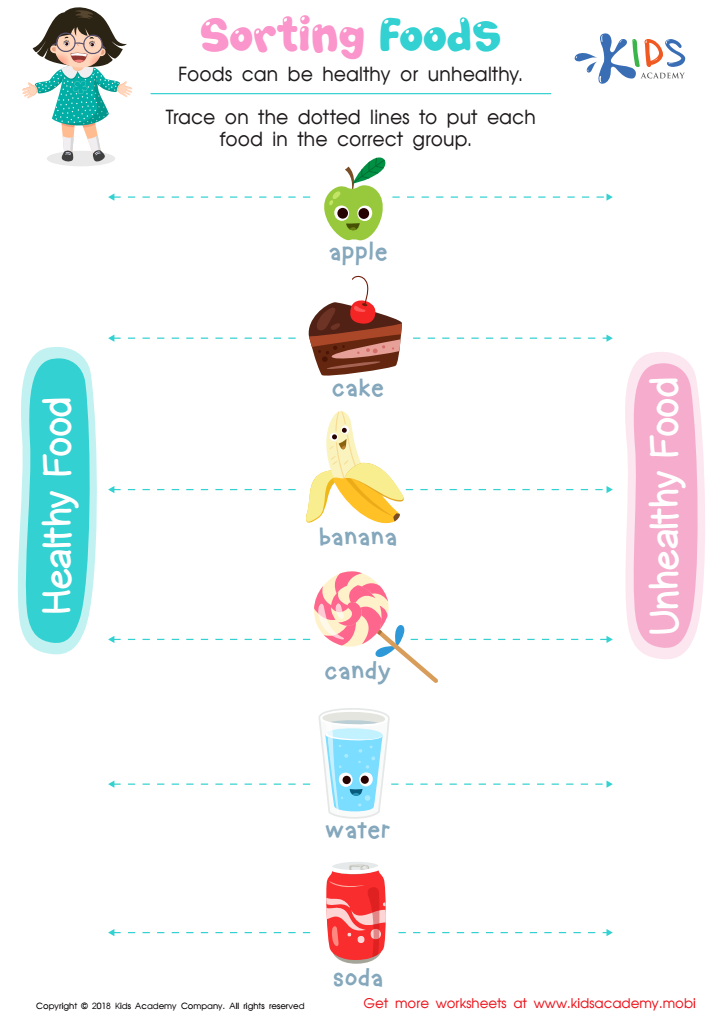
Sorting Food Worksheet
This delightful worksheet boosts critical thinking and fine motor skills. Kids use prior knowledge and pictures to sort foods into healthy and unhealthy groups. Tracing lines support accurate sorting and matching. Enjoy fun and free learning!
 Assign to My Students
Sorting Food Worksheet
Worksheet
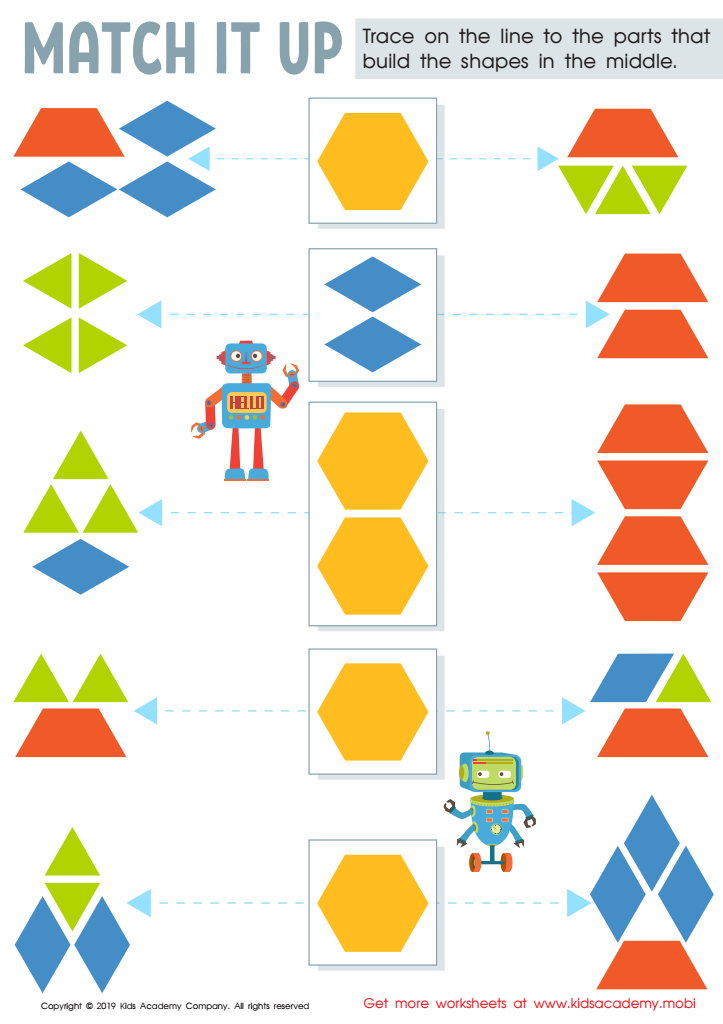
Match It up Worksheet
If your kids are into robots, they'll be thrilled to work on this worksheet. Ask them to name shapes they know, and help them draw and identify these shapes. Look at the shapes in the middle, and the sides. Finally, help your kids trace the lines to build the shapes in the middle.
Match It up Worksheet
Worksheet
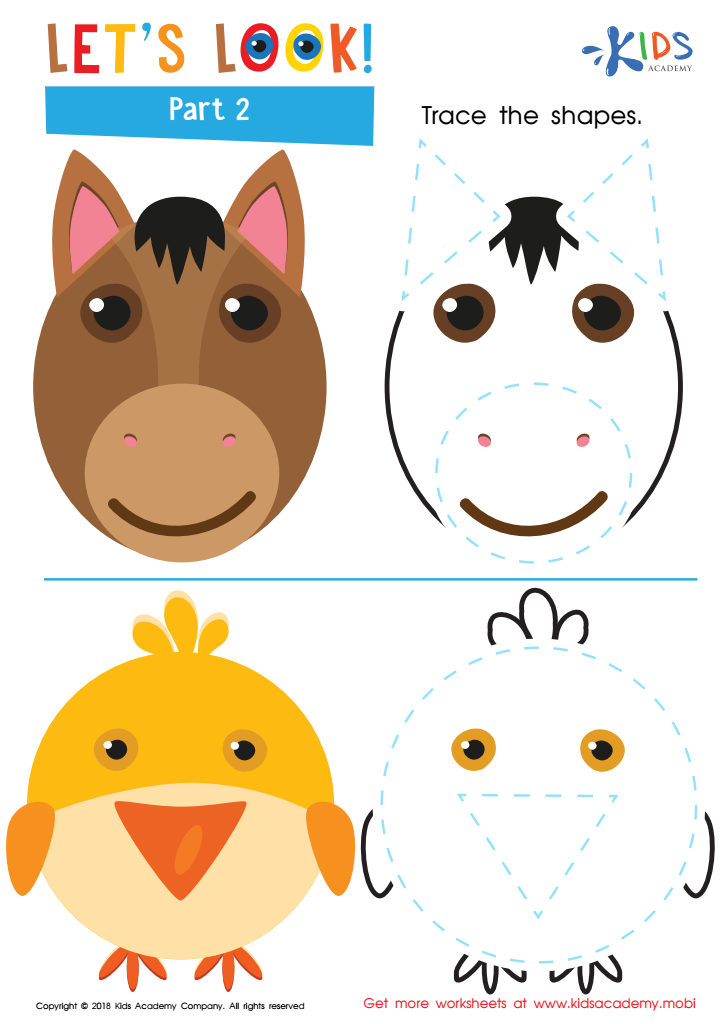
Let's Look! Part 2 Worksheet
This tracing sheet helps your little ones develop their skills. Ask them to identify the animals, then trace the shapes in the space provided, following the dotted lines. It's a simple task that can help them grow and have fun!
Let's Look! Part 2 Worksheet
Worksheet
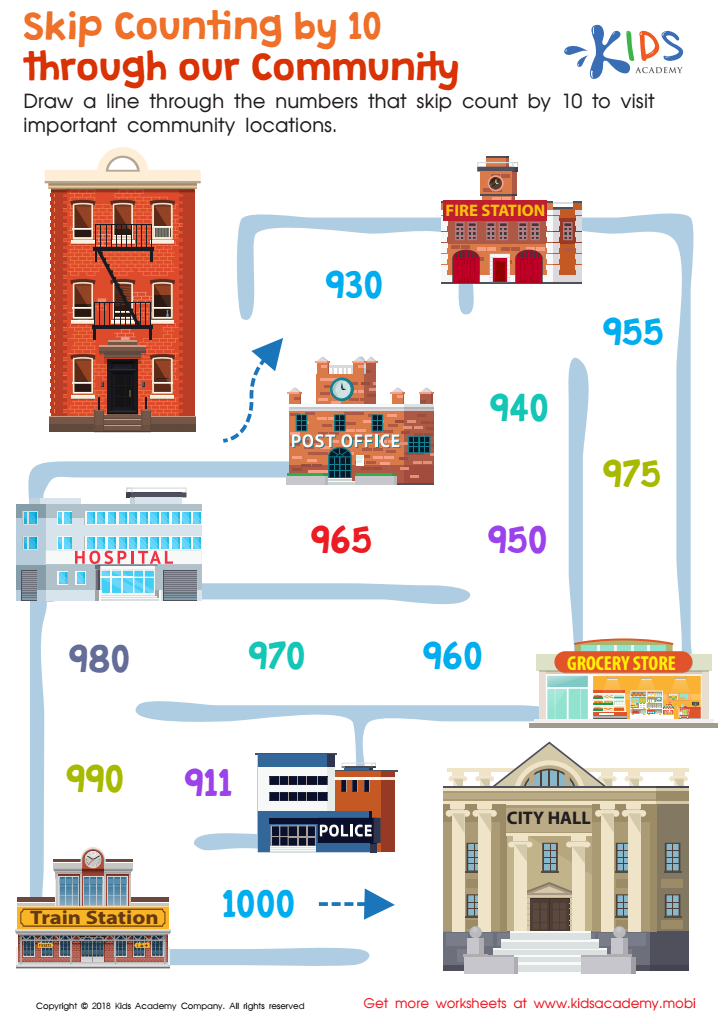
Skip Counting by 10 Through Our Community Worksheet
Our kids need to 'make a ten' and skip count by tens to boost their speed and accuracy in math. This cool, free worksheet takes them on a journey through their local community to practice counting by tens. They'll work on social studies and fine motor skills while having fun with the maze they get to count by tens in!
Skip Counting by 10 Through Our Community Worksheet
Worksheet
The Four Seasons Worksheet
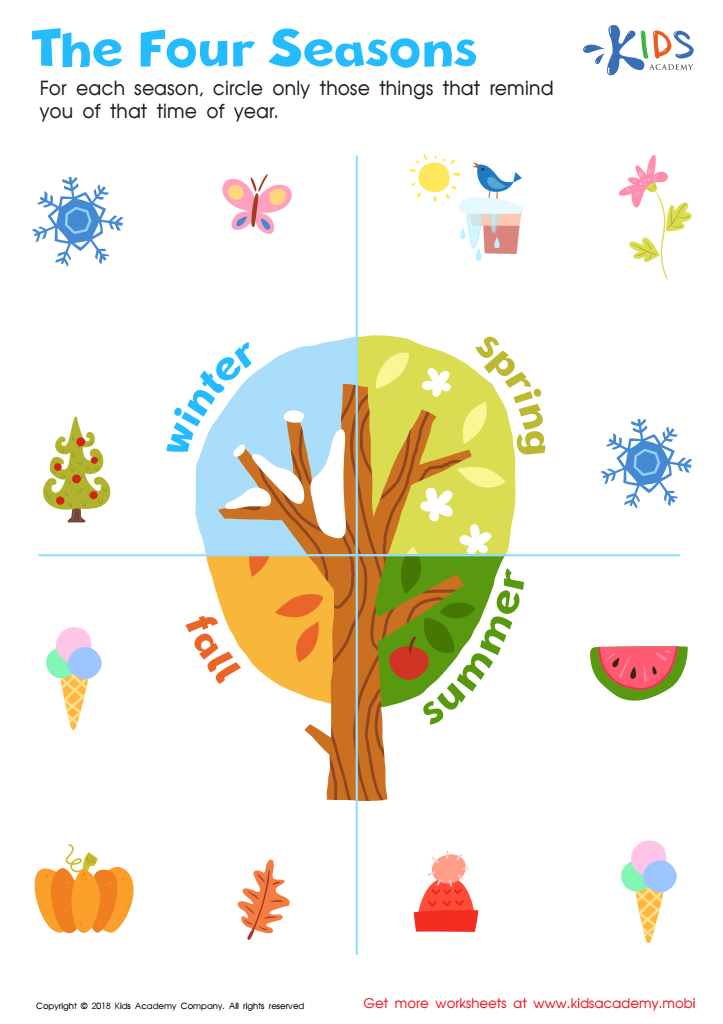
Tell your child to circle things that remind them of each season. The tree has four squares, one for each season. Some things in each square match the season, others don't. Ask if any are out of place. Help them circle only items that remind them of that season.
The Four Seasons Worksheet
Worksheet
Join Kids Academy for Free
Who is primarily going to use this learning content?







.jpg)
Visual recognition math is crucial for children ages 4-7 because it lays the foundation for essential cognitive, observational, and problem-solving skills. This approach makes abstract concepts tangible by using images, colors, and shapes to represent numbers and operations, making math relatable and engaging for young learners. At this formative age, children's brains are exceptionally receptive to learning through visual stimuli, aiding memory retention and making complex ideas more accessible.
When parents and teachers focus on visual recognition math, they help children develop strong number sense, which is the ability to understand, relate, and connect numbers. This builds their confidence and reduces math anxiety, fostering a positive attitude towards the subject. Visual aids also promote critical thinking and spatial reasoning, essential skills for complex problem-solving later in academic life.
Furthermore, immediate and relatable visual feedback during math activities fosters engagement, encourages participation, and keeps children motivated. It also supports diverse learning needs and styles, making math inclusive and accommodating for every child, including those who may struggle with traditional learning methods.
In summary, prioritizing visual recognition math for young children establishes a robust foundation for future success in mathematics and other areas by nurturing a love for learning, enhancing critical cognitive skills, and providing a supportive and effective educational experience.








