Comparing heights Measurement Worksheets for Ages 4-7
3 filtered results
-
From - To
Discover our engaging Comparing Heights Measurement Worksheets designed specifically for children ages 4 to 7! These interactive worksheets teach young learners the valuable skill of measuring and comparing heights through fun and colorful activities. Kids will boost their critical thinking and problem-solving abilities as they explore concepts such as tall vs. short and practice using measurement tools. Ideal for classrooms or home learning, our worksheets not only align with early math standards but also promote hands-on learning and active engagement. Start fostering your child’s math skills today with our exciting comparing heights resources, making learning both enjoyable and effective!
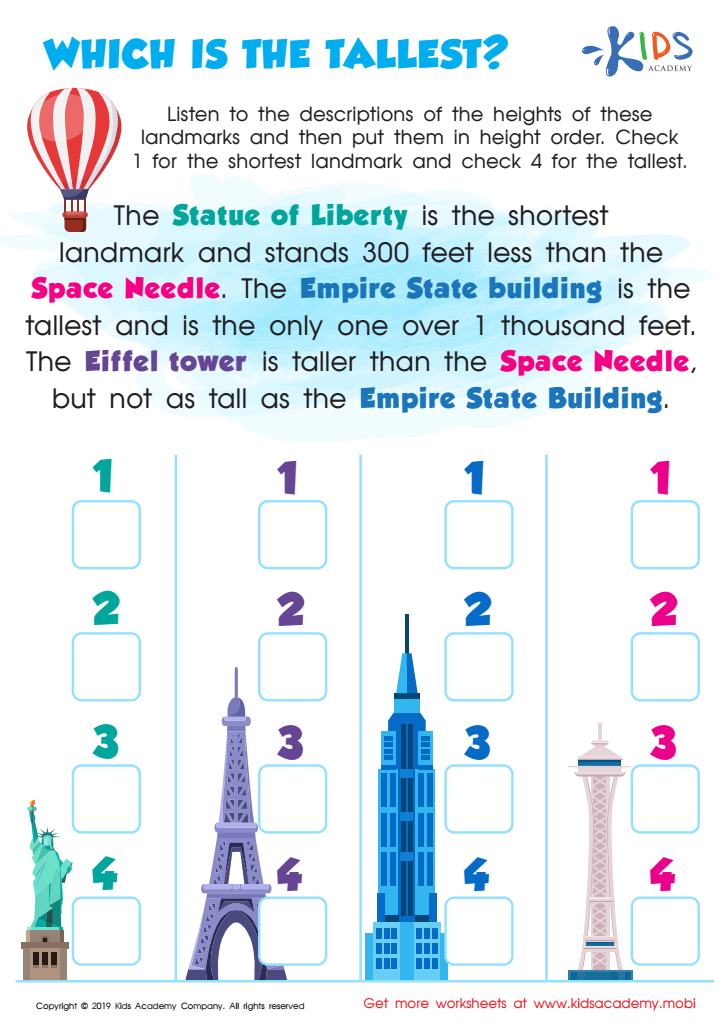
Which is the Tallest? Worksheet
 Assign to My Students
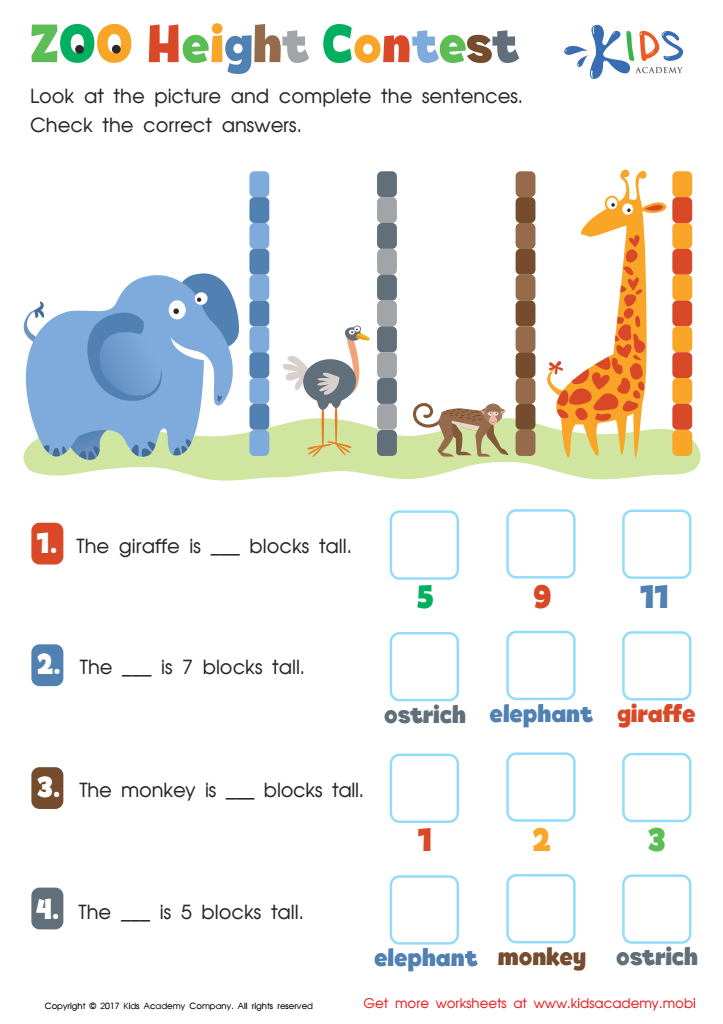
Zoo Height Contest Worksheet
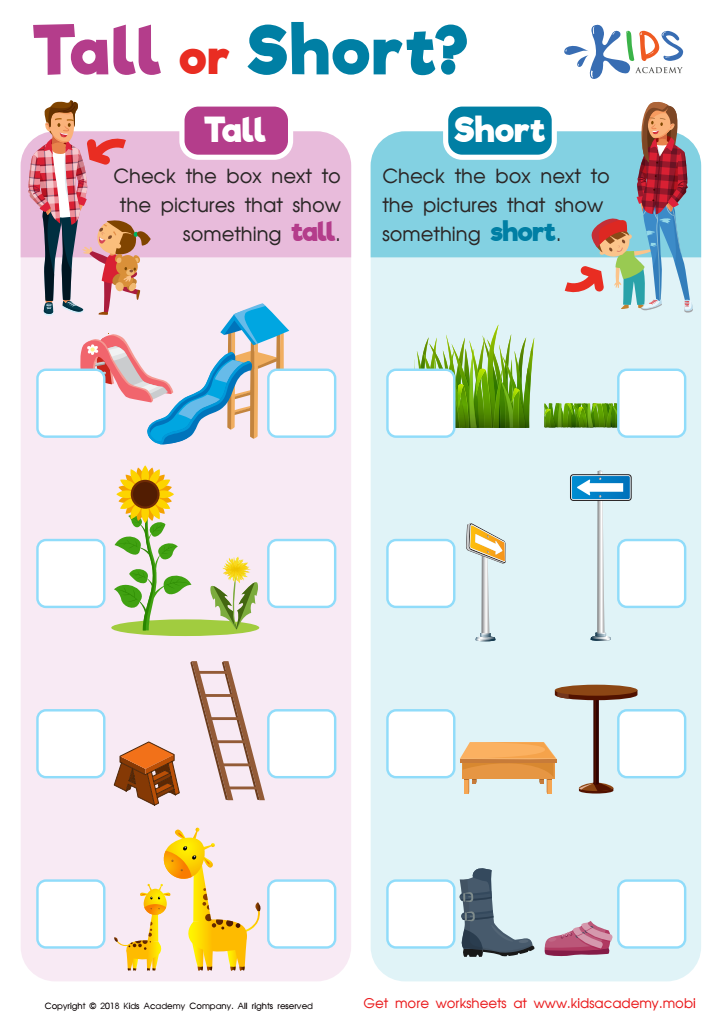
Tall or Short? Worksheet








Comparing heights is an important measurement skill for children ages 4-7, as it fosters both cognitive and physical development. For teachers and parents, engaging in height comparisons helps children learn about measurement, a foundational mathematics skill. By using simple tools like rulers or measuring tapes, children not only practice numerical concepts but also develop spatial awareness.
Height comparison activities enhance observational skills as children learn to differentiate and describe various heights through words and visuals. This hands-on experience can make learning engaging and tangible, encouraging curiosity about the world around them.
Furthermore, measuring and comparing heights collectively provides an opportunity for social interaction. Working in pairs or small groups, children learn to communicate, take turns, and share findings, thus developing social skills.
Finally, height comparison discussions often lead to broader concepts like growth, diversity, and body positivity, encouraging children to appreciate individual differences. Understanding that variability exists within physical attributes empowers children to embrace their unique traits confidently. By integrating height measurement into learning, caregivers can support children’s math skills, foster interpersonal relationships, and build a positive self-image—all of which are crucial during these formative years.








