Enhancing Counting Skills Measurement Worksheets for Ages 4-7
3 filtered results
-
From - To
Enhance your child's counting skills with our engaging measurement worksheets designed specifically for ages 4-7. These fun and interactive resources provide a solid foundation in numbers and measurements, making learning enjoyable. Your little ones will explore concepts through colorful visuals and hands-on activities, allowing them to practice counting objects, understanding measurement terms, and performing simple comparisons. Perfect for busy classrooms or home schooling, these worksheets aim to boost confidence and foster a love for math. Equip your child with essential skills that will support their academic journey and inspire a curiosity for the world around them. Dive into the fun today!
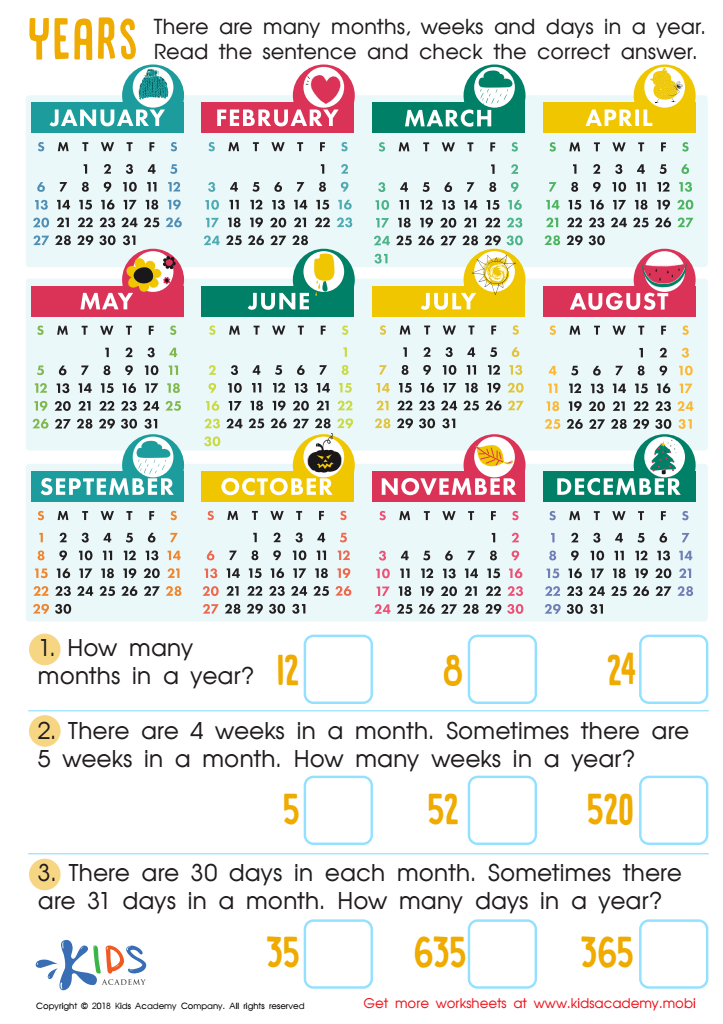
Years Worksheet
 Assign to My Students
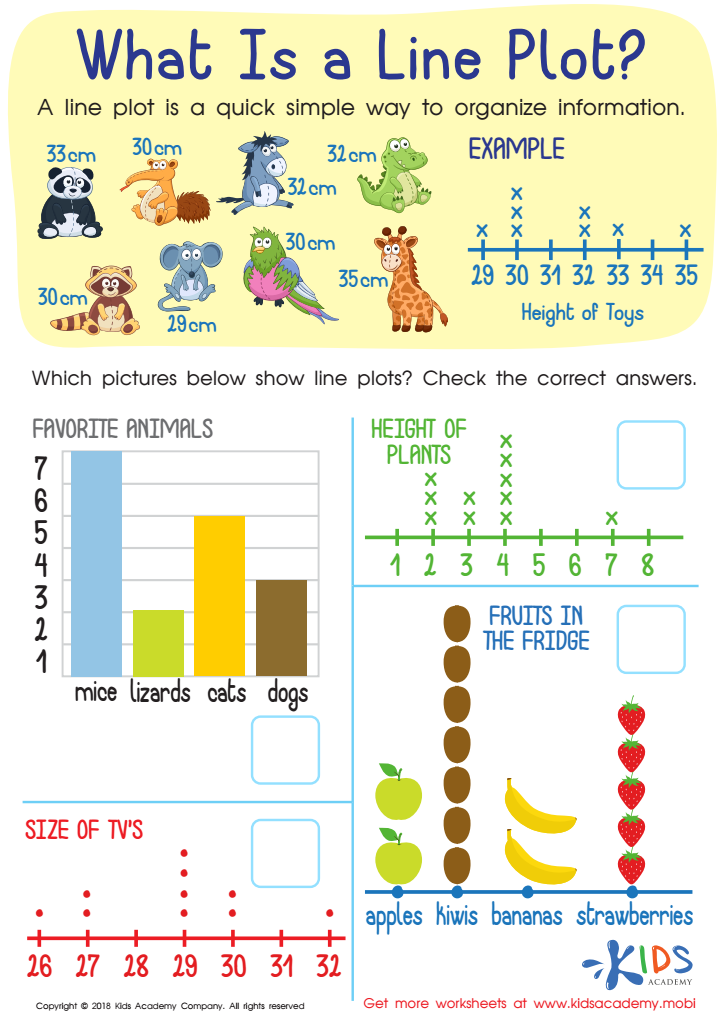
What Is a Line Plot? Worksheet
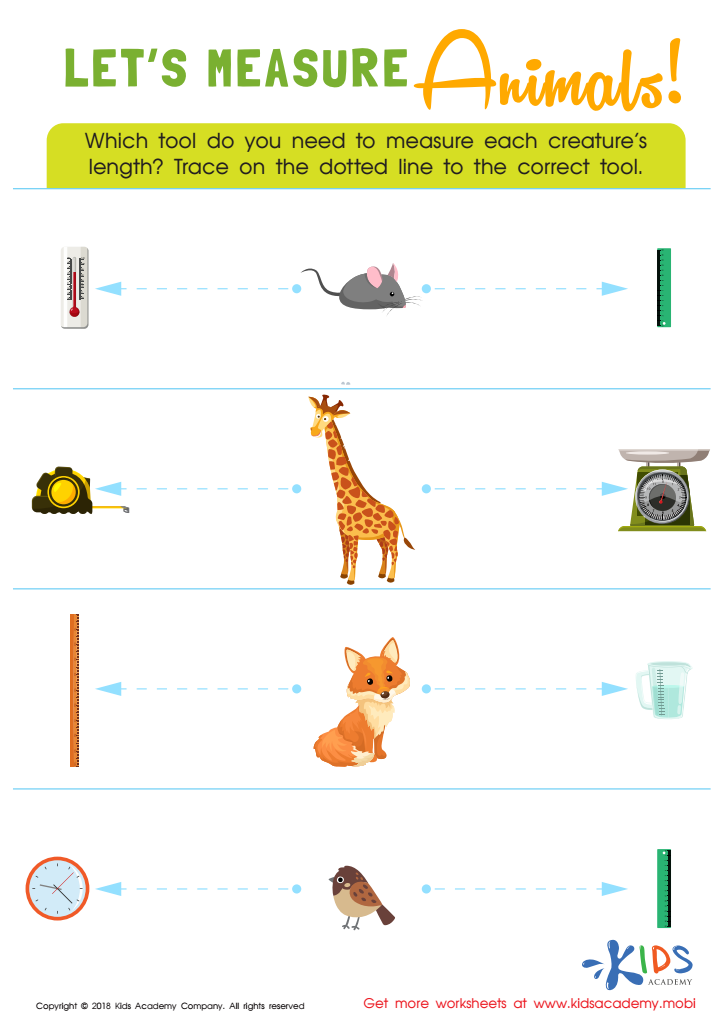
Let's Measure Animals! Worksheet








Enhancing counting skills and measurement abilities in children aged 4-7 is crucial for several reasons. During these formative years, children develop foundational mathematical concepts that will support their future learning. Early exposure to counting helps build number sense, which is the understanding of number properties, relationships, and magnitudes—skills necessary for complex mathematical operations later on.
Counting goes hand-in-hand with measurement, as both involve comparison, quantification, and observational skills. When children measure objects, they're not just learning dimensions; they’re also practicing how to quantify their world, which fosters critical thinking and problem-solving abilities.
Moreover, strong counting and measurement skills are linked to better performance in mathematics and science in later grades. Early numeracy has been shown to predict later academic success, making it essential for parents and teachers to nurture these skills.
By fostering a love for counting and measurement through engaging activities—like counting games, measurement comparisons in everyday life, and exploration—adults can create a positive learning environment. This enthusiasm and confidence with numbers support children’s overall development, benefitting not only their academic performance but also their everyday experiences and interactions with the world around them.








