
Mathematical reasoning Measurement Worksheets for Ages 4-7
4 filtered results
Difficulty Level
Grade
Age
-
From - To
Subject
Activity
Standards
Unlock your child's potential with our Mathematical Reasoning Measurement Worksheets for Ages 4-7. These engaging, colorful activities are designed to develop critical thinking and problem-solving skills through fun measurement tasks. Ideal for early learners, our worksheets cover essential concepts such as comparing sizes, lengths, weights, and capacities. They encourage interactive learning and lay a strong foundation for future math success. Perfect for both classroom settings and homeschooling, these worksheets make learning measurement an enjoyable experience for young minds. Discover a seamless blend of education and entertainment to enhance your child's mathematical reasoning today!
Favorites
With answer key
Interactive
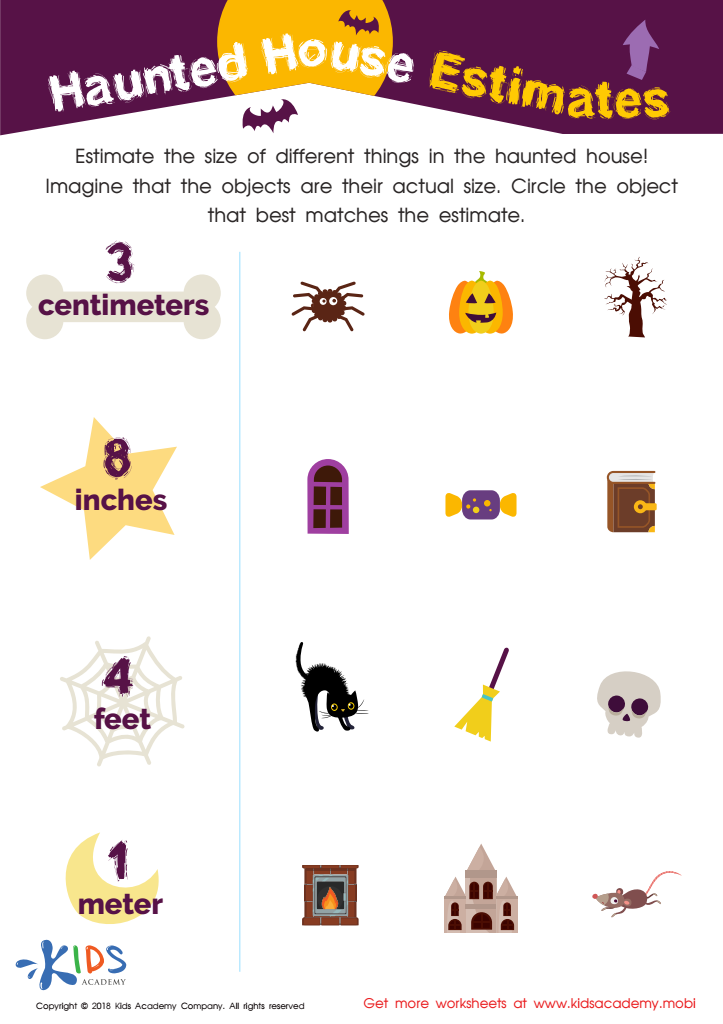
Haunted House Estimates Worksheet
Enliven your kid's learning with this printable worksheet! Have them estimate the size of objects and creatures in a haunted house, then circle the ones that match their estimates. They'll need to understand different measuring units beforehand. It's an exciting way to learn!
 Assign to My Students
Haunted House Estimates Worksheet
Worksheet
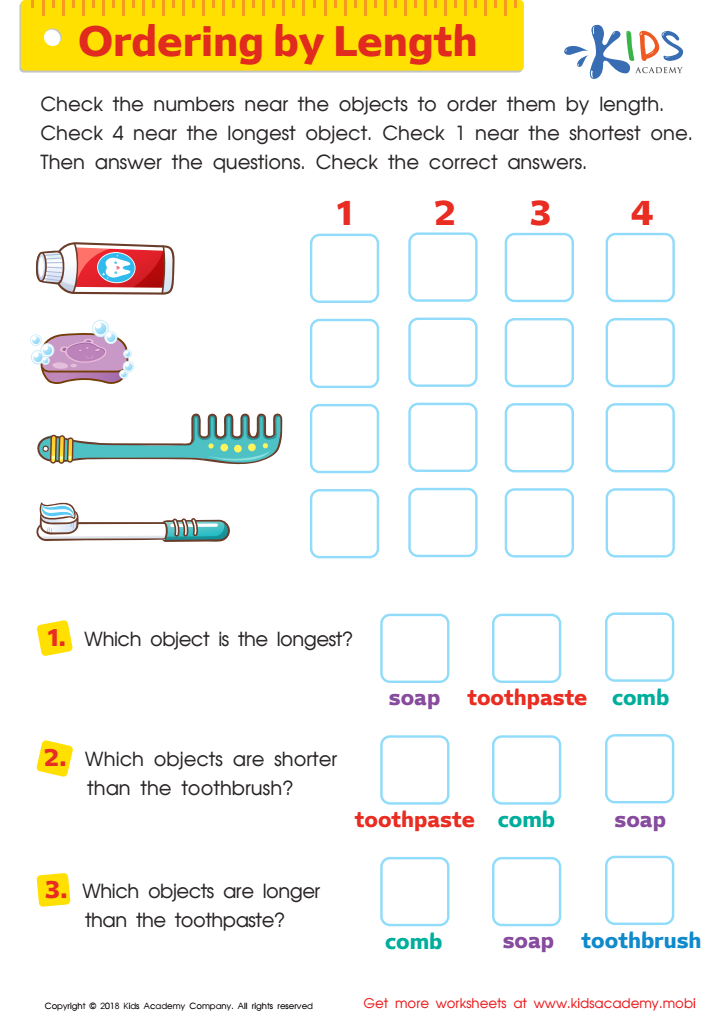
Ordering by Length Worksheet
Compare objects to learn about measurement! Before purchasing a ruler, get kids to understand length by comparing objects and labeling them as longer or shorter than others. Use this printable math worksheet to help children think about measurement. It will show pictures of objects and ask children to categorize them by length.
Ordering by Length Worksheet
Worksheet
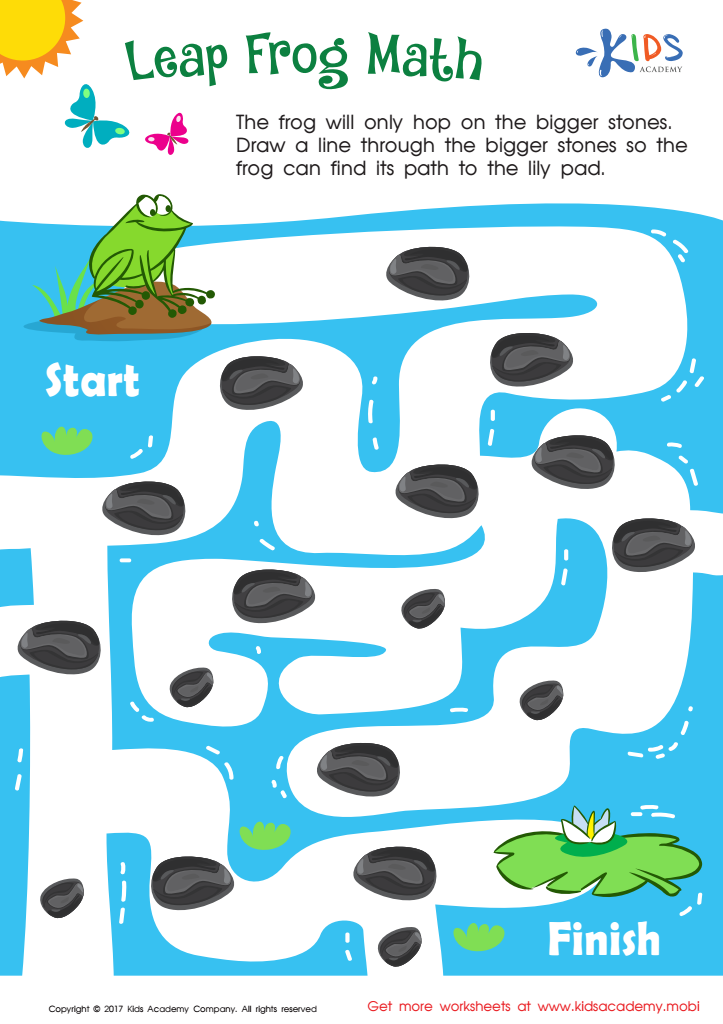
Math Puzzle Worksheet
Kids will use their math skills to help the frog get through the maze by selecting the larger stones. Perfect for kindergarteners, it develops the ability to identify size differences.
Math Puzzle Worksheet
Worksheet
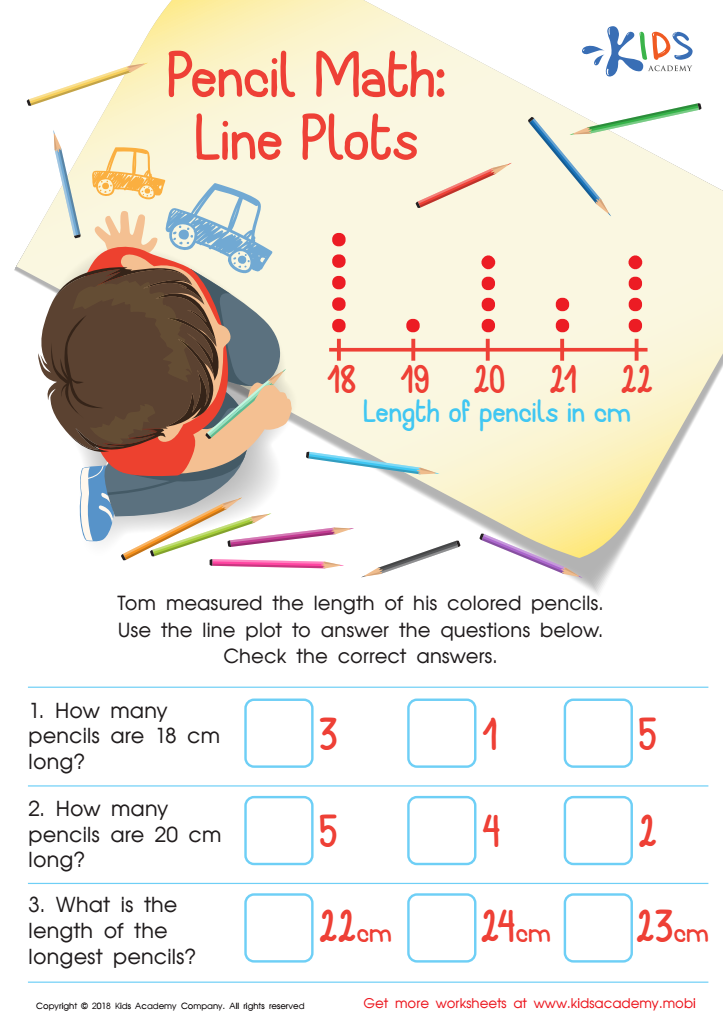
Pencil Math: Line Plots Worksheet
Your child will meet Tom in this worksheet, helping him find the length of his colored pencils. Tom has written the lengths in cm, and the line plot will help your kids answer the questions. Check the correct answers for each, including how many pencils are of a certain length. The line plot makes it easy to find the answers.
Pencil Math: Line Plots Worksheet
Worksheet
Join Kids Academy for Free
Who is primarily going to use this learning content?








Mathematical reasoning and measurement skills form foundational tools for young learners ages 4-7, enabling them to understand and engage with the world in meaningful ways. At this early developmental stage, grasping these concepts equips children with critical thinking skills that extend beyond mere arithmetic.
Firstly, mathematical reasoning fosters problem-solving abilities and logical thinking. When children explore patterns, relationships, and sequencing, they develop analytical skills that enhance their overall cognitive development. These skills are essential for academic success in various subjects and everyday decision-making.
Secondly, measurement is a practical aspect of mathematics that children encounter in daily life. Understanding dimensions, weights, and volumes opens avenues for experiential learning. For instance, activities like comparing lengths of objects, weighing ingredients for a recipe, or tracking time teach children about precision, estimation, and accuracy, reinforcing their numeracy.
Furthermore, engaging with these concepts through hands-on activities, such as building blocks or measuring items, promotes fine motor skills and spatial awareness. It supports the National Council of Teachers of Mathematics' (NCTM) vision of early childhood mathematics as an active learning process that involves playing, exploring, and questioning.
In summary, incorporating mathematical reasoning and measurement in early education nurtures a child's intellectual growth, practical life skills, and readiness for future academic challenges. Parents and teachers play a crucial role by creating an enriching environment where these foundational mathematics skills can flourish.








